
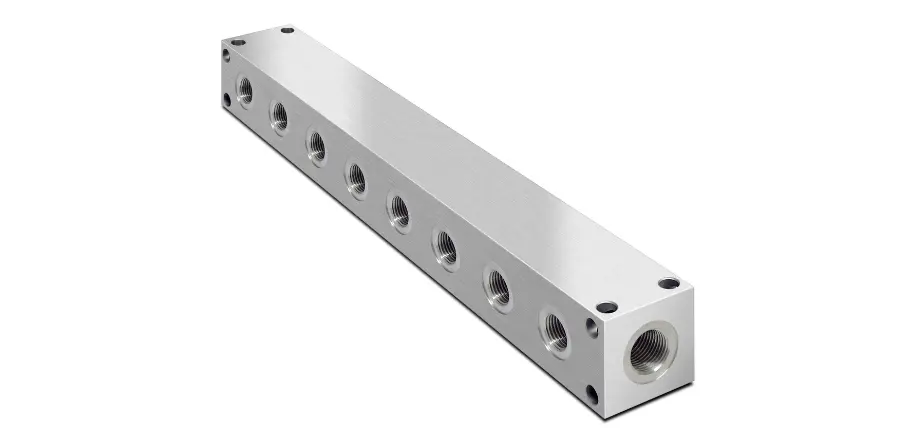
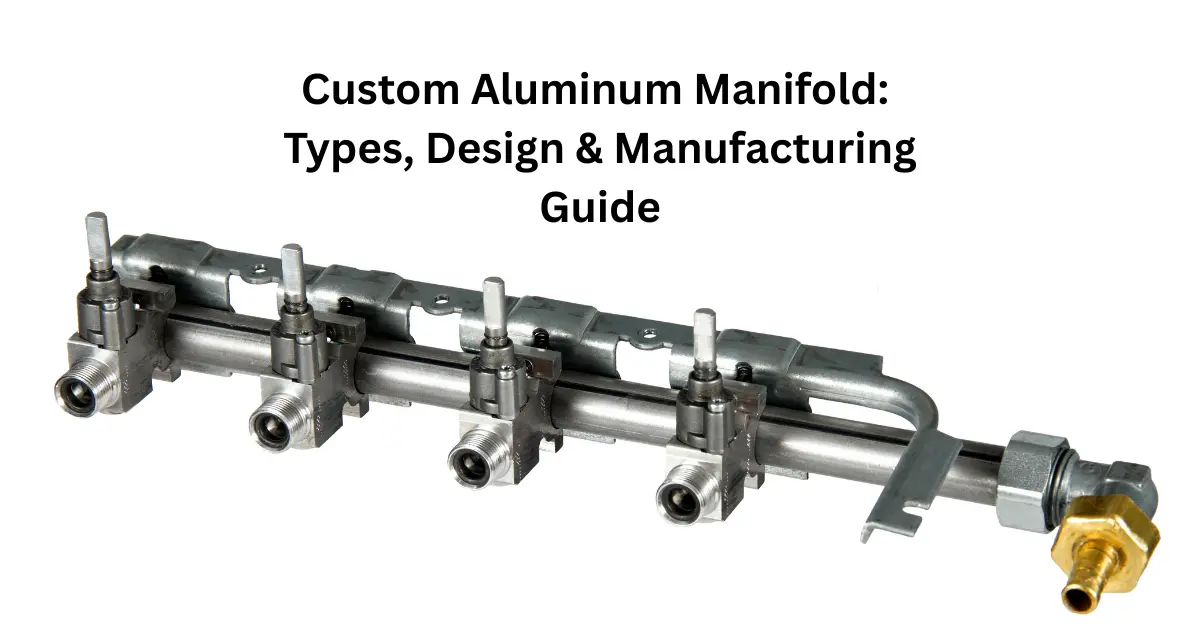
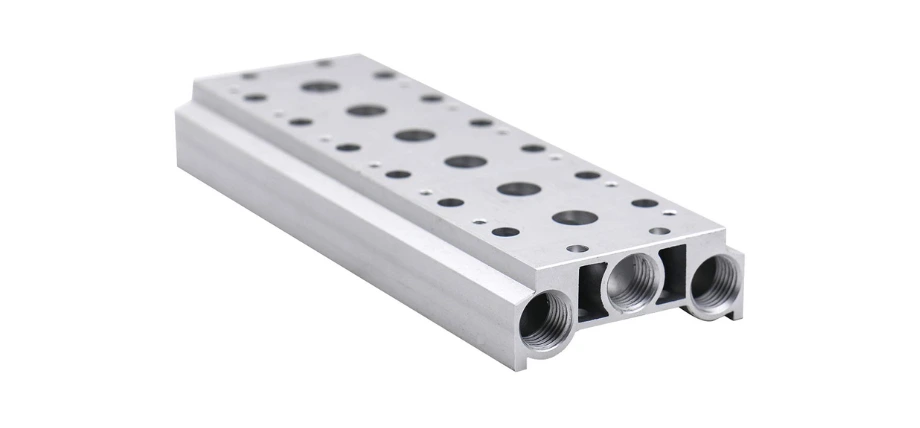
Aluminum manifolds are fluid distribution blocks that manage the flow of fluids within a hydraulic or pneumatic system. They serve as a central hub for connecting multiple valves, hoses, and other components, allowing for a compact and efficient system design.
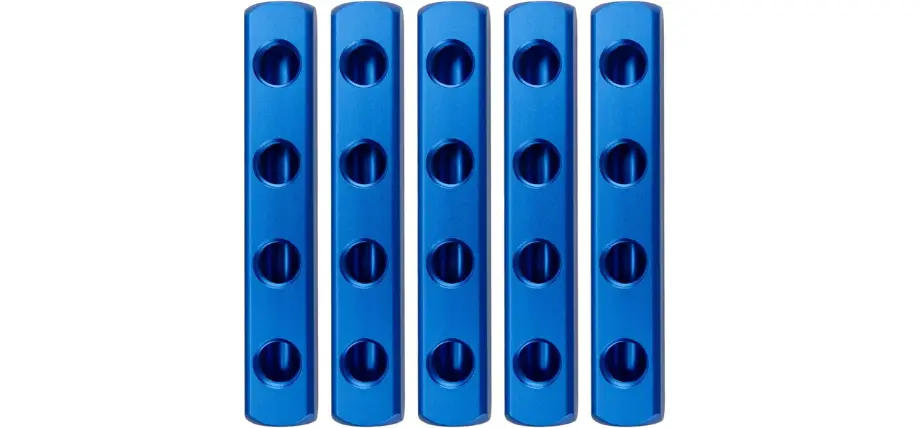
Function of Manifolds
The primary function of an aluminum manifold is to direct the flow of fluid from one or more sources to various destinations within a system. This is achieved through a series of internal passages and ports that are precision-machined into the manifold block. By centralizing the control of fluid flow, manifolds simplify the overall system architecture, reduce the number of external connections, and minimize the risk of leaks.
Types of Aluminum Manifolds
There are several types of aluminum manifolds, each designed for specific applications:
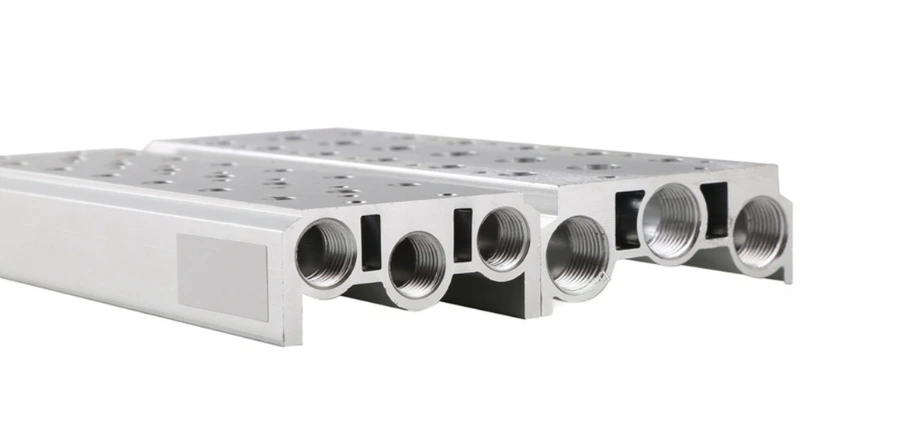
Design Principles for Aluminum Manifolds
- Flow Performance: The internal passages must be designed to minimize pressure drop and turbulence.
- Material Selection and Weight Loss: Choosing the right aluminum alloy is crucial for ensuring the manifold’s durability and performance. Lightweight design is also important in many applications.
- Port and Connection Characteristics: The type and location of the ports and connections must be carefully planned to ensure easy installation and maintenance.
- Structural and Seal Analysis: The manifold must be able to withstand the system’s operating pressure without leaking or failing.
- Manufacturing and Assembly: The design must be optimized for efficient manufacturing and assembly.
- Die Casting Manifold: This process involves injecting molten aluminum into a mold to create the basic shape of the manifold.
- Lightweight: Aluminum is much lighter than steel or iron, making it ideal for weight-sensitive applications.
- Corrosion Resistance: Aluminum naturally forms a protective oxide layer that makes it highly resistant to corrosion.
- Excellent Machinability: Aluminum is easy to machine, allowing for the creation of complex internal passages and ports.
- Cost-Effective: Aluminum is relatively inexpensive compared to other high-performance materials.
- Pressure Rating: The manifold must be rated for the system’s maximum operating pressure.
- Flow Rate: The manifold must be able to handle the system’s required flow rate.
- Port Sizes and Types: The ports must be compatible with the system’s hoses and fittings.
- Material Grade: The aluminum alloy used must be suitable for the system’s environment and operating conditions.
- Automotive: Used in braking systems, transmissions, and engine cooling systems.
- Aerospace: Used in hydraulic systems for flight controls, landing gear, and braking.
- Industrial Machinery: Used in hydraulic presses, machine tools, and material handling equipment.
- Mobile Equipment: Used in construction equipment, agricultural machinery, and mining equipment.
- 6061-T6 Aluminum: This is the most common alloy used for manifolds. It offers a good balance of strength, corrosion resistance, and machinability.
- 7075-T6 Aluminum: This alloy is much stronger than 6061 but is more expensive and more difficult to machine. It’s typically used in high-pressure applications.
- 6063 Aluminum: This alloy is often used for simple manifolds that don’t require high strength.
- 5083 Aluminum: This alloy is highly resistant to corrosion and is often used in marine applications.
- ISO 9001: This is the international standard for quality management systems.
- AS9100: This is the quality standard for the aerospace industry.
- IATF 16949: This is the quality standard for the automotive industry.
- ASTM Standards: These are technical standards for materials and testing.
Manufacturing Process for Aluminum Manifolds
The manufacturing of aluminum manifolds typically involves several steps:
Precision CNC Machining at PremFixer
Aluminum manifolds offer several advantages over manifolds made from other materials:
Key Features of Selection of Manifolds
When selecting an aluminum manifold, it’s important to consider the following features:
Applications of Aluminum Manifolds
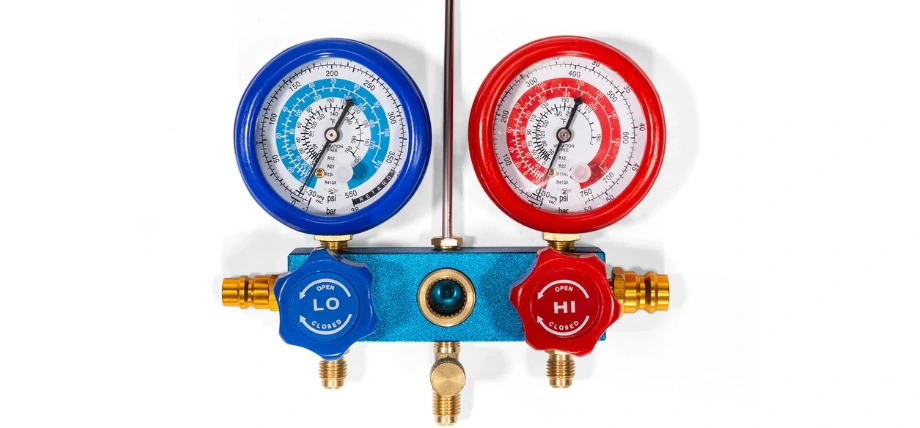
Aluminum manifolds are used in a wide range of industries and applications:
Best Aluminum Alloy for Manifolds
The choice of aluminum alloy depends on the specific requirements of the application:
Quality Standards for Manifolds
Precision CNC Machining at PremFixer
At PremFixer, we specialize in the precision CNC machining of aluminum manifolds. Our state-of-the-art facility is equipped with the latest CNC machines, allowing us to produce manifolds with complex internal passages and tight tolerances.
Whether you need a standard manifold or a custom design, we have the expertise and experience to deliver high-quality products that meet your exact specifications.
Contact us today to discuss your aluminum manifold needs and request a quote.
Conclusion
Aluminum manifolds are essential components in fluid power systems, offering a lightweight, corrosion-resistant, and cost-effective solution for regulating fluid flow. By understanding the different types, design principles, and manufacturing processes, you can select the right manifold for your specific application.
For precision-machined aluminum manifolds that meet the highest quality standards, trust the experts at PremFixer.