
Is Brass Magnetic?
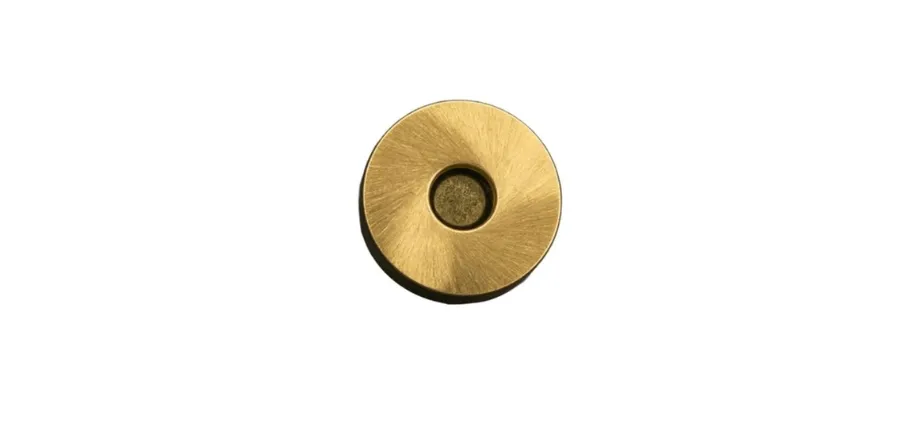
The short answer is no, brass is not magnetic. Under normal conditions, brass does not exhibit any magnetic attraction to permanent magnets. This is because brass is an alloy primarily composed of copper and zinc—two elements that are inherently non-magnetic (diamagnetic).
Brass is often used in precision components where magnetic interference must be avoided. Even when exposed to strong magnetic fields, brass remains unaffected. This property makes it an ideal choice for scientific instruments, electronic enclosures, and maritime navigation equipment.
Why Is Some Brass Magnetic?
You might have encountered a situation where a “brass” object sticks to a magnet. This usually happens for two reasons:
- Brass-Plated Steel: Many household items like keys or decorative hardware are actually made of steel and then plated with a thin layer of brass. The magnet is attracted to the steel core, not the brass coating.
- Impurities: Low-quality brass may contain trace amounts of iron or nickel from the recycling process. If the iron content is high enough, the alloy may show weak magnetic properties.
Can You Magnetize Brass?
No, you cannot magnetize brass. Unlike ferromagnetic materials like iron, cobalt, or nickel, brass lacks the necessary atomic structure to maintain a magnetic alignment.
In ferromagnetic metals, electron spins can be aligned to create a net magnetic field. In brass, the electron configurations of copper and zinc result in no net magnetic moment, meaning it cannot be turned into a permanent magnet.
When brass comes into contact with a magnetic field, it doesn’t hold on to any magnetic charge. Even when you try to rub it with a magnet or expose it to electricity, brass remains non-magnetic.
The Composition of Brass
Brass is an alloy of copper and zinc. Copper and zinc are both non-magnetic metals. Copper has a diamagnetic property, meaning it is slightly repelled by a magnetic field. Zinc is also non-magnetic.
The absence of iron or other ferromagnetic metals in brass makes it non-magnetic. Even though brass may contain traces of other elements like lead or tin, these are also non-magnetic. If a piece of brass shows magnetic properties, it’s likely that it has some iron impurities or it’s not pure brass.
Brass is used in many industries because it doesn’t interfere with magnetic fields.
Molecular and Physical Properties
The non-magnetic nature of brass is due to its atomic structure. In a magnetic material, the atoms have unpaired electrons that align with each other to create a magnetic field. In brass, the electrons in the copper and zinc atoms are paired in a way that their magnetic moments cancel each other out.
This results in no net magnetic moment for the alloy. Even at the molecular level, brass doesn’t have the properties needed for magnetism.
Bronze vs. Brass Magnetic Properties of Brass

Bronze and brass are both copper alloys. Bronze is an alloy of copper and tin, while brass is an alloy of copper and zinc.
Both tin and zinc are non-magnetic. Therefore, both bronze and brass are non-magnetic materials.
Both are used in applications where a non-magnetic material is required. They are also highly durable and resistant to corrosion.
What Makes a Material Magnetic?
Magnetism is a result of the motion of electrons in the atoms of a material. Most materials are not magnetic because the magnetic moments of their electrons cancel each other out.
Materials that are magnetic, like iron, have unpaired electrons that can align with an external magnetic field.
Brass doesn’t have these unpaired electrons, which is why it’s not magnetic.
In general, a material is magnetic if its atoms have a net magnetic moment that can align with a magnetic field.
External Magnetic Fields and Brass
When brass is placed in a strong external magnetic field, it doesn’t show any attraction.
In fact, brass is slightly repelled by a magnetic field, but this effect is so small that it’s hardly noticeable. This is called diamagnetism.
Unlike iron, brass doesn’t become magnetized when exposed to an external field.
This is why brass is used in electrical components where magnetic fields are present.
Types of Brass Alloys and Their Magnetic Properties
All types of brass alloys are non-magnetic. Some common brass alloys include:
- Alpha brasses: These have less than 37% zinc and are non-magnetic.
- Alpha-beta brasses: These have 37-45% zinc and are also non-magnetic.
- Beta brasses: These have more than 45% zinc and are non-magnetic as well.
All these alloys are used in applications where non-magnetic properties are needed.
Why Brass is Non-Magnetic? The Science Explained
As mentioned earlier, the non-magnetic behavior of brass is explained by its electronic structure. The electrons in copper and zinc are arranged in a way that their magnetic moments cancel each other out.
Without any net magnetic moment, brass cannot be attracted to a magnet or be magnetized.
This is a fundamental property of the elements that make up brass.
Applications of Non-Magnetic Brass
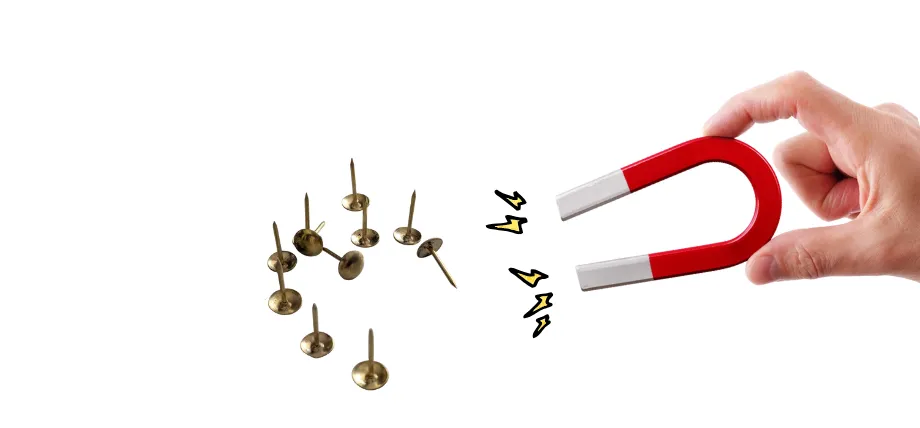
The non-magnetic property of brass makes it useful in many applications:
- Electrical components: Brass is used in connectors and terminals because it doesn’t interfere with electrical signals.
- Marine hardware: Brass is resistant to corrosion and is non-magnetic, making it ideal for use on ships.
- Musical instruments: Brass is used to make instruments like trumpets and trombones because of its acoustic properties.
- Ammunition: Brass is used for shell casings because it’s non-magnetic and durable.
These are just a few examples of the many uses of brass.
Custom Metal Machining Service
PremFixer provides high-quality custom metal machining services. We have the expertise to machine all types of brass alloys for your specific needs.
Our CNC machining services ensure precision and quality for all your brass parts. Whether you need a small prototype or a large production run, we can help.
Contact PremFixer today for a quote on your brass machining project.
Conclusion
In summary, brass is a non-magnetic metal because it’s made of copper and zinc, both of which are non-magnetic. Its atomic structure doesn’t allow for the formation of a net magnetic moment.
This property makes brass an excellent material for many industrial and commercial applications. If you need a material that is durable, corrosion-resistant, and non-magnetic, brass is a great choice.
For high-quality brass machining services, trust PremFixer to deliver the precision and quality you need.
Common Questions About Brass Magnetism
1. Is Brass Magnetic Or Not?
Brass is not magnetic. The necessary unpaired electrons required for magnetic attraction are not present in its primary components, copper and zinc.
2. Is A Brass Key Magnetic?
A solid brass key is not magnetic. However, many “brass” keys are actually brass-plated steel or nickel-silver, which may exhibit magnetic attraction.
3. Is Copper Or Brass Magnetic?
Neither copper nor brass is magnetic. Copper is diamagnetic (slightly repelled by magnets), and brass inherits this non-magnetic property.
4. Is Brass A Magnetic Material?
No, brass is classified as a non-magnetic material. It is widely used in electrical and fluid manifold systems for this reason.
5. Why Is Some Brass Magnetic?
As mentioned above, if brass appears magnetic, it is likely due to a steel core (brass plating) or trace iron impurities within the alloy.
6. Is Brass Magnetic Yes Or No?
No. Solid brass is strictly non-magnetic under standard environmental conditions.
7. Is Brass Magnetic At All?
Under standard conditions, no. At extremely low temperatures or in the presence of massive magnetic fields, it may show negligible diamagnetic effects, but for all practical purposes, it is non-magnetic.