
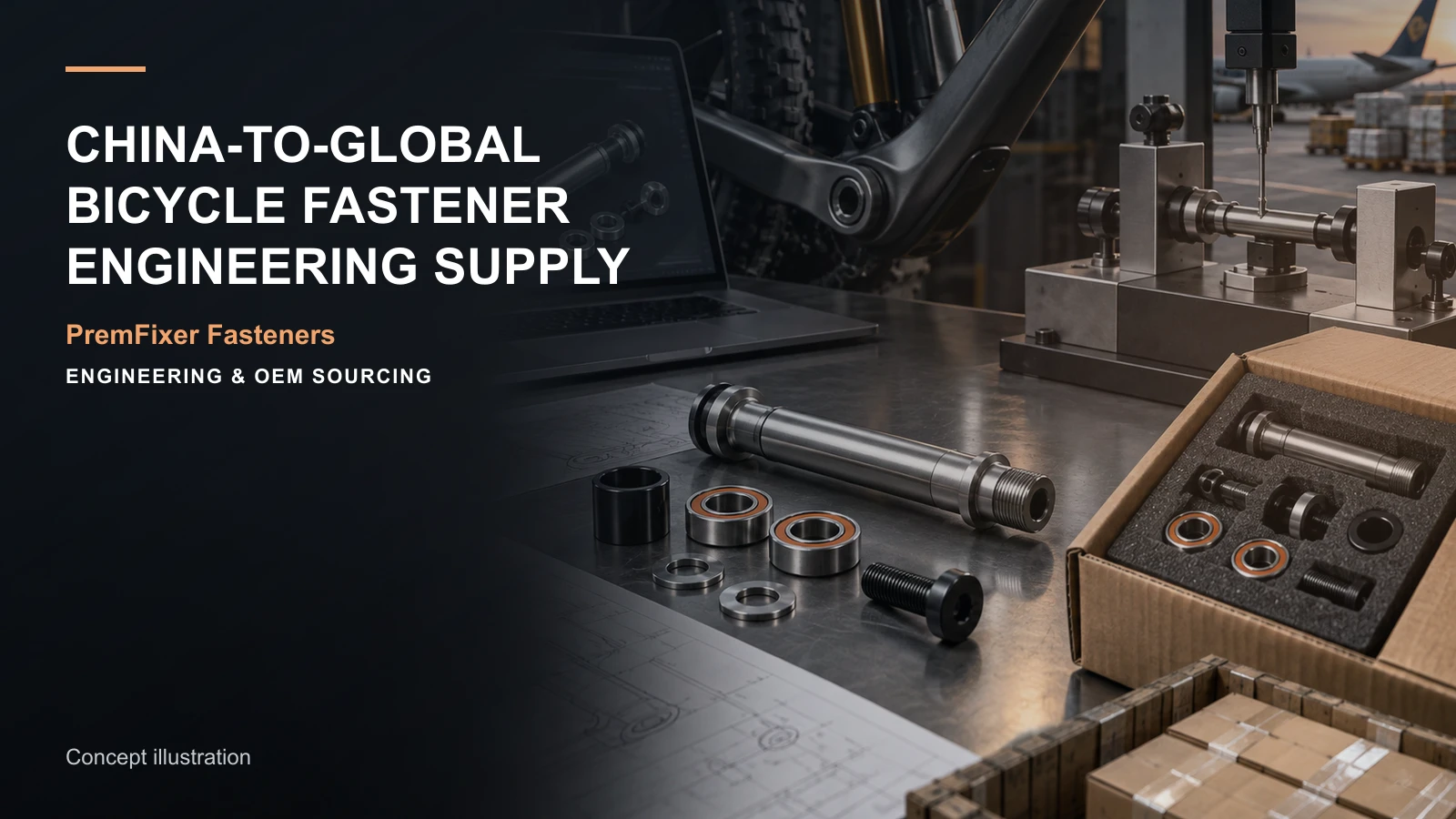
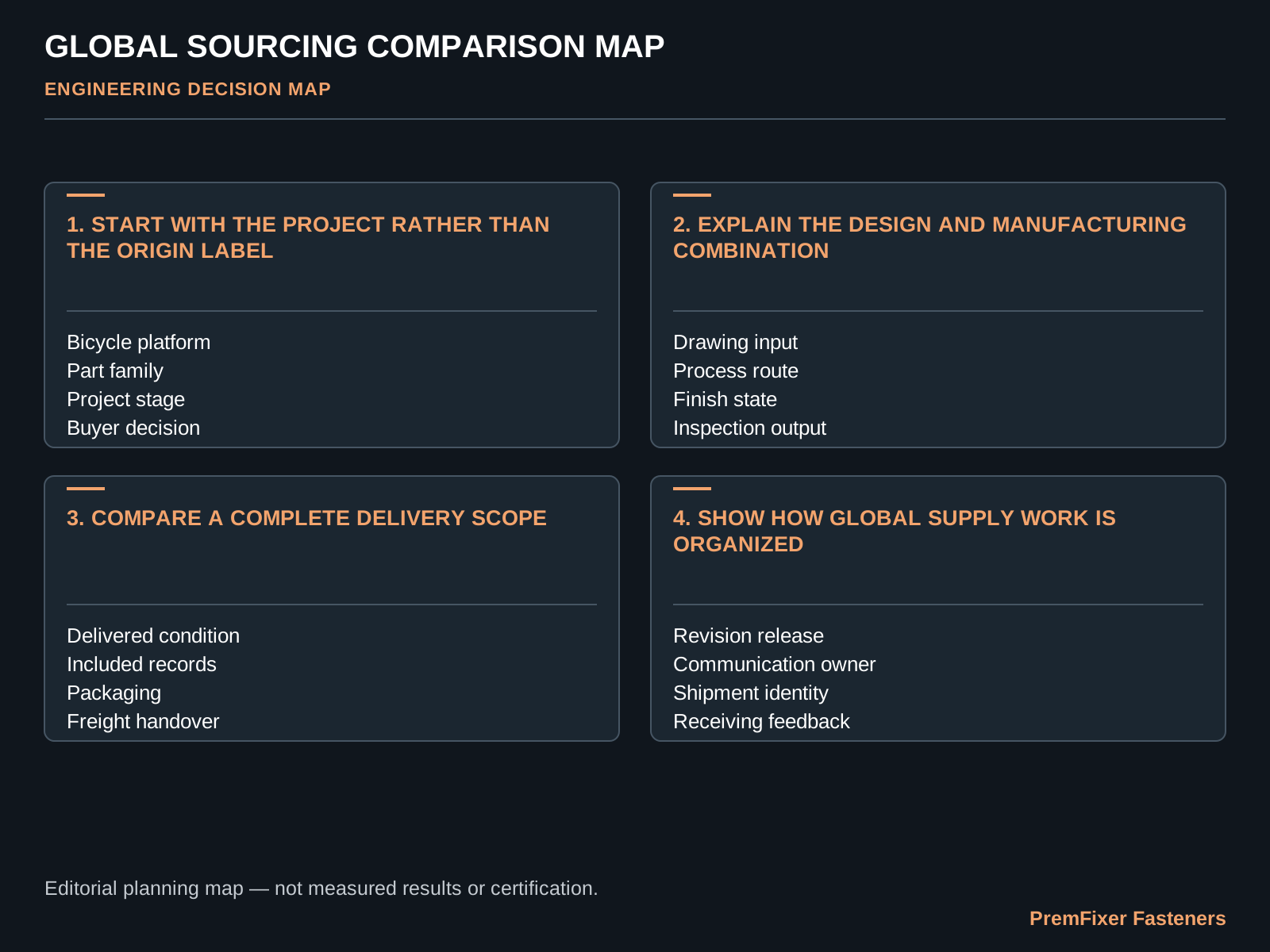
China-based bicycle fastener sourcing can provide access to forming, CNC machining, surface treatment and export supply networks, but location alone says little about whether a supplier can control a drawing-led OEM program. The decisive questions are how the supplier interprets engineering inputs, manages partner processes, releases samples, controls revisions and responds when the delivered condition does not match the requirement.
A global OEM does not need another broad factory-capability presentation. It needs evidence that a selected part family can move from RFQ to approved sample and repeat production without losing the connection between drawing, process and shipment. That evidence is best built through one controlled cooperation project rather than a long questionnaire detached from real parts.
This guide explains how to qualify a China bicycle fastener supplier around the operating system you will actually use.
Define the engineering package the supplier must control
Begin with a representative set of files: drawing or 3D model, BOM position, material and finish specification, annual and batch quantities, critical interfaces, inspection-document expectations, packaging and destination. State which document governs if dimensions or notes conflict.
Ask the supplier to return a structured clarification list. The quality of those questions is useful evidence: does the team identify missing datums, ambiguous material conditions, finish-sensitive dimensions and mating information, or does it quote around them? A fast price without resolved scope is not an engineering response.
For international projects, also agree on units, drawing language, revision notation and named contacts. These simple controls prevent translation and file-history problems later.
| Qualification area | Evidence to request | What it should demonstrate |
|---|---|---|
| Drawing review | Clarification log and DFM response | The team understands the interfaces and open points |
| Process route | Operation sequence and partner-process scope | Ownership is visible from raw material to packing |
| Quality release | Sample report and production control plan | Checks are connected to drawing characteristics |
| Change control | Revision and stock disposition example | Old and new configurations will not be mixed |
Match process capability to the part family
Separate catalogue screws, cold-formed specials, turned spacers, CNC pivot axles and assembled kits. Each family needs a different combination of equipment, tooling, inspection and partner processes. A supplier may be strong in one route without being the right source for every line on the bicycle BOM.
Request the proposed route for the actual component rather than a machine list. For a pivot axle, the response should address stock or preform, turning and milling sequence, threads, critical diameters, finish handling and final inspection. For a formed screw, tooling and secondary machining may be the more relevant questions.
A combined supply proposal is credible when the lead supplier can show how different routes remain tied to one BOM and release process.
Qualify external process control
Heat treatment, coating, anodizing, passivation, grinding or special testing may be performed by approved partners. Outsourcing is not automatically a weakness; hidden ownership is. Ask who selects the partner, releases the purchase specification, verifies the returned condition and keeps the record with the final part.
Select one characteristic that can be affected by the external process and follow it through the route. Examples include a finished diameter, protected thread, colour boundary or surface condition. Confirm when it is measured and what happens if the result falls outside the drawing requirement.
The same exercise clarifies logistics. It shows whether the quoted lead time includes partner queues, transport between plants and final re-inspection.
Use a first project that exposes the real workflow
Choose a pilot component that is important enough to reveal the supplier’s system but contained enough to manage. A small pivot kit with one machined axle, one spacer and one externally finished part can expose drawing review, purchasing, partner coordination, inspection and packaging without transferring the complete platform.
Set acceptance points before the order: quotation clarification closed, sample condition identified, dimensional report agreed, packaging labelled and change communication tested. Review response quality and record retrieval as well as the physical parts.
Do not turn the pilot into an artificial audit exercise. Use the normal contacts and files that would support production, because those are the behaviours the OEM will depend on later.
Design the global delivery interface
Define Incoterm, destination, carton and inner-pack labels, lot identification, document language and the person who receives shipment notices. If kits feed an assembly line, state whether they arrive frame-ready, model-separated or as bulk parts for local kitting.
Forecasting should distinguish firm orders, expected demand and service stock. Agree how quantity changes, expedited needs and revision cutovers will be communicated. A nominal production lead time is less useful than a schedule showing material, manufacturing, finishing, inspection and transport stages.
For repeat supply, measure delivery accuracy against the confirmed schedule and required condition—not only the date a parcel leaves the factory.
Prepare a qualification RFQ
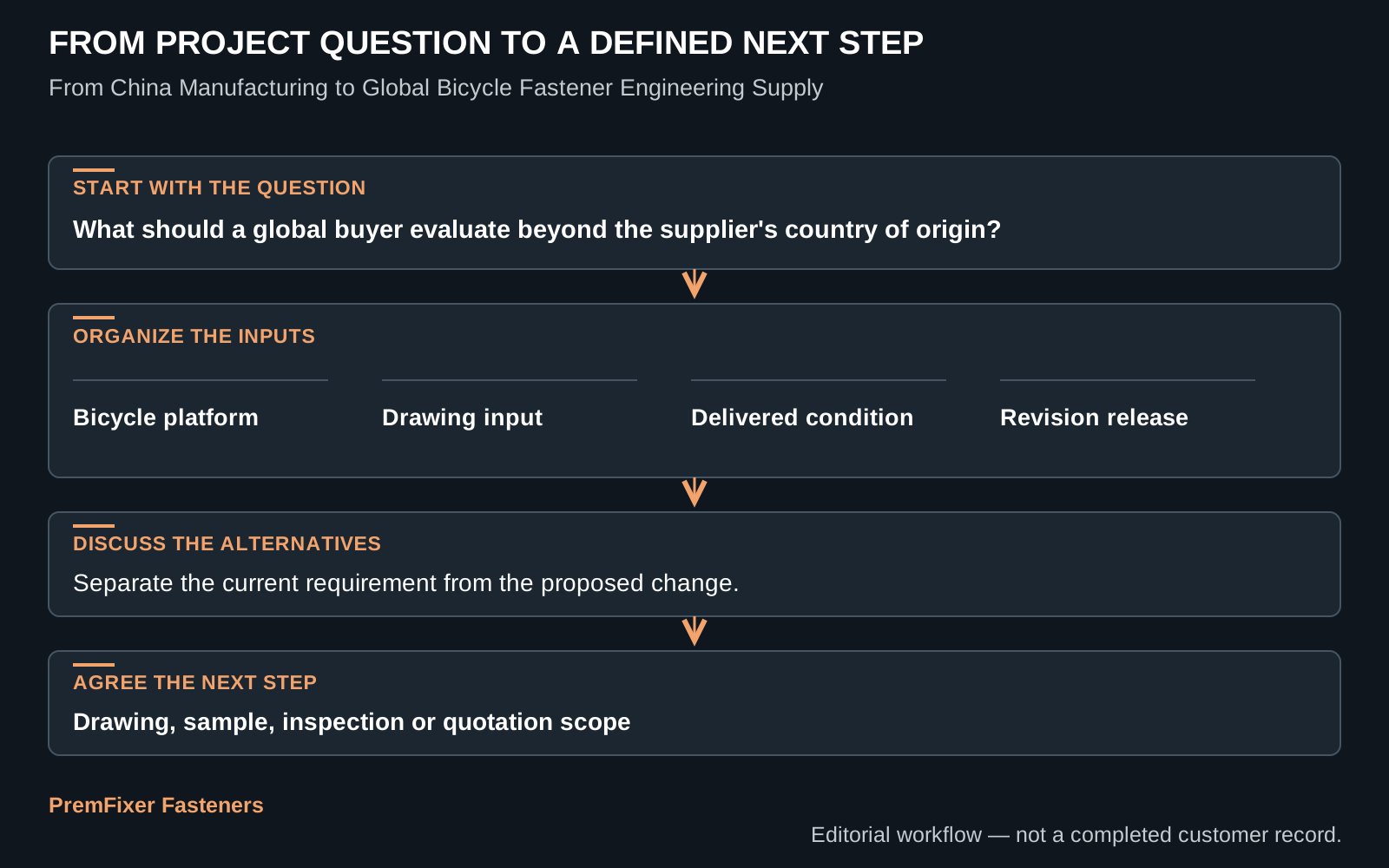
Send the real files for a selected part family and request three outputs: a technical clarification response, a quoted manufacturing and documentation scope, and a proposed sample-to-production plan. Include expected volumes, destination and communication requirements.
Ask for the names or roles that own engineering review, order execution and quality response. Evaluate whether answers remain consistent across those functions. The objective is not to demand a large organization; it is to know who carries each decision and how records are handed over.
PremFixer supports drawing-led bicycle hardware and multi-part packages from China. A practical first step is one defined component or kit that allows both teams to prove the workflow before expanding the business.
Evaluate the project response before the factory visit
A site visit is most useful after the candidate has reviewed a real part. Before travelling, compare the returned clarification log, proposed route, sample plan and list of external processes with the original RFQ. These documents reveal which areas deserve direct observation and prevent the visit from becoming a general machine tour.
During the visit or remote process review, follow one part number through document control, production planning, raw-material identity, work instructions, inspection and packing. Ask operators and coordinators to retrieve the current revision and a representative record. The purpose is to test connection between functions, not to count equipment without context.
Review one exception path as well. Ask how a finish lot outside the required condition, a drawing revision received during production or a missing kit component would be contained and communicated. A practical answer should identify who stops shipment, who contacts the customer and how affected stock is identified.
Afterward, record gaps as actions tied to the pilot project. Some issues may be closed with clarified files or agreed packaging; others may require a new sample or make the supplier unsuitable for that part family. This evidence-led approach produces a more defensible global sourcing decision than either enthusiasm about location or blanket concern about distance.
Questions buyers ask
How should an OEM qualify a bicycle fastener supplier in China?
Use an actual drawing-led pilot to assess clarification quality, process ownership, sample reporting, revision control, packaging and communication. Factory profiles and certificates are useful inputs but do not replace project evidence.
What information should be included in the first RFQ?
Include the drawing or model, assembly context, material and finish, volumes, critical characteristics, required records, delivery condition, destination and the project stage.
Is outsourced surface treatment acceptable?
It can be, provided the supplier controls the specification, approved source, identification, returned condition, final inspection and records. Ask who owns each handoff.
What makes a good first cooperation project?
Choose a representative but bounded part or kit that exercises engineering review, manufacturing, an external process, inspection and export packing without exposing the full launch to an unproven workflow.
How can revision mixing be prevented?
Use one part number and revision system across drawings, orders, sample labels, stock, inspection reports and packaging. Define disposition rules for work in process and finished stock when a change is released.
Qualify the Supplier Through a Real Part
Use a contained pilot to test engineering response, process ownership, records, packaging and global delivery before expanding the scope.
Start a Pilot RFQ