
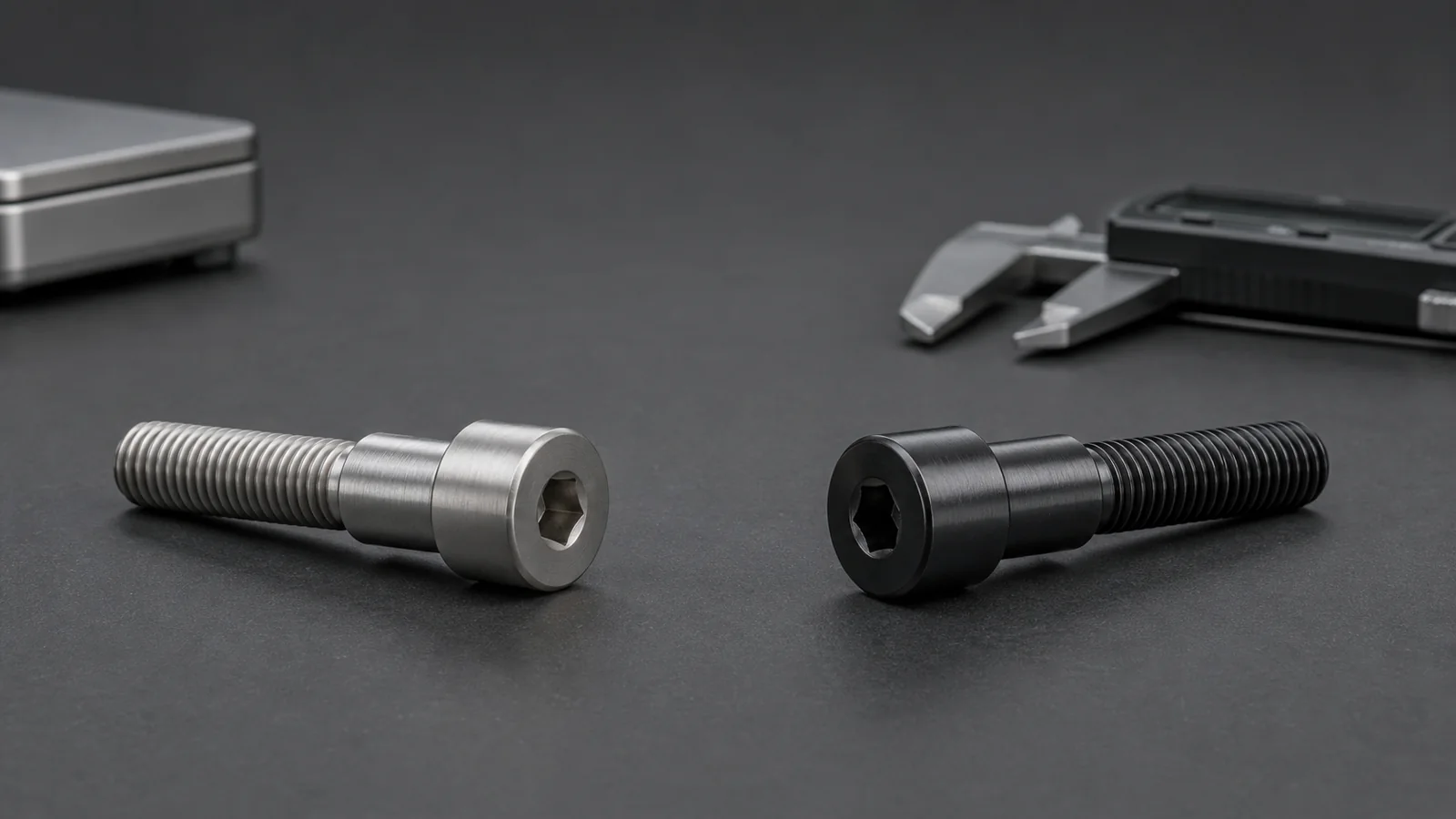
Titanium, alloy steel and stainless steel can serve different roles in bicycle hardware. For an OEM project, the choice starts with the joint, the approved material specification and the finished-part requirements. A material name, bicycle category or matching thread size does not establish that one bolt can replace another.
This guide helps bicycle brands, frame manufacturers and assembly teams prepare a material comparison for a new drawing or an engineering change. Final selection belongs to the approved design and validation process.
Compare the specification, not just the material label
“Steel” includes different material grades, conditions and fastener specifications. A stainless alloy designation also needs the relevant condition and finished requirements. For titanium, identify the governing grade, standard and product form rather than assuming that familiar trade names are automatically interchangeable.
Use the same drawing revision and supply scope when comparing candidates. Where a material change requires different geometry, include that change in the comparison instead of treating it as an identical replacement.
| Project question | Information to compare | Input for the supplier |
|---|---|---|
| Is there a mass target? | The finished geometry and actual component quantities | Candidate drawings or models; mass target where applicable |
| What must the joint carry? | Loads, preload, stiffness and the intended validation | Design requirements and the responsible approval party |
| Which interfaces matter? | Shoulder length, seats, threads, mating parts and engagement | Assembly section, mating drawings and critical features |
| How will it be assembled? | Specified tightening method, surface condition and locking approach | Approved assembly requirements and any proposed changes |
| What environment applies? | Contacting materials, moisture, cleaning and service conditions | Exposure requirements and the defined finish or protection |
| What will be accepted? | Material records, finished dimensions and agreed checks | Drawing revision, inspection scope and required documents |
Start with the approved joint requirements
An ultimate tensile-strength figure alone does not describe the performance of an assembled joint. Review how the fastener, mating thread, bearing or sleeve, contact faces and clamped parts work together. NASA's Fastener Design Manual discusses material selection together with loading, fatigue and tightening; these are connected design questions, not a single material ranking. [1]
For a suspension pivot or motor-mounting component, provide the relevant interface drawing and installation requirements. A catalogue photograph can illustrate a component form, but it does not establish compatibility with a particular frame, linkage or motor system.
Where a project proposes changing an existing steel part to titanium, identify the original requirement, the proposed material and any affected geometry or assembly instructions. Obtain the design owner's approval and define the required evaluation before production release.
For a drawing-defined component, see custom bicycle pivot bolt manufacturing. For the frame-level hardware scope, see MTB and eMTB full-suspension pivot systems.
Define the finished thread and assembly condition
Keep material selection connected to the actual threads, contact surfaces and assembly process. ASSDA identifies galling as a concern for stainless steel and notes that titanium can also be affected. The mating materials, surface condition and lubrication require consideration. [2]
A lubricant or coating change can also change friction and the relationship between tightening torque and preload. Follow the approved assembly procedure; do not transfer a torque value from a different material or surface condition without the relevant review. NASA's torque discussion specifically includes thread friction, bearing-surface friction, coatings and lubricants. [1]
For the RFQ, state the supplied condition: which surfaces are treated, which dimensions apply after treatment, how threads are accepted and which assembly requirements the supplier needs to understand. Record unresolved items for discussion.
Review corrosion at the complete interface
Do not describe a material as having unlimited corrosion resistance or assign a universal “safe” voltage to every carbon-frame interface. Identify the materials actually in contact, their finishes, the service environment and any isolation or sealing requirements.
A corrosion-test requirement needs a defined specimen, preparation, method and acceptance criterion. A generic table of test hours does not establish the life of a particular bicycle component or assembly. For a new project, include the required test and report scope in the enquiry rather than treating an unverified published value as a supplied-part guarantee.
Compare quotes on the same basis
Ask for the same part revision, quantity, finish, inspection and documentation scope. Identify sample quantities separately from later production demand. For an assembly, list pieces per bike or per defined set so that the quotation does not mix component and kit quantities.
Ask the quotation to identify preparation or tooling charges separately from recurring part prices where relevant. Material records, additional tests and special packing should be included explicitly in the requested scope. Prices, sample timing and production delivery follow the confirmed project quotation.
Prepare a material-review RFQ
Start with the information you have. A preliminary drawing or BOM can support an initial discussion when its status is clear. The enquiry should identify:
- The project or part reference and available drawing revision.
- Whether the request covers a new component or a proposed material change.
- The specified or candidate material, condition and finish.
- Mating components, important interfaces and available assembly requirements.
- Sample quantity, production quantity and the quotation unit.
- Critical acceptance requirements and requested material or inspection records.
For several related parts, use a BOM with a separate line for each drawing and quantity. Mark bearings, seals or surrounding assemblies as included or reference-only according to the requested supply scope.
Use the drawing and BOM RFQ guide to organise the enquiry, or discuss bicycle OEM hardware supplied to a defined BOM.
Send your drawing or BOM for project review
Tell PremFixer which parts you need, which material decision remains open and the quantities you want quoted. Include the drawing or BOM you currently have and flag any preliminary requirements. We can then clarify the manufacturing scope and the inputs needed for a project quotation.
Send a Drawing or BOM for Review
Technical references
- Richard T. Barrett, NASA RP-1228, Fastener Design Manual (1990), particularly the material, corrosion, fatigue and fastener-torque discussions. NASA record and full document. This is general engineering background, not bicycle compatibility approval or a PremFixer test report.
- Australian Stainless Steel Development Association, Technical FAQ 5: Galling and its Control. ASSDA technical article. This supports the discussion of galling; it does not validate a particular assembly or tightening procedure.
Explore Related PremFixer Products
Send Your Drawing or BOM for Project Review
Tell us which parts you need, which material decision remains open and the quantities you want quoted. Include your available drawing or BOM and identify any preliminary requirements.
Send a Drawing or BOM for Review