
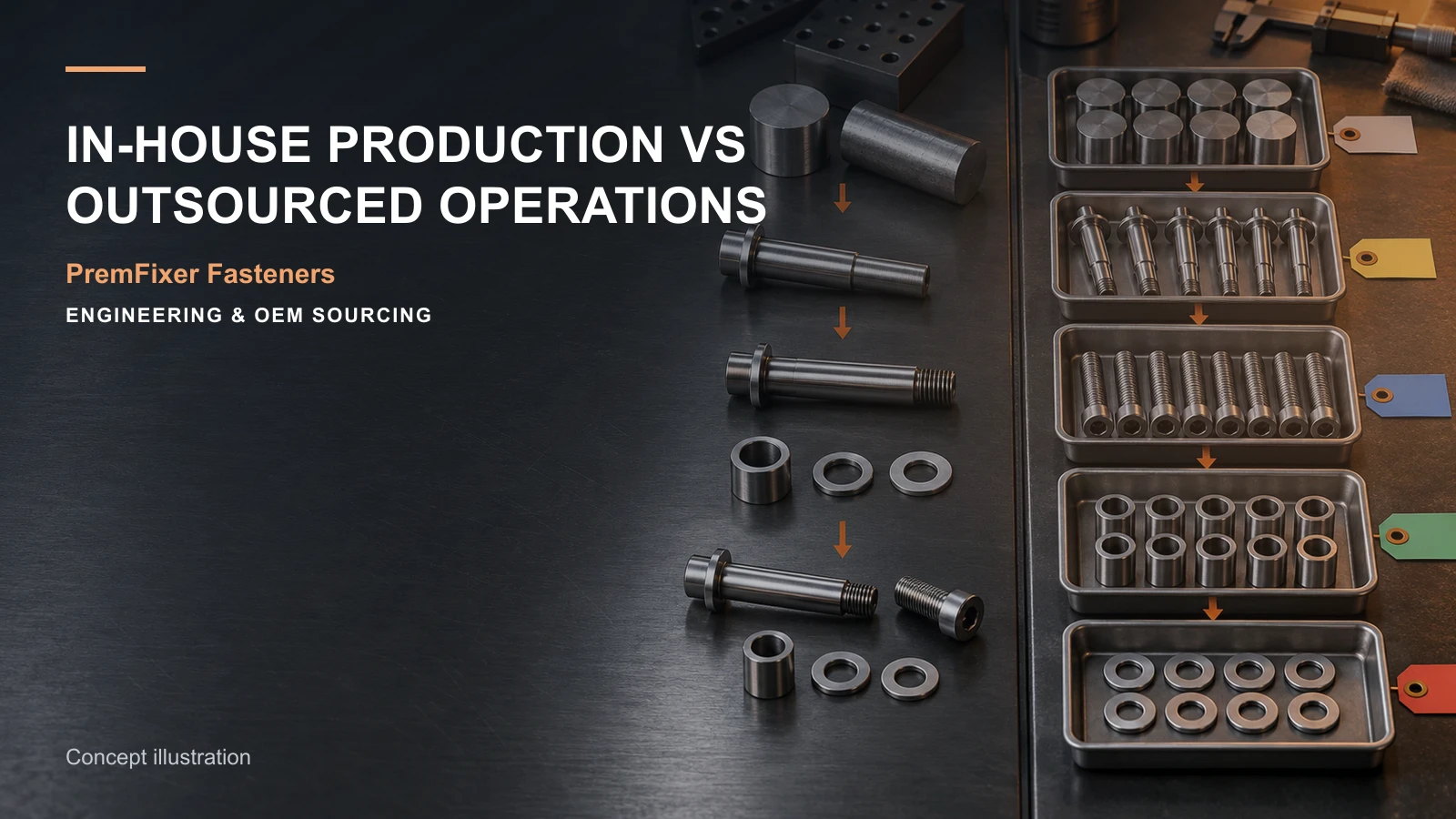
An in-house production route can shorten the chain between a released bicycle fastener drawing and the people who machine, inspect and pack the order. An outsourced route can also work well when specialist partners, handoffs and release responsibilities are clearly managed. Factory ownership by itself does not prove whether either route is controlled.
For an OEM buyer, the useful comparison follows one defined part or hardware set through the real operations. It asks who receives the current revision, who performs each step, how material and inspection records remain connected to the shipment, and what happens when a requirement changes after sampling.
The program becomes concrete when a machined axle leaves the main plant for heat treatment and finish before final inspection and kitting. The review can then focus on the evidence required before the next commitment.
Define the comparison before comparing the price
Is in-house ownership enough to demonstrate control of an order? No. It tells the buyer where an operation is located, but it does not show which specification was used, how the result was recorded or who authorized the next step. Those details must be visible in both an integrated proposal and a proposal that uses qualified external partners.
Begin with the same component, quantity, material requirement, finish, inspection state and packing condition. A quote for machined blanks is not equivalent to a quote for finished, inspected and lot-identified parts. If the delivered scope differs, separate that difference before treating a price gap as a production-efficiency result.
For the "Define the comparison before comparing the price" review, put in house bicycle fastener manufacturing, outsourced fastener operations, bicycle fastener traceability, fastener change control on the same sheet. Name the current revision, the decision owner and the condition that allows the part or program to move forward. The technical discussion then has a clear purchasing and release action.
The purchasing question is therefore operational: which route can accept the released configuration, manage the necessary handoffs and return the agreed parts and records with clear responsibility? The answer may favor an integrated route for one program and a specialist network for another.
Show who owns each manufacturing handoff
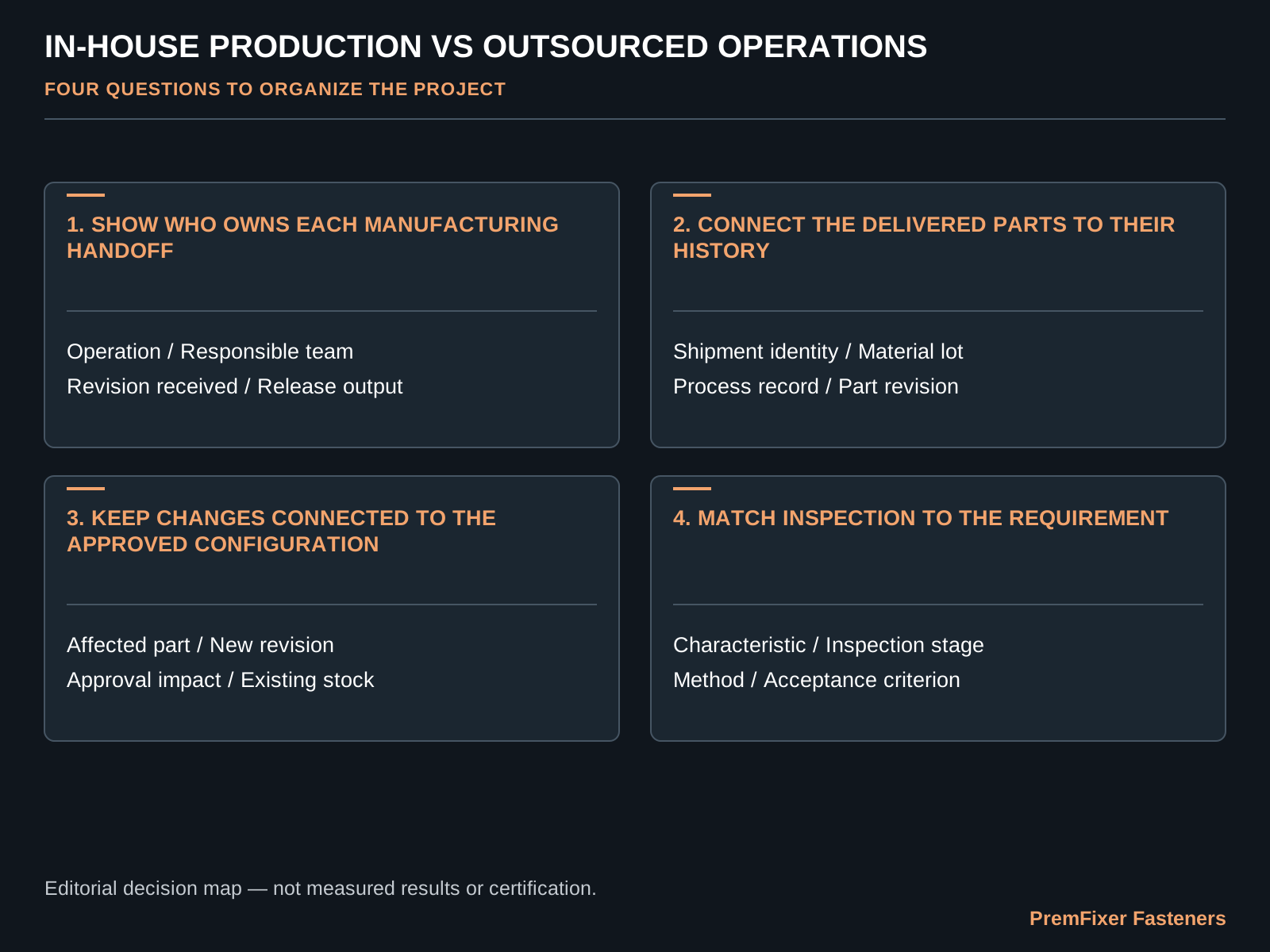
A responsibility map turns a broad manufacturing claim into something a buyer can review. List the operation, the team or partner responsible, the revision received and the release output. For a shoulder bolt, those operations might include material issue, turning, thread production, specified finishing, dimensional inspection and final packing. The exact route depends on the drawing and order scope.
In an integrated route, several operations may sit under one commercial and production system. That can simplify escalation and version control, but the internal handoffs still need owners. In an outsourced route, a specialist may perform a defined process. Control then depends on the purchase specification, lot identity, acceptance requirement and return record that connect the partner's work to the order.
Under "Show who owns each manufacturing handoff," compare the current and proposed conditions using in house bicycle fastener manufacturing, outsourced fastener operations, bicycle fastener traceability, fastener change control. Record the evidence source and any item that remains open. The buyer should be able to approve, reject or sample a specific supplier proposal.
Neither column below is a score. It is a prompt for documenting how the proposed route will work before the order is released.
| Control field | Integrated route | Route with outside operations |
|---|---|---|
| Operation | Name the internal operation and its place in the routing. | Name the external operation and the approved scope sent to the partner. |
| Responsible team | Identify who performs and who releases the work. | Identify both the supplier owner and the partner responsibility. |
| Revision received | Link the operation to the current drawing or work instruction. | Confirm that the partner receives the applicable specification and revision. |
| Release output | State the record or accepted condition needed for the next step. | State what returns with the lot and how it is accepted into the next step. |
Connect the delivered parts to their history
Traceability is useful when the identity on the package can lead back to the part revision, material lot and applicable manufacturing or inspection records. A folder full of certificates is not enough if the buyer cannot tell which record belongs to the delivered parts. The depth of the record chain should be agreed for the component and the program.
For integrated fastener manufacturing, use a shipment or lot identity as the connecting point. It can link the packing label to the released part number, the material record and the operation or inspection history retained for that supply. If an outside operation is involved, preserve the same identity across the outbound and returned lot instead of creating an unconnected document trail.
In "Connect the delivered parts to their history," follow in house bicycle fastener manufacturing, outsourced fastener operations, bicycle fastener traceability, fastener change control through the relevant handoff. The output from one operation or team should be a usable input for the next. Missing ownership at that boundary often causes more disruption than the operation itself.
The buyer should also define what must accompany the shipment and what may remain available from the supplier's records. This keeps the documentation useful without turning every order into the same generic report package.
| Traceability field | Question to resolve | Useful project outcome |
|---|---|---|
| Shipment identity | How will the delivered package identify the supply? | A label or record linked to the order and part identity. |
| Material lot | Which material record applies to these parts? | A defined connection between issued material and the delivered lot. |
| Process record | Which operation records are required by the order? | Records retained or delivered according to the agreed scope. |
| Part revision | Which configuration was manufactured and released? | The delivered lot reconciles with the approved drawing and BOM. |
Keep changes connected to the approved configuration
A change after sampling should begin with the affected part number and a new or updated revision. Then review which operations, inspection requirements, packing descriptions and existing stock are touched. A finish change may affect surface preparation and final appearance requirements; a shoulder change may affect machining, measurement and mating-part review. They should not be handled as the same type of update.
An integrated route can make the internal communication path shorter, but the change still needs a release point. A route with outside operations needs the same discipline across company boundaries. In both cases, verbal approval or an annotated email should be converted into the controlled input used for new work.
Use in house bicycle fastener manufacturing, outsourced fastener operations, bicycle fastener traceability, fastener change control to define the sample question for "Keep changes connected to the approved configuration." The sample record should state what represents production, what is temporary and which decision follows the review. A conforming sample without that context can still leave the production route unsettled.
Before production resumes, record the approval impact and disposition of material, work in process and finished stock. That prevents a new requirement from becoming mixed with an older configuration and makes later service or replenishment discussions easier to reconstruct.
Match inspection to the requirement
Inspection should name the characteristic, stage, method and acceptance criterion. First-article review can confirm that a setup reflects the released drawing. In-process checks can monitor selected features while the order is running. Final inspection can confirm the defined release scope. These stages support different decisions and should not be collapsed into a single statement such as fully inspected.
The inspection scope must also remain proportional to the requirement. Checking every part for one dimensional feature does not mean that every part has undergone fatigue, torque or destructive testing. Those tests require their own specification, sampling plan and acceptance conditions when the project calls for them.
After "Match inspection to the requirement," carry in house bicycle fastener manufacturing, outsourced fastener operations, bicycle fastener traceability, fastener change control into repeat orders and service planning. Approved conditions should remain visible in stock, inspection records and packaging so that later lots do not depend on personal memory.
Use the same inspection questions for in-house and outside operations. Equipment ownership does not establish an outcome; the useful evidence is a suitable method applied to the named characteristic with a recorded acceptance decision.
| Inspection field | What the order should state | Why it matters |
|---|---|---|
| Characteristic | The dimension, thread, surface or other requirement being checked. | Prevents a broad inspection label from hiding the actual coverage. |
| Inspection stage | First article, in-process, final or a separately specified test. | Connects the check to the manufacturing decision it supports. |
| Method | The agreed gauge, instrument or review approach appropriate to the feature. | Makes the result interpretable and repeatable within the agreed plan. |
| Acceptance criterion | The drawing, specification or approved limit used for release. | Keeps the decision tied to the current configuration. |
Apply the discussion to a PremFixer Fasteners project
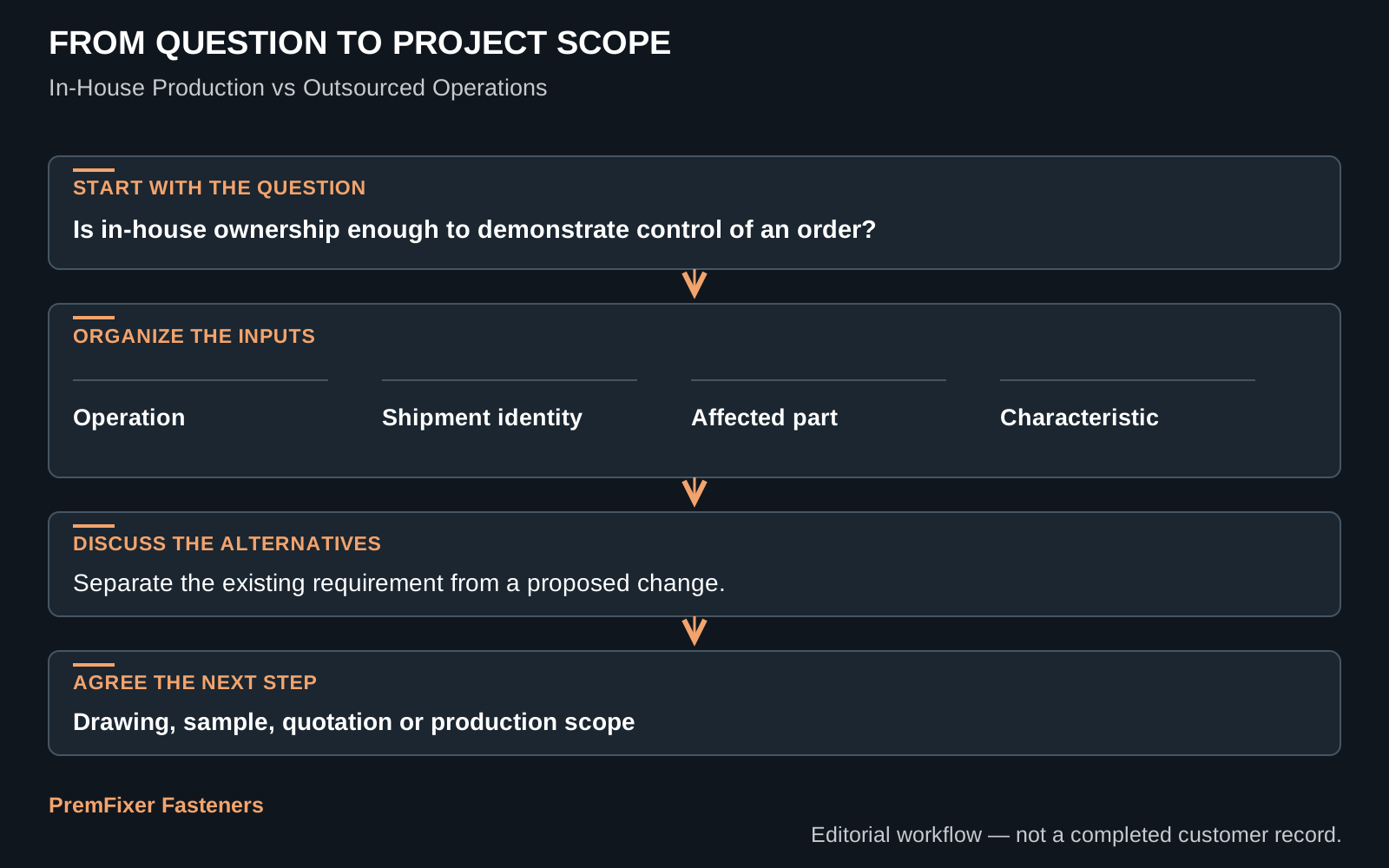
PremFixer Fasteners can organize an enquiry around the operation map, traceability depth and configuration that the project actually needs. Start with the available drawing, model, BOM or sample description, together with quantities and the current stage. Mark which material, finish, inspection and packing requirements are fixed and which remain open for discussion.
For a route comparison, ask each supplier to state the operations included, the responsible party at each handoff and the release output returned to the next step. This creates a common basis for an RFQ without assuming that one ownership model is universally superior.
Convert the result of "Apply the discussion to a PremFixer Fasteners project" into a quotation line that identifies in house bicycle fastener manufacturing, outsourced fastener operations, bicycle fastener traceability, fastener change control. Ask the supplier to state included work, customer inputs, open assumptions and release evidence. Alternative offers are easier to compare when scope is not hidden inside one unit price.
Share your available drawings, BOM or project description with PremFixer Fasteners, together with quantities and the project stage, to discuss integrated fastener manufacturing.
Check the decision against a production scenario
A production scenario gives the discussion a clear boundary: a machined axle leaves the main plant for heat treatment and finish before final inspection and kitting. State the model, volume stage, revision and destination before comparing alternatives.
For in-house production vs outsourced operations: control of bicycle fastener orders, list the decisions that the customer has already made and the items still open to supplier input. Each open item should have one owner and one expected output.
An internal step can be poorly documented and an external step can break traceability if its handoff is vague. Test the control where the issue can first be detected, then decide how the accepted condition will remain visible during repeat orders.
Use the pilot result for in-house production vs outsourced operations: control of bicycle fastener orders to update the drawing, BOM, process or packing record. Avoid carrying an informal email decision into production when the controlled file still says something else.
Start the quotation with the drawing, proposed process route, external operations, required records and packing condition. Ask for inclusions, exclusions, one-time work and the evidence supplied with the sample or lot.
Questions buyers ask
What baseline should the OEM freeze first?
Begin with the current configuration, then compare operation control through ownership, records and release points instead of factory labels. Name the owner and the output required before price, schedule or supplier preference is treated as final.
Which commercial inputs change the answer?
Send the drawing, proposed process route, external operations, required records and packing condition. Separate fixed requirements from open fields so the supplier can price the confirmed scope and respond to the engineering questions.
How does the team close an open point?
A machined axle leaves the main plant for heat treatment and finish before final inspection and kitting. A sample or pilot should answer named questions and disclose any material, finish, process or quantity that differs from production.
What can make an accepted part fail in the program?
An internal step can be poorly documented and an external step can break traceability if its handoff is vague. Connect the risk to a drawing characteristic, process handoff, approval or delivery record and verify its closure.
When should PremFixer join the discussion?
PremFixer can review the available drawing, model, BOM or sample with the drawing, proposed process route, external operations, required records and packing condition. The response can identify open questions, proposed scope and evidence for the next decision.
Map the complete process route
Share the drawing, proposed process route, external operations, required records and packing condition. The response will identify the proposed scope, open questions and the evidence needed before release.
Discuss This Project