
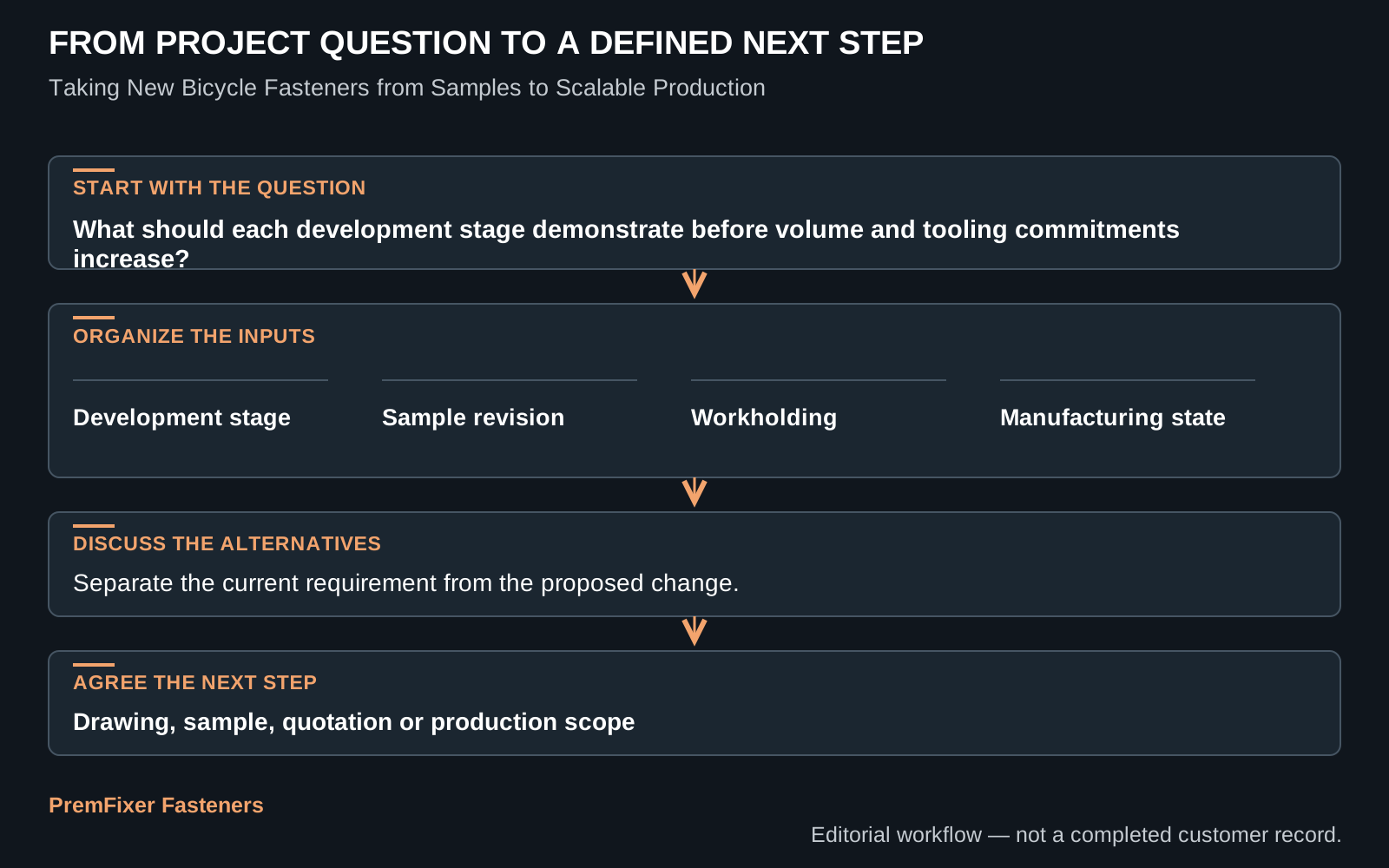
A good sample proves that a part can be made in one controlled condition. It does not automatically prove that the tooling, inspection, finishing, packaging and delivery system are ready for repeated production at a different quantity.
Launch, quality and production teams need to move an approved sample into repeat production with explicit readiness gates. The review should use the current drawing, BOM and project stage so that the recommendation applies to a real component or release.
A hand-finished prototype is approved before tooling, inspection and packaging are representative. The review needs a defined baseline, named handoffs and a sample or RFQ that closes the next decision.
Define what each development stage must achieve
Give the engineering sample, pilot batch and production release different objectives and deliverables. The stages should not be interchangeable labels for increasing quantities.
Build the working record around Development stage, Quantity, Decision to make and Required output. The practical output is a stage-gate map for the ramp.
For the "Define what each development stage must achieve" review, put stage objective, sample revision, tooling state, release quantity on the same sheet. Name the current revision, the decision owner and the condition that allows the part or program to move forward. The technical discussion then has a clear purchasing and release action.
Do not increase volume while the previous stage's open configuration questions remain unresolved.
Capture the learning from initial samples
Record structural, machining, finish and assembly observations against the exact sample revision. Those findings become useful only when they create the next controlled task.
Keep the review anchored to Sample revision, Observed feature, Assembly feedback and Next action. The practical output is a sample-learning register for the pilot plan.
Under "Capture the learning from initial samples," compare the current and proposed conditions using Sample revision, Observed feature, Assembly feedback, Next action. Record the evidence source and any item that remains open. The buyer should be able to approve, reject or sample a specific supplier proposal.
Do not mix observations from different revisions or delivered conditions.
| Review stage | Project question | Inputs to connect | Expected output |
|---|---|---|---|
| 01 | Define what each development stage must achieve | Development stage / Quantity / Decision to make / Required output | a stage-gate map for the ramp |
| 02 | Capture the learning from initial samples | Sample revision / Observed feature / Assembly feedback / Next action | a sample-learning register for the pilot plan |
| 03 | Adapt tooling to the intended volume | Workholding / Machining route / Inspection fixture / Demand range | a tooling and route plan for the intended stage |
| 04 | Use pilot production to connect departments | Manufacturing state / Quality record / Purchase release / Assembly feedback | a cross-functional pilot review |
| 05 | Establish the production baseline | Drawing revision / Program and fixture / Material state / Packing definition | a repeat-order production baseline |
| 06 | Plan the launch with the brand team | Launch timing / Annual demand / Firm release / Stock responsibility | a phased launch and replenishment plan |
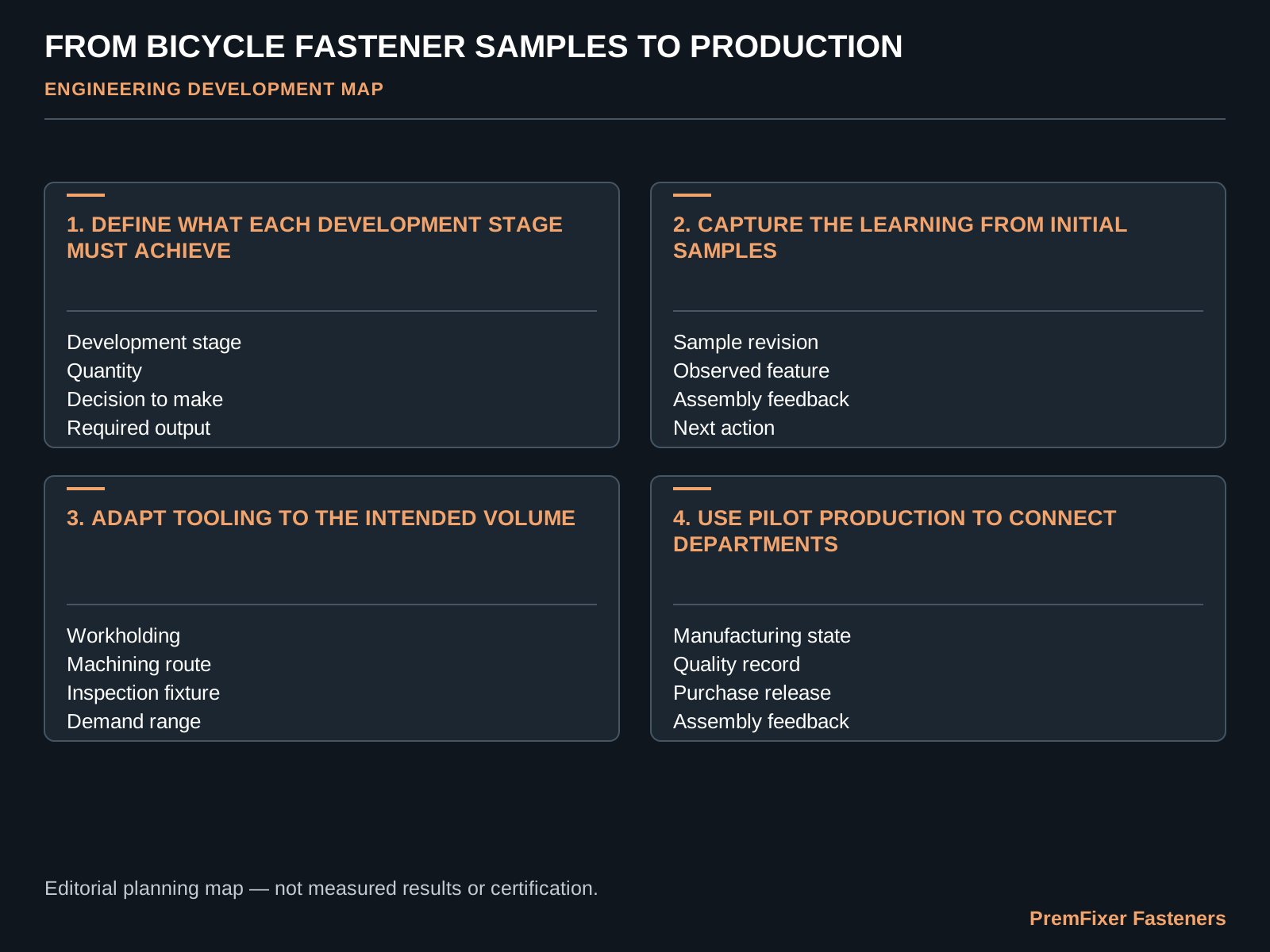
Adapt tooling to the intended volume
Review workholding, cutting route, inspection fixtures and capacity assumptions as volume increases. The best method for a few engineering parts may not be the repeatable production route.
Put the following fields on the same revision-controlled page: Workholding, Machining route, Inspection fixture and Demand range. The practical output is a tooling and route plan for the intended stage.
In "Adapt tooling to the intended volume," follow stage objective, sample revision, tooling state, release quantity through the relevant handoff. The output from one operation or team should be a usable input for the next. Missing ownership at that boundary often causes more disruption than the operation itself.
Do not promise capacity from an undefined process or invent equipment counts.
Use pilot production to connect departments
Bring manufacturing, quality, purchasing and customer assembly around the same revision and release question. Pilot work tests the handovers as well as the parts.
Build the working record around Manufacturing state, Quality record, Purchase release and Assembly feedback. The practical output is a cross-functional pilot review.
Use stage objective, sample revision, tooling state, release quantity to define the sample question for "Use pilot production to connect departments." The sample record should state what represents production, what is temporary and which decision follows the review. A conforming sample without that context can still leave the production route unsettled.
Do not allow one department's approval to stand in for the complete release scope.
Establish the production baseline
Freeze the approved drawing, program, fixture, material state, inspection plan and packaging definition for repeat orders. A baseline permits controlled improvement without losing the configuration that was accepted.
Keep the review anchored to Drawing revision, Program and fixture, Material state and Packing definition. The practical output is a repeat-order production baseline.
After "Establish the production baseline," carry stage objective, sample revision, tooling state, release quantity into repeat orders and service planning. Approved conditions should remain visible in stock, inspection records and packaging so that later lots do not depend on personal memory.
Future changes should remain traceable to the baseline rather than overwrite it informally.
Plan the launch with the brand team
Translate annual demand and launch timing into manageable releases with clear revision and stock responsibility. A forecast is useful for planning but is not the same as a committed production order.
Put the following fields on the same revision-controlled page: Launch timing, Annual demand, Firm release and Stock responsibility. The practical output is a phased launch and replenishment plan.
Convert the result of "Plan the launch with the brand team" into a quotation line that identifies stage objective, sample revision, tooling state, release quantity. Ask the supplier to state included work, customer inputs, open assumptions and release evidence. Alternative offers are easier to compare when scope is not hidden inside one unit price.
Do not convert an uncommitted forecast into finished stock without an agreed commercial rule.
Apply the decision to a working program
A hand-finished prototype is approved before tooling, inspection and packaging are representative. Identify the exact part numbers and revision involved, then name the teams that approve design, prepare supply, receive the lot and assemble the bicycle.
Place the current condition beside the proposed condition for taking new bicycle fasteners from samples to scalable production. Record the drawing or BOM effect, process change, inspection evidence, schedule consequence and delivered state. Unknown inputs should remain open instead of becoming quoted assumptions.
Sample approval can be overextended to processes and quantities that were never reviewed. Use the smallest sample, document check or pilot lot that can expose this issue, and state which production conditions the evidence does not cover.
Carry the accepted result for taking new bicycle fasteners from samples to scalable production into the drawing, order, inspection plan and packaging identity that depend on it. Another model or revision stays outside the approval until its interfaces are shown to be equivalent.
Send the released drawing, sample status, planned route, volumes, inspection plan and packaging. The supplier response should separate included work, customer approvals, external operations and open assumptions so launch, quality and production teams can make the next commitment.
Questions buyers ask
How should purchasing frame this decision?
Begin with the current configuration, then move an approved sample into repeat production with explicit readiness gates. Name the owner and the output required before price, schedule or supplier preference is treated as final.
What should remain linked to the drawing revision?
Send the released drawing, sample status, planned route, volumes, inspection plan and packaging. Separate fixed requirements from open fields so the supplier can price the confirmed scope and respond to the engineering questions.
Which evidence is useful during sampling?
A hand-finished prototype is approved before tooling, inspection and packaging are representative. A sample or pilot should answer named questions and disclose any material, finish, process or quantity that differs from production.
What should stay visible during repeat orders?
Sample approval can be overextended to processes and quantities that were never reviewed. Connect the risk to a drawing characteristic, process handoff, approval or delivery record and verify its closure.
What should the first supplier response contain?
PremFixer can review the available drawing, model, BOM or sample with the released drawing, sample status, planned route, volumes, inspection plan and packaging. The response can identify open questions, proposed scope and evidence for the next decision.
Build the production ramp plan
Share the released drawing, sample status, planned route, volumes, inspection plan and packaging. The response will identify the proposed scope, open questions and the evidence needed before release.
Discuss This Project