

A machine can repeat its programmed motion while the finished process still shifts because of workholding, tool wear, material state, temperature, finishing or measurement practice. Stable output comes from coordinating these variables around the features that matter.
Manufacturing engineers and OEM program teams need to build a stable sequence from raw material through machining, finish, inspection and packing. The review should use the current drawing, BOM and project stage so that the recommendation applies to a real component or release.
The program becomes concrete when a precision axle changes datums and owners several times before final kit release. The review can then focus on the evidence required before the next commitment.
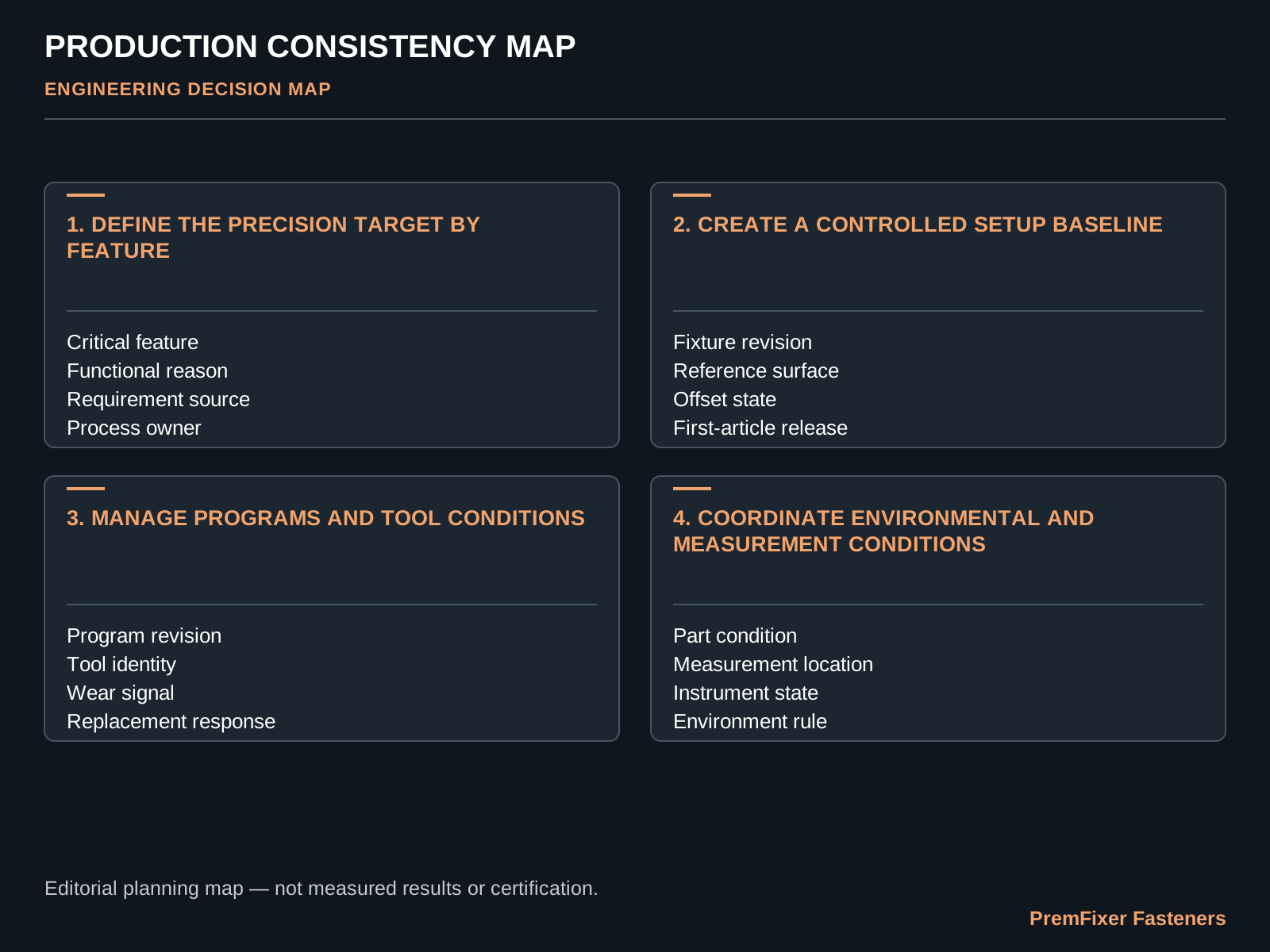
Define the precision target by feature
Identify the dimensions, geometry, surfaces and threads whose variation affects the bicycle assembly. The control architecture needs priorities rather than a general demand for micron-level work.
For the working record, connect Critical feature, Functional reason, Requirement source and Process owner. The immediate output should be a prioritized feature-control list. That record gives engineering, purchasing and manufacturing one configuration to discuss.
For the "Define the precision target by feature" review, put feature target, setup baseline, tool condition, measurement environment on the same sheet. Name the current revision, the decision owner and the condition that allows the part or program to move forward. The technical discussion then has a clear purchasing and release action.
Do not advertise a single precision figure as the capability of every feature and process. If geometry, material, finish, process or assembly changes, identify the affected configuration and the question the next stage must answer.
Create a controlled setup baseline
Record workholding, reference surfaces, machine state, offsets and first-article release for the approved setup. The baseline gives later batches a defined starting point.
For the working record, connect Fixture revision, Reference surface, Offset state and First-article release. The immediate output should be a revision-controlled setup baseline. It also keeps the next sample, inspection or quotation tied to the same revision.
Under "Create a controlled setup baseline," compare the current and proposed conditions using Fixture revision, Reference surface, Offset state, First-article release. Record the evidence source and any item that remains open. The buyer should be able to approve, reject or sample a specific supplier proposal.
Do not rely on operator memory for a relationship that the drawing treats as critical. If geometry, material, finish, process or assembly changes, identify the affected configuration and the question the next stage must answer.
| Stage | Decision to make | Inputs to connect | Controlled output |
|---|---|---|---|
| 01 | Define the precision target by feature | Critical feature / Functional reason / Requirement source / Process owner | a prioritized feature-control list |
| 02 | Create a controlled setup baseline | Fixture revision / Reference surface / Offset state / First-article release | a revision-controlled setup baseline |
| 03 | Manage programs and tool conditions | Program revision / Tool identity / Wear signal / Replacement response | a program-and-tool control plan |
| 04 | Coordinate environmental and measurement conditions | Part condition / Measurement location / Instrument state / Environment rule | a coordinated measurement-condition plan |
| 05 | Treat batch changes as managed events | Change event / Affected feature / Verification action / Release owner | a batch-change response workflow |
| 06 | Explain the architecture to an OEM buyer | Part family / Control chain / Record output / Open decision | an OEM-ready process-control brief |
Manage programs and tool conditions
Connect the released program, tool list, wear limits and replacement response to the produced features. Program control and tool condition work together to preserve geometry over the run.
For the working record, connect Program revision, Tool identity, Wear signal and Replacement response. The immediate output should be a program-and-tool control plan. The result is a reviewable handover instead of an assumption passed between departments.
In "Manage programs and tool conditions," follow feature target, setup baseline, tool condition, measurement environment through the relevant handoff. The output from one operation or team should be a usable input for the next. Missing ownership at that boundary often causes more disruption than the operation itself.
Do not treat automatic compensation as evidence that the process cannot drift. If geometry, material, finish, process or assembly changes, identify the affected configuration and the question the next stage must answer.
Coordinate environmental and measurement conditions
Define part stabilization, measurement location, instrument state and any relevant environmental controls. Production and inspection must interpret the requirement under compatible conditions.
For the working record, connect Part condition, Measurement location, Instrument state and Environment rule. The immediate output should be a coordinated measurement-condition plan. That record gives engineering, purchasing and manufacturing one configuration to discuss.
Use feature target, setup baseline, tool condition, measurement environment to define the sample question for "Coordinate environmental and measurement conditions." The sample record should state what represents production, what is temporary and which decision follows the review. A conforming sample without that context can still leave the production route unsettled.
Do not compare readings collected under materially different conditions without explanation. If geometry, material, finish, process or assembly changes, identify the affected configuration and the question the next stage must answer.
Treat batch changes as managed events
Review material lots, setup restarts, tool changes, finishing batches and program revisions as explicit transitions. A change event is the right moment to confirm the baseline before output accumulates.
For the working record, connect Change event, Affected feature, Verification action and Release owner. The immediate output should be a batch-change response workflow. It also keeps the next sample, inspection or quotation tied to the same revision.
After "Treat batch changes as managed events," carry feature target, setup baseline, tool condition, measurement environment into repeat orders and service planning. Approved conditions should remain visible in stock, inspection records and packaging so that later lots do not depend on personal memory.
Do not assume the previous lot's evidence automatically releases the next configuration. If geometry, material, finish, process or assembly changes, identify the affected configuration and the question the next stage must answer.
Explain the architecture to an OEM buyer
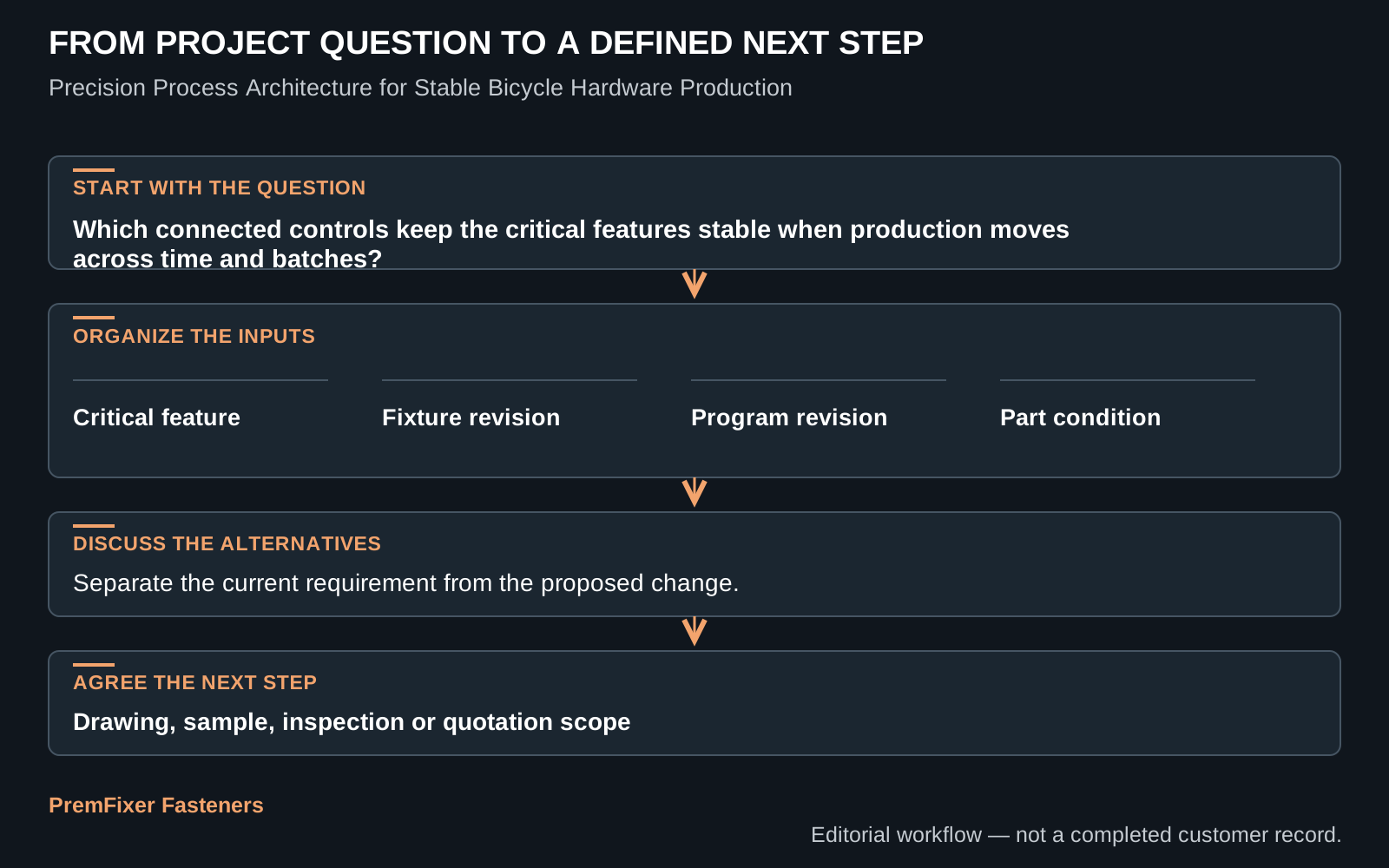
Present the critical-feature chain, control stages and available records for the actual part family. The buyer needs to understand how the process answers the drawing, not a generic factory tour.
For the working record, connect Part family, Control chain, Record output and Open decision. The immediate output should be an OEM-ready process-control brief. The result is a reviewable handover instead of an assumption passed between departments.
Convert the result of "Explain the architecture to an OEM buyer" into a quotation line that identifies feature target, setup baseline, tool condition, measurement environment. Ask the supplier to state included work, customer inputs, open assumptions and release evidence. Alternative offers are easier to compare when scope is not hidden inside one unit price.
Do not imply statistical capability or guaranteed outcomes without the supporting project data. If geometry, material, finish, process or assembly changes, identify the affected configuration and the question the next stage must answer.
Check the decision against a production scenario
A production scenario gives the discussion a clear boundary: a precision axle changes datums and owners several times before final kit release. State the model, volume stage, revision and destination before comparing alternatives.
For precision process architecture for stable bicycle hardware production, list the decisions that the customer has already made and the items still open to supplier input. Each open item should have one owner and one expected output.
Individual capable operations can still produce unstable output when their handoffs and states are disconnected. Test the control where the issue can first be detected, then decide how the accepted condition will remain visible during repeat orders.
Use the pilot result for precision process architecture for stable bicycle hardware production to update the drawing, BOM, process or packing record. Avoid carrying an informal email decision into production when the controlled file still says something else.
Start the quotation with the drawing, material, complete route, external processes, critical controls, volume and delivery condition. Ask for inclusions, exclusions, one-time work and the evidence supplied with the sample or lot.
Questions buyers ask
How should purchasing frame this decision?
Begin with the current configuration, then build a stable sequence from raw material through machining, finish, inspection and packing. Name the owner and the output required before price, schedule or supplier preference is treated as final.
What should remain linked to the drawing revision?
Send the drawing, material, complete route, external processes, critical controls, volume and delivery condition. Separate fixed requirements from open fields so the supplier can price the confirmed scope and respond to the engineering questions.
Which evidence is useful during sampling?
A precision axle changes datums and owners several times before final kit release. A sample or pilot should answer named questions and disclose any material, finish, process or quantity that differs from production.
What should stay visible during repeat orders?
Individual capable operations can still produce unstable output when their handoffs and states are disconnected. Connect the risk to a drawing characteristic, process handoff, approval or delivery record and verify its closure.
What should the first supplier response contain?
PremFixer can review the available drawing, model, BOM or sample with the drawing, material, complete route, external processes, critical controls, volume and delivery condition. The response can identify open questions, proposed scope and evidence for the next decision.
Design the process architecture
Share the drawing, material, complete route, external processes, critical controls, volume and delivery condition. The response will identify the proposed scope, open questions and the evidence needed before release.
Discuss This Project