
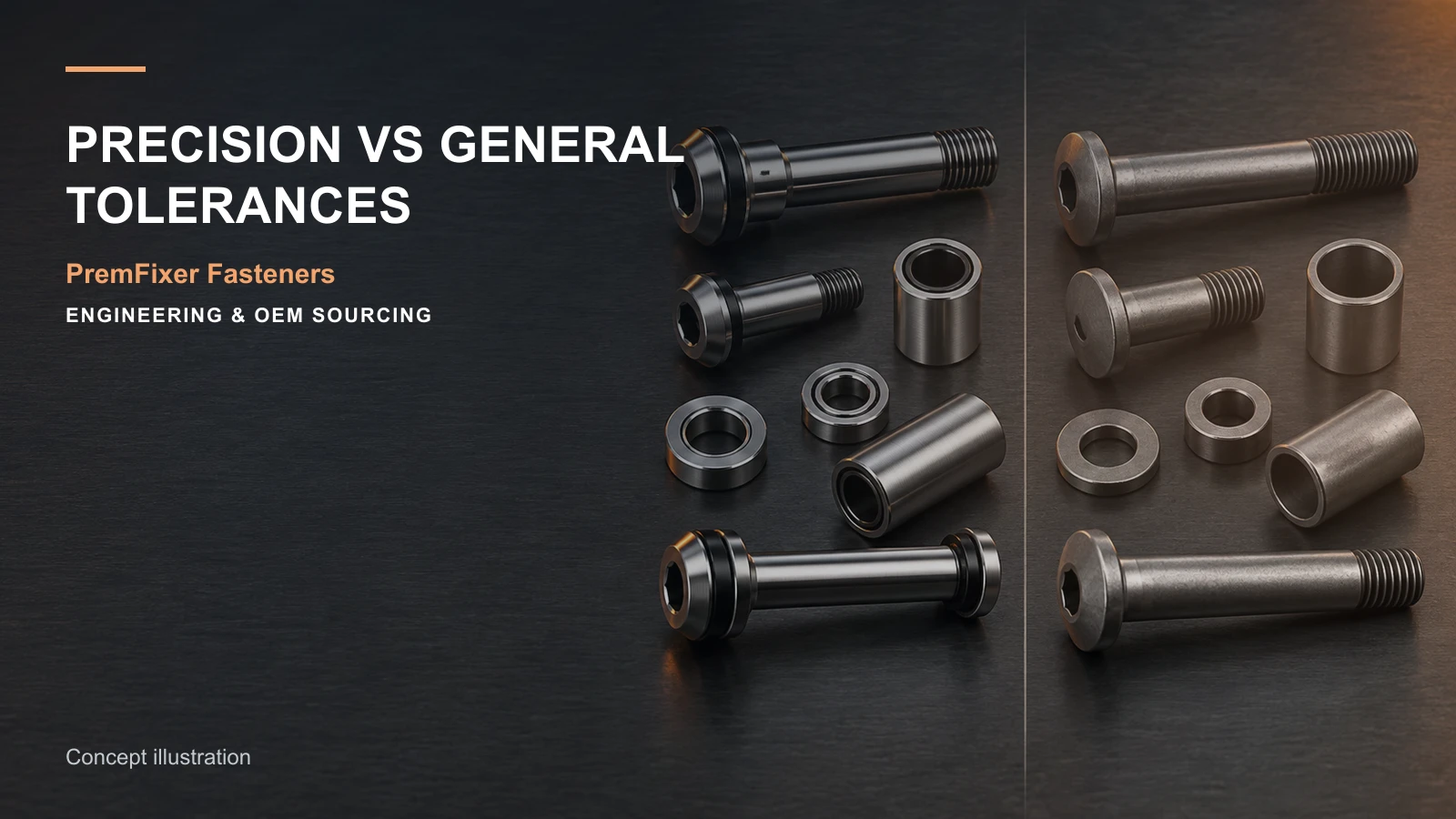
A tighter tolerance does not automatically make a bicycle joint better. It changes the manufacturing and inspection requirement for a defined feature. Whether that change is useful depends on the part's function, the mating components, the dimensional stack and the way the joint is assembled and used.
A shoulder diameter, a bearing seat, a clamp face and a thread feature do not carry the same responsibility. A drawing should identify the features that locate, support, clamp or move, then give the supplier and inspector a clear way to relate those features to the part datum and the mating parts.
A pivot axle fits its individual dimensions but creates variable bearing location across the stack. The review needs a defined baseline, named handoffs and a sample or RFQ that closes the next decision.
Define the comparison before comparing the price
The engineering decision is not whether a part should be called precision or general tolerance. Ask which feature needs a controlled relationship to another feature, and what function that relationship protects. A tolerance belongs to the feature and its measurement basis, not to the part as a marketing label.
Compare the same geometry and delivery condition before discussing cost. A quotation for a part with controlled locating features, a stated datum method and defined inspection can differ from a quotation that applies a general tolerance by default. The difference needs to be visible in the drawing and scope.
For the "Define the comparison before comparing the price" review, put bicycle fastener tolerance comparison, pivot bolt tolerance, bicycle joint dimensional stack, CNC hardware inspection on the same sheet. Name the current revision, the decision owner and the condition that allows the part or program to move forward. The technical discussion then has a clear purchasing and release action.
Avoid drawing conclusions from an isolated number. A smaller band on one dimension does not establish that the full bicycle joint will have better alignment, less noise or longer service life.
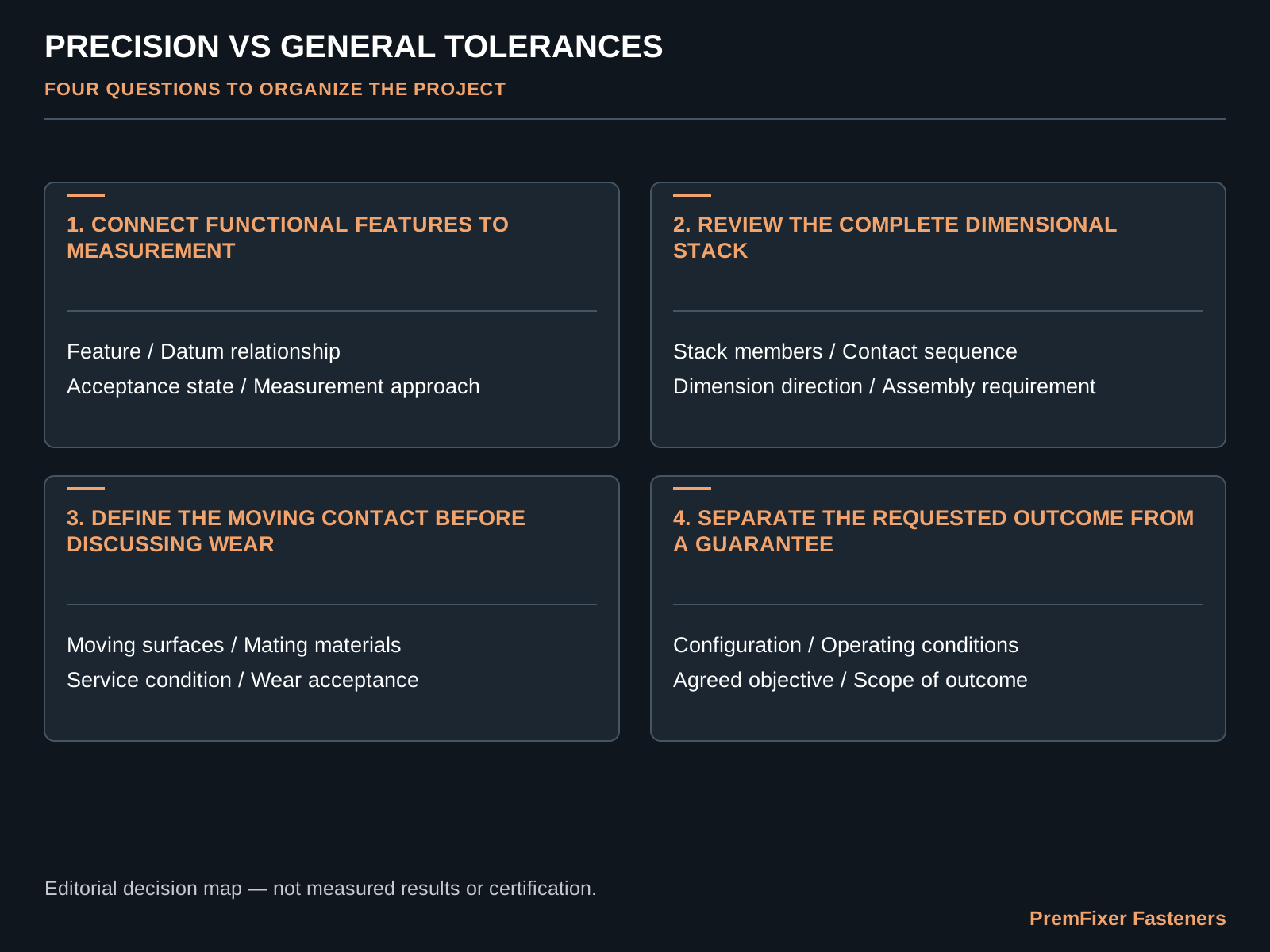
Connect functional features to measurement
Start with the feature's job. A locating diameter may position a sleeve or bearing inner ring. A shoulder length may define a stack condition. A contact face may influence how the clamp path closes. Each of these questions needs a clear drawing callout and a way to orient the part during measurement.
A datum relationship makes the requirement inspectable. It tells the manufacturing and quality teams what reference is being used when the feature is checked. Without that relationship, two parties can read the same dimension while making different assumptions about how it should be measured.
Under "Connect functional features to measurement," compare the current and proposed conditions using bicycle fastener tolerance comparison, pivot bolt tolerance, bicycle joint dimensional stack, CNC hardware inspection. Record the evidence source and any item that remains open. The buyer should be able to approve, reject or sample a specific supplier proposal.
| Functional feature | Question to define | Measurement connection |
|---|---|---|
| Locating diameter | What component does it locate or support? | State the reference datum and measuring approach. |
| Shoulder or spacer length | Which stack members does it influence? | Show the contact sequence and the length reference. |
| Clamp face | Which surfaces close under assembly? | Define the relevant face and its relationship to the axis or datum. |
| Thread feature | What is the mating requirement and engagement condition? | Use the specified thread standard and the approved mating part context. |
Review the complete dimensional stack
A bicycle pivot is a stack of relationships, more than a machined fastener. Spacers, bearing inner rings, washers, receiver features, frame interfaces and the clamp path can all affect the final condition. The review should identify which dimensions add together, which parts locate one another and which contact surfaces close first.
This does not require every dimension to receive a tight tolerance. It requires the team to identify the dimensions that matter to the function and to avoid assigning a single component a responsibility that belongs to a mating stack. A controlled comparison keeps the known stack members and open dimensions visible.
In "Review the complete dimensional stack," follow bicycle fastener tolerance comparison, pivot bolt tolerance, bicycle joint dimensional stack, CNC hardware inspection through the relevant handoff. The output from one operation or team should be a usable input for the next. Missing ownership at that boundary often causes more disruption than the operation itself.
| Stack question | Why it belongs in the review | Useful record |
|---|---|---|
| Which parts touch? | Contact order affects how the joint seats and clamps. | Assembly section or stack sketch. |
| Which dimension locates the assembly? | A locating feature may carry a different requirement from a clearance feature. | Datum and mating-part reference. |
| Which dimensions are open? | Unreleased values should not be treated as fixed production inputs. | Open-item list tied to the revision. |
| How will the stack be checked? | The measurement plan must fit the actual delivered components. | Inspection and assembly review plan. |
Define the moving contact before discussing wear
Before linking a tolerance discussion to wear, define the moving and clamped contacts in the actual joint. A rotation can occur at a bearing, bushing, sleeve or another interface. The fastener may be primarily a clamp or locating component. The role should be established before an individual feature is credited with preventing a field condition.
Material, lubrication, surface condition, preload, assembly method and service environment may also affect the result. A drawing requirement can support a controlled configuration, but it does not replace validation of the intended bicycle assembly.
Use bicycle fastener tolerance comparison, pivot bolt tolerance, bicycle joint dimensional stack, CNC hardware inspection to define the sample question for "Define the moving contact before discussing wear." The sample record should state what represents production, what is temporary and which decision follows the review. A conforming sample without that context can still leave the production route unsettled.
Separate the requested outcome from a guarantee
A customer can request a specific tolerance, inspection record or assembly interface. The supplier can explain the proposed manufacturing and measurement route. Neither statement should become an unqualified promise about ride feel, durability or complete-frame performance without an agreed validation plan.
The strongest documents are clear about the scope of outcome: controlled part features, stated inspection method, approved revision and the application conditions the customer will validate. That clarity makes the RFQ easier to compare and the production release easier to maintain.
After "Separate the requested outcome from a guarantee," carry bicycle fastener tolerance comparison, pivot bolt tolerance, bicycle joint dimensional stack, CNC hardware inspection into repeat orders and service planning. Approved conditions should remain visible in stock, inspection records and packaging so that later lots do not depend on personal memory.
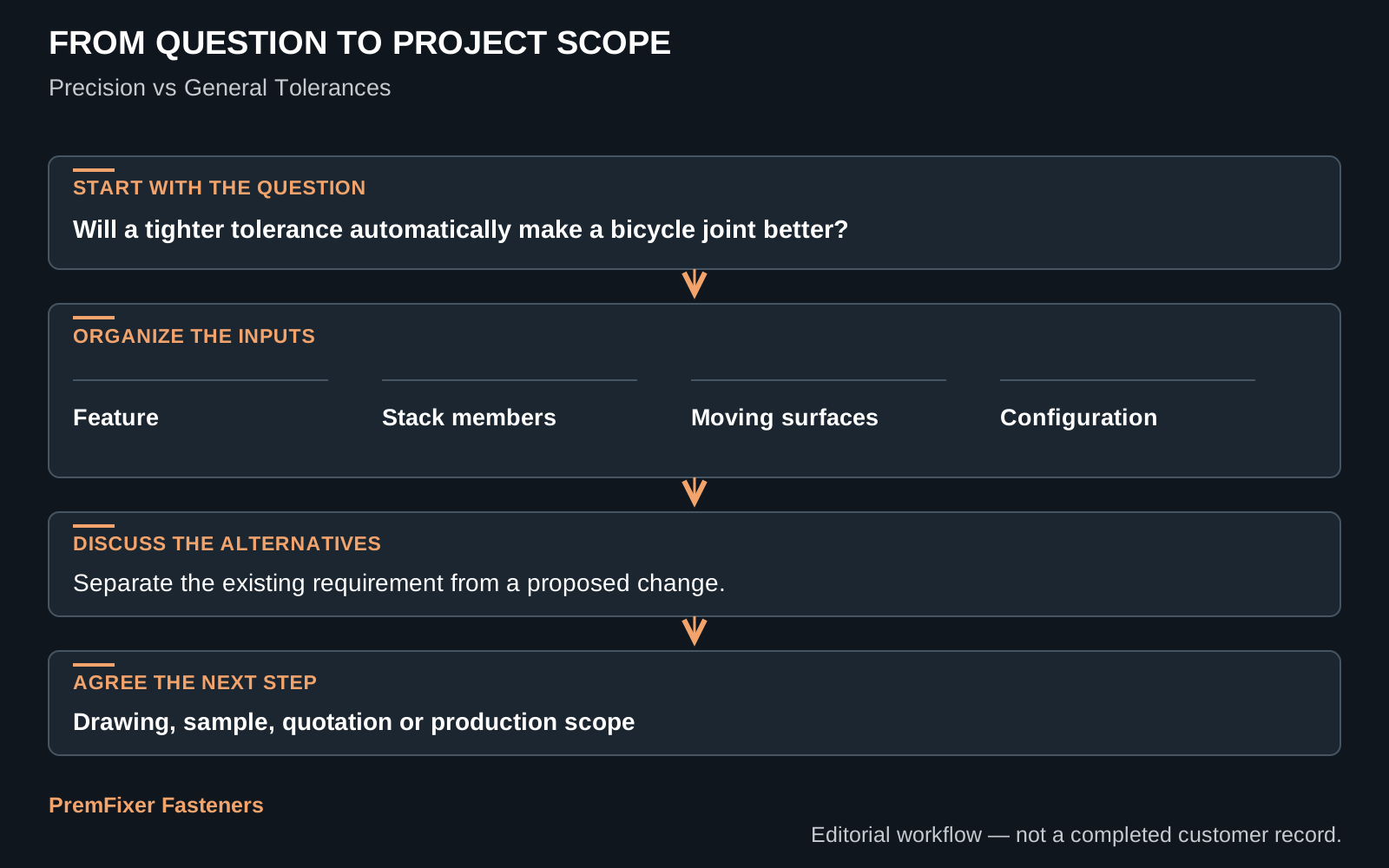
Turn the discussion into an RFQ conversation
For an initial tolerance review, share the drawing or model, relevant mating information, project stage and the features that appear function-critical. Include any existing datum scheme, stack sketch, inspection expectation or sample objective. PremFixer can use these inputs to identify the manufacturing and inspection questions that need resolution.
If the design is still evolving, keep preliminary suggestions separate from the released drawing. When the configuration is approved, the same feature, datum and measurement records can support a build-to-print quotation and a more controlled first sample discussion.
Convert the result of "Turn the discussion into an RFQ conversation" into a quotation line that identifies bicycle fastener tolerance comparison, pivot bolt tolerance, bicycle joint dimensional stack, CNC hardware inspection. Ask the supplier to state included work, customer inputs, open assumptions and release evidence. Alternative offers are easier to compare when scope is not hidden inside one unit price.
Apply the decision to a working program
A pivot axle fits its individual dimensions but creates variable bearing location across the stack. Identify the exact part numbers and revision involved, then name the teams that approve design, prepare supply, receive the lot and assemble the bicycle.
Place the current condition beside the proposed condition for precision vs general tolerances: what changes in a bicycle joint?. Record the drawing or BOM effect, process change, inspection evidence, schedule consequence and delivered state. Unknown inputs should remain open instead of becoming quoted assumptions.
Blanket precision adds cost while a missed datum relationship leaves assembly variation. Use the smallest sample, document check or pilot lot that can expose this issue, and state which production conditions the evidence does not cover.
Carry the accepted result for precision vs general tolerances: what changes in a bicycle joint? into the drawing, order, inspection plan and packaging identity that depend on it. Another model or revision stays outside the approval until its interfaces are shown to be equivalent.
Send the drawing, mating stack, critical interfaces, batch quantity and intended inspection method. The supplier response should separate included work, customer approvals, external operations and open assumptions so frame and linkage engineers can make the next commitment.
Questions buyers ask
Which project decision comes first?
Begin with the current configuration, then decide which dimensions need joint-specific control and which can use general drawing tolerances. Name the owner and the output required before price, schedule or supplier preference is treated as final.
What belongs in the first RFQ?
Send the drawing, mating stack, critical interfaces, batch quantity and intended inspection method. Separate fixed requirements from open fields so the supplier can price the confirmed scope and respond to the engineering questions.
How should the sample be judged?
A pivot axle fits its individual dimensions but creates variable bearing location across the stack. A sample or pilot should answer named questions and disclose any material, finish, process or quantity that differs from production.
Which risk needs an owner?
Blanket precision adds cost while a missed datum relationship leaves assembly variation. Connect the risk to a drawing characteristic, process handoff, approval or delivery record and verify its closure.
What can PremFixer review before quotation?
PremFixer can review the available drawing, model, BOM or sample with the drawing, mating stack, critical interfaces, batch quantity and intended inspection method. The response can identify open questions, proposed scope and evidence for the next decision.
Review the tolerance chain
Share the drawing, mating stack, critical interfaces, batch quantity and intended inspection method. The response will identify the proposed scope, open questions and the evidence needed before release.
Discuss This Project