
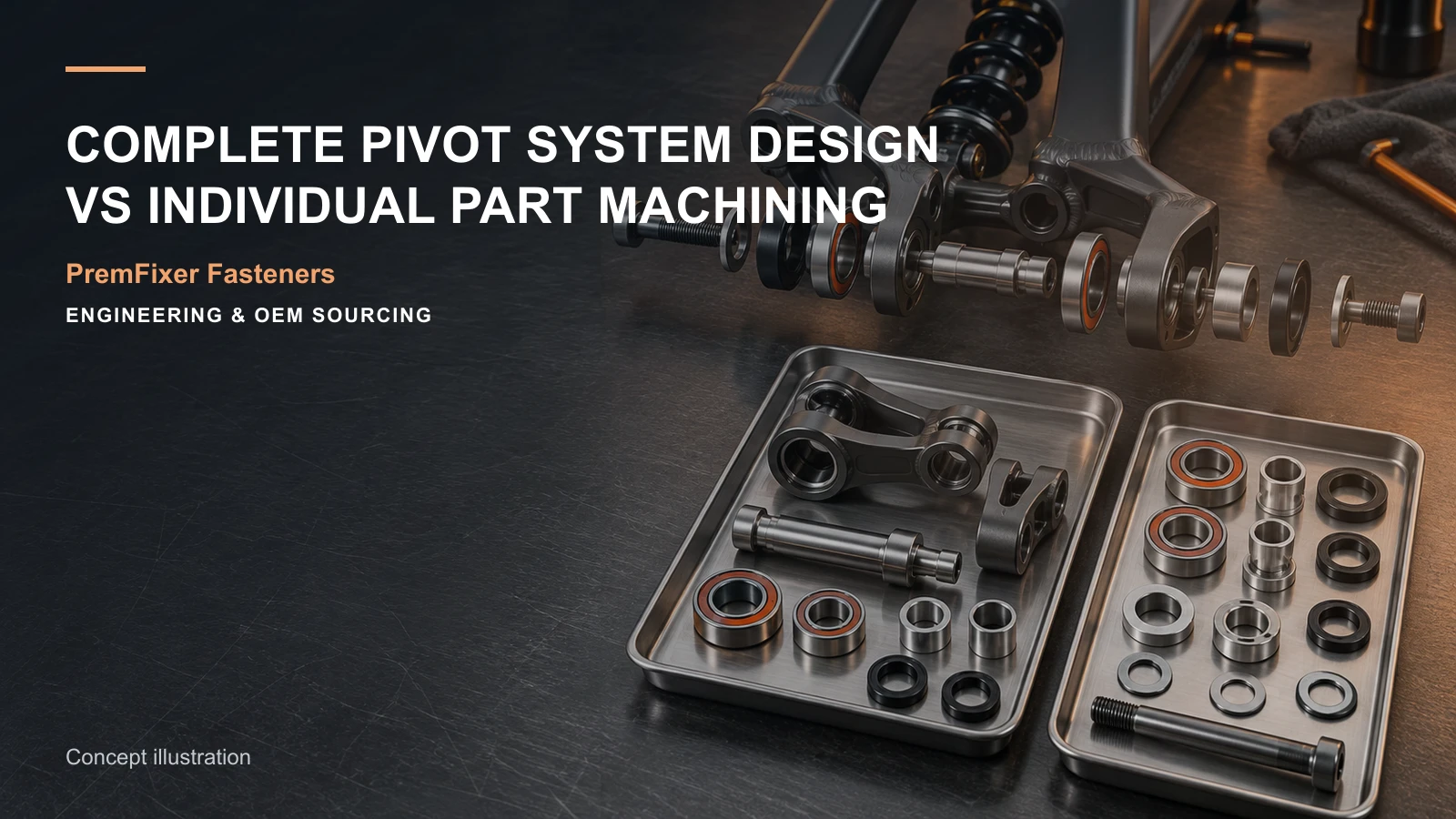
Buying a pivot axle, sleeves, spacers and locking parts from one source does not automatically guarantee that the joint will fit or move as intended. The real advantage of a complete-system approach is that the mating interfaces can be reviewed as one dimensional problem. That opportunity only becomes useful when the assembly identifies what locates, what clamps, what rotates and where clearance is required.
Individual part machining can also produce a successful system. It asks the bicycle brand or another designated integrator to preserve the relationships between drawings, suppliers and revisions. A part can meet its own drawing while a missing assembly requirement still leaves the joint difficult to assemble, over-constrained or uncertain at final inspection.
An axle, sleeves and spacers each pass drawing inspection but clamp the bearing stack incorrectly. The review needs a defined baseline, named handoffs and a sample or RFQ that closes the next decision.
Define the comparison before comparing the price
Does buying every pivot component together guarantee the fit? No. A combined purchase order can put the relevant components and questions in one conversation, but it does not replace an assembly definition. The offer still needs to identify the supplied configuration, the mating features that matter and the checks expected before the set is released.
Begin with the same bicycle model, revision and quantity basis. State whether the quoted scope includes only machined components, finished components, an identified kit, inspection records or support for assembly review. A quotation for loose parts cannot be compared directly with a quotation that includes coordinated revisions, kit identity and a defined set-level review without making those added tasks visible.
For the "Define the comparison before comparing the price" review, put complete pivot system vs individual parts, bicycle pivot hardware system, pivot dimensional stack, bicycle hardware BOM on the same sheet. Name the current revision, the decision owner and the condition that allows the part or program to move forward. The technical discussion then has a clear purchasing and release action.
Unit price comes later. First ask who owns each unresolved interface and who will reconcile a change that affects more than one part.
Map the locating and clamping interfaces
A pivot joint often contains several surfaces with different jobs. A shoulder or precision diameter may locate against a bearing inner ring or sleeve. End faces may establish the clamped stack. A threaded receiver or nut supplies the closing force, while the intended rotation occurs elsewhere. If those roles are not named, two individually plausible drawings can still describe incompatible assumptions.
Use an assembly section, mating-part dimensions or a clearly marked interface sketch to record the locating surface, clamping face, mating component and assembly direction. The purpose is not to hand manufacturing authority over the frame design. It is to let the component proposal preserve the functional relationship that the customer has defined.
Under "Map the locating and clamping interfaces," compare the current and proposed conditions using complete pivot system vs individual parts, bicycle pivot hardware system, pivot dimensional stack, bicycle hardware BOM. Record the evidence source and any item that remains open. The buyer should be able to approve, reject or sample a specific supplier proposal.
Where information is incomplete, keep the item open rather than inventing a fit. For example, a supplier may be able to quote the axle geometry while flagging the bearing contact sequence for customer confirmation.
| Interface field | Complete-system review | Individual-part route |
|---|---|---|
| Locating surface | Record which diameter or face establishes the component position in the approved assembly. | Carry the same locating requirement into the responsible part drawing and integration record. |
| Clamping face | Review the contact faces and the intended closing direction across the supplied set. | Name the owner who reconciles contact faces made by different suppliers. |
| Mating component | Link each functional feature to its bearing, sleeve, frame feature, nut or other receiver. | Provide the relevant mating information without exposing unrelated proprietary geometry. |
| Assembly direction | Confirm how the parts enter and where the stack is supported during tightening. | Preserve the direction and sequence in the customer-controlled assembly definition. |
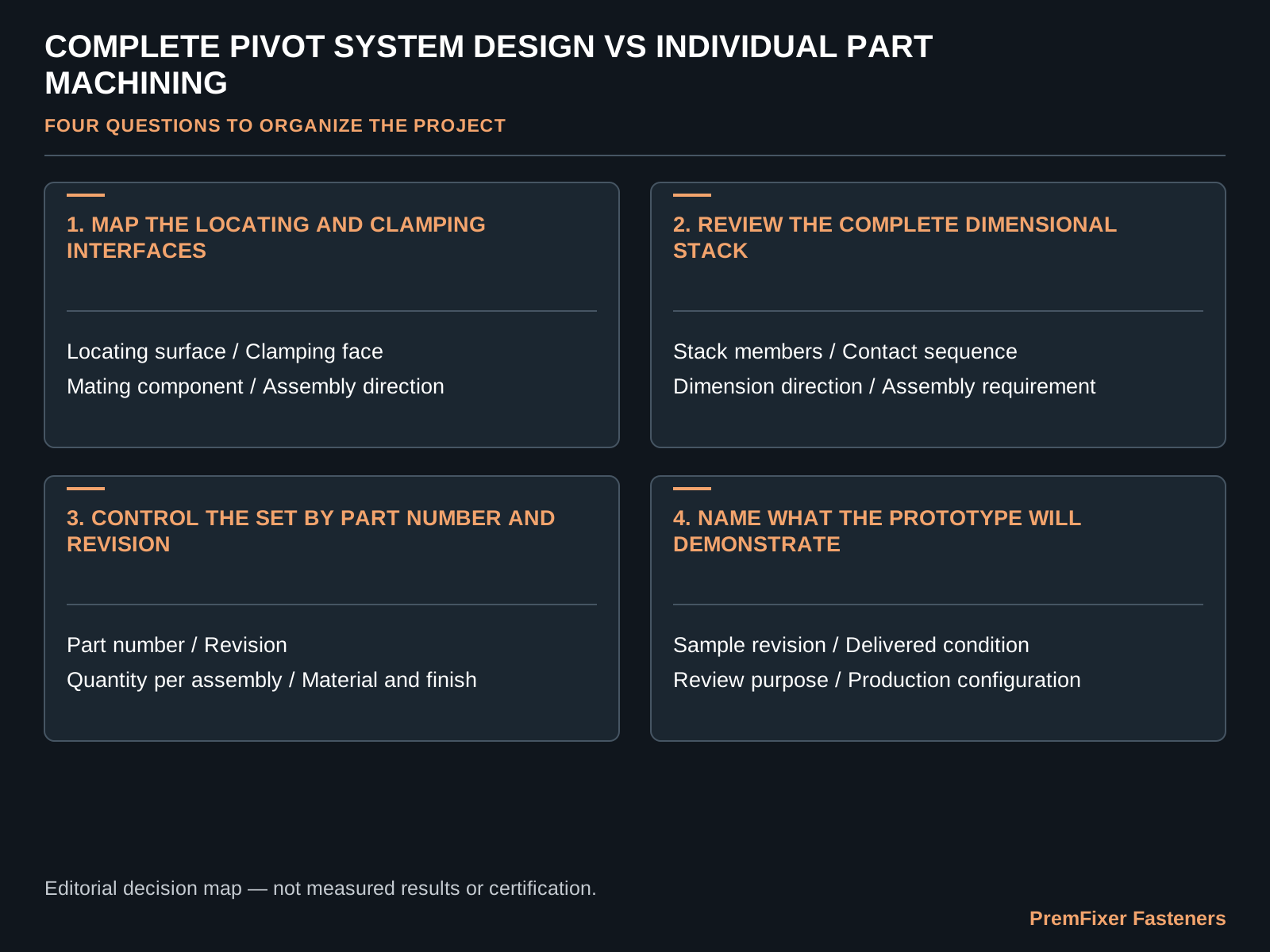
Review the complete dimensional stack
A dimensional stack is more than a list of tolerances. It follows the sequence of contacts from one reference surface to the next and records the direction in which each dimension acts. Depending on the architecture, a longer component can reduce one clearance while increasing another. It is therefore unsafe to assume that every upper-limit dimension simply adds to a larger gap.
List the stack members that establish axial position or radial fit: axle shoulders, bearing inner rings, sleeves, spacers, frame or link faces and the closing feature. Then identify which dimensions are part sizes, which belong to the bicycle assembly and which remain open. The result should explain the intended contact sequence and the condition in which the requirement applies.
In "Review the complete dimensional stack," follow complete pivot system vs individual parts, bicycle pivot hardware system, pivot dimensional stack, bicycle hardware BOM through the relevant handoff. The output from one operation or team should be a usable input for the next. Missing ownership at that boundary often causes more disruption than the operation itself.
The complete-system route can make this review easier because related parts are visible together. It does not justify tightening every tolerance.
| Stack record | Question to resolve | Useful project output |
|---|---|---|
| Stack members | Which shoulders, rings, sleeves, spacers and frame faces close the chain? | A named sequence tied to part numbers or assembly features. |
| Contact sequence | Which surfaces contact before and after the joint is clamped? | An explicit description of intended contact rather than an assumed fit. |
| Dimension direction | Does each dimension increase or decrease the controlled result? | A stack convention that avoids adding unlike directions. |
| Assembly requirement | Is the controlled result clearance, preload, location or another functional condition? | A requirement that engineering and inspection can interpret consistently. |
Control the set by part number and revision
A complete pivot set needs item-level control. Give every axle, sleeve, spacer, nut or locking element its own part number and revision, then state the quantity required per assembly. Left and right variants, optional travel configurations and model-year differences should remain explicit even when the parts share one package.
Material and finish belong to the individual line item, not to a vague kit description. Components in one system can require different stock forms, machining routes, heat-treatment conditions or surface finishes. Coordinated supply means the approved differences are preserved; it does not mean every part receives the same tolerance or process.
Use complete pivot system vs individual parts, bicycle pivot hardware system, pivot dimensional stack, bicycle hardware BOM to define the sample question for "Control the set by part number and revision." The sample record should state what represents production, what is temporary and which decision follows the review. A conforming sample without that context can still leave the production route unsettled.
When one component changes, record the effect on mating parts, kit identity, sample status and service stock. A controlled BOM allows purchasing to order the intended set and allows engineering to see whether a revision is local to one component or changes the assembly relationship.
| BOM field | Why the field matters | Release question |
|---|---|---|
| Part number | Keeps visually similar components from becoming interchangeable by assumption. | Which exact item is supplied? |
| Revision | Connects drawings, samples, inspection records and packed stock. | Which configuration has been approved? |
| Quantity per assembly | Defines a complete kit and supports receiving or packing checks. | How many of this item belong to one bicycle or joint? |
| Material and finish | Preserves the specified condition for each component. | Is the quote based on the same delivered state as the BOM? |
Name what the prototype will demonstrate
A prototype set can answer different questions. A machined sample may confirm tool access and basic geometry. A finished sample can support appearance and post-process dimensional review. An inspection-supported set can confirm selected drawing characteristics, while a customer assembly trial evaluates the parts in the intended frame or linkage context.
Before the sample is ordered, record its revision, delivered condition and review purpose. If the trial uses temporary material, omits a finish or contains a hand-adjusted feature, say so. A useful approval record also lists the open items that must be closed before the configuration becomes a production reference.
After "Name what the prototype will demonstrate," carry complete pivot system vs individual parts, bicycle pivot hardware system, pivot dimensional stack, bicycle hardware BOM into repeat orders and service planning. Approved conditions should remain visible in stock, inspection records and packaging so that later lots do not depend on personal memory.
Production release should name the actual approved BOM rather than relying on a photograph or an informal statement that the sample fitted. That distinction protects both routes: the complete-system supplier knows which set to reproduce, and an individual-part supplier receives the exact released input for its component.
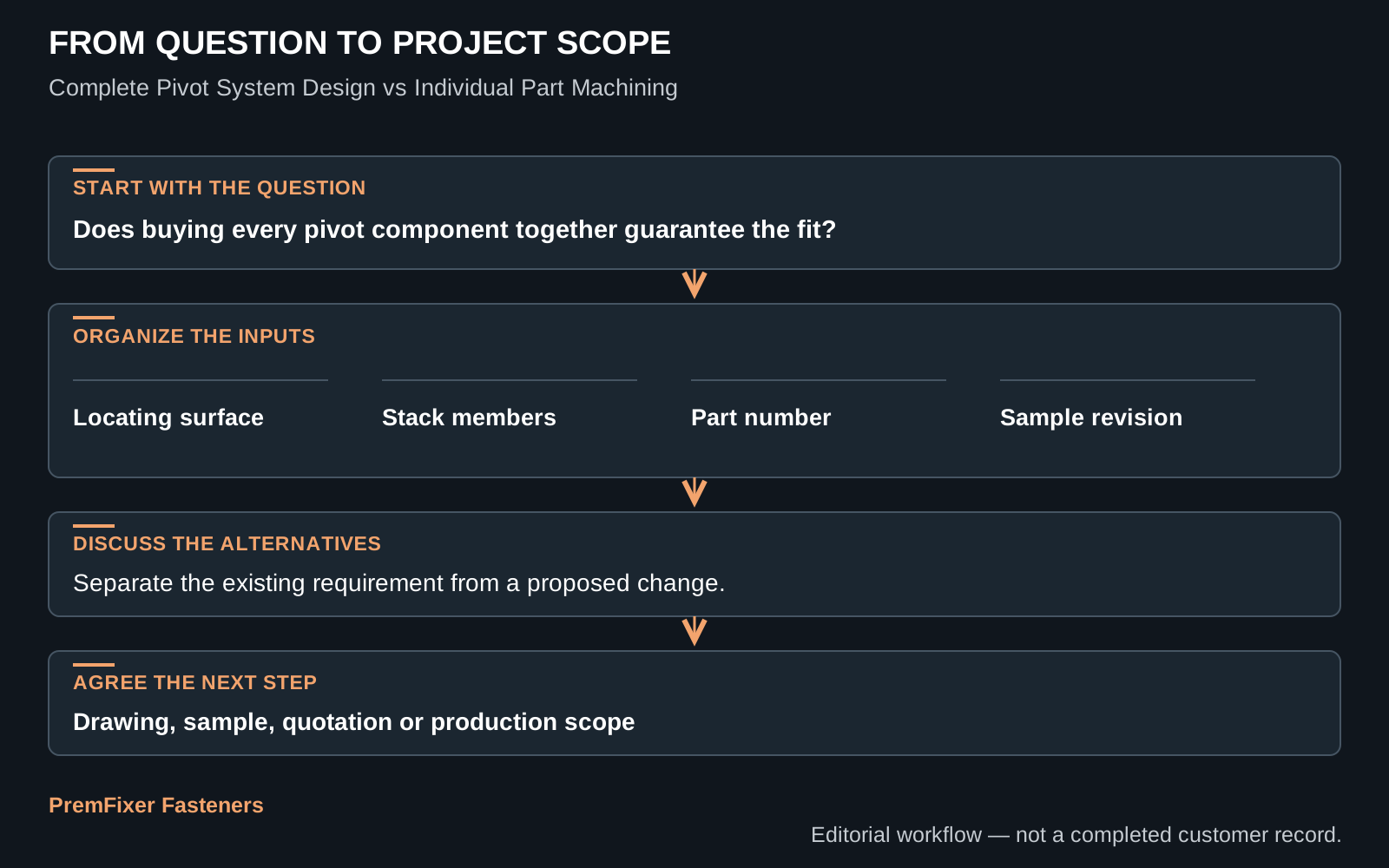
Apply the discussion to a PremFixer Fasteners project
PremFixer Fasteners can begin with the information already available: a drawing, assembly view, BOM, model or sample description, plus the expected quantity and project stage. Mark the locating surfaces, stack members or part identities that are fixed, and distinguish them from dimensions or interfaces still awaiting customer review.
That first package allows the discussion to be separated into manufacturing scope, interface questions and configuration control. A proposal can then state which components are included, which relationships need confirmation, what the prototype is intended to demonstrate and what records will identify the released set.
Convert the result of "Apply the discussion to a PremFixer Fasteners project" into a quotation line that identifies complete pivot system vs individual parts, bicycle pivot hardware system, pivot dimensional stack, bicycle hardware BOM. Ask the supplier to state included work, customer inputs, open assumptions and release evidence. Alternative offers are easier to compare when scope is not hidden inside one unit price.
Share your available drawings, BOM or project description with PremFixer Fasteners, together with quantities and the project stage, to discuss complete pivot hardware systems.
Turn the comparison into a controlled work package
An axle, sleeves and spacers each pass drawing inspection but clamp the bearing stack incorrectly. Map that case from customer input to accepted delivery, including every point where the part, information or approval changes hands.
For each complete pivot system design vs individual part machining handoff, write the input, responsible person, expected output and rejection condition. This short record makes schedule and responsibility visible without a large process manual.
Individual part conformity can hide an unresolved system interface. Compare the proposed controls with the current route and choose evidence that can reveal the difference during a representative sample or pilot.
Once the result for complete pivot system design vs individual part machining is accepted, update the released files and any stock or service identity affected by the change. Keep superseded material separate whenever interchangeability has not been approved.
Provide the frame section, bearing stack, component drawings, BOM, tightening method and sample objective. A useful supplier reply links technical questions, commercial scope and release evidence to the same project revision.
Questions buyers ask
What should buyers define before comparing offers?
Begin with the current configuration, then choose who owns the dimensional stack and assembly definition across a complete pivot set. Name the owner and the output required before price, schedule or supplier preference is treated as final.
Which files make the review useful?
Send the frame section, bearing stack, component drawings, BOM, tightening method and sample objective. Separate fixed requirements from open fields so the supplier can price the confirmed scope and respond to the engineering questions.
When is a pilot needed?
An axle, sleeves and spacers each pass drawing inspection but clamp the bearing stack incorrectly. A sample or pilot should answer named questions and disclose any material, finish, process or quantity that differs from production.
What commonly remains hidden?
Individual part conformity can hide an unresolved system interface. Connect the risk to a drawing characteristic, process handoff, approval or delivery record and verify its closure.
How can PremFixer support the next step?
PremFixer can review the available drawing, model, BOM or sample with the frame section, bearing stack, component drawings, BOM, tightening method and sample objective. The response can identify open questions, proposed scope and evidence for the next decision.
Review the pivot as one system
Share the frame section, bearing stack, component drawings, BOM, tightening method and sample objective. The response will identify the proposed scope, open questions and the evidence needed before release.
Discuss This Project