

Secondary setups do not automatically create unacceptable parts, and a turn-mill center does not automatically create perfect geometry. The useful comparison is where each route establishes, retains and transfers the references behind the critical features.
CNC process and design engineers need to carry functional datums through turning and milling operations without losing feature relationships. The review should use the current drawing, BOM and project stage so that the recommendation applies to a real component or release.
A pivot axle needs a turned bearing axis, milled wrench flats and a cross hole. The review needs a defined baseline, named handoffs and a sample or RFQ that closes the next decision.
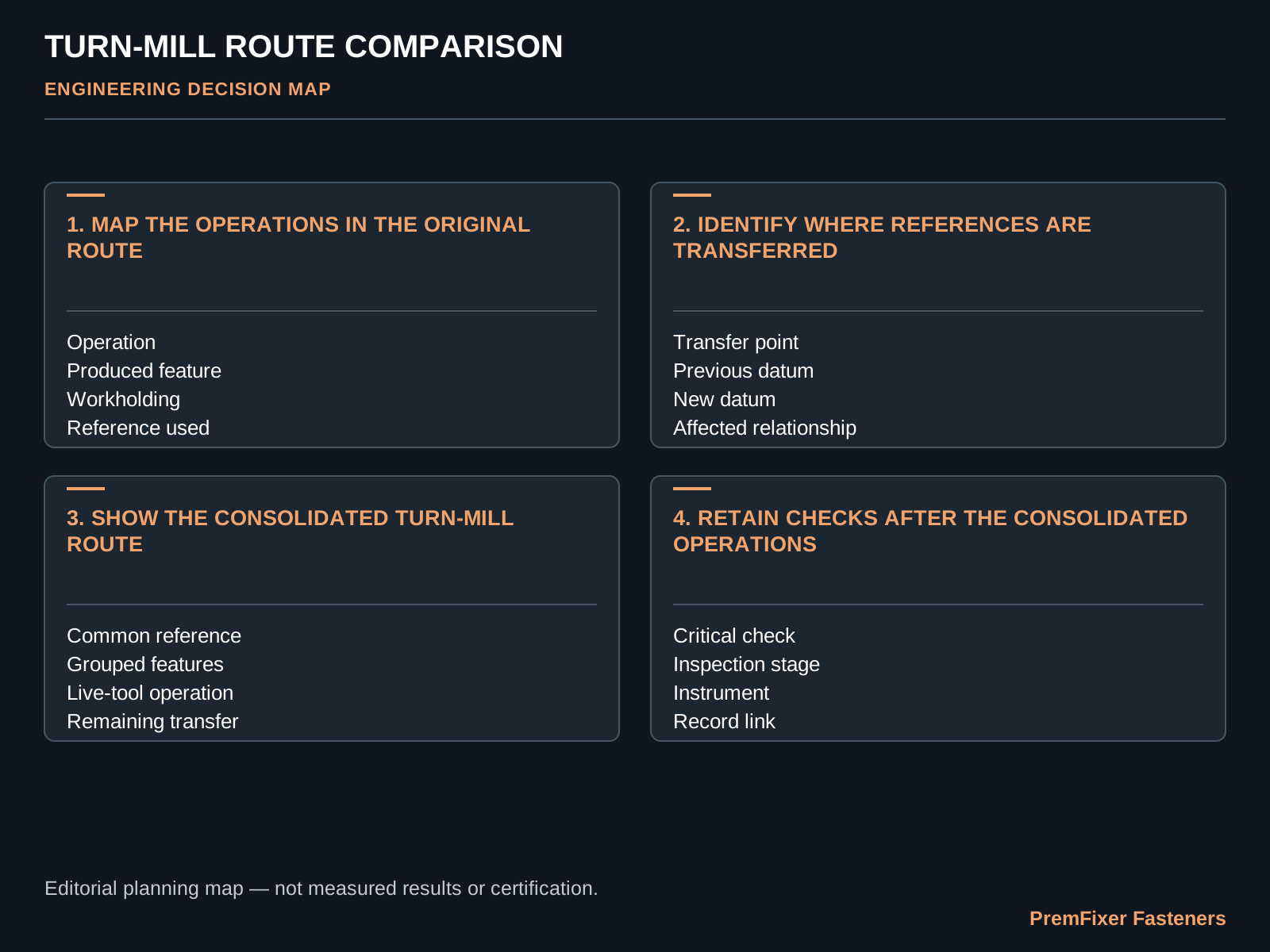
Map the operations in the original route
List turning, drilling, milling, threading, deburring and inspection in the order the part experiences them. The route becomes understandable when each operation is tied to a feature and reference.
For the working record, connect Operation, Produced feature, Workholding and Reference used. The immediate output should be an original-route operation map. That record gives engineering, purchasing and manufacturing one configuration to discuss.
For the "Map the operations in the original route" review, put operation sequence, datum transfer, same-setup feature, verification point on the same sheet. Name the current revision, the decision owner and the condition that allows the part or program to move forward. The technical discussion then has a clear purchasing and release action.
Do not describe every secondary setup as an error source without examining its fixture and acceptance controls. If geometry, material, finish, process or assembly changes, identify the affected configuration and the question the next stage must answer.
Identify where references are transferred
Mark each point where the part is removed, reversed, reclamped or located from a new surface. These transfers are the places where coaxial or angular relationships need an explicit control strategy.
For the working record, connect Transfer point, Previous datum, New datum and Affected relationship. The immediate output should be a datum-transfer risk map. It also keeps the next sample, inspection or quotation tied to the same revision.
Under "Identify where references are transferred," compare the current and proposed conditions using Transfer point, Previous datum, New datum, Affected relationship. Record the evidence source and any item that remains open. The buyer should be able to approve, reject or sample a specific supplier proposal.
Do not assume a transfer is uncontrolled simply because it occurs on another machine. If geometry, material, finish, process or assembly changes, identify the affected configuration and the question the next stage must answer.
| Stage | Decision to make | Inputs to connect | Controlled output |
|---|---|---|---|
| 01 | Map the operations in the original route | Operation / Produced feature / Workholding / Reference used | an original-route operation map |
| 02 | Identify where references are transferred | Transfer point / Previous datum / New datum / Affected relationship | a datum-transfer risk map |
| 03 | Show the consolidated turn-mill route | Common reference / Grouped features / Live-tool operation / Remaining transfer | a consolidated turn-mill route proposal |
| 04 | Retain checks after the consolidated operations | Critical check / Inspection stage / Instrument / Record link | a retained verification plan |
| 05 | Compare setup effort and production use | Program effort / Tooling / Lot size / Changeover | a route-selection comparison |
| 06 | Ask for geometry before prescribing a machine | 3D model / Drawing / Critical relationship / Quantity | a geometry-led machining brief |
Show the consolidated turn-mill route
Group features that can be produced from a common spindle or workholding reference while preserving tool access. Consolidation is most valuable when it protects a named relationship and simplifies the handover.
For the working record, connect Common reference, Grouped features, Live-tool operation and Remaining transfer. The immediate output should be a consolidated turn-mill route proposal. The result is a reviewable handover instead of an assumption passed between departments.
In "Show the consolidated turn-mill route," follow operation sequence, datum transfer, same-setup feature, verification point through the relevant handoff. The output from one operation or team should be a usable input for the next. Missing ownership at that boundary often causes more disruption than the operation itself.
Do not force every feature into one setup when access, chip control or finish quality would suffer. If geometry, material, finish, process or assembly changes, identify the affected configuration and the question the next stage must answer.
Retain checks after the consolidated operations
Verify sizes, runout, face relationships and thread condition after machining and required finishing. Process consolidation changes the route, not the customer's acceptance requirement.
For the working record, connect Critical check, Inspection stage, Instrument and Record link. The immediate output should be a retained verification plan. That record gives engineering, purchasing and manufacturing one configuration to discuss.
Use operation sequence, datum transfer, same-setup feature, verification point to define the sample question for "Retain checks after the consolidated operations." The sample record should state what represents production, what is temporary and which decision follows the review. A conforming sample without that context can still leave the production route unsettled.
Do not use a machine position display as finished-part acceptance evidence. If geometry, material, finish, process or assembly changes, identify the affected configuration and the question the next stage must answer.
Compare setup effort and production use
Review programming, tooling, cycle, changeover and lot size together. The best route depends on the geometry and production context, not the machine category alone.
For the working record, connect Program effort, Tooling, Lot size and Changeover. The immediate output should be a route-selection comparison. It also keeps the next sample, inspection or quotation tied to the same revision.
After "Compare setup effort and production use," carry operation sequence, datum transfer, same-setup feature, verification point into repeat orders and service planning. Approved conditions should remain visible in stock, inspection records and packaging so that later lots do not depend on personal memory.
Do not promise lower cost or shorter lead time before the actual part and quantity are reviewed. If geometry, material, finish, process or assembly changes, identify the affected configuration and the question the next stage must answer.
Ask for geometry before prescribing a machine
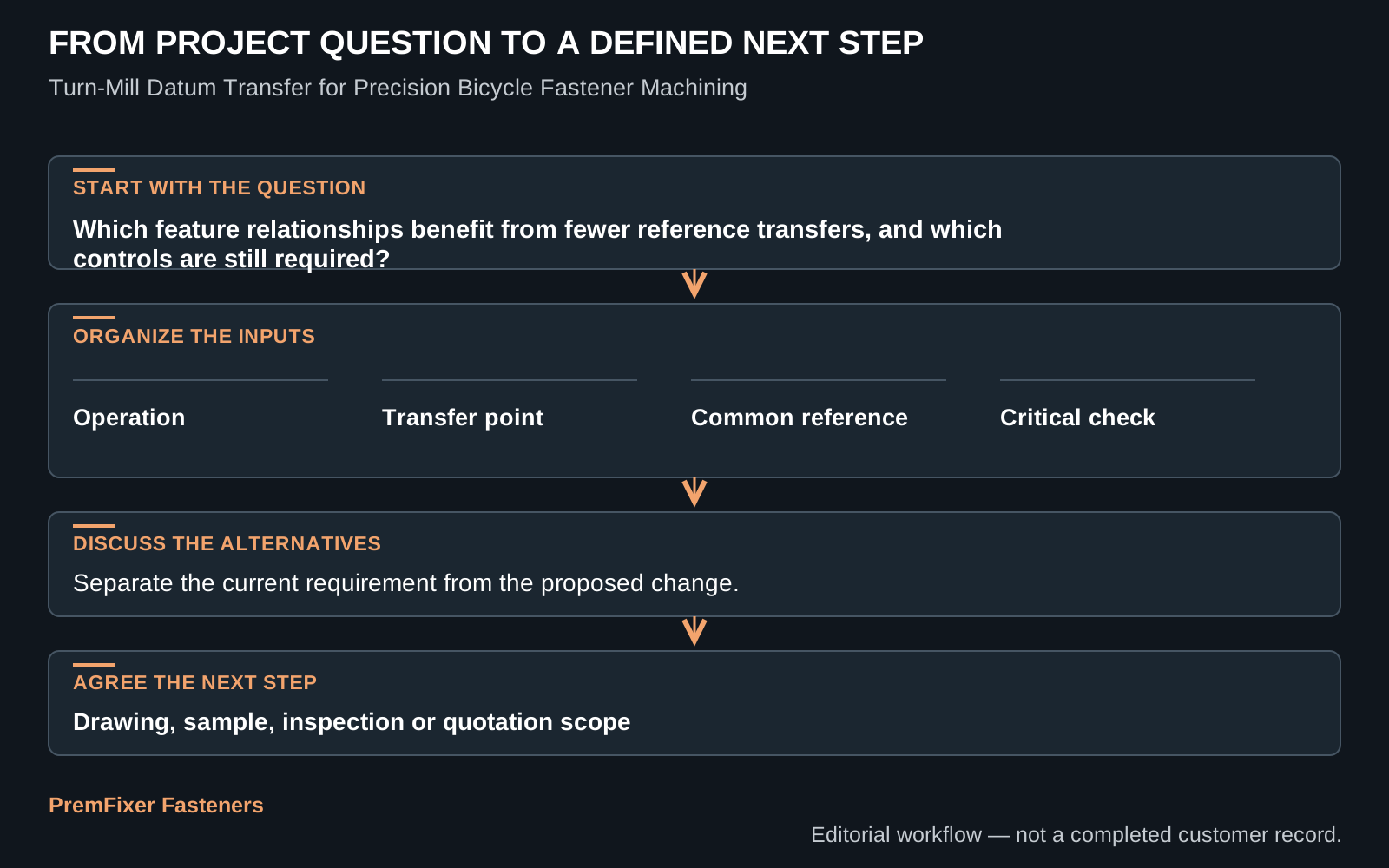
Begin the RFQ with the model, drawing, critical relationships and expected quantity. Those inputs allow the supplier to choose a route instead of selling a machine label.
For the working record, connect 3D model, Drawing, Critical relationship and Quantity. The immediate output should be a geometry-led machining brief. The result is a reviewable handover instead of an assumption passed between departments.
Convert the result of "Ask for geometry before prescribing a machine" into a quotation line that identifies operation sequence, datum transfer, same-setup feature, verification point. Ask the supplier to state included work, customer inputs, open assumptions and release evidence. Alternative offers are easier to compare when scope is not hidden inside one unit price.
Keep alternative process proposals subject to OEM approval. If geometry, material, finish, process or assembly changes, identify the affected configuration and the question the next stage must answer.
Apply the decision to a working program
A pivot axle needs a turned bearing axis, milled wrench flats and a cross hole. Identify the exact part numbers and revision involved, then name the teams that approve design, prepare supply, receive the lot and assemble the bicycle.
Place the current condition beside the proposed condition for turn-mill datum transfer for precision bicycle fastener machining. Record the drawing or BOM effect, process change, inspection evidence, schedule consequence and delivered state. Unknown inputs should remain open instead of becoming quoted assumptions.
Datum changes between setups can create clocking or runout error even when sizes pass. Use the smallest sample, document check or pilot lot that can expose this issue, and state which production conditions the evidence does not cover.
Carry the accepted result for turn-mill datum transfer for precision bicycle fastener machining into the drawing, order, inspection plan and packaging identity that depend on it. Another model or revision stays outside the approval until its interfaces are shown to be equivalent.
Send the model, datum scheme, geometric controls, setup concept, batch size and inspection access. The supplier response should separate included work, customer approvals, external operations and open assumptions so CNC process and design engineers can make the next commitment.
Questions buyers ask
What should buyers define before comparing offers?
Begin with the current configuration, then carry functional datums through turning and milling operations without losing feature relationships. Name the owner and the output required before price, schedule or supplier preference is treated as final.
Which files make the review useful?
Send the model, datum scheme, geometric controls, setup concept, batch size and inspection access. Separate fixed requirements from open fields so the supplier can price the confirmed scope and respond to the engineering questions.
When is a pilot needed?
A pivot axle needs a turned bearing axis, milled wrench flats and a cross hole. A sample or pilot should answer named questions and disclose any material, finish, process or quantity that differs from production.
What commonly remains hidden?
Datum changes between setups can create clocking or runout error even when sizes pass. Connect the risk to a drawing characteristic, process handoff, approval or delivery record and verify its closure.
How can PremFixer support the next step?
PremFixer can review the available drawing, model, BOM or sample with the model, datum scheme, geometric controls, setup concept, batch size and inspection access. The response can identify open questions, proposed scope and evidence for the next decision.
Review the datum transfer
Share the model, datum scheme, geometric controls, setup concept, batch size and inspection access. The response will identify the proposed scope, open questions and the evidence needed before release.
Discuss This Project