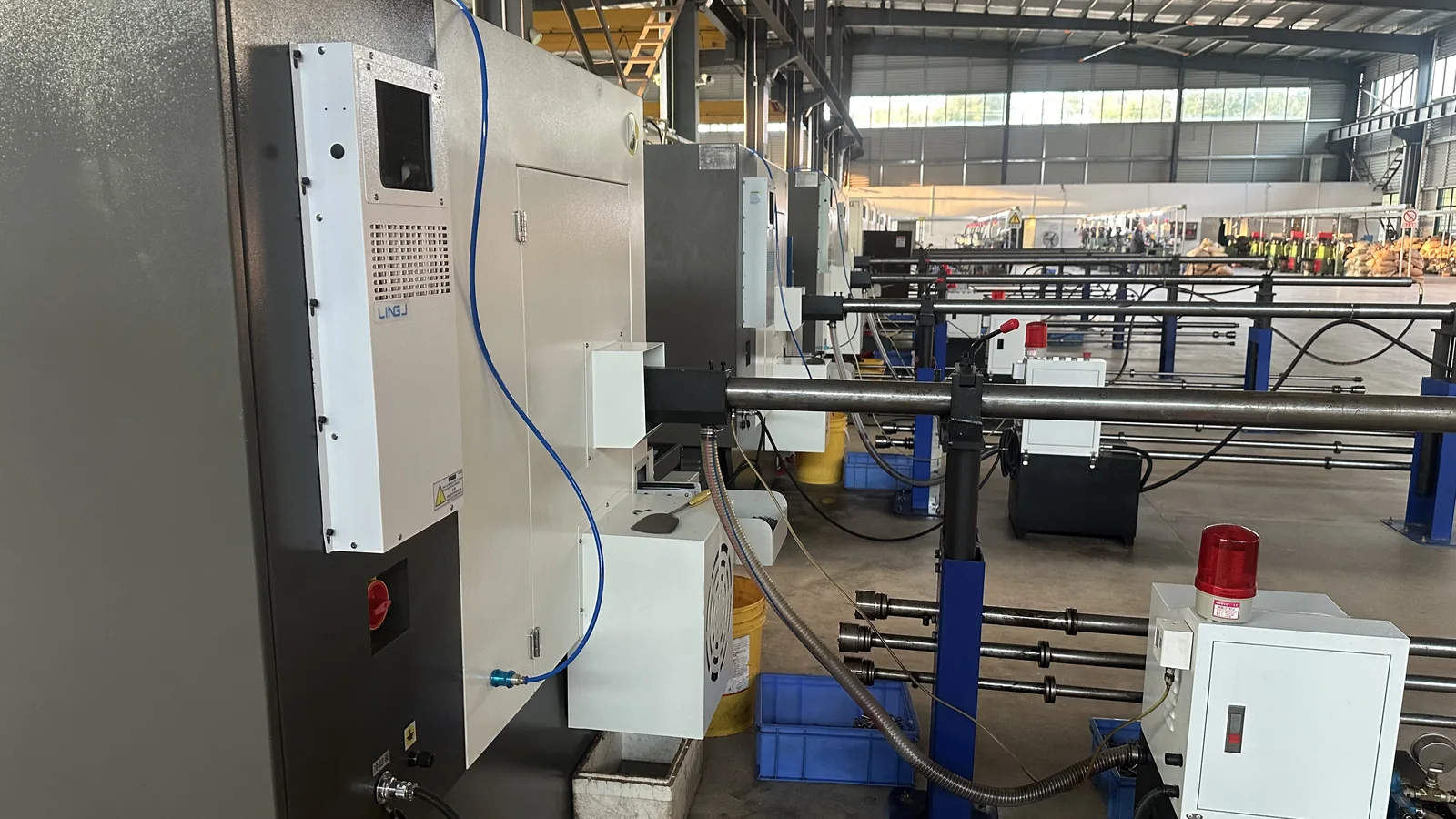
Prozessauswahlleitfaden für die Herstellung von Fahrradbefestigungen und Strukturbeschlägen.
## Mehr als eine Möglichkeit, eine Schraube herzustellen. Fahrradteile umfassen ein breites Spektrum an Herstellungsprozessen – vom Kaltstauchen von M5-Schrauben in großen Stückzahlen bis zur 5-Achsen-CNC-Bearbeitung von Aufhängungszapfen in kleinen Stückzahlen. Die Wahl des Verfahrens beeinflusst nicht nur die Stückkosten, sondern auch die Kornstruktur des Materials, die Ermüdungslebensdauer, die Abmessungsfähigkeit und die Mindestbestellmenge. In diesem Leitfaden werden die vier primären Herstellungsprozesse erläutert, die bei PremFixer verwendet werden, wann jeder einzelne sinnvoll ist und was in Ihrem RFQ angegeben werden muss.
## Prozessvergleichsmatrix | Prozess | Stärke | Präzision | Oberfläche | Werkzeugkosten | Mindestbestellmenge | Zykluszeit | |---|---|---|---|---|---|---| | Kaltschmieden | Sehr hoch | Mittel | Gut | Hoch | 5.000+ | Schnell | | Warmschmieden | Hoch | Mittelhoch | Gut | Mittelhoch | 1.000+ | Mittel | | Warmschmieden | Mittelhoch | Mittel | Fair | Mittel | 500+ | Langsam | | CNC-Bearbeitung | Mittel | Sehr hoch | Ausgezeichnet | Niedrig | 1+ | Langsam |
## Cold Forging (Cold Heading)
Cold forging deforms metal at room temperature using high-pressure dies. The material flows plastically into the die cavity, producing work hardening that increases strength beyond the base material.
### How It Works
A wire coil is cut into blanks, then struck at high speed in a multi-station progressive die. Each station forms a different feature: head, shank, thread blank, under-head radius. The final station trims to length.
### When to Use Cold Forging
- High-volume standard fasteners (M5–M12 screws, bolts, nuts)
- Parts where work hardening improves the mechanical properties
- Budget-sensitive programs where tooling amortization is spread over large volumes
- PS-A standard fasteners, PS-E weld nuts in high volume
### Grain Structure Advantage
Cold forging maintains and aligns the original grain flow of the wire with the part geometry. This produces higher fatigue strength in the bolt head-to-shank transition zone compared to a machined bolt where grain flow is cut by the tool path.
### Limitations
- Limited to simpler geometries (axisymmetric parts)
- High initial tooling investment
- Not suitable for aluminum alloys with poor cold formability
- Cannot achieve the tightest tolerances without secondary machining
## Warm Forging
Warm forging heats the billet to 200–400°C—below the recrystallization temperature. This reduces forming pressure while retaining most of the grain refinement benefits of cold forging.
### How It Works
Aluminum or steel billets are induction heated to the warm forming range, then pressed in closed dies. Post-forge CNC machining achieves final tolerances on critical interfaces.
### When to Use Warm Forging
- Medium-volume e-bike motor mounts (PS-R series)
- Aluminum structural brackets with complex 3D geometry
- Parts requiring grain flow alignment with load direction
- Where surface finish matters but post-machining is acceptable
### The PS-R Example
PS-R motor mounts are warm forged from 6061-T6 aluminum billet. Warm forging aligns grain flow with the motor torque reaction path, producing fatigue strength 15–25% higher than the equivalent CNC-only part from billet. Post-forge CNC finishing achieves the tight interface tolerances for motor alignment.
### Grain Structure Advantage
Warm forging produces a finer, more uniform grain structure than hot forging while avoiding the cracking risk that can occur with cold forging of aluminum. The aligned grain flow follows the part's load path, improving fatigue performance at the most critical stress concentrations.
## Hot Forging
Hot forging heats the billet above the recrystallization temperature (typically 350–500°C for aluminum, 1100–1250°C for steel). The material is fully plastic, allowing very large deformation with relatively low forces.
### How It Works
Material is furnace heated, then forged in a hydraulic or mechanical press. Hot forged parts cool in air or controlled-cooling fixtures.
### When to Use Hot Forging
- Large deformation parts (PS-K derailleur hangers from thick aluminum billet)
- Parts requiring significant shape change between billet and final geometry
- Where tooling forces would be prohibitive for cold or warm forging
### The PS-K Example
PS-K derailleur hangers are hot forged from 6061-T6 aluminum. A derailleur hanger serves as a sacrificial failure point—it must absorb impact energy and break before the frame or derailleur does. Hot forging produces higher elongation at break and better crack resistance than CNC-machined hangers from plate.
### Trade-Offs
- Lower precision than cold or warm forging; secondary machining required
- Surface oxidation (scale) requires cleaning or machining
- Grain growth at high temperature may reduce strength slightly vs warm forging
- Higher energy consumption
## CNC Machining
CNC machining is the subtractive opposite of forging—it removes material from a billet or bar stock rather than deforming it.
### How It Works
A solid billet of aluminum, steel, or titanium is fixtured in a 3-axis or 5-axis CNC mill. Cutting tools progressively remove material to achieve the final geometry. Multi-axis machines can produce complex geometries in a single setup.
### When to Use CNC Machining
- Prototype and low-volume production (1–500 pieces)
- Complex geometries that cannot be forged (asymmetric, deep pockets, internal threads)
- Parts requiring the highest dimensional precision (suspension pivots, bearing bores)
- Materials that are difficult to forge (titanium, 17-4PH)
- Where surface finish is critical and cannot be achieved through forging alone
### The Grain Structure Disadvantage
CNC machining cuts across the material grain structure rather than flowing with it. This creates stress concentration points where the cut ends of grains are exposed to cyclic loading. For fatigue-critical parts, a forged blank + CNC finish provides the best combination of grain flow and precision.
### The Speed Advantage
For prototypes and small batches, CNC machining requires no tooling investment. A single part can be machined from a STEP file within 24–72 hours. This makes CNC the preferred process for RFQ samples and design verification before committing to forging tooling.
## Entscheidungsflussdiagramm 1. **Liegt das Volumen über 5.000 Stück/Jahr?** → Erwägen Sie Kaltschmieden (Befestigungselemente) oder Warmschmieden (Struktur) 2. **Ist das Volumen 500–5.000 Stück/Jahr?** → Erwägen Sie Warmschmieden + CNC-Finish 3. **Liegt das Volumen unter 500 Stück/Jahr?** → CNC-Bearbeitung ist am wirtschaftlichsten 4. **Ist die Geometrie komplex (nicht achsensymmetrisch)?** → Warmschmieden + CNC oder nur CNC 5. **Ist das Teil ermüdungskritisch?** → Geschmiedeter Rohling + CNC-Finish (Kornfluss ist wichtig) 6. **Ist das Material schwer zu schmieden? (Titan, 17-4PH)?** → CNC-Bearbeitung
## Lassen Sie PremFixer den richtigen Prozess empfehlen. Senden Sie Ihre 2D-Zeichnung oder STEP-Datei mit Zielvolumen, Material und Anwendungskontext. Unser Engineering-Team empfiehlt Ihnen den optimalen Herstellungsprozess und erstellt innerhalb von 24 Stunden ein Angebot.
erhalten Sie eine Prozessempfehlung.
## Verwandtes Wissen – [42CrMo vs. Edelstahl für Fahrradschrauben](/knowledge/42crmo-vs-stainless-bike-bolts) – Leitfaden zur Oberflächenbehandlung (in Kürze erhältlich) – ISO 898-1 Befestigungsstandard (in Kürze verfügbar) ## Verwandte Serien – [PS-K Ausfallenden und Schaltaugen](/products/ps-k-dropouts-hangers) – [PS-R E-Bike-Motor Halterungen](/products/ps-r-motor-mounts) – [PS-D Aufhängungszapfen und Verbindungsbolzen](/products/ps-d-suspension-pivots-linkage-bolts) – [PS-A Standardbefestigungen](/products#prod-grid)