
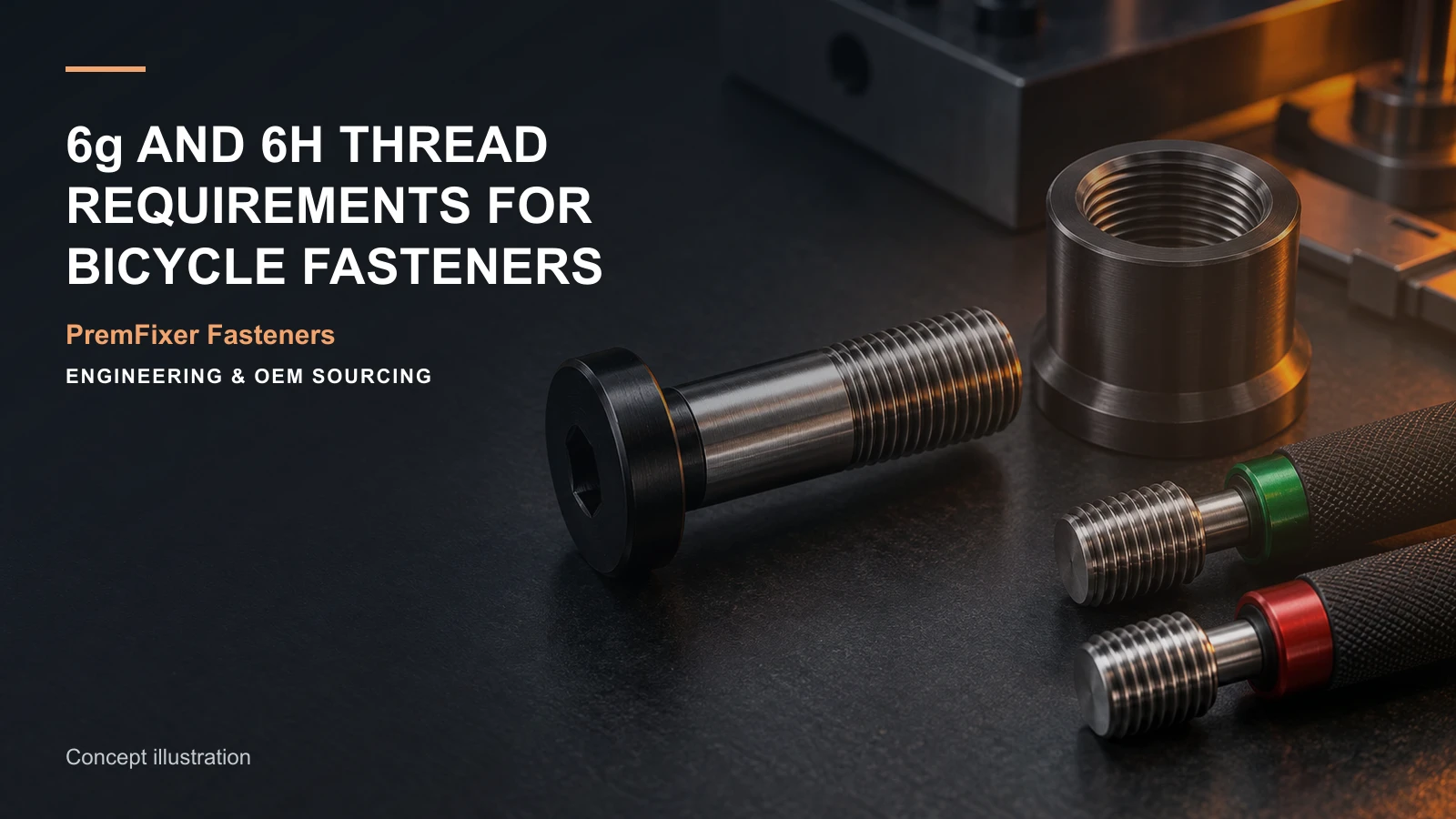
Writing 6g on an external metric thread and 6H on the mating internal thread is a useful starting point, not a complete production instruction. The thread pair still needs a defined size, engagement, surface state, locking method and inspection condition.
Fastener designers and supplier-quality engineers need to apply 6g and 6H thread requirements to the actual external and internal mating pair. The review should use the current drawing, BOM and project stage so that the recommendation applies to a real component or release.
Use this case as the working baseline: a finished male thread is checked before coating while the mating insert is sourced separately. Each section turns one part of the case into a reviewable project output.
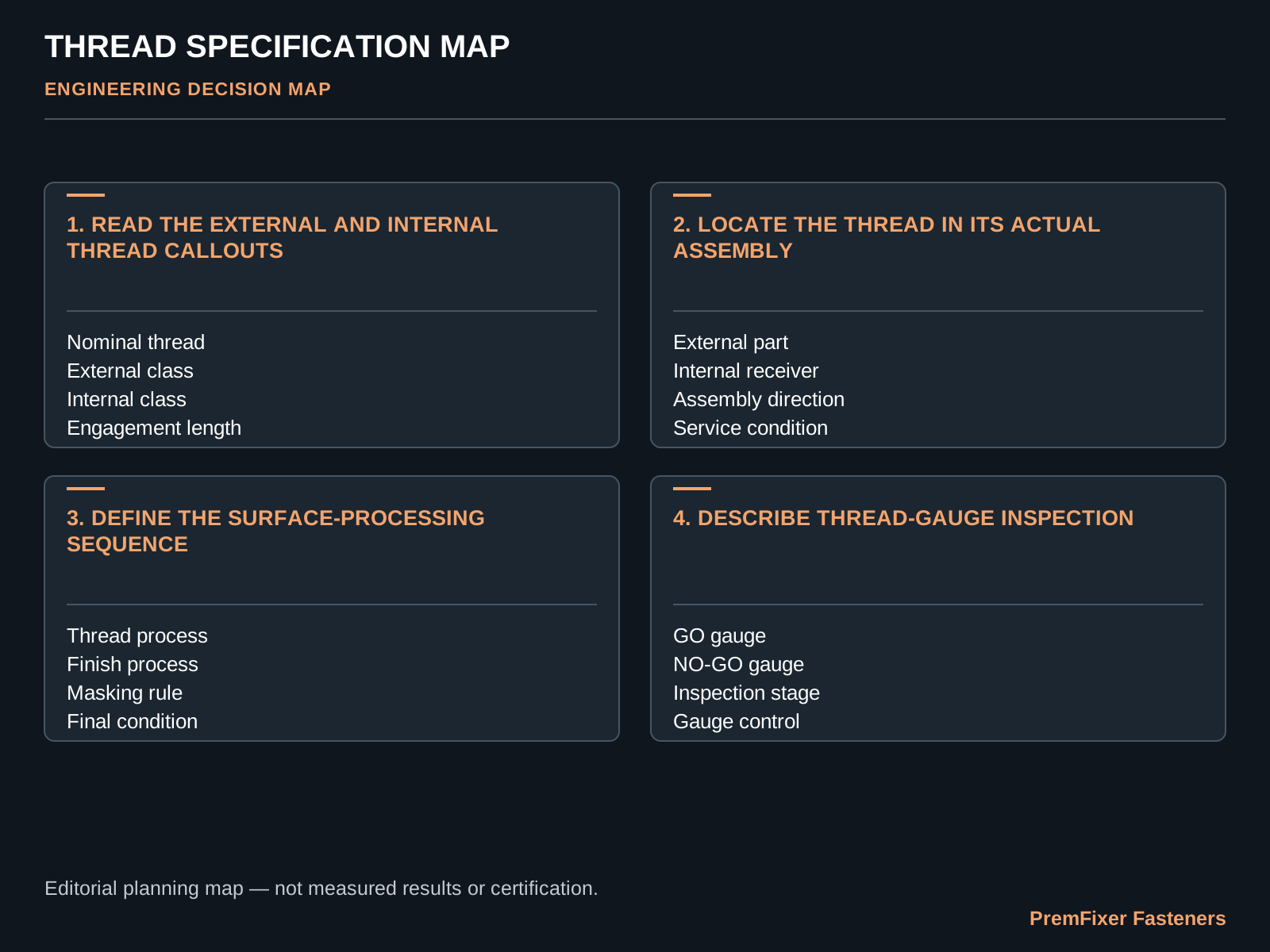
Read the external and internal thread callouts
Separate the nominal thread designation from the tolerance class applied to each member of the pair. The lowercase external class and uppercase internal class belong to different controlled features.
For the working record, connect Nominal thread, External class, Internal class and Engagement length. The immediate output should be a complete mating-thread callout. That record gives engineering, purchasing and manufacturing one configuration to discuss.
For the "Read the external and internal thread callouts" review, put external thread, internal thread, finish sequence, gauge state on the same sheet. Name the current revision, the decision owner and the condition that allows the part or program to move forward. The technical discussion then has a clear purchasing and release action.
Do not describe 6g or 6H as a material grade, strength class or universal quality score. If geometry, material, finish, process or assembly changes, identify the affected configuration and the question the next stage must answer.
Locate the thread in its actual assembly
Identify whether the thread sits in a nut, frame insert, axle, cap or other receiver and how the joint is assembled. Access, engagement and service expectations change the practical specification.
For the working record, connect External part, Internal receiver, Assembly direction and Service condition. The immediate output should be an assembly-specific thread definition. It also keeps the next sample, inspection or quotation tied to the same revision.
Under "Locate the thread in its actual assembly," compare the current and proposed conditions using External part, Internal receiver, Assembly direction, Service condition. Record the evidence source and any item that remains open. The buyer should be able to approve, reject or sample a specific supplier proposal.
Do not transfer the same engagement or service rule to a different receiver material without review. If geometry, material, finish, process or assembly changes, identify the affected configuration and the question the next stage must answer.
| Stage | Decision to make | Inputs to connect | Controlled output |
|---|---|---|---|
| 01 | Read the external and internal thread callouts | Nominal thread / External class / Internal class / Engagement length | a complete mating-thread callout |
| 02 | Locate the thread in its actual assembly | External part / Internal receiver / Assembly direction / Service condition | an assembly-specific thread definition |
| 03 | Define the surface-processing sequence | Thread process / Finish process / Masking rule / Final condition | a controlled process-and-finish sequence |
| 04 | Describe thread-gauge inspection | GO gauge / NO-GO gauge / Inspection stage / Gauge control | a finished-thread inspection instruction |
| 05 | Keep locking and thread geometry distinct | Thread class / Locking method / Application zone / Assembly instruction | a combined but clearly separated thread-and-locking specification |
| 06 | Write a complete threaded-part specification | Drawing callout / Finished state / Gauge requirement / Locking note | an RFQ-ready threaded-part brief |
Define the surface-processing sequence
State whether threads are cut, rolled, masked, coated or finished before the acceptance check. Surface treatment can change the delivered thread condition and gauge response.
For the working record, connect Thread process, Finish process, Masking rule and Final condition. The immediate output should be a controlled process-and-finish sequence. The result is a reviewable handover instead of an assumption passed between departments.
In "Define the surface-processing sequence," follow external thread, internal thread, finish sequence, gauge state through the relevant handoff. The output from one operation or team should be a usable input for the next. Missing ownership at that boundary often causes more disruption than the operation itself.
Do not assume that post-finish correction is always required or always acceptable. If geometry, material, finish, process or assembly changes, identify the affected configuration and the question the next stage must answer.
Describe thread-gauge inspection
Name the applicable working gauges, inspection stage and handling rule for the finished thread. A gauge result is meaningful only for the defined thread and delivered condition.
For the working record, connect GO gauge, NO-GO gauge, Inspection stage and Gauge control. The immediate output should be a finished-thread inspection instruction. That record gives engineering, purchasing and manufacturing one configuration to discuss.
Use external thread, internal thread, finish sequence, gauge state to define the sample question for "Describe thread-gauge inspection." The sample record should state what represents production, what is temporary and which decision follows the review. A conforming sample without that context can still leave the production route unsettled.
Do not replace the specified acceptance method with an informal mating-part trial. If geometry, material, finish, process or assembly changes, identify the affected configuration and the question the next stage must answer.
Keep locking and thread geometry distinct
Record patch, adhesive, prevailing-torque or mechanical retention separately from thread class. Locking behavior and geometric fit answer different engineering questions.
For the working record, connect Thread class, Locking method, Application zone and Assembly instruction. The immediate output should be a combined but clearly separated thread-and-locking specification. It also keeps the next sample, inspection or quotation tied to the same revision.
After "Keep locking and thread geometry distinct," carry external thread, internal thread, finish sequence, gauge state into repeat orders and service planning. Approved conditions should remain visible in stock, inspection records and packaging so that later lots do not depend on personal memory.
Do not claim a locking feature changes the underlying tolerance class. If geometry, material, finish, process or assembly changes, identify the affected configuration and the question the next stage must answer.
Write a complete threaded-part specification
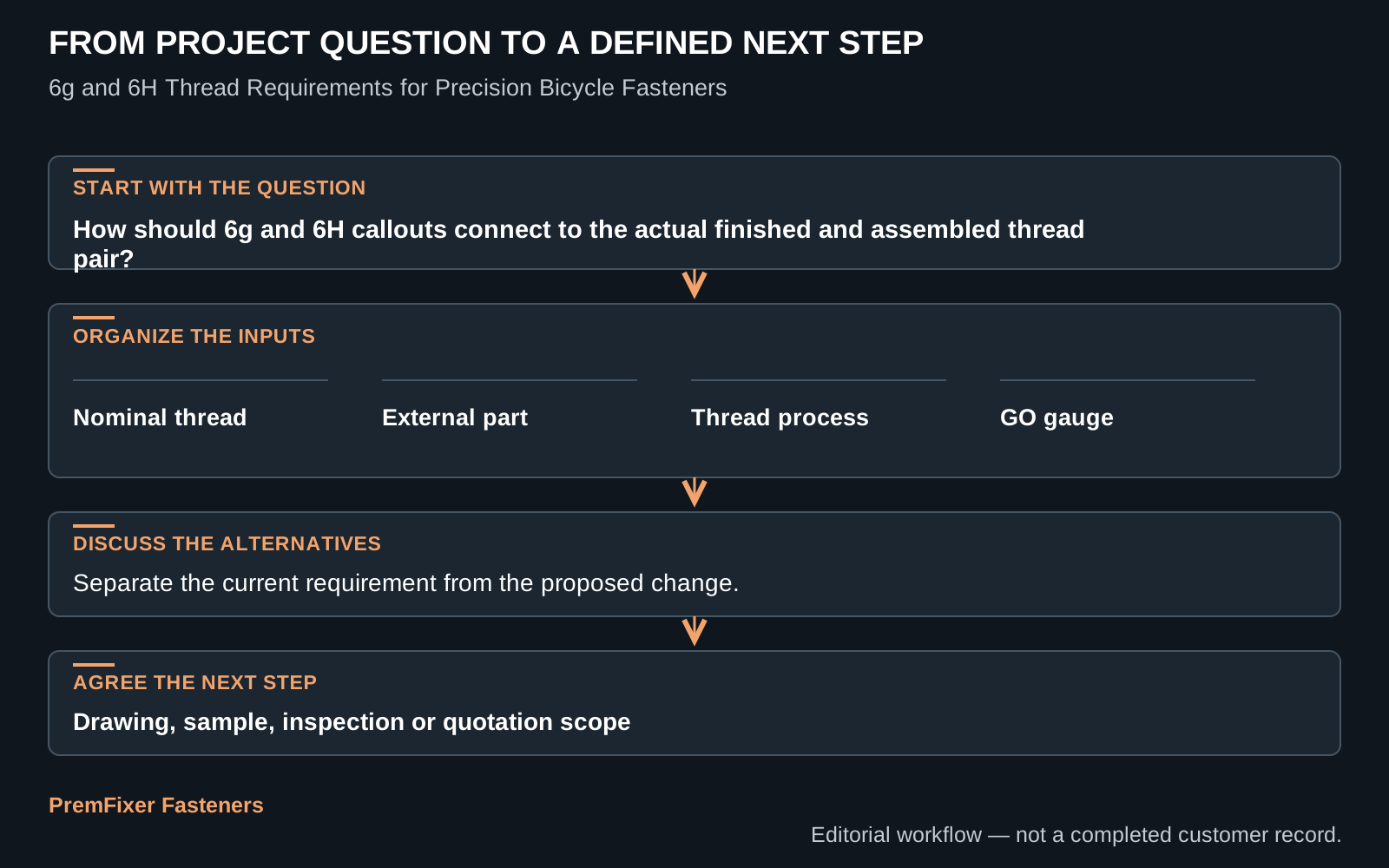
Combine the callout, engagement, finish state, gauge method and locking requirement on the controlled drawing or purchase specification. This gives manufacturing, inspection and assembly the same definition.
For the working record, connect Drawing callout, Finished state, Gauge requirement and Locking note. The immediate output should be an RFQ-ready threaded-part brief. The result is a reviewable handover instead of an assumption passed between departments.
Convert the result of "Write a complete threaded-part specification" into a quotation line that identifies external thread, internal thread, finish sequence, gauge state. Ask the supplier to state included work, customer inputs, open assumptions and release evidence. Alternative offers are easier to compare when scope is not hidden inside one unit price.
Do not publish a universal torque value from thread class alone. If geometry, material, finish, process or assembly changes, identify the affected configuration and the question the next stage must answer.
Check the decision against a production scenario
A production scenario gives the discussion a clear boundary: a finished male thread is checked before coating while the mating insert is sourced separately. State the model, volume stage, revision and destination before comparing alternatives.
For 6g and 6h thread requirements for precision bicycle fasteners, list the decisions that the customer has already made and the items still open to supplier input. Each open item should have one owner and one expected output.
Class labels can hide coating allowance, gauge condition and engagement requirements. Test the control where the issue can first be detected, then decide how the accepted condition will remain visible during repeat orders.
Use the pilot result for 6g and 6h thread requirements for precision bicycle fasteners to update the drawing, BOM, process or packing record. Avoid carrying an informal email decision into production when the controlled file still says something else.
Start the quotation with the thread designation, mating part, finished condition, engagement, gauge method and quantity. Ask for inclusions, exclusions, one-time work and the evidence supplied with the sample or lot.
Questions buyers ask
Which project decision comes first?
Fix the drawing and project state that frame the decision, then apply 6g and 6H thread requirements to the actual external and internal mating pair. A recommendation without that baseline may solve a different configuration.
What belongs in the first RFQ?
Provide the thread designation, mating part, finished condition, engagement, gauge method and quantity, including any requirement that is still open to supplier feedback. That distinction prevents assumptions from being priced as approved scope.
How should the sample be judged?
A finished male thread is checked before coating while the mating insert is sourced separately. Use the pilot to examine that condition rather than treating one conforming part as approval of the complete route.
Which risk needs an owner?
Class labels can hide coating allowance, gauge condition and engagement requirements. The review should show where the issue can be detected and who can stop the next release.
What can PremFixer review before quotation?
For this 6g and 6h thread requirements for precision bicycle fasteners decision, PremFixer can return clarification questions, a proposed route and the records expected at sample or production release.
Define the thread acceptance condition
Share the thread designation, mating part, finished condition, engagement, gauge method and quantity. The response will identify the proposed scope, open questions and the evidence needed before release.
Discuss This Project