
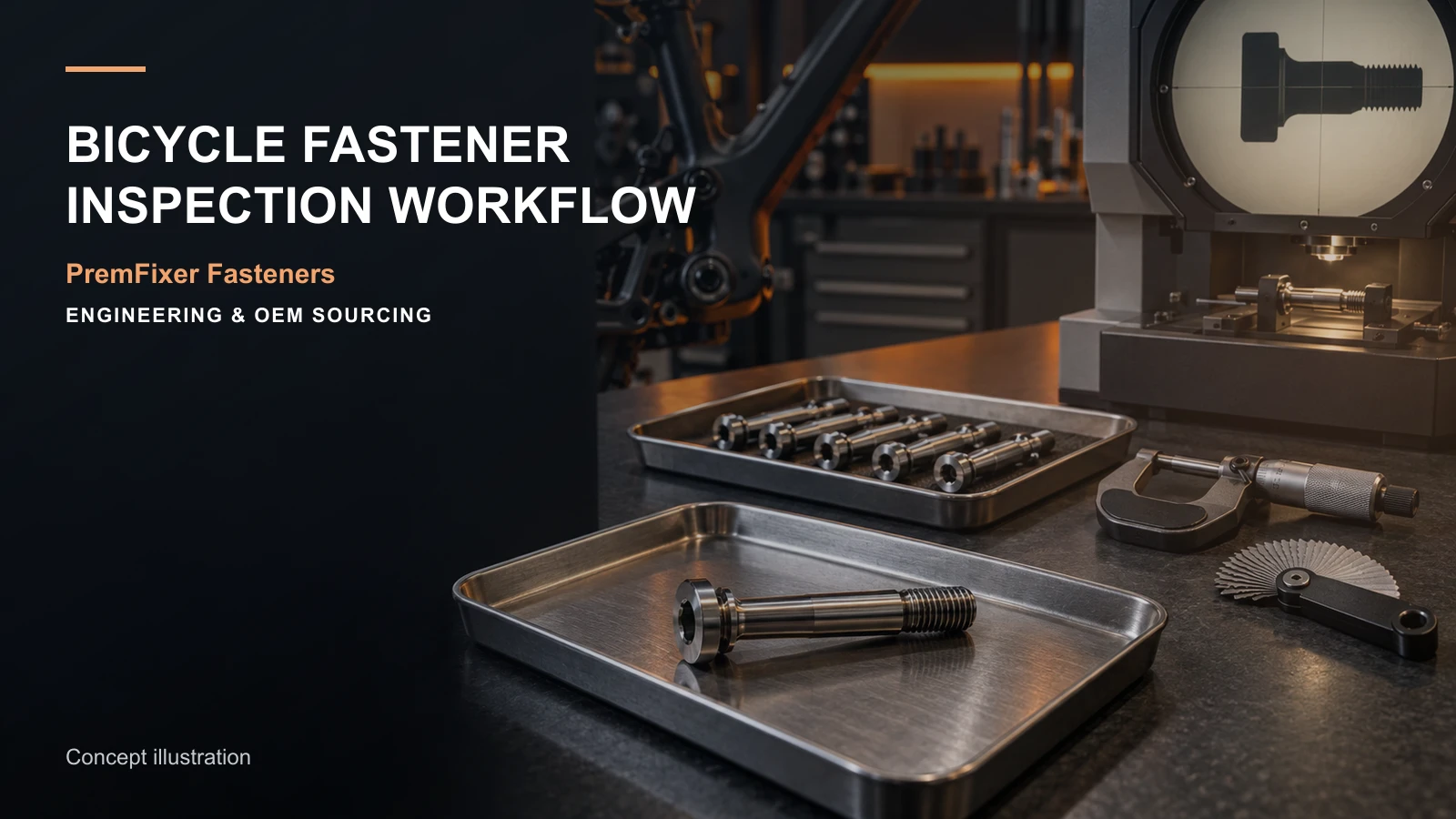
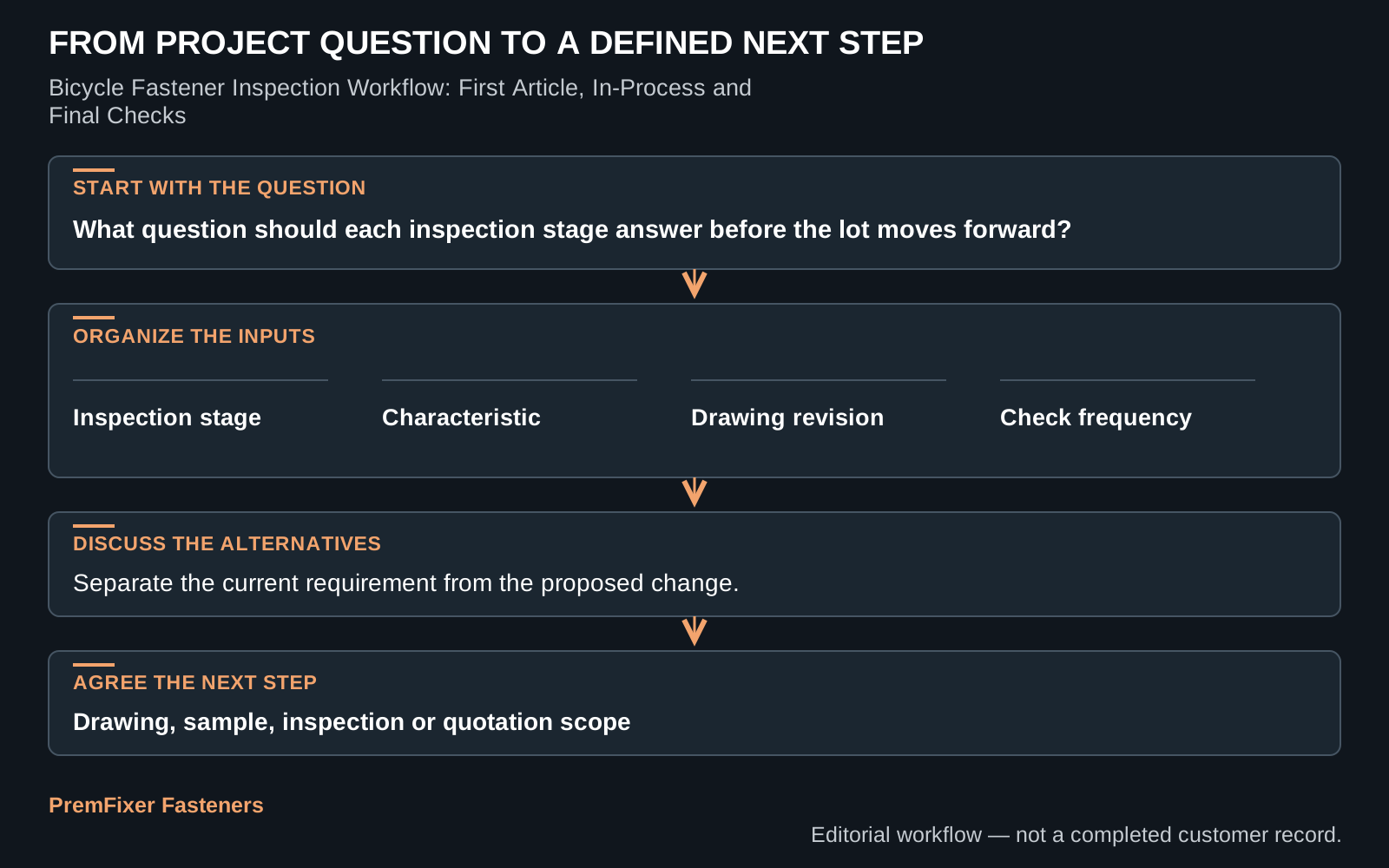
A long equipment list does not explain a quality system. The practical question is which feature is checked at first article, which signal is monitored during production, what is confirmed on the finished lot and how the records reach the OEM.
OEM quality and manufacturing teams need to assign first-article, in-process and final checks to the risks they can detect. The review should use the current drawing, BOM and project stage so that the recommendation applies to a real component or release.
Consider this working situation: a new axle revision enters production with a tool change halfway through the first batch. It connects the topic to the records, approvals and quotation inputs the program needs.
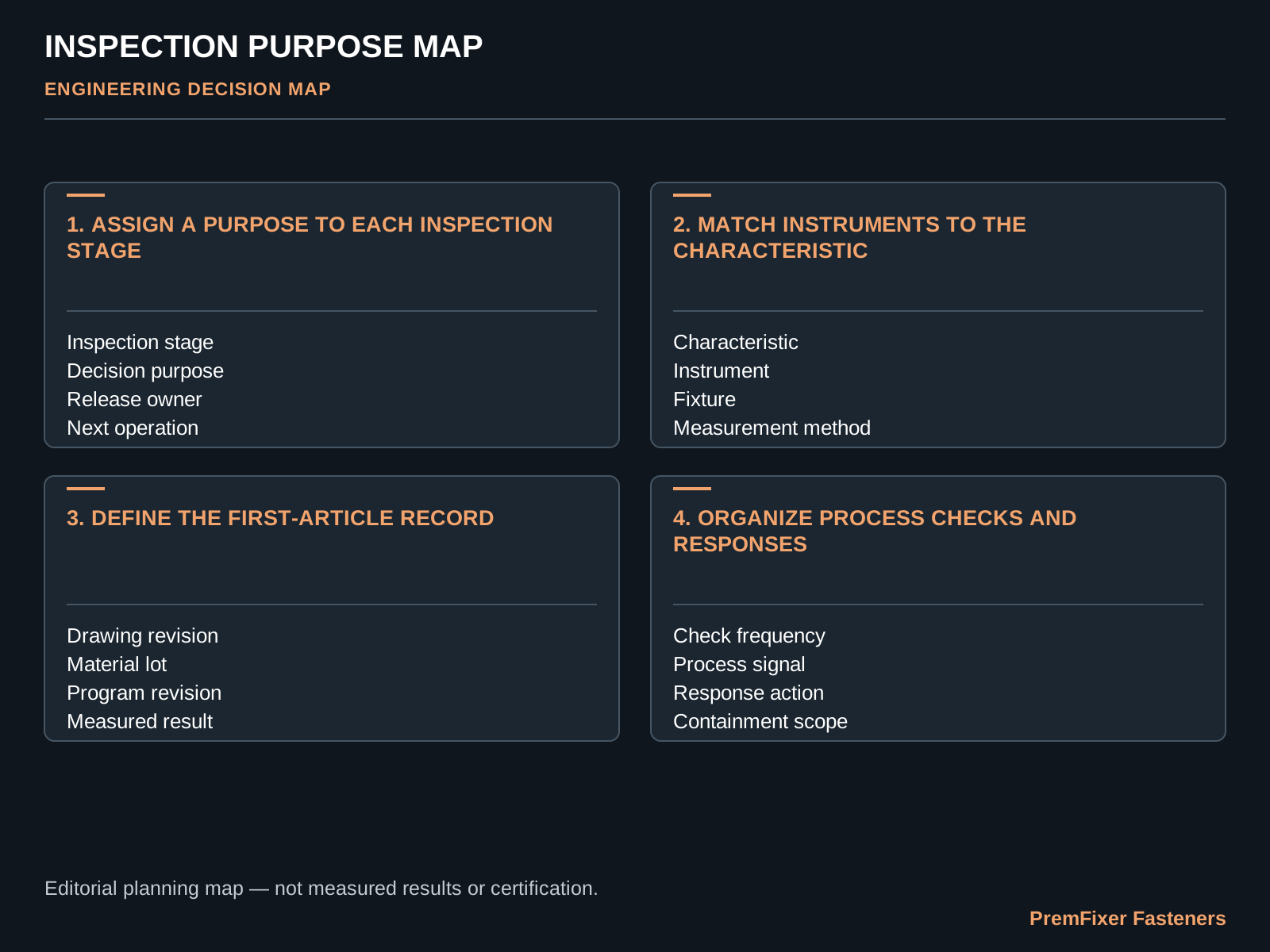
Assign a purpose to each inspection stage
Define first article, in-process, final and shipment checks by the decision each one supports. Repeating the same measurement at every stage adds records without necessarily adding control.
For the working record, connect Inspection stage, Decision purpose, Release owner and Next operation. The immediate output should be a stage-purpose inspection matrix. That record gives engineering, purchasing and manufacturing one configuration to discuss.
For the "Assign a purpose to each inspection stage" review, put inspection stage, controlled characteristic, instrument, response rule on the same sheet. Name the current revision, the decision owner and the condition that allows the part or program to move forward. The technical discussion then has a clear purchasing and release action.
Do not describe a final sort as a replacement for process control. If geometry, material, finish, process or assembly changes, identify the affected configuration and the question the next stage must answer.
Match instruments to the characteristic
Select gauges, micrometers, optical systems or CMM methods according to the feature and uncertainty needed. The instrument must establish the relationship called out on the drawing.
For the working record, connect Characteristic, Instrument, Fixture and Measurement method. The immediate output should be an instrument-to-feature plan. It also keeps the next sample, inspection or quotation tied to the same revision.
Under "Match instruments to the characteristic," compare the current and proposed conditions using Characteristic, Instrument, Fixture, Measurement method. Record the evidence source and any item that remains open. The buyer should be able to approve, reject or sample a specific supplier proposal.
Do not choose an instrument from availability alone when it cannot reproduce the required datum. If geometry, material, finish, process or assembly changes, identify the affected configuration and the question the next stage must answer.
| Stage | Decision to make | Inputs to connect | Controlled output |
|---|---|---|---|
| 01 | Assign a purpose to each inspection stage | Inspection stage / Decision purpose / Release owner / Next operation | a stage-purpose inspection matrix |
| 02 | Match instruments to the characteristic | Characteristic / Instrument / Fixture / Measurement method | an instrument-to-feature plan |
| 03 | Define the first-article record | Drawing revision / Material lot / Program revision / Measured result | a traceable first-article record |
| 04 | Organize process checks and responses | Check frequency / Process signal / Response action / Containment scope | an in-process control and reaction plan |
| 05 | Prepare the finished-part report | Delivered state / Final characteristic / Lot identity / Report format | a finished-lot inspection package |
| 06 | Present a coherent OEM handover | Approved drawing / Inspection summary / Lot reference / Exception status | an OEM-ready inspection handover |
Define the first-article record
Connect the first completed setup to the drawing revision, material lot, program and measured characteristics. First article confirms the setup baseline before the production lot continues.
For the working record, connect Drawing revision, Material lot, Program revision and Measured result. The immediate output should be a traceable first-article record. The result is a reviewable handover instead of an assumption passed between departments.
In "Define the first-article record," follow inspection stage, controlled characteristic, instrument, response rule through the relevant handoff. The output from one operation or team should be a usable input for the next. Missing ownership at that boundary often causes more disruption than the operation itself.
Do not present a first-article pass as proof that every later part is acceptable. If geometry, material, finish, process or assembly changes, identify the affected configuration and the question the next stage must answer.
Organize process checks and responses
Set the check location, frequency, response and containment rule for characteristics that can move during production. A check is useful only if the team knows what action follows a signal.
For the working record, connect Check frequency, Process signal, Response action and Containment scope. The immediate output should be an in-process control and reaction plan. That record gives engineering, purchasing and manufacturing one configuration to discuss.
Use inspection stage, controlled characteristic, instrument, response rule to define the sample question for "Organize process checks and responses." The sample record should state what represents production, what is temporary and which decision follows the review. A conforming sample without that context can still leave the production route unsettled.
Do not publish a universal sampling rate without the lot, process history and customer requirement. If geometry, material, finish, process or assembly changes, identify the affected configuration and the question the next stage must answer.
Prepare the finished-part report
Confirm the delivered material and finish state, final dimensions, appearance and lot identity in the required format. The report should describe the parts the customer actually receives.
For the working record, connect Delivered state, Final characteristic, Lot identity and Report format. The immediate output should be a finished-lot inspection package. It also keeps the next sample, inspection or quotation tied to the same revision.
After "Prepare the finished-part report," carry inspection stage, controlled characteristic, instrument, response rule into repeat orders and service planning. Approved conditions should remain visible in stock, inspection records and packaging so that later lots do not depend on personal memory.
Do not combine data from different revisions or lots without a clear grouping rule. If geometry, material, finish, process or assembly changes, identify the affected configuration and the question the next stage must answer.
Present a coherent OEM handover
Package the approved drawing, inspection summary, lot identity and exception status with the shipment. The receiving team needs a usable record, not a folder of unrelated files.
For the working record, connect Approved drawing, Inspection summary, Lot reference and Exception status. The immediate output should be an OEM-ready inspection handover. The result is a reviewable handover instead of an assumption passed between departments.
Convert the result of "Present a coherent OEM handover" into a quotation line that identifies inspection stage, controlled characteristic, instrument, response rule. Ask the supplier to state included work, customer inputs, open assumptions and release evidence. Alternative offers are easier to compare when scope is not hidden inside one unit price.
Keep certificates or test reports limited to work actually included in the order. If geometry, material, finish, process or assembly changes, identify the affected configuration and the question the next stage must answer.
Use a project example to test the proposal
Use one bounded work package to test the decision. A new axle revision enters production with a tool change halfway through the first batch. Give the package a part list, revision, owner and required completion state.
For bicycle fastener inspection workflow: first article, in-process and final checks, ask engineering to mark the functional interfaces and purchasing to define the quoted delivery unit. Quality can then identify the evidence needed at sample and production release.
Repeating the same final measurement at every stage leaves process-specific risks uncovered. Build a check around the point where that failure enters the workflow, rather than adding broad inspection after every operation.
Review the first result against the stated question for bicycle fastener inspection workflow: first article, in-process and final checks. If a material, finish, tool or quantity differs from production, keep the limitation with the sample record and decide whether another stage is required.
The RFQ should include the drawing, critical characteristics, process route, batch size, change events and required records. Request a scope matrix, timing assumptions and the exact output that will close the open project decision.
Questions buyers ask
Where should the engineering review begin?
Assign first-article, in-process and final checks to the risks they can detect. The comparison is credible only when every option uses the same part revision, quantity and delivered condition.
What information should the supplier receive?
The first package should contain the drawing, critical characteristics, process route, batch size, change events and required records. It should also state the immediate decision the customer needs from the supplier response.
What must a prototype demonstrate?
Base the pilot on this situation: a new axle revision enters production with a tool change halfway through the first batch. Record the representative operations and the approval that follows the result.
Which handoff deserves extra attention?
The main risk is that repeating the same final measurement at every stage leaves process-specific risks uncovered. Put one person in charge of the related drawing, handoff or release action.
What output should the RFQ request?
For bicycle fastener inspection workflow: first article, in-process and final checks, PremFixer can organize the files and open points into a manufacturing, sample and quotation response for the defined component or hardware set.
Build the inspection workflow
Share the drawing, critical characteristics, process route, batch size, change events and required records. The response will identify the proposed scope, open questions and the evidence needed before release.
Discuss This Project