
Teams often describe a preferred assembly as smooth, consistent or premium. Those words are useful starting observations, but manufacturing needs them translated into repeatable part features, surface states, tools and operator steps.
Assembly and supplier-quality engineers need to connect part variation, finish, torque and work instructions to repeatable joint assembly. The review should use the current drawing, BOM and project stage so that the recommendation applies to a real component or release.
Two accepted fastener lots produce different seating feel on the same frame line. Following that case from drawing through release exposes which questions belong to engineering, manufacturing, quality and purchasing.
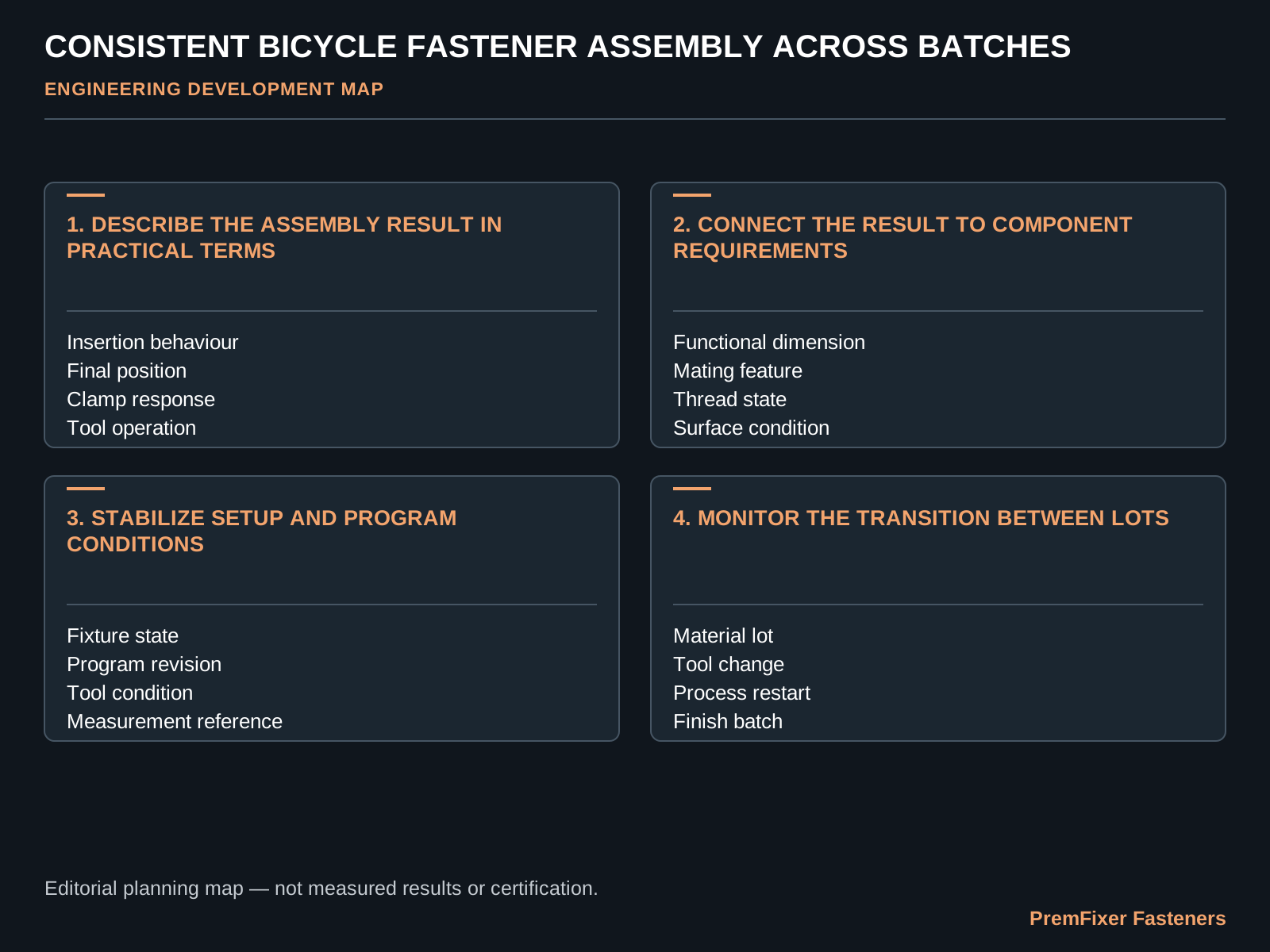
Describe the assembly result in practical terms
Separate insertion effort, final position, clamp response, appearance and tool operation into observable conditions. A practical description gives engineering and production something they can connect to the components.
Build the working record around Insertion behaviour, Final position, Clamp response and Tool operation. The practical output is an assembly-result definition.
For the "Describe the assembly result in practical terms" review, put assembly observation, functional feature, process state, lot transition on the same sheet. Name the current revision, the decision owner and the condition that allows the part or program to move forward. The technical discussion then has a clear purchasing and release action.
Do not use a broad premium-feel phrase as the only acceptance rule.
Connect the result to component requirements
Map each observation to dimensions, fits, end faces, threads and surface conditions across the mating parts. No single tolerance can explain the entire assembly.
Keep the review anchored to Functional dimension, Mating feature, Thread state and Surface condition. The practical output is a component-to-assembly relationship map.
Under "Connect the result to component requirements," compare the current and proposed conditions using Functional dimension, Mating feature, Thread state, Surface condition. Record the evidence source and any item that remains open. The buyer should be able to approve, reject or sample a specific supplier proposal.
Do not assign all variation to one nominal precision value.
| Review stage | Project question | Inputs to connect | Expected output |
|---|---|---|---|
| 01 | Describe the assembly result in practical terms | Insertion behaviour / Final position / Clamp response / Tool operation | an assembly-result definition |
| 02 | Connect the result to component requirements | Functional dimension / Mating feature / Thread state / Surface condition | a component-to-assembly relationship map |
| 03 | Stabilize setup and program conditions | Fixture state / Program revision / Tool condition / Measurement reference | a repeatable setup and restart checklist |
| 04 | Monitor the transition between lots | Material lot / Tool change / Process restart / Finish batch | a lot-transition verification plan |
| 05 | Feed assembly observations back into production | Part number / Revision / Lot identity / Assembly observation | a traceable feedback and disposition record |
| 06 | Define the repeat-order baseline | Accepted revision / Reference sample / Assembly instruction / Packing identity | a repeat-order configuration baseline |
Stabilize setup and program conditions
Control the fixture, program, tool state, measurement reference and relevant environmental conditions for repeat work. Stable production comes from managed inputs rather than a zero-variation promise.
Put the following fields on the same revision-controlled page: Fixture state, Program revision, Tool condition and Measurement reference. The practical output is a repeatable setup and restart checklist.
In "Stabilize setup and program conditions," follow assembly observation, functional feature, process state, lot transition through the relevant handoff. The output from one operation or team should be a usable input for the next. Missing ownership at that boundary often causes more disruption than the operation itself.
Do not claim that temperature control or calibration removes every source of variation.
Monitor the transition between lots
Add review points when material lots, tools, restarts, treatment batches or suppliers change. Transitions are where an accepted process can drift without a drawing change.
Build the working record around Material lot, Tool change, Process restart and Finish batch. The practical output is a lot-transition verification plan.
Use assembly observation, functional feature, process state, lot transition to define the sample question for "Monitor the transition between lots." The sample record should state what represents production, what is temporary and which decision follows the review. A conforming sample without that context can still leave the production route unsettled.
Do not mix production states under one batch identity.
Feed assembly observations back into production
Return assembly feedback to the exact part number, revision, lot and measured feature that can be investigated. A general complaint cannot guide corrective work across multiple models and batches.
Keep the review anchored to Part number, Revision, Lot identity and Assembly observation. The practical output is a traceable feedback and disposition record.
After "Feed assembly observations back into production," carry assembly observation, functional feature, process state, lot transition into repeat orders and service planning. Approved conditions should remain visible in stock, inspection records and packaging so that later lots do not depend on personal memory.
Do not invent statistical trends when only individual observations are available.
Define the repeat-order baseline
Record the accepted part state, reference sample, inspection language, assembly instruction and packaging identity. That baseline supports repeat orders while leaving controlled room for improvement.
Put the following fields on the same revision-controlled page: Accepted revision, Reference sample, Assembly instruction and Packing identity. The practical output is a repeat-order configuration baseline.
Convert the result of "Define the repeat-order baseline" into a quotation line that identifies assembly observation, functional feature, process state, lot transition. Ask the supplier to state included work, customer inputs, open assumptions and release evidence. Alternative offers are easier to compare when scope is not hidden inside one unit price.
Do not let later changes silently replace the accepted state.
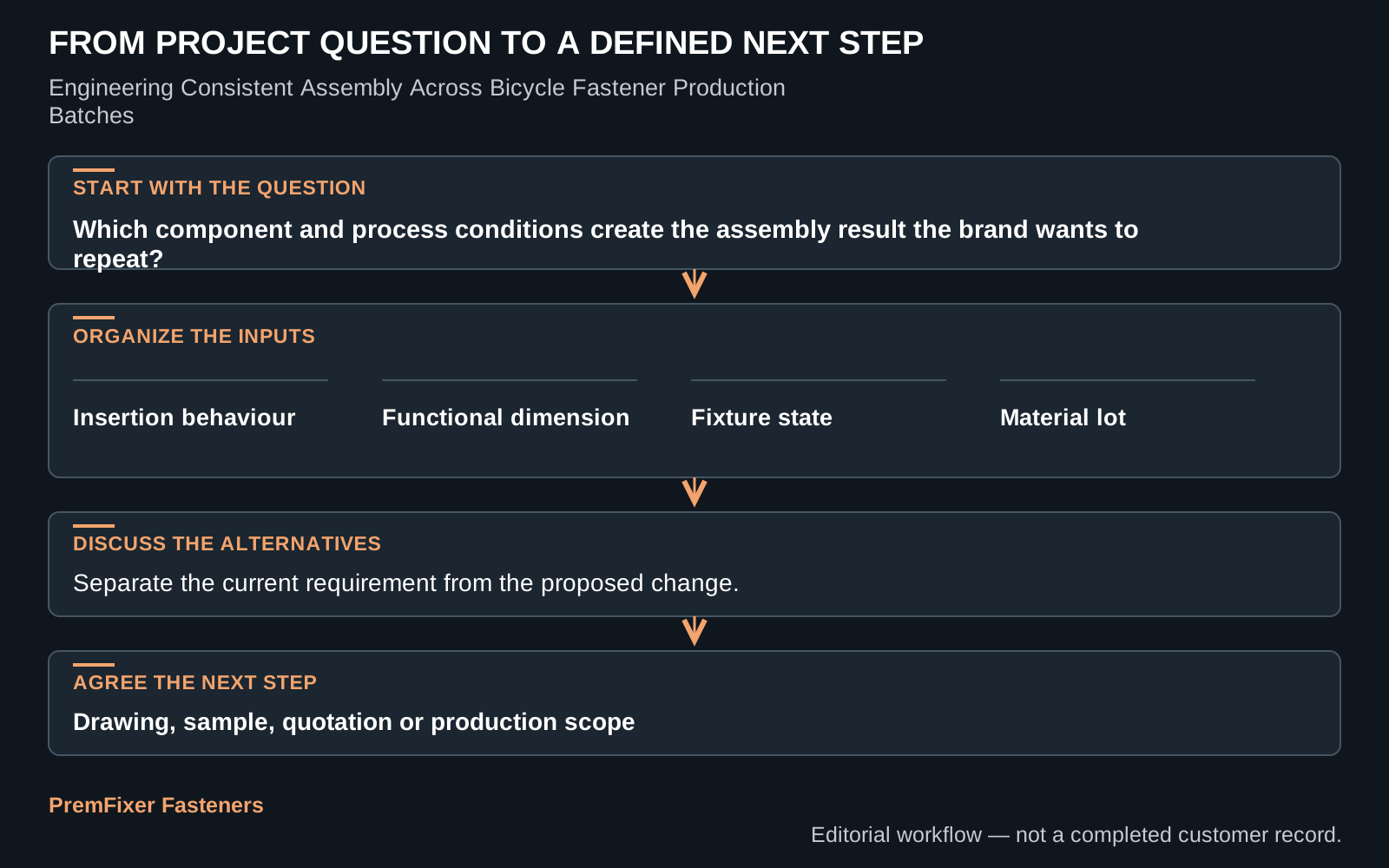
Turn the comparison into a controlled work package
Two accepted fastener lots produce different seating feel on the same frame line. Map that case from customer input to accepted delivery, including every point where the part, information or approval changes hands.
For each engineering consistent assembly across bicycle fastener production batches handoff, write the input, responsible person, expected output and rejection condition. This short record makes schedule and responsibility visible without a large process manual.
Dimensional conformity alone can miss friction, burr, finish or stack effects. Compare the proposed controls with the current route and choose evidence that can reveal the difference during a representative sample or pilot.
Once the result for engineering consistent assembly across bicycle fastener production batches is accepted, update the released files and any stock or service identity affected by the change. Keep superseded material separate whenever interchangeability has not been approved.
Provide the joint drawing, accepted lots, assembly method, finish condition, tools and observed variation. A useful supplier reply links technical questions, commercial scope and release evidence to the same project revision.
Questions buyers ask
What should buyers define before comparing offers?
Fix the drawing and project state that frame the decision, then connect part variation, finish, torque and work instructions to repeatable joint assembly. A recommendation without that baseline may solve a different configuration.
Which files make the review useful?
Provide the joint drawing, accepted lots, assembly method, finish condition, tools and observed variation, including any requirement that is still open to supplier feedback. That distinction prevents assumptions from being priced as approved scope.
When is a pilot needed?
Two accepted fastener lots produce different seating feel on the same frame line. Use the pilot to examine that condition rather than treating one conforming part as approval of the complete route.
What commonly remains hidden?
Dimensional conformity alone can miss friction, burr, finish or stack effects. The review should show where the issue can be detected and who can stop the next release.
How can PremFixer support the next step?
For this engineering consistent assembly across bicycle fastener production batches decision, PremFixer can return clarification questions, a proposed route and the records expected at sample or production release.
Investigate assembly consistency
Share the joint drawing, accepted lots, assembly method, finish condition, tools and observed variation. The response will identify the proposed scope, open questions and the evidence needed before release.
Discuss This Project