
The source brief uses BATTLE and Phoenix as cooperation references. The transferable lesson is the working mechanism: how an early technical review becomes a sample, how the sample becomes a controlled revision and how recurring orders stay connected to the approved configuration.
Bicycle brand development teams need to structure a development partnership from drawing review through repeat orders. The review should use the current drawing, BOM and project stage so that the recommendation applies to a real component or release.
A named brand program begins with prototype pivot hardware and later expands into a model family. The review needs a defined baseline, named handoffs and a sample or RFQ that closes the next decision.
Define the cooperation described in the brief
State the part families, development stage and expected working relationship without expanding the source into exclusivity or universal supply claims. The cooperation model is only useful when its scope is visible.
Build the working record around Part family, Development stage, Working scope and Order horizon. The practical output is a bounded brand-cooperation brief.
For the "Define the cooperation described in the brief" review, put cooperation scope, development stage, revision flow, repeat demand on the same sheet. Name the current revision, the decision owner and the condition that allows the part or program to move forward. The technical discussion then has a clear purchasing and release action.
Do not imply exclusive status, approval, every sub-brand or a broader relationship than the supplied brief supports.
Explain early technical participation
Connect geometry, material and manufacturing suggestions to the drawing and decision that the brand team owns. Early participation should create reviewable outputs rather than informal advice.
Keep the review anchored to Design question, Engineering suggestion, Affected drawing and Approval owner. The practical output is a controlled early-engineering handover.
Under "Explain early technical participation," compare the current and proposed conditions using Design question, Engineering suggestion, Affected drawing, Approval owner. Record the evidence source and any item that remains open. The buyer should be able to approve, reject or sample a specific supplier proposal.
Do not invent a specific model, meeting date or project milestone.
| Review stage | Project question | Inputs to connect | Expected output |
|---|---|---|---|
| 01 | Define the cooperation described in the brief | Part family / Development stage / Working scope / Order horizon | a bounded brand-cooperation brief |
| 02 | Explain early technical participation | Design question / Engineering suggestion / Affected drawing / Approval owner | a controlled early-engineering handover |
| 03 | Connect development to recurring orders | Sample revision / Forecast demand / Firm release / Delivery configuration | a repeat-order and configuration plan |
| 04 | Manage product iterations together | Change request / Affected part / Implementation window / Communication owner | a shared revision and implementation workflow |
| 05 | Present experience without inventing a case record | Service stage / Customer input / Supplier output / Approval gate | a reusable partnership operating model |
| 06 | Translate the model to a new brand program | Representative family / Current drawings / Model plan / Long-term demand | a practical new-brand development brief |
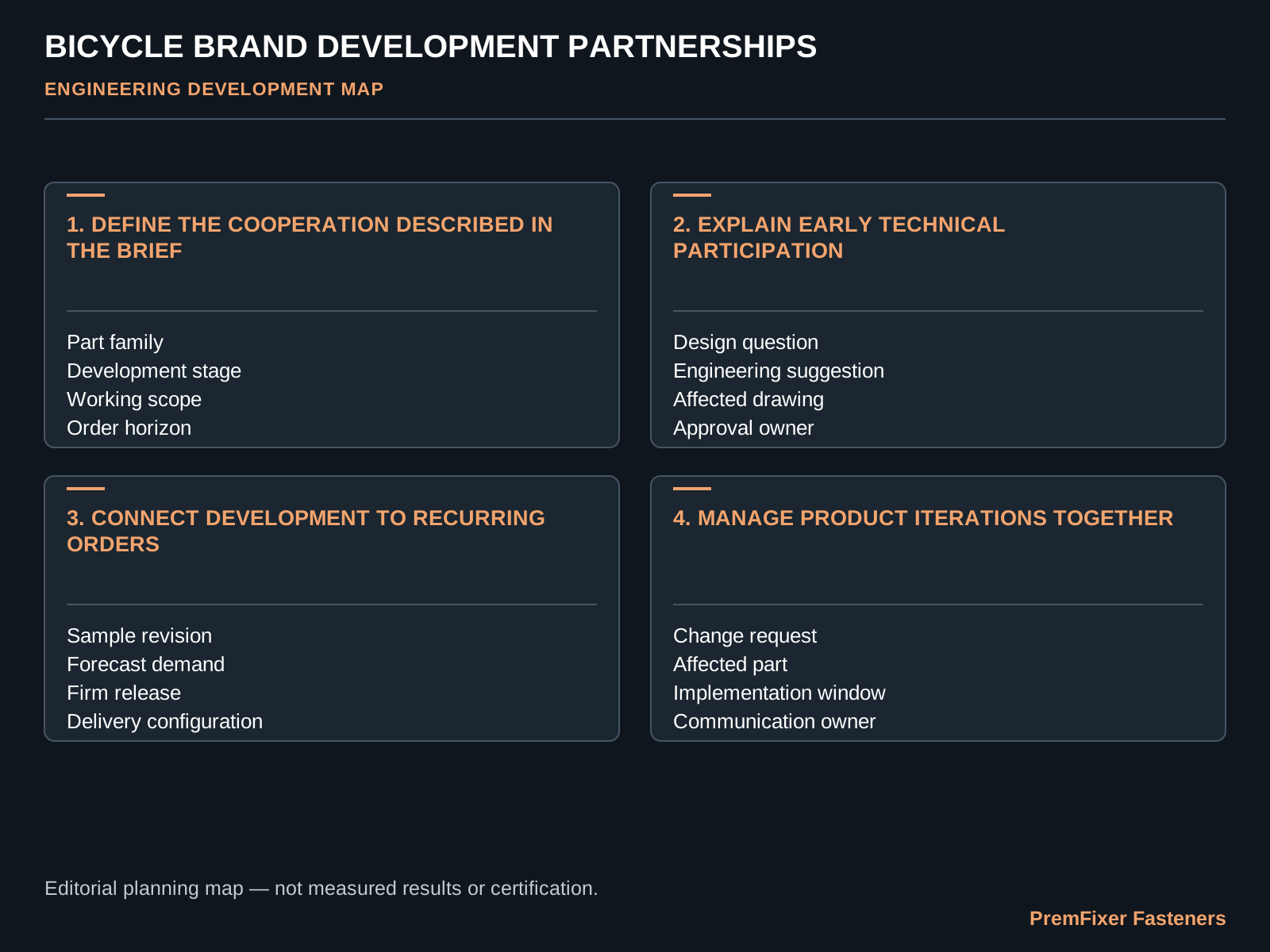
Connect development to recurring orders
Link samples, forecast demand, firm releases, revisions and delivery configuration across the program. Repeat orders depend on continuity as much as unit production.
Put the following fields on the same revision-controlled page: Sample revision, Forecast demand, Firm release and Delivery configuration. The practical output is a repeat-order and configuration plan.
In "Connect development to recurring orders," follow cooperation scope, development stage, revision flow, repeat demand through the relevant handoff. The output from one operation or team should be a usable input for the next. Missing ownership at that boundary often causes more disruption than the operation itself.
Do not invent contract values, annual volumes or guaranteed continuity.
Manage product iterations together
Use a defined change window and communication owner for design, manufacturing and packaging revisions. Iteration becomes risky when one team changes a feature without updating the production baseline.
Build the working record around Change request, Affected part, Implementation window and Communication owner. The practical output is a shared revision and implementation workflow.
Use cooperation scope, development stage, revision flow, repeat demand to define the sample question for "Manage product iterations together." The sample record should state what represents production, what is temporary and which decision follows the review. A conforming sample without that context can still leave the production route unsettled.
Do not mix old and new configurations inside one uncontrolled release.
Present experience without inventing a case record
Describe the service chain and collaboration method rather than constructing an unverified success narrative. The workflow can stand on its own without fabricated performance figures.
Keep the review anchored to Service stage, Customer input, Supplier output and Approval gate. The practical output is a reusable partnership operating model.
After "Present experience without inventing a case record," carry cooperation scope, development stage, revision flow, repeat demand into repeat orders and service planning. Approved conditions should remain visible in stock, inspection records and packaging so that later lots do not depend on personal memory.
Do not add zero-defect claims, sales results, model launches or private customer records.
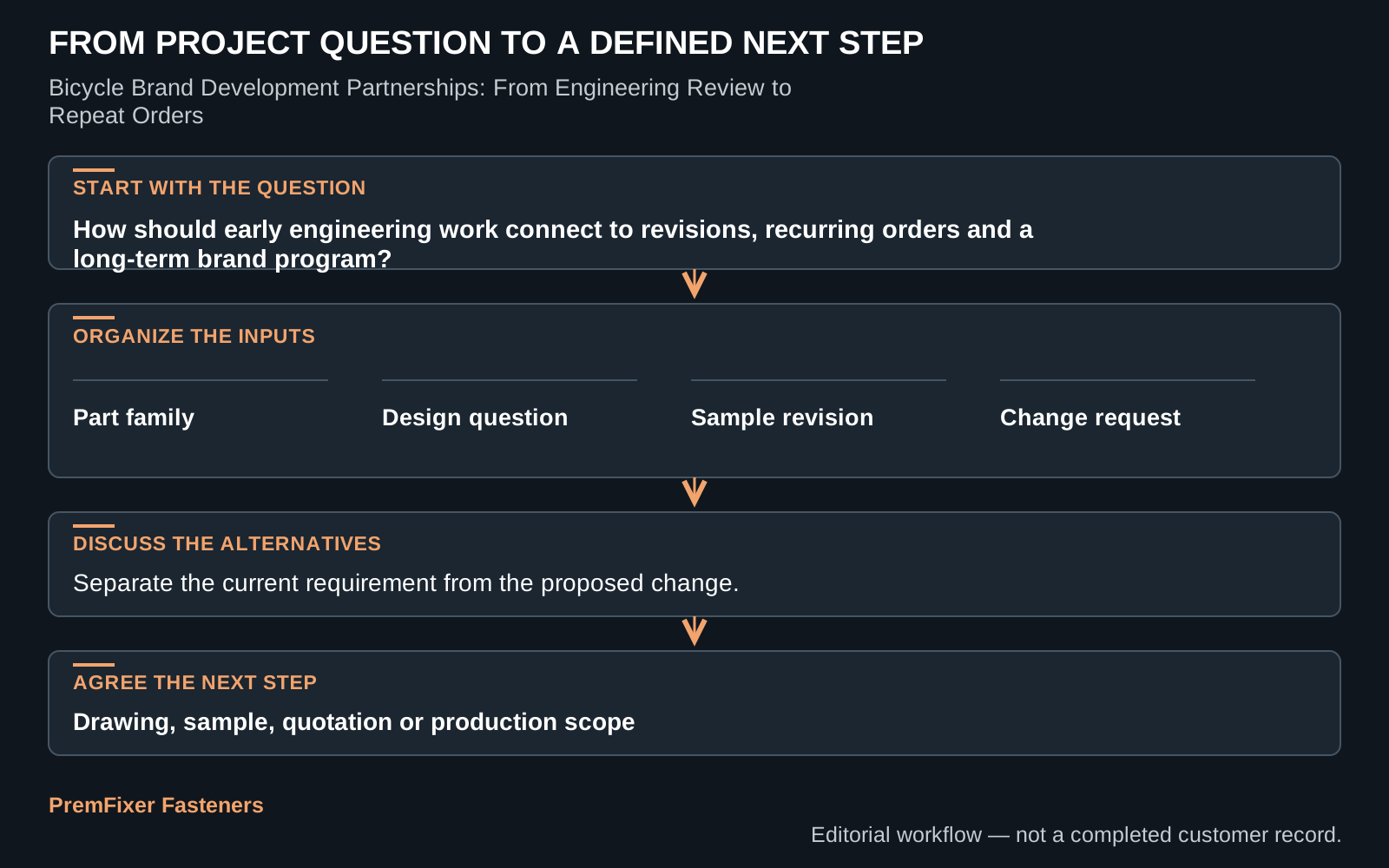
Translate the model to a new brand program
Start a new discussion with one representative hardware family, current drawings and a demand plan. A bounded pilot lets both teams establish the handover before expanding the program.
Put the following fields on the same revision-controlled page: Representative family, Current drawings, Model plan and Long-term demand. The practical output is a practical new-brand development brief.
Convert the result of "Translate the model to a new brand program" into a quotation line that identifies cooperation scope, development stage, revision flow, repeat demand. Ask the supplier to state included work, customer inputs, open assumptions and release evidence. Alternative offers are easier to compare when scope is not hidden inside one unit price.
Do not assume that every customer needs the same partnership depth or supply arrangement.
Turn the comparison into a controlled work package
A named brand program begins with prototype pivot hardware and later expands into a model family. Map that case from customer input to accepted delivery, including every point where the part, information or approval changes hands.
For each bicycle brand development partnerships: from engineering review to repeat orders handoff, write the input, responsible person, expected output and rejection condition. This short record makes schedule and responsibility visible without a large process manual.
Brand references can replace real scope unless deliverables, approvals and publication permission are explicit. Compare the proposed controls with the current route and choose evidence that can reveal the difference during a representative sample or pilot.
Once the result for bicycle brand development partnerships: from engineering review to repeat orders is accepted, update the released files and any stock or service identity affected by the change. Keep superseded material separate whenever interchangeability has not been approved.
Provide the target hardware, current files, phases, quantities, approval owners and confidentiality limits. A useful supplier reply links technical questions, commercial scope and release evidence to the same project revision.
Questions buyers ask
Which project decision comes first?
Begin with the current configuration, then structure a development partnership from drawing review through repeat orders. Name the owner and the output required before price, schedule or supplier preference is treated as final.
What belongs in the first RFQ?
Send the target hardware, current files, phases, quantities, approval owners and confidentiality limits. Separate fixed requirements from open fields so the supplier can price the confirmed scope and respond to the engineering questions.
How should the sample be judged?
A named brand program begins with prototype pivot hardware and later expands into a model family. A sample or pilot should answer named questions and disclose any material, finish, process or quantity that differs from production.
Which risk needs an owner?
Brand references can replace real scope unless deliverables, approvals and publication permission are explicit. Connect the risk to a drawing characteristic, process handoff, approval or delivery record and verify its closure.
What can PremFixer review before quotation?
PremFixer can review the available drawing, model, BOM or sample with the target hardware, current files, phases, quantities, approval owners and confidentiality limits. The response can identify open questions, proposed scope and evidence for the next decision.
Define the development work package
Share the target hardware, current files, phases, quantities, approval owners and confidentiality limits. The response will identify the proposed scope, open questions and the evidence needed before release.
Discuss This Project