
Build-to-print manufacturing is efficient when the drawing, mating interfaces, material, finish and acceptance criteria are already released. Early design support is useful when the bicycle team still needs to resolve tool access, shoulder geometry, part split, process sequence or the purpose of the first sample.
These are not competing supplier labels. They are different project modes. A program may begin with a focused design-for-manufacturing review, move through prototype questions and then become a conventional build-to-print order once the configuration is approved. Problems arise when the team expects design work inside a production quote or treats an informal suggestion as an authorized drawing change.
The practical choice depends on design maturity, not company size. This guide shows what to request at each stage and how to carry decisions into a controlled production release.
Match the supplier scope to design maturity
Start by rating the inputs, not the calendar. A released drawing has defined interfaces, materials, finish notes, revision identity and acceptance requirements. An early concept may have a 3D envelope and known joint function but still lack a finalized part split or process-compatible detail. A prototype drawing may sit between those states.
Build-to-print is appropriate when the manufacturer can prepare the route without deciding the product architecture. Early support is appropriate when manufacturing consequences could still influence geometry or the sample plan. Make the requested scope explicit in the RFQ so quotation time is not confused with open-ended engineering work.
A supplier can flag risks in either mode, but only an early-support scope reserves time to compare alternatives and document a recommendation before release.
| Project state | Useful supplier task | Customer output |
|---|---|---|
| Concept | Review envelope, interfaces and candidate processes | Selected part concept and open-question list |
| Drawing review | Identify access, tolerance and sequence concerns | Approved change record or confirmed drawing |
| Prototype | Produce a sample tied to stated questions | Fit, assembly or process learning |
| Released production | Manufacture and inspect to controlled inputs | Accepted lot and traceable records |
Review interfaces before isolated dimensions
For a bicycle pivot part, send the bearing arrangement, linkage or frame section, spacer stack, tightening direction and tool envelope together with the component drawing. A dimension can only be judged properly when its function in the assembly is visible.
The review should distinguish locating diameters, clamp faces, thread engagement, clearance features, cosmetic surfaces and service access. This makes tolerance discussions more useful: the team can protect the relationships that control the joint while avoiding unnecessary precision on unrelated geometry.
If the mating part is still changing, mark the interface as open. A supplier proposal based on an unstable stack should be treated as a concept, not a production commitment.
Record DFM feedback as a decision
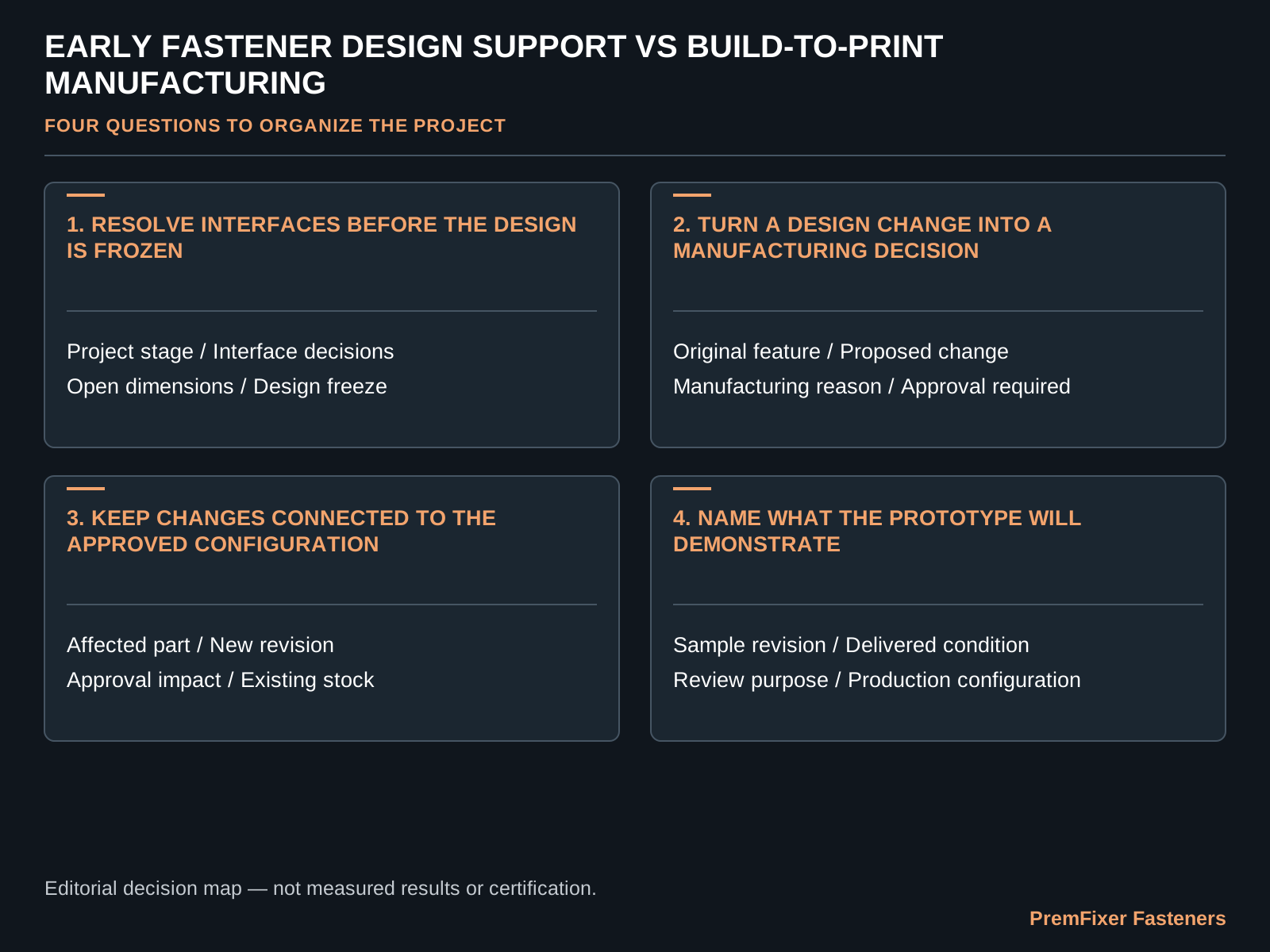
Good DFM feedback names the original feature, the suggested alternative, the manufacturing reason and the product question that remains. ‘Make it easier to machine’ is not enough. A useful note might explain that a tool cannot reach a transition, that a datum is inaccessible after finishing or that a tolerance would require a separate operation.
For each proposal, record what changes in function, appearance, inspection and cost. The customer can then accept it, reject it or request a prototype comparison. Keep the decision with the drawing revision so the factory does not have to interpret email history during production preparation.
This is especially important for load paths and bearing interfaces. Manufacturing advice can clarify consequences, but it does not replace the OEM’s structural and vehicle-level validation.
Make each prototype answer one set of questions
A first prototype does not need to reproduce every production detail if its purpose is narrowly defined. A rapid geometry sample may answer fit and tool-access questions. A production-route sample is more suitable for checking finished dimensions, appearance and inspection flow. An assembly pilot can evaluate kit completeness and line handling.
Write the sample objective on the order and identify any non-representative material, finish or process. Without that note, later teams may treat a convenient prototype substitution as an approved production condition.
Close the sample with a decision log: what passed, what changed, what remains open and which revision moves forward. This small record is the bridge between collaborative development and build-to-print execution.
Define the handoff to build-to-print
The handoff occurs when the customer releases the drawing and related requirements that the supplier will manufacture against. Confirm the part number, revision, approved material condition, finish route, critical characteristics, inspection documents, packaging and quantity. Close or explicitly defer every early-stage question.
After release, proposed deviations should return through a change process rather than being absorbed into shop-floor judgment. This protects both parties: the manufacturer knows what is authorized, and the OEM can trace why the delivered part differs from an earlier sample.
For repeat orders, the same release package supports quoting, planning and service stock. It also makes supplier transfer or dual sourcing more practical if the business later requires it.
Choose the right first conversation
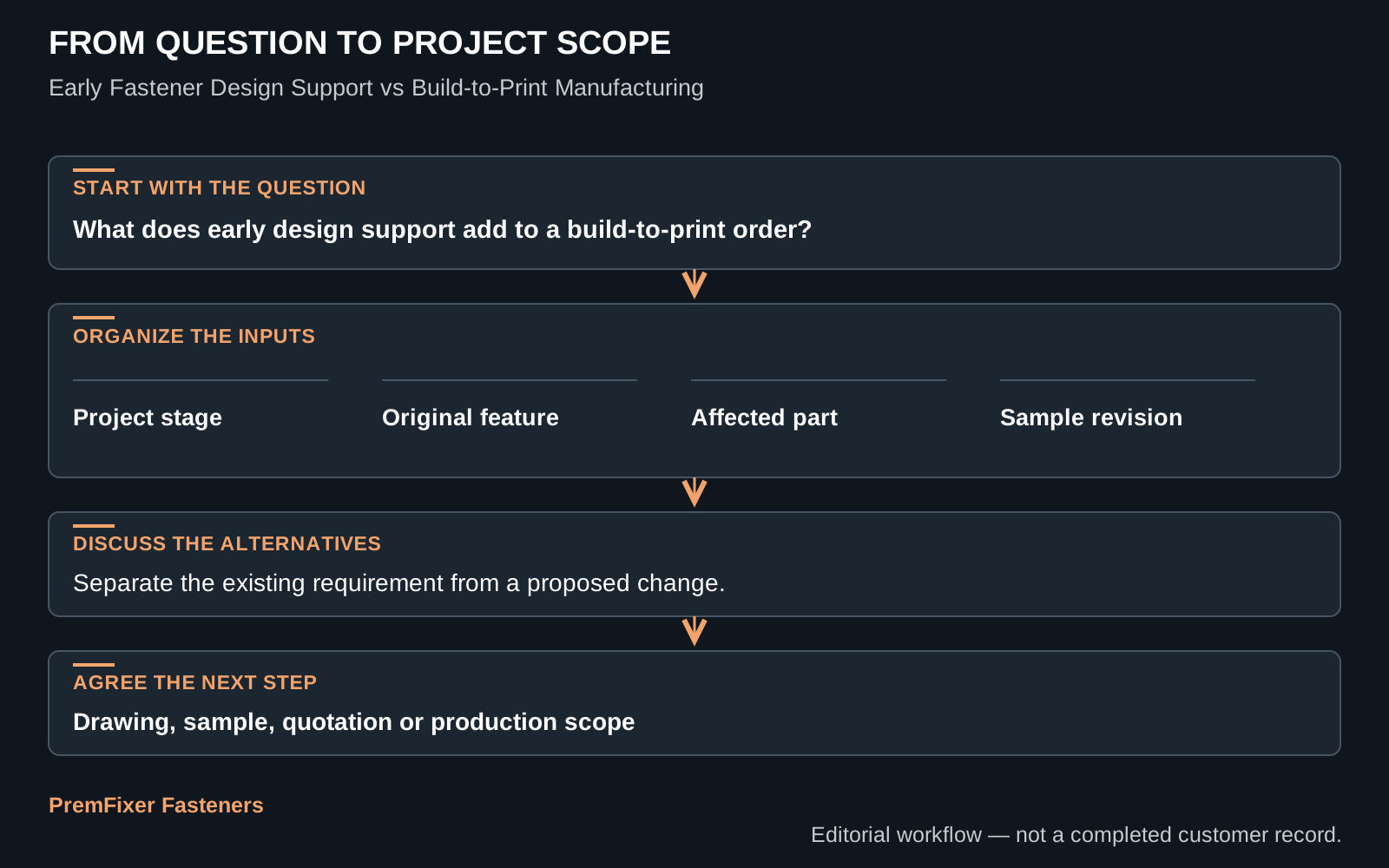
If the drawing is released, request a build-to-print quote and list any commercial options separately. If important interfaces or processes remain open, request a defined engineering review with named questions. If only a physical part exists, provide the sample context and explain what must be preserved, measured or changed.
Include expected annual volume and project timing even during early work because they influence sensible process choices. A design suited to a few development pieces may not be the best route for repeat production, and a production-optimized route may be disproportionate for concept screening.
PremFixer can begin from a drawing, model, BOM or sample. The most productive brief states the current maturity, the decision owner and what the next sample or quotation needs to establish.
Use a pivot-axle example to set the boundary
Suppose an OEM has a pivot-axle model with the bearing layout fixed but the head profile, tool recess and thread-side retention still open. Asking for a build-to-print quote at this point forces each supplier to make different assumptions. Asking for unlimited design help is also unclear. A bounded early review can compare two head concepts, confirm available tool access and identify how the retention choice changes machining and assembly.
The supplier should return marked views, manufacturing reasons and questions—not silently revise the model. The OEM can select an option, update the controlled drawing and define a first sample that checks frame access and stack-up. If the first sample uses temporary material or omits the final finish, that limitation travels with the sample label and review record.
After the geometry is approved, the project changes mode. The production RFQ references the released drawing, expected quantities, representative material and finish, critical inspection results and packing condition. Any later supplier proposal re-enters the same change route instead of being treated as a normal process adjustment.
This staged boundary keeps engineering support useful and finite. It gives the supplier enough context to prevent avoidable manufacturing problems while preserving the customer’s authority over the joint, the drawing and the complete bicycle validation plan.
Questions buyers ask
What is the difference between early design support and build-to-print?
Early support reviews selected interfaces and manufacturing trade-offs before release. Build-to-print begins from an approved configuration and focuses on producing and inspecting the specified part.
Does DFM feedback change the drawing automatically?
No. Treat feedback as a proposal. The customer reviews functional consequences and issues an updated drawing or written disposition before the change becomes part of the manufacturing input.
What should an early bicycle fastener review include?
Provide assembly context, mating parts, available geometry, material or finish direction, target quantity, project stage and a short list of unresolved questions.
Can the first prototype use a different process?
Yes, when the difference is declared and consistent with the sample objective. Do not use a rapid geometry sample as evidence that production finish, dimensional capability or assembly performance is approved.
When is a design ready for build-to-print production?
It is ready when the part number and revision, interfaces, material, finish, acceptance criteria, required records and delivery condition are approved and open design questions are closed or formally deferred.
Turn Open Design Questions Into a Controlled Sample
PremFixer can separate DFM proposals, customer approvals and build-to-print inputs so the project moves forward with a clear revision.
Request an Engineering Review