
Production cost engineering for precision bicycle fasteners is not a request to make every dimension looser or every part from a cheaper material. It is the work of connecting geometry, tolerance, material condition, process sequence, inspection and lot size so that the required joint function is produced with fewer unnecessary operations.
For a pivot axle, shoulder bolt or threaded insert, cost may be driven by long cycle time, repeated setups, a difficult transition, post-finish rework, low material yield or inspection that was added without a clear acceptance purpose. The largest opportunity is often found by redesigning the route around the functional surfaces rather than negotiating a percentage from the existing quotation.
This guide gives engineering and sourcing teams a practical way to identify cost drivers, compare alternatives and preserve an auditable path back to the approved drawing.
Separate function from manufacturing convenience
Begin with a feature map. Identify bearing seats, clamp faces, threads, sealing or wear surfaces, tool interfaces, cosmetic zones and non-contact reliefs. Ask which dimensions control location, load transfer, assembly or interchangeability. Those characteristics form the protected core of the cost review.
Next, identify features created mainly by legacy drawing practice or visual preference. A deep recess, interrupted diameter, sharp internal corner or blanket surface finish may require additional tools and setups. Removing or simplifying such a feature can reduce cost, but only after the team confirms that it does not serve a hidden assembly or service purpose.
Document the reasoning. A cost change is safer when the drawing shows what was protected, what changed and how the next sample will be evaluated.
| Cost driver | Engineering question | Possible response |
|---|---|---|
| Multiple setups | Can datums and tool access support more work in one holding? | Reorder features or revise non-functional geometry |
| Long cycle time | Which removed material or finish actually serves the joint? | Reduce unnecessary stock removal or cosmetic coverage |
| Secondary operation | Is the operation required by function or inherited specification? | Combine, substitute or remove after approval |
| High inspection load | Which characteristics drive fit or acceptance? | Focus the control plan on critical relationships |
Build a cost tree from material to packing
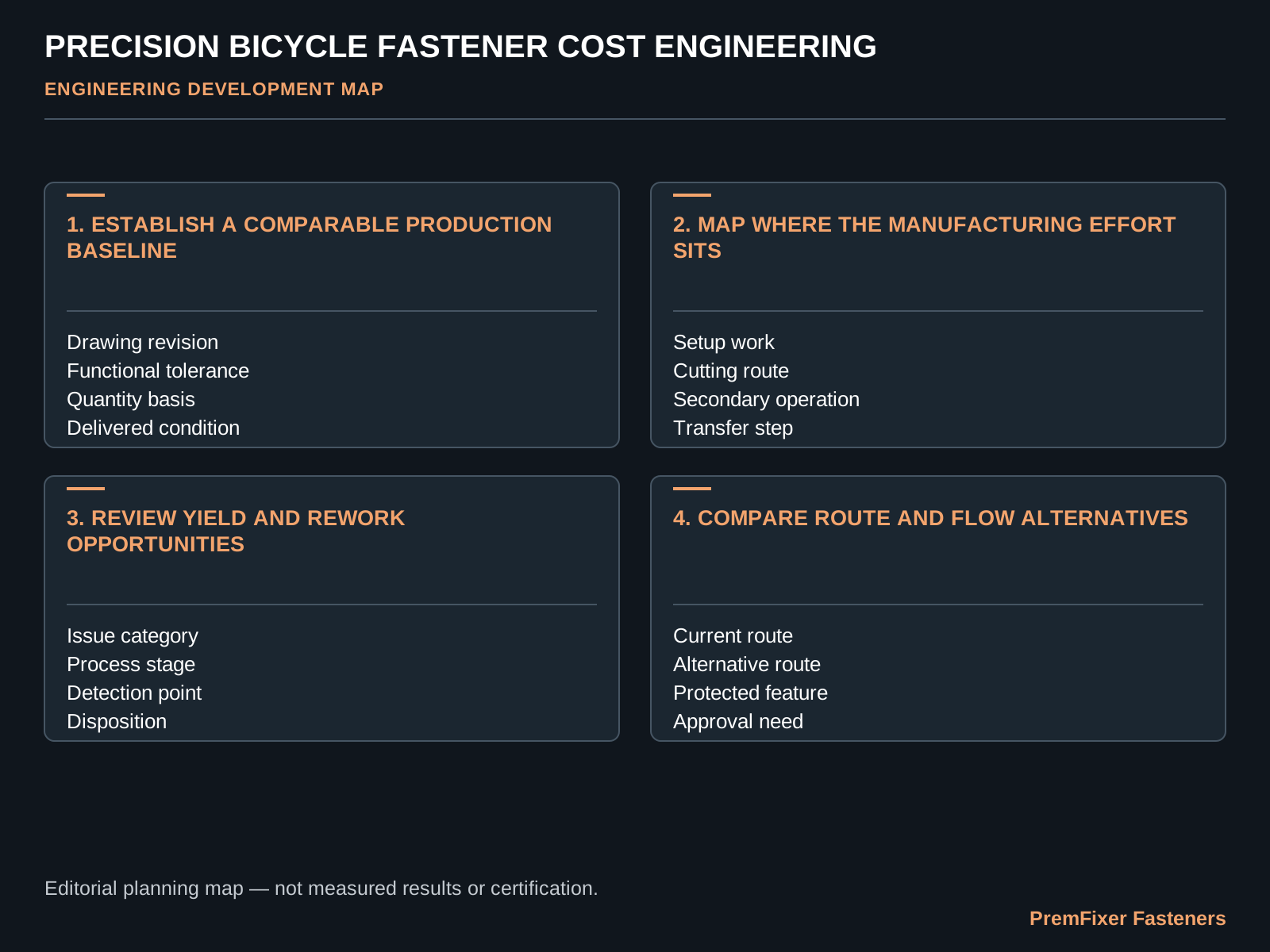
Break the quoted part into material, primary forming or machining, secondary machining, heat treatment, surface treatment, cleaning, inspection, scrap allowance, packaging and logistics. Add one-time items such as fixtures, gauges and sample documentation separately. This makes an alternative route easier to evaluate than a single unit-price number.
For machined components, review stock diameter, cut length, material utilization and whether the geometry allows productive bar feeding or workholding. For formed parts, consider tooling commitment and the volume needed to justify it. For hybrid routes, show where near-net shaping ends and precision machining begins.
A cost tree does not require the supplier to disclose confidential rates. It requires enough structure to show which requirement changes would move cost and which expenses are fixed for the current route.
Review tolerances as relationships
Fastener drawings often contain dimensions that are individually achievable but difficult to hold together after several operations. Review concentricity, runout, shoulder length, face location and thread relationship as a chain. Decide which datum scheme represents the assembled function and can still be used for manufacturing and inspection.
Avoid solving every uncertainty with a tighter bilateral tolerance. A functional stack may be better controlled through one critical distance, a geometric relationship or an assembly gauge. Conversely, a broad tolerance on a bearing-contact or clamp-stack feature may create variation that appears later as line-side adjustment.
The cost objective is not fewer requirements; it is clearer requirements that can be produced and verified without interpretation.
Evaluate finish and post-process effects
Surface treatment can add handling, masking, racking, transport and dimensional risk. State which surfaces require the finish and whether colour, corrosion behaviour, friction or appearance is the reason. A decorative requirement on a hidden interface may be a candidate for change; a protected bearing seat may require a controlled treatment or masking plan.
If the process changes size or surface condition, decide when the final critical dimension will be achieved and inspected. Re-machining after treatment, selective masking and pre-treatment compensation each have different cost and capability implications.
Include finish partners in the process map early enough to avoid quoting a machined blank that cannot be completed in the specified condition.
Compare route options at the real volume
A CNC route can be flexible for prototypes and changing designs, while forming or dedicated tooling can become attractive at stable repeat volume. Do not compare those routes with one annual number alone. Include batch size, forecast confidence, variant count, change frequency and the expected life of the platform.
Use a volume ladder: prototype, pilot, early production and mature demand. Estimate where tooling, fixture or automation investment is recovered, and show what happens if the design changes before that point. For families of related parts, consider whether common semi-finished stock or fixtures can serve several revisions.
Keep the decision reversible where uncertainty is high. A staged route can protect launch timing while the team gathers actual demand and process data.
Send a cost-engineering RFQ
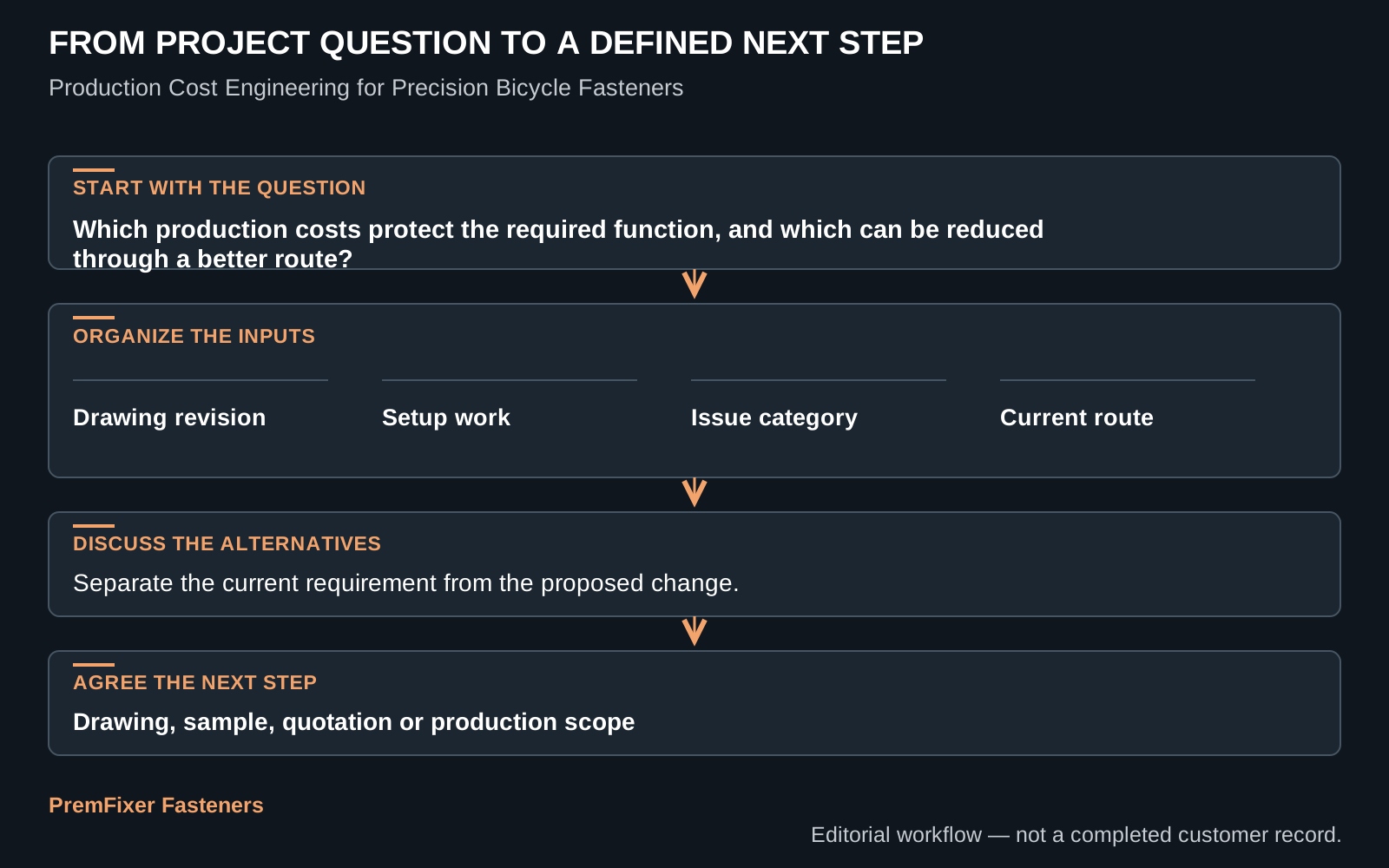
Provide the current drawing and 3D model, annual volume and order pattern, approved material and finish, critical characteristics, current pain point and any processes that must remain unchanged. If a baseline quote or existing part is available, state whether the goal is lower recurring cost, reduced lead time, improved assembly or a route suitable for higher volume.
Ask for options with clear conditions rather than one unexplained target price. Each option should identify the changed feature or process, one-time investment, expected production effect, sample needed and customer approval required.
PremFixer can review a precision fastener or pivot component from the process route outward. The useful deliverable is a manufacturable proposal tied to the same function—not a cheaper part that solves a different problem.
Prioritize options by value and disruption
Not every cost idea should enter the same sample. Sort options into four groups: drawing-only clarifications, low-disruption process changes, geometry changes that need assembly confirmation and material or architecture changes that need broader validation. This prevents a promising but complex redesign from delaying simpler improvements that can be approved earlier.
For each option, show the current route, proposed route, affected characteristic, one-time investment, expected recurring effect, technical risk and approval evidence. Use value ranges until the route and production volume are stable. The objective is to compare decisions, not to manufacture a precise savings forecast from uncertain inputs.
A practical sequence might first remove a redundant inspection duplication, then improve workholding to reduce a setup, and only later consider a formed preform for mature volume. Each step preserves a measurable baseline and produces information for the next decision.
Close the review by updating the drawing, control plan and quotation together. A process saving that remains only in a meeting note will disappear during repeat orders or supplier handover. A controlled option becomes part of the production system and can be verified against actual lot performance.
Questions buyers ask
What usually drives the cost of a precision bicycle fastener?
Common drivers include material utilization, machining cycle time, number of setups, difficult features, secondary operations, surface-treatment handling, critical inspection and lot size. The dominant driver differs by geometry and volume.
Should all tolerances be loosened to reduce cost?
No. Protect dimensions and geometric relationships that control fit, location, clamp stack or interchangeability. Review non-functional tolerances and legacy notes only where the assembly permits change.
When does tooling become economical?
It depends on stable cumulative volume, part family, tooling cost, expected revisions and the savings per part. Compare several volume stages and include the risk of design change before payback.
Can surface finish be a major cost driver?
Yes. Masking, racking, colour control, transport, rework and final-dimensional effects can add cost beyond the treatment price. Define why each surface needs the specified condition.
What output should a cost-engineering review provide?
It should provide a protected-function list, cost-driver map, specific route or drawing options, the approval required for each option and a sample plan that can verify the proposed change.
Reduce Cost Without Losing the Joint Function
Request a feature-and-process review that separates protected interfaces from changeable manufacturing cost drivers.
Request a Cost Review