
A single tightening number cannot describe every pivot, stem clamp or seat-clamp connection. The same nominal thread can behave differently when the mating material, bearing surface, coating, lubrication, locking product or assembly sequence changes.
Assembly and quality engineers need to develop a torque specification from the actual joint, friction condition and validation plan. The review should use the current drawing, BOM and project stage so that the recommendation applies to a real component or release.
Consider this working situation: the same nominal screw is used with two finishes and different aluminium interfaces. It connects the topic to the records, approvals and quotation inputs the program needs.
Define the joint before the torque value
Describe the clamped parts, locating surfaces and purpose of the fastener before discussing a number. Torque is an assembly input; the engineering objective is the joint state it is intended to create.
Build the working record around Joint location, Clamped stack, Fastener role and Mating thread. The practical output is a configuration statement for the pivot, stem or seat-clamp joint.
For the "Define the joint before the torque value" review, put joint configuration, surface condition, tool method, service state on the same sheet. Name the current revision, the decision owner and the condition that allows the part or program to move forward. The technical discussion then has a clear purchasing and release action.
Do not transfer a value from a visually similar joint without checking the interfaces.
Separate material and assembly conditions
Record grade and condition, thread form, bearing surface, finish, lubrication and pre-applied locking separately. Combining them into broad titanium, aluminium or steel columns hides the friction conditions that influence tightening.
Keep the review anchored to Fastener material, Mating material, Surface state and Lubrication or locking. The practical output is a controlled list of the assembly conditions to be evaluated.
Under "Separate material and assembly conditions," compare the current and proposed conditions using Fastener material, Mating material, Surface state, Lubrication or locking. Record the evidence source and any item that remains open. The buyer should be able to approve, reject or sample a specific supplier proposal.
Material names alone are not a complete torque specification.
| Review stage | Project question | Inputs to connect | Expected output |
|---|---|---|---|
| 01 | Define the joint before the torque value | Joint location / Clamped stack / Fastener role / Mating thread | a configuration statement for the pivot, stem or seat-clamp joint |
| 02 | Separate material and assembly conditions | Fastener material / Mating material / Surface state / Lubrication or locking | a controlled list of the assembly conditions to be evaluated |
| 03 | Plan the parameter-development exercise | Specimen revision / Tool method / Tightening sequence / Review criterion | a repeatable development plan for the specific joint |
| 04 | Write the assembly instruction | Applicable part / Tool and socket / Preparation step / Tightening order | a revision-controlled assembly instruction |
| 05 | Address service and repeat assembly | First assembly / Reuse rule / Thread inspection / Replacement condition | a service note linked to the approved fastener and locking system |
| 06 | Offer a torque-development discussion | Assembly drawing / Material state / Current method / Target use | a scoped torque-development and documentation proposal |
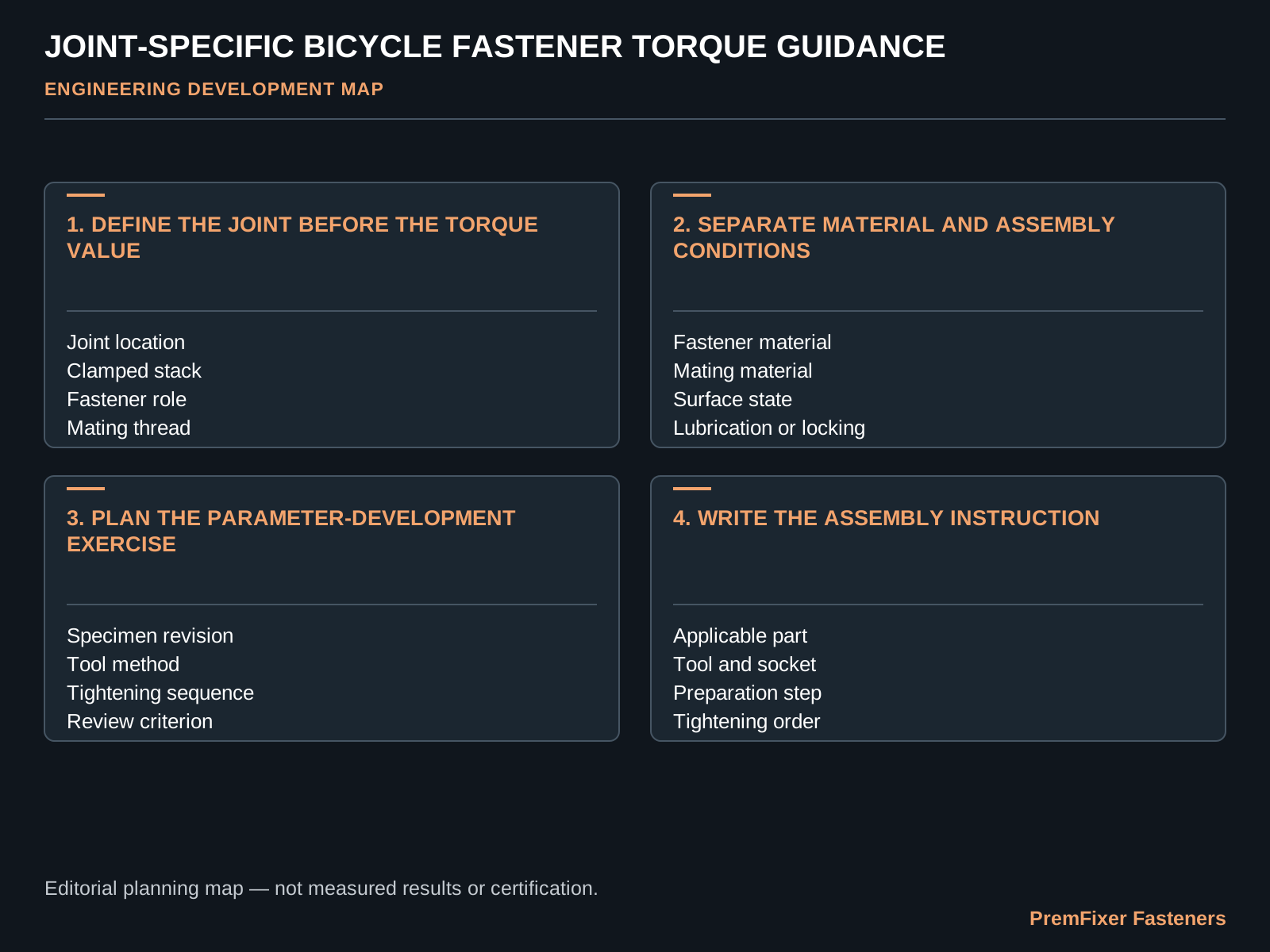
Plan the parameter-development exercise
Define the specimen configuration, tool method, tightening sequence, observation method and acceptance question before collecting results. A result is meaningful only when the tested joint and its limits are traceable.
Put the following fields on the same revision-controlled page: Specimen revision, Tool method, Tightening sequence and Review criterion. The practical output is a repeatable development plan for the specific joint.
In "Plan the parameter-development exercise," follow joint configuration, surface condition, tool method, service state through the relevant handoff. The output from one operation or team should be a usable input for the next. Missing ownership at that boundary often causes more disruption than the operation itself.
Do not invent a universal value or imply that one bench exercise validates every service condition.
Write the assembly instruction
Translate the developed condition into the correct tool, engagement, steps, order and part-number applicability. An isolated value in a product table cannot guide the operator through preparation or sequence.
Build the working record around Applicable part, Tool and socket, Preparation step and Tightening order. The practical output is a revision-controlled assembly instruction.
Use joint configuration, surface condition, tool method, service state to define the sample question for "Write the assembly instruction." The sample record should state what represents production, what is temporary and which decision follows the review. A conforming sample without that context can still leave the production route unsettled.
The instruction should state when its assumptions no longer apply.
Address service and repeat assembly
Separate first installation from maintenance, inspection and repeat assembly. Pre-applied locking, damaged threads, surface wear or replacement parts can change the required service decision.
Keep the review anchored to First assembly, Reuse rule, Thread inspection and Replacement condition. The practical output is a service note linked to the approved fastener and locking system.
After "Address service and repeat assembly," carry joint configuration, surface condition, tool method, service state into repeat orders and service planning. Approved conditions should remain visible in stock, inspection records and packaging so that later lots do not depend on personal memory.
Do not assume that every locking product or fastener remains unchanged after disassembly.
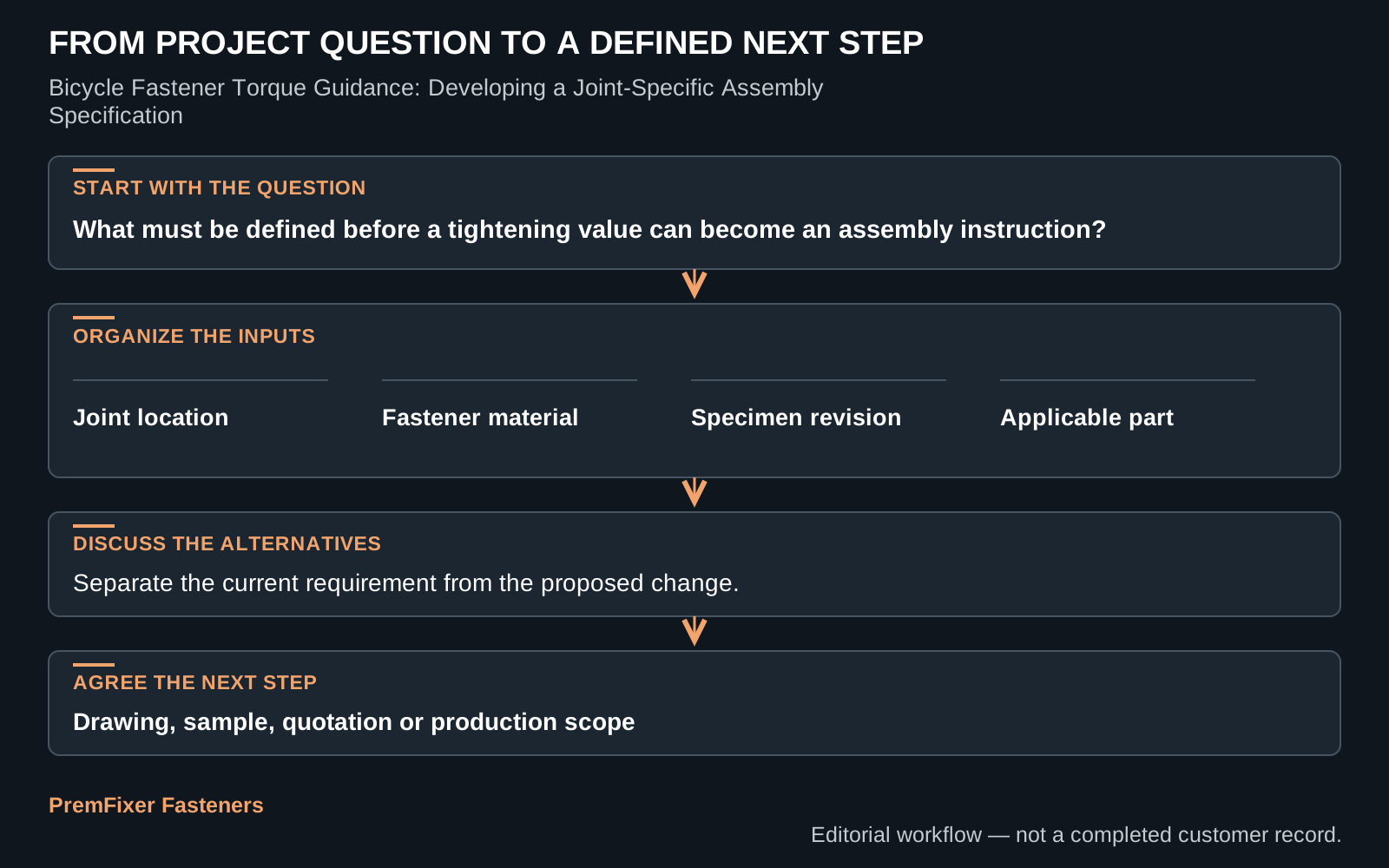
Offer a torque-development discussion
Use the assembly drawing, materials, surface states and current method to define the next development task. The purpose is to turn a vague request for a torque chart into a joint-specific engineering question.
Put the following fields on the same revision-controlled page: Assembly drawing, Material state, Current method and Target use. The practical output is a scoped torque-development and documentation proposal.
Convert the result of "Offer a torque-development discussion" into a quotation line that identifies joint configuration, surface condition, tool method, service state. Ask the supplier to state included work, customer inputs, open assumptions and release evidence. Alternative offers are easier to compare when scope is not hidden inside one unit price.
No torque specification can guarantee the absence of every joint failure mode.
Check the decision against a production scenario
A production scenario gives the discussion a clear boundary: the same nominal screw is used with two finishes and different aluminium interfaces. State the model, volume stage, revision and destination before comparing alternatives.
For bicycle fastener torque guidance: developing a joint-specific assembly specification, list the decisions that the customer has already made and the items still open to supplier input. Each open item should have one owner and one expected output.
Copying a generic torque value can change clamp load when finish, lubricant or seating differs. Test the control where the issue can first be detected, then decide how the accepted condition will remain visible during repeat orders.
Use the pilot result for bicycle fastener torque guidance: developing a joint-specific assembly specification to update the drawing, BOM, process or packing record. Avoid carrying an informal email decision into production when the controlled file still says something else.
Start the quotation with the joint stack, fastener and mating materials, finish, lubricant, tightening method and validation need. Ask for inclusions, exclusions, one-time work and the evidence supplied with the sample or lot.
Questions buyers ask
How should purchasing frame this decision?
Develop a torque specification from the actual joint, friction condition and validation plan. The comparison is credible only when every option uses the same part revision, quantity and delivered condition.
What should remain linked to the drawing revision?
The first package should contain the joint stack, fastener and mating materials, finish, lubricant, tightening method and validation need. It should also state the immediate decision the customer needs from the supplier response.
Which evidence is useful during sampling?
Base the pilot on this situation: the same nominal screw is used with two finishes and different aluminium interfaces. Record the representative operations and the approval that follows the result.
What should stay visible during repeat orders?
The main risk is that copying a generic torque value can change clamp load when finish, lubricant or seating differs. Put one person in charge of the related drawing, handoff or release action.
What should the first supplier response contain?
For bicycle fastener torque guidance: developing a joint-specific assembly specification, PremFixer can organize the files and open points into a manufacturing, sample and quotation response for the defined component or hardware set.
Develop a joint-specific torque brief
Share the joint stack, fastener and mating materials, finish, lubricant, tightening method and validation need. The response will identify the proposed scope, open questions and the evidence needed before release.
Discuss This Project