
A request to make hardware for a Chinese electric-motorcycle program should not begin with the phrase new national standard and a generic high-strength bolt. It should begin with the vehicle category, destination, named standard and the assembly that the component serves. Electric motorcycles, electric mopeds and electric bicycles are not interchangeable regulatory or engineering categories.
The official National Standard Information Public Service Platform currently lists GB/T 24158-2018, General technical specifications for electric motorcycles and electric mopeds, as current. It records a last review date of August 4, 2025 and a conclusion of continued validity. The same platform lists GB 24155-2020, Safety requirements for electric motorcycles and electric mopeds, as current.
Use this case as the working baseline: an electric-motorcycle program references current Chinese standards while sourcing frame and motor-mount hardware. Each section turns one part of the case into a reviewable project output.
Define the market, period and product segment
Which Chinese standard applies to an electric-motorcycle hardware project? The answer depends first on the actual product category and market scope. Confirm whether the platform is an electric motorcycle or electric moped and do not silently substitute an electric-bicycle requirement because the vehicles share electric propulsion or some component vocabulary.
Record the standard number, edition and status from an official source at the time of review. GB/T 24158-2018 and GB 24155-2020 are relevant official starting points for electric motorcycles and electric mopeds, but a complete program can involve other vehicle, component, test and destination requirements. The applicable list belongs to the responsible compliance team.
For the "Define the market, period and product segment" review, put electric motorcycle standards fasteners, China electric motorcycle hardware, GB 24155-2020 fastener implications, GB/T 24158-2018 on the same sheet. Name the current revision, the decision owner and the condition that allows the part or program to move forward. The technical discussion then has a clear purchasing and release action.
Then identify the component responsibility. A vehicle-level requirement can create a need to control a mounting joint, document a material or support an assembly test.
Identify the applicable product and rule
Use a four-part record: product category, jurisdiction, named instrument and component responsibility. This prevents a broad standards headline from becoming an unsupported list of bolt requirements. It also lets a global brand separate the Chinese-market vehicle scope from hardware used on another platform or destination.
On the official platform, GB/T 24158-2018 is titled General technical specifications for electric motorcycles and electric mopeds. Its current status and 2025 review record establish that the document remains an official reference. GB 24155-2020 is titled Safety requirements for electric motorcycles and electric mopeds and is also listed as current. Neither status page states that one generic fastener specification covers every joint.
Under "Identify the applicable product and rule," compare the current and proposed conditions using electric motorcycle standards fasteners, China electric motorcycle hardware, GB 24155-2020 fastener implications, GB/T 24158-2018. Record the evidence source and any item that remains open. The buyer should be able to approve, reject or sample a specific supplier proposal.
For each hardware family, document why it is being reviewed. A motor-mount bolt, frame fastener, suspension axle and battery-retention component have different interfaces and failure paths.
| Scope field | Question to answer | Component-program output |
|---|---|---|
| Product category | Electric motorcycle, electric moped or another defined vehicle? | A category matched to the correct standards review. |
| Jurisdiction | Which market and approval route apply to the vehicle? | A bounded compliance scope rather than a global assumption. |
| Named instrument | Which standard number, edition and official status are being used? | A dated source that engineering and compliance can verify. |
| Component responsibility | What must the specific joint or part contribute? | A defined drawing, analysis, test or document task. |
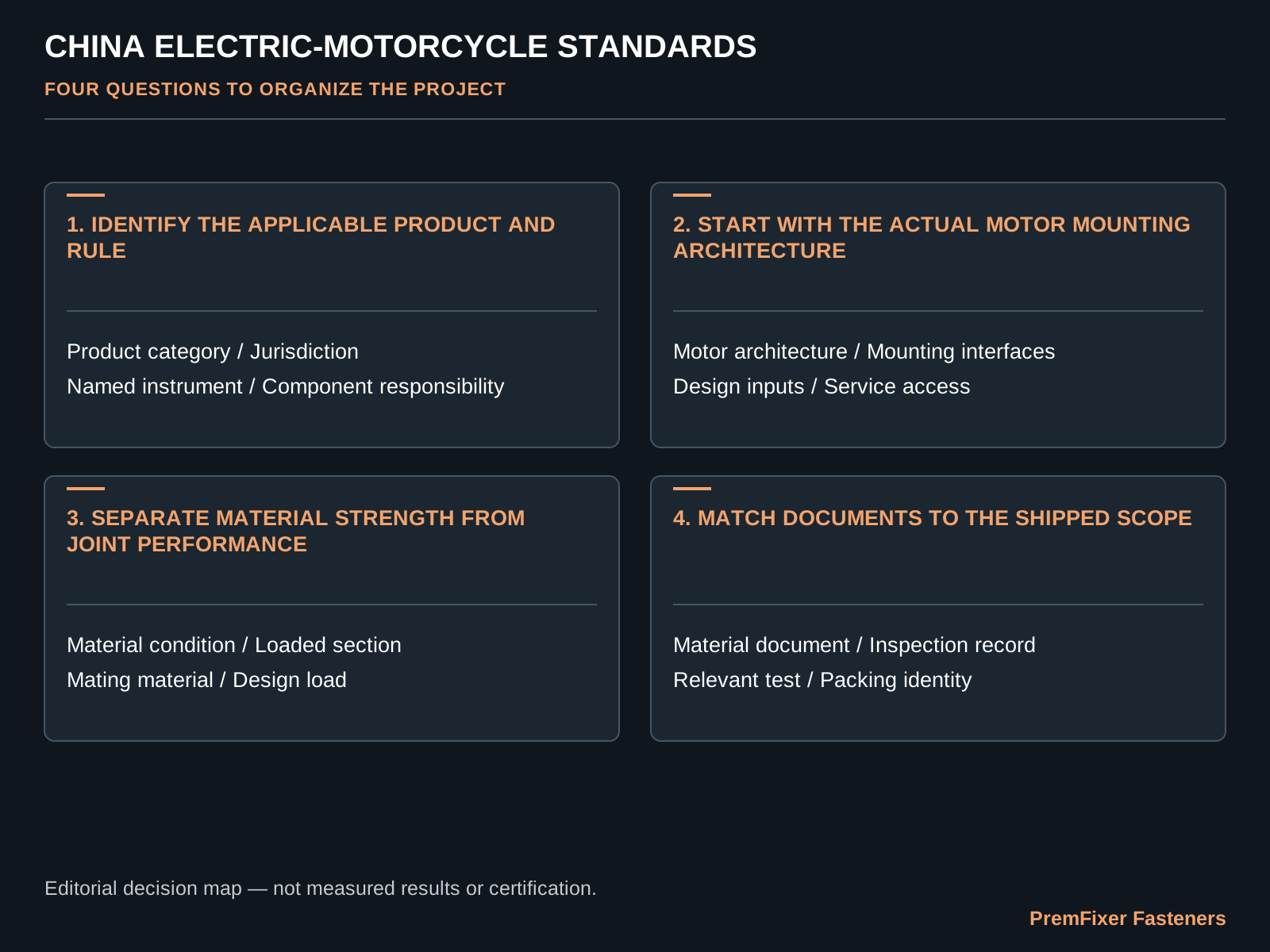
Start with the actual motor mounting architecture
Motor output is not the tightening torque for every mounting bolt. The load reaching a joint depends on the motor architecture, support points, brackets, reaction path, frame stiffness, road input and service events. Begin with the actual arrangement and the load information provided by the vehicle or system designer.
Map the mounting interfaces and service access. A housing flange, through-bolt, threaded boss, cradle or removable bracket creates different locating, clamping and tool-access conditions. Identify where the joint reacts torque and other loads, which surfaces locate the assembly and how technicians will reach the hardware during production and maintenance.
In "Start with the actual motor mounting architecture," follow electric motorcycle standards fasteners, China electric motorcycle hardware, GB 24155-2020 fastener implications, GB/T 24158-2018 through the relevant handoff. The output from one operation or team should be a usable input for the next. Missing ownership at that boundary often causes more disruption than the operation itself.
Open inputs should remain open. If the final load case, receiver material or packaging envelope is not released, do not fill the gap with a universal bolt size.
| Architecture field | Information needed | Why it affects hardware |
|---|---|---|
| Motor architecture | Motor location, support concept and torque-reaction path. | Defines which joints participate in the load path. |
| Mounting interfaces | Lugs, flanges, shafts, brackets, threads and locating faces. | Shows how the assembly is positioned and clamped. |
| Design inputs | Applicable loads, duty information and surrounding constraints from the system owner. | Supports component geometry and joint analysis. |
| Service access | Assembly direction, tool envelope and maintenance sequence. | Protects installability and controlled tightening. |
Separate material strength from joint performance
A stronger material is not automatic approval for an electric-motorcycle joint. Material grade and condition are only part of the design. The loaded section, thread transition, bearing area, mating material, clamp length, surface condition and applied loads determine how the complete interface behaves.
Review the receiver as carefully as the fastener. A harder bolt does not correct insufficient thread engagement, an unsupported clamping face or a soft mating material that cannot sustain the intended bearing or preload condition. A material change can also alter corrosion compatibility, galling behavior, mass and manufacturing route.
Use electric motorcycle standards fasteners, China electric motorcycle hardware, GB 24155-2020 fastener implications, GB/T 24158-2018 to define the sample question for "Separate material strength from joint performance." The sample record should state what represents production, what is temporary and which decision follows the review. A conforming sample without that context can still leave the production route unsettled.
Torque belongs to the joint configuration and assembly method. It should not be copied from motor power, from an unrelated bolt chart or from another platform with a different receiver and friction condition.
| Joint field | Definition needed | Decision protected |
|---|---|---|
| Material condition | The specified material state for the component. | Keeps a nominal grade from replacing delivered-condition control. |
| Loaded section | The geometry and transition carrying the relevant load. | Connects material properties to the real cross-section. |
| Mating material | Receiver, bracket, housing or frame material and interface. | Supports thread, bearing and compatibility review. |
| Design load | The OEM-defined load cases and joint objective. | Prevents motor output from being misused as bolt torque. |
Match documents to the shipped scope
The component document pack should answer the order's actual requirements. It may include material identification, agreed dimensional results, relevant process or test records and packing identity. Each document should connect to the supplied part number, revision and lot or shipment scope.
Distinguish vehicle-level approval from component evidence. A material certificate does not approve the complete motorcycle. A dimensional report does not demonstrate vibration durability. A test record applies to its stated specimen, method and acceptance criteria. More document names do not create broader compliance unless the program has defined what each one must support.
After "Match documents to the shipped scope," carry electric motorcycle standards fasteners, China electric motorcycle hardware, GB 24155-2020 fastener implications, GB/T 24158-2018 into repeat orders and service planning. Approved conditions should remain visible in stock, inspection records and packaging so that later lots do not depend on personal memory.
Packaging identity closes the physical-to-record link. The receiving team should be able to reconcile the goods with the approved component and requested evidence.
| Document field | What it should identify | Boundary |
|---|---|---|
| Material document | The relevant material identity and supplied item or lot. | Not vehicle approval by itself. |
| Inspection record | Measured characteristics, part revision and acceptance basis. | Does not cover unmeasured performance. |
| Relevant test | Specimen, method, condition and result for a named requirement. | Not a passport for every joint or destination. |
| Packing identity | Part number, revision, quantity and shipment or lot connection. | Links physical parts to the agreed document scope. |
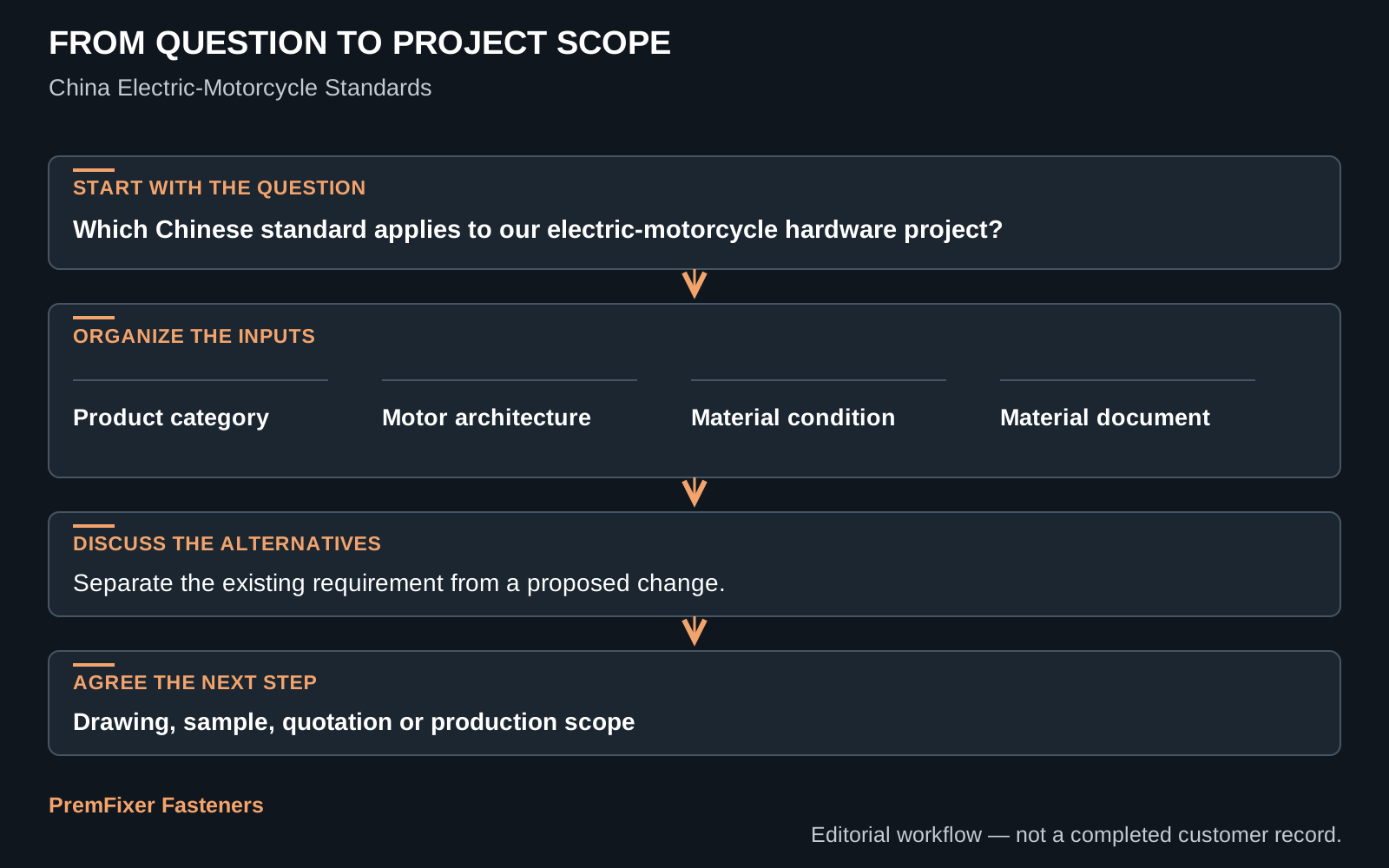
Apply the discussion to a PremFixer Fasteners project
Begin with the vehicle category, destination, named standards list and responsible system owner. Add the available motor, frame or suspension assembly information, component drawings or BOM, quantities and project stage. Mark the load, interface or document decisions that remain open.
PremFixer Fasteners can organize the component discussion around mounting geometry, feasible materials and processes, inspection scope and shipment identity. A manufacturing proposal can reference the customer's applicable requirements without claiming that one standard automatically approves every fastener or complete vehicle.
Convert the result of "Apply the discussion to a PremFixer Fasteners project" into a quotation line that identifies electric motorcycle standards fasteners, China electric motorcycle hardware, GB 24155-2020 fastener implications, GB/T 24158-2018. Ask the supplier to state included work, customer inputs, open assumptions and release evidence. Alternative offers are easier to compare when scope is not hidden inside one unit price.
Share your available drawings, BOM or project description with PremFixer Fasteners, together with quantities and the project stage, to discuss electric-motorcycle hardware requirements.
Use a project example to test the proposal
Use one bounded work package to test the decision. An electric-motorcycle program references current Chinese standards while sourcing frame and motor-mount hardware. Give the package a part list, revision, owner and required completion state.
For china electric-motorcycle standards: implications for fastener programs, ask engineering to mark the functional interfaces and purchasing to define the quoted delivery unit. Quality can then identify the evidence needed at sample and production release.
A standard title can be misused as proof that an individual fastener or supplier is certified. Build a check around the point where that failure enters the workflow, rather than adding broad inspection after every operation.
Review the first result against the stated question for china electric-motorcycle standards: implications for fastener programs. If a material, finish, tool or quantity differs from production, keep the limitation with the sample record and decide whether another stage is required.
The RFQ should include the target vehicle, applicable standard clauses, joint drawings, responsible approvals and evidence plan. Request a scope matrix, timing assumptions and the exact output that will close the open project decision.
Questions buyers ask
Where should the engineering review begin?
Fix the drawing and project state that frame the decision, then separate vehicle-standard scope from component design and supplier evidence. A recommendation without that baseline may solve a different configuration.
What information should the supplier receive?
Provide the target vehicle, applicable standard clauses, joint drawings, responsible approvals and evidence plan, including any requirement that is still open to supplier feedback. That distinction prevents assumptions from being priced as approved scope.
What must a prototype demonstrate?
An electric-motorcycle program references current Chinese standards while sourcing frame and motor-mount hardware. Use the pilot to examine that condition rather than treating one conforming part as approval of the complete route.
Which handoff deserves extra attention?
A standard title can be misused as proof that an individual fastener or supplier is certified. The review should show where the issue can be detected and who can stop the next release.
What output should the RFQ request?
For this china electric-motorcycle standards: implications for fastener programs decision, PremFixer can return clarification questions, a proposed route and the records expected at sample or production release.
Official standards status sources
- GB/T 24158-2018 — General technical specifications for electric motorcycles and electric mopeds: Official SAMR status page: current; last reviewed August 4, 2025, with a conclusion of continued validity.
- GB 24155-2020 — Safety requirements for electric motorcycles and electric mopeds: Official SAMR status page: current.
Map standards to component decisions
Share the target vehicle, applicable standard clauses, joint drawings, responsible approvals and evidence plan. The response will identify the proposed scope, open questions and the evidence needed before release.
Discuss This Project