
A fast acknowledgement can be helpful, but it is not the same as a resolved engineering or purchasing question. In a bicycle fastener program, the buyer may be coordinating drawings, samples, material choices, finishing, inspection, packing and delivery milestones at the same time. Each answer needs to remain connected to the current project configuration.
General support can handle routine enquiries efficiently when the request is clear and self-contained. A dedicated project manager becomes more valuable when the work carries revisions, open technical decisions or several internal specialists. The contact should preserve context and route questions to the correct owner, not pretend to replace engineering, quality or logistics expertise.
Use this case as the working baseline: an OEM changes one pivot-kit revision while a finish issue and launch shipment are open. Each section turns one part of the case into a reviewable project output.
Define the comparison before comparing the price
What should a dedicated project contact improve for the buyer? The contact should keep the current files, commercial scope, open questions, decisions and next actions coherent throughout the order. Technical conclusions still belong to the appropriate engineering or quality owner; the manager makes sure those conclusions return to the project record.
General support can be the right model for a standard reorder, a document request or a well-defined quotation. A dedicated contact adds value when several parts, revisions, functions or delivery stages must be coordinated. Compare the work being managed rather than treating the job title itself as proof of better service.
For the "Define the comparison before comparing the price" review, put bicycle fastener project management, B2B fastener communication, fastener revision control, OEM sourcing project contact on the same sheet. Name the current revision, the decision owner and the condition that allows the part or program to move forward. The technical discussion then has a clear purchasing and release action.
The clearest test is whether the buyer can understand the present state of the project without reconstructing it from disconnected messages. A response should state what has been understood, what remains open, who owns the decision and what happens next.
Give technical decisions a clear owner
One point of contact should not turn into one person making every decision. The project manager can collect the question, confirm the relevant files and route it to manufacturing, quality, engineering, commercial or logistics roles. The answer should then be returned with its scope and responsible owner visible.
Separate acknowledgement, technical conclusion and closure. An acknowledgement confirms receipt. A technical conclusion explains the applicable decision or the information still required. Closure records the agreed action in the quotation, drawing revision, sample plan, order note or other controlled project output. Counting only response minutes encourages activity without proving that the question was resolved.
Under "Give technical decisions a clear owner," compare the current and proposed conditions using bicycle fastener project management, B2B fastener communication, fastener revision control, OEM sourcing project contact. Record the evidence source and any item that remains open. The buyer should be able to approve, reject or sample a specific supplier proposal.
The fields below give both a dedicated-manager model and a general-support model a fair basis for comparison. The issue is not who sends more messages; it is whether project context survives the handoff.
| Communication field | Dedicated project contact | General support route |
|---|---|---|
| Current files | Maintains the active drawing, BOM and commercial references for the project. | Retrieves the stated files for each request and confirms which version is being discussed. |
| Decision owner | Routes the question to the named technical or commercial owner. | Escalates through a defined support path and identifies the responsible function. |
| Open question | Keeps unresolved points visible across meetings and order stages. | Records the specific ticket or enquiry so the next responder can see the remaining issue. |
| Next action | Connects the answer to an updated document, approval or task. | States the handoff, expected output and responsible role before closing the request. |
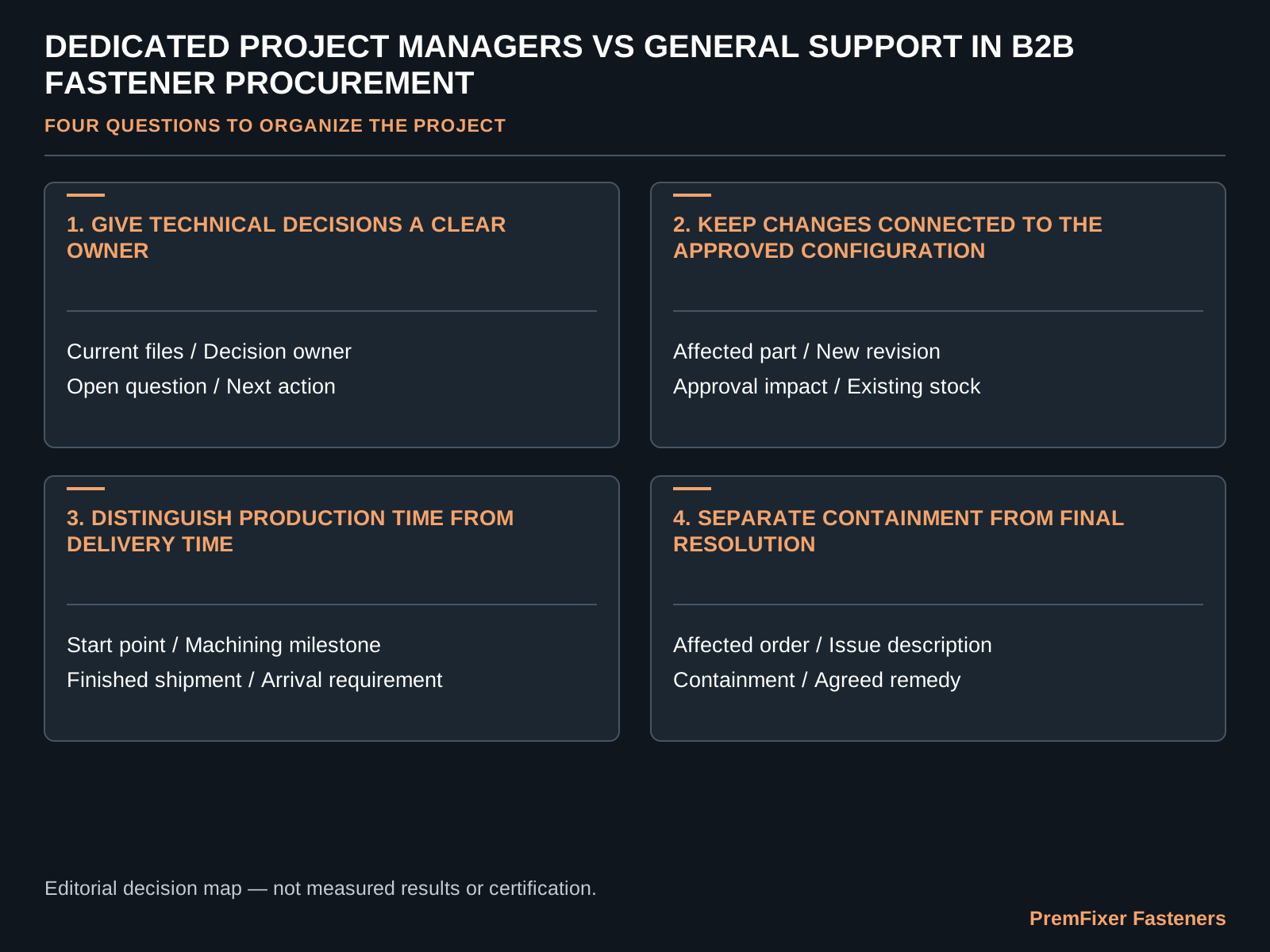
Keep changes connected to the approved configuration
When a requirement changes after sampling, begin with the affected part number and revision. Then identify the approval impact and the state of existing material, work in process or finished stock. A finish substitution, thread change and packing-label change may touch different operations and documents, so the project record should not treat them as one generic update.
A dedicated manager can coordinate the review, but the applicable engineering, quality and purchasing owners still decide their parts. The outcome should appear in the released drawing, BOM, sample condition, quotation or order documentation as appropriate. An email thread that says use the new version is not a reliable configuration-control system.
In "Keep changes connected to the approved configuration," follow bicycle fastener project management, B2B fastener communication, fastener revision control, OEM sourcing project contact through the relevant handoff. The output from one operation or team should be a usable input for the next. Missing ownership at that boundary often causes more disruption than the operation itself.
General support can also manage changes effectively when it has a controlled escalation path and document ownership. The practical comparison is whether either service model can show the affected part, new revision, required approval and stock disposition before further work is released.
| Change field | Question for the project team | Controlled outcome |
|---|---|---|
| Affected part | Which part numbers, kits or mating references are touched? | The change scope is explicit rather than assumed. |
| New revision | Which released input replaces the current one? | Manufacturing and purchasing work from the same configuration. |
| Approval impact | Which functions must review the change before release? | Decision ownership remains visible. |
| Existing stock | What happens to material, work in process and finished pieces? | Old and new configurations are not mixed unintentionally. |
Distinguish production time from delivery time
A schedule needs a defined start point and a defined deliverable. Drawing review, material preparation, machining, specified secondary processing, inspection, packing, dispatch and transport are separate milestones. Machining completion is not the same as a finished shipment, and dispatch is not the same as arrival at the customer's site.
The project contact should keep these milestones connected to their prerequisites. If a drawing revision remains open, the manufacturing start point may not yet exist. If a finish or external operation is required, an expedited machining step does not automatically shorten the complete order by the same amount.
Use bicycle fastener project management, B2B fastener communication, fastener revision control, OEM sourcing project contact to define the sample question for "Distinguish production time from delivery time." The sample record should state what represents production, what is temporary and which decision follows the review. A conforming sample without that context can still leave the production route unsettled.
This is another reason to value context over rapid replies. A useful schedule answer states which configuration and quantity it covers, which milestone is being quoted and which customer approval or logistics input remains open.
| Schedule field | Definition to agree | Common confusion prevented |
|---|---|---|
| Start point | The approved input and event that starts the stated lead time. | An enquiry date is not mistaken for a released production date. |
| Machining milestone | The point at which the specified machining scope is complete. | Machined parts are not assumed to be finished and packed. |
| Finished shipment | The condition required before dispatch, including agreed inspection and packing. | Factory completion is not confused with arrival. |
| Arrival requirement | Destination, transport responsibility and required date or window. | Transit assumptions remain separate from production planning. |
Separate containment from final resolution
When an issue is reported, the first response should identify the affected order and parts, clarify the observed condition and decide whether immediate containment is needed. That response is important, but it is not yet a root-cause conclusion or final remedy. The project record should keep those stages distinct.
Investigation may require drawings, lot identity, photographs, samples, assembly context or inspection records. The relevant owner then evaluates the evidence against the original requirement. Rework, replacement, return or another disposition should follow the confirmed responsibility and an agreed action, rather than being promised before the issue is understood.
After "Separate containment from final resolution," carry bicycle fastener project management, B2B fastener communication, fastener revision control, OEM sourcing project contact into repeat orders and service planning. Approved conditions should remain visible in stock, inspection records and packaging so that later lots do not depend on personal memory.
A dedicated manager helps by maintaining continuity between the first report, the specialists reviewing it and the final disposition. General support can achieve the same result with a disciplined case handoff.
| Issue field | Purpose | Project record |
|---|---|---|
| Affected order | Define which delivery and parts are involved. | Order, shipment and part identity remain linked. |
| Issue description | Describe the observed condition without guessing the cause. | The review begins from a shared problem statement. |
| Containment | Protect current use or stock while the issue is assessed. | Immediate action is separated from final responsibility. |
| Agreed remedy | Record the confirmed disposition and owner. | Closure can be checked against the original requirement. |
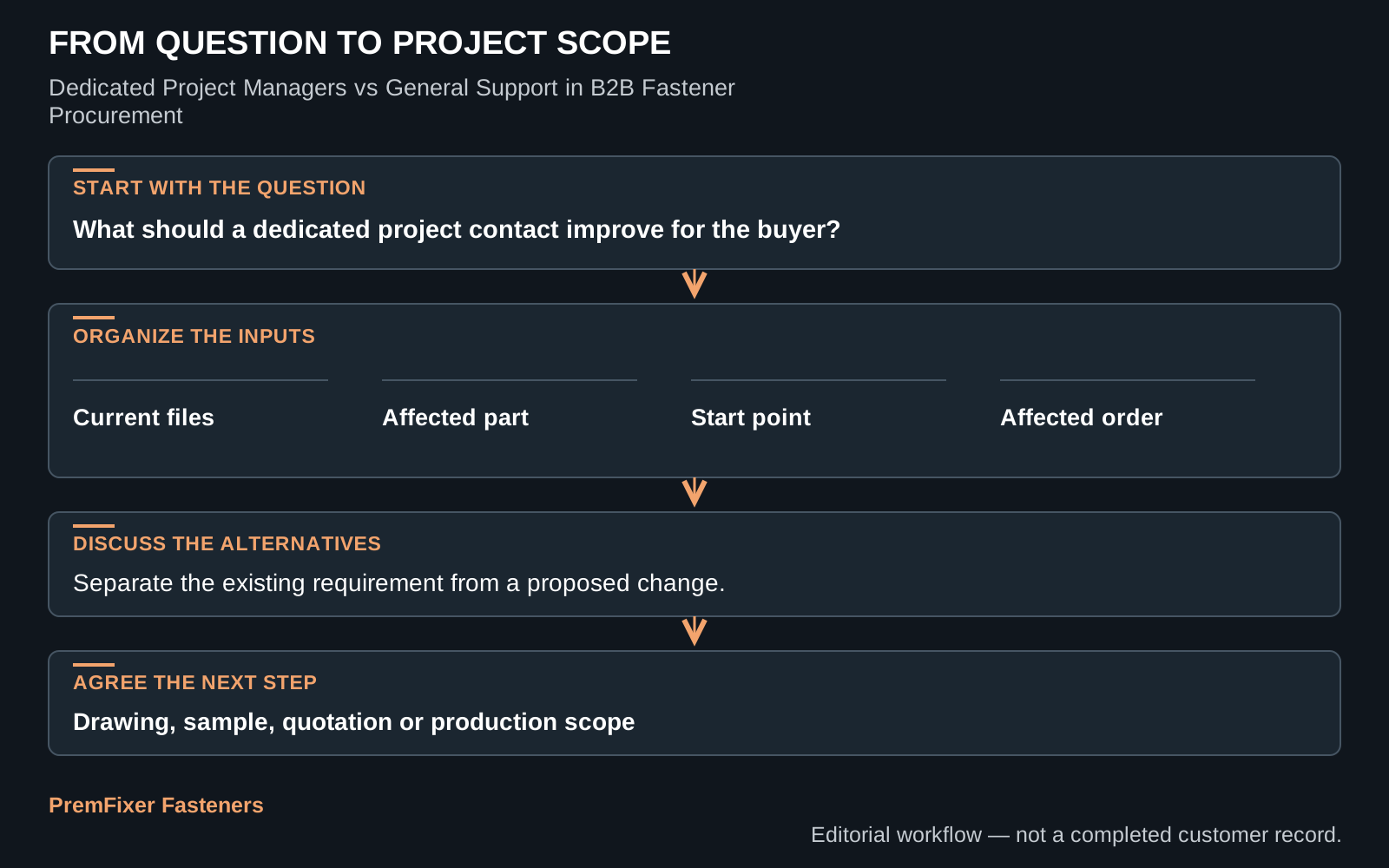
Apply the discussion to a PremFixer Fasteners project
PremFixer Fasteners can organize the first project exchange around the documents and decisions already available. Share a drawing, model, BOM or sample description, together with quantities and the project stage. Identify the current files, affected parts, target milestone and open technical or commercial questions.
The dedicated contact should then make the next decision path visible: which question can be answered from the current input, which function needs to review an open point and which document or sample will capture the result. That is more useful than promising an instant answer to a question that requires engineering evidence.
Convert the result of "Apply the discussion to a PremFixer Fasteners project" into a quotation line that identifies bicycle fastener project management, B2B fastener communication, fastener revision control, OEM sourcing project contact. Ask the supplier to state included work, customer inputs, open assumptions and release evidence. Alternative offers are easier to compare when scope is not hidden inside one unit price.
Share your available drawings, BOM or project description with PremFixer Fasteners, together with quantities and the project stage, to discuss B2B fastener project communication.
Use a project example to test the proposal
Use one bounded work package to test the decision. An OEM changes one pivot-kit revision while a finish issue and launch shipment are open. Give the package a part list, revision, owner and required completion state.
For dedicated project managers vs general support in b2b fastener procurement, ask engineering to mark the functional interfaces and purchasing to define the quoted delivery unit. Quality can then identify the evidence needed at sample and production release.
A dedicated title adds little unless authority, backup coverage and escalation rules are clear. Build a check around the point where that failure enters the workflow, rather than adding broad inspection after every operation.
Review the first result against the stated question for dedicated project managers vs general support in b2b fastener procurement. If a material, finish, tool or quantity differs from production, keep the limitation with the sample record and decide whether another stage is required.
The RFQ should include the program scope, contacts, decision rights, reporting cadence and escalation events. Request a scope matrix, timing assumptions and the exact output that will close the open project decision.
Questions buyers ask
Which project decision comes first?
Fix the drawing and project state that frame the decision, then define when a named project owner reduces handoff loss across engineering, production and delivery. A recommendation without that baseline may solve a different configuration.
What belongs in the first RFQ?
Provide the program scope, contacts, decision rights, reporting cadence and escalation events, including any requirement that is still open to supplier feedback. That distinction prevents assumptions from being priced as approved scope.
How should the sample be judged?
An OEM changes one pivot-kit revision while a finish issue and launch shipment are open. Use the pilot to examine that condition rather than treating one conforming part as approval of the complete route.
Which risk needs an owner?
A dedicated title adds little unless authority, backup coverage and escalation rules are clear. The review should show where the issue can be detected and who can stop the next release.
What can PremFixer review before quotation?
For this dedicated project managers vs general support in b2b fastener procurement decision, PremFixer can return clarification questions, a proposed route and the records expected at sample or production release.
Define project ownership
Share the program scope, contacts, decision rights, reporting cadence and escalation events. The response will identify the proposed scope, open questions and the evidence needed before release.
Discuss This Project