
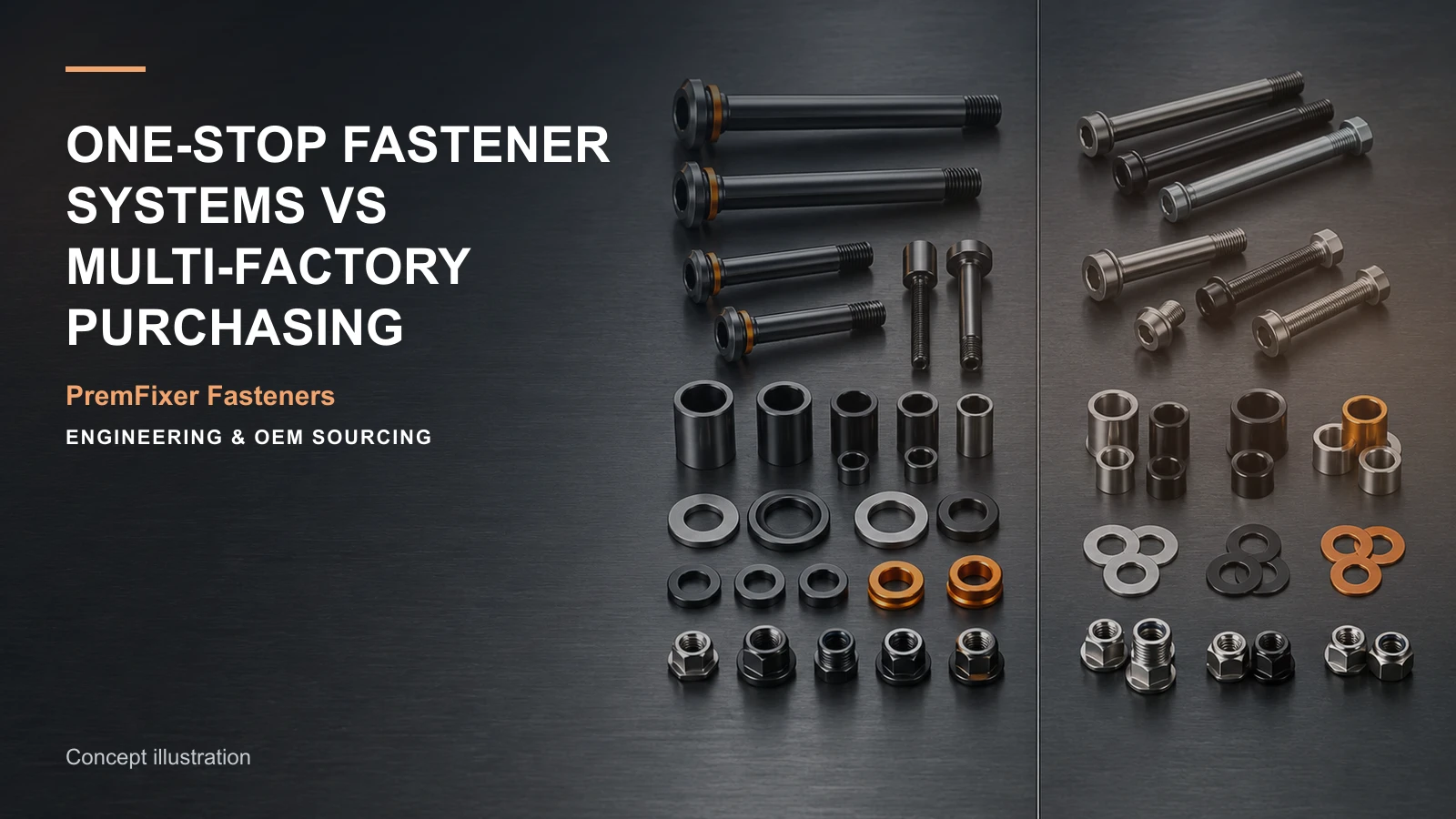
One-stop bicycle fastener sourcing can reduce coordination when a single supplier owns the controlled BOM, partner operations, inspection records and kit delivery. Multi-factory purchasing can be stronger when distinct specialists are required or the buyer already has the resources to integrate them. The correct decision depends on the work behind the invoice, not the number of supplier names on the purchase order.
For a fair total-cost comparison, define one delivered unit—such as a complete frame hardware kit at an approved revision—and trace every handoff needed to create it. Include drawing changes, sub-supplier scheduling, incoming inspection, sorting, line-side kitting, stock buffers and service replacements. This exposes where cost and risk actually move between supplier and buyer.
The following method helps purchasing and engineering compare both models without assuming that consolidation is always cheaper or that specialist sourcing is always more capable.
Define the delivered unit before requesting prices
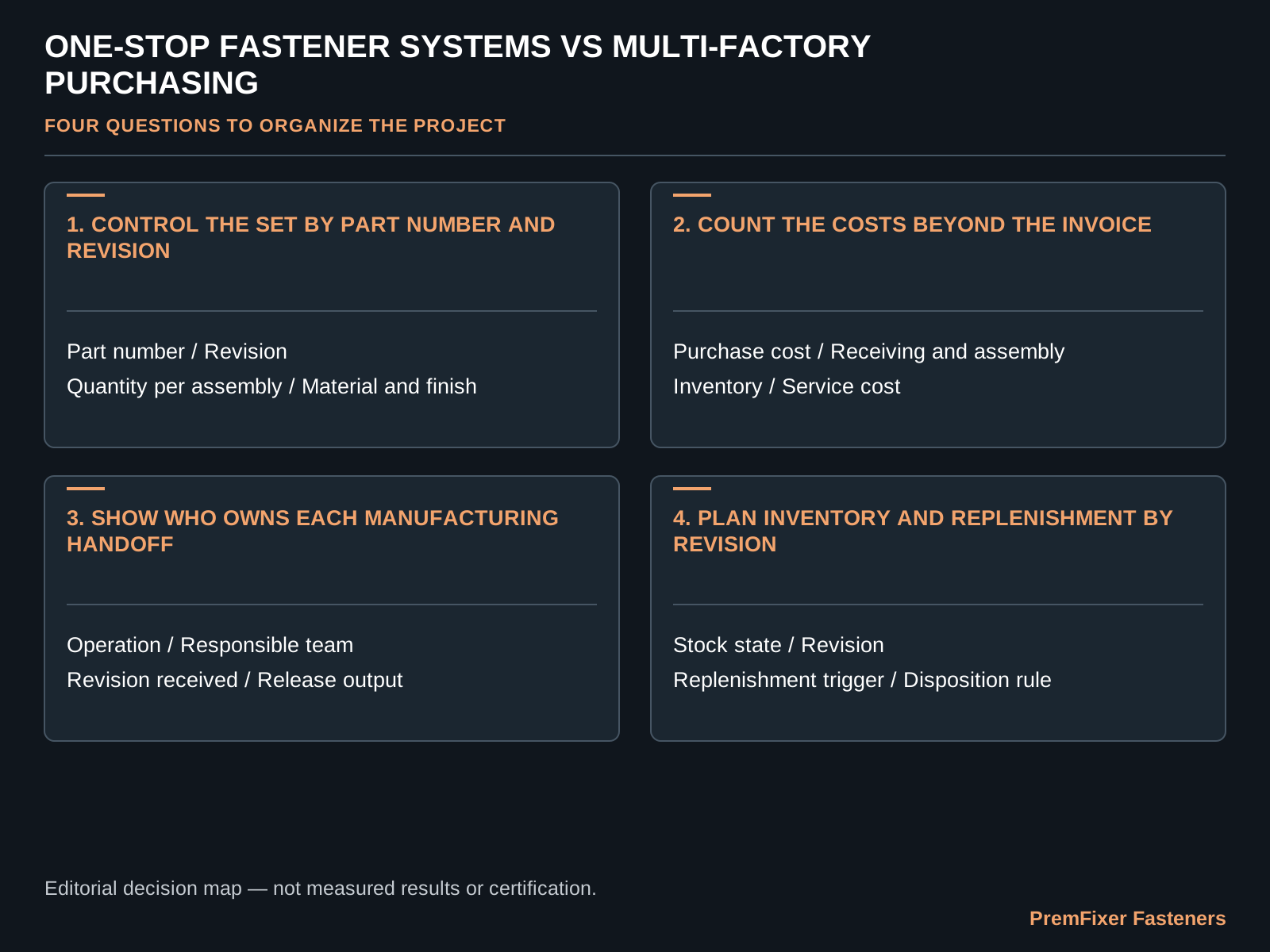
Choose a common comparison unit before issuing the RFQ. For full-suspension hardware, it might be one labelled kit containing the main pivot axle, smaller pivot bolts, sleeves, spacers, washers and locking elements for one frame. State the drawing revisions, quantities per assembly and acceptable substitutions for every line.
If one supplier quotes finished kits and another quotes loose components, normalize the offers. Add the cost and lead time for receiving, cross-supplier matching, sorting, packaging and release documentation to the loose-part route. Remove tasks from the one-stop route if they are not actually included in its proposal.
This prevents a common sourcing error: treating a low component subtotal as the cost of a production-ready system.
| TCO layer | One-stop questions | Multi-factory questions |
|---|---|---|
| BOM control | Who controls the complete set and revision effectivity? | Who integrates revisions across each supplier? |
| Quality release | Which records accompany the kit? | Who combines and approves records from several sources? |
| Physical delivery | Are parts counted, separated and line-ready? | Where are components received, matched and packed? |
| Service | Can the same controlled kit be replenished? | Who maintains cross-supplier service availability? |
Map every handoff and name its owner
A handoff occurs whenever information or parts move between engineering, purchasing, a manufacturer, a finishing partner, inspection, warehousing or the bicycle assembly line. Each handoff needs an input, an expected output and an owner who can stop the process when the information does not match.
In a one-stop model, the lead supplier may coordinate outside heat treatment, coating or grinding while presenting one release package. Confirm how those partners are controlled and which records remain traceable to the final part number. In a multi-factory model, the OEM or nominated integrator usually owns more of this connection work.
Do not assign an automatic risk score to either route. Count unresolved interfaces. A well-managed four-supplier program can be more controlled than a vague ‘complete solution’ with unclear exclusions.
Calculate internal work, not only supplier price
Build a simple activity model around the people and transactions required for each lot. Include RFQ maintenance, purchase orders, schedule follow-up, incoming-document review, dimensional sampling, discrepancy resolution, stock moves, kit assembly and invoice processing. Use actual internal rates where available; otherwise keep the input visible as an estimate.
Also include the cost of delay and disruption as scenarios rather than invented probabilities. For example: what happens if a finish lot is late, one mating component changes revision or a service kit is missing a spacer? Record the recovery owner and the likely operational consequence for each sourcing model.
The goal is not a precise spreadsheet that hides uncertain assumptions. It is a transparent comparison that shows which costs are measured, estimated or excluded.
Compare inventory by revision and state
Inventory can multiply when components have different minimum quantities, lead times and revision transition dates. Separate raw or semi-finished buffers, finished parts, complete kits, service stock and superseded stock. Then identify which organization owns each state and when it becomes chargeable.
A one-stop supplier may pool common materials or hold semi-finished parts before final differentiation. That can help only when commercial ownership and revision rules are explicit. Multiple factories may provide more direct visibility into component stock, but the buyer must prevent mismatched revisions from entering the same kit.
Ask how an engineering change affects open orders and existing stock. The answer is often more important than the nominal lead time printed on the quotation.
Test the model with one controlled pilot kit
Before moving a full hardware family, run a pilot around one representative kit. Select enough variety to expose the real handoffs—for example, one machined axle, one formed screw, one spacer and one externally finished item. Release a controlled BOM and define the records and packaging expected at delivery.
At receipt, measure more than component conformity. Check kit completeness, label accuracy, revision identity, document retrieval and how quickly an exception can be traced. Capture the actual buyer and supplier effort required to resolve open points.
A pilot turns the TCO model into observed workflow. It also limits disruption if the proposed responsibility split is not yet mature.
Write the RFQ around responsibility
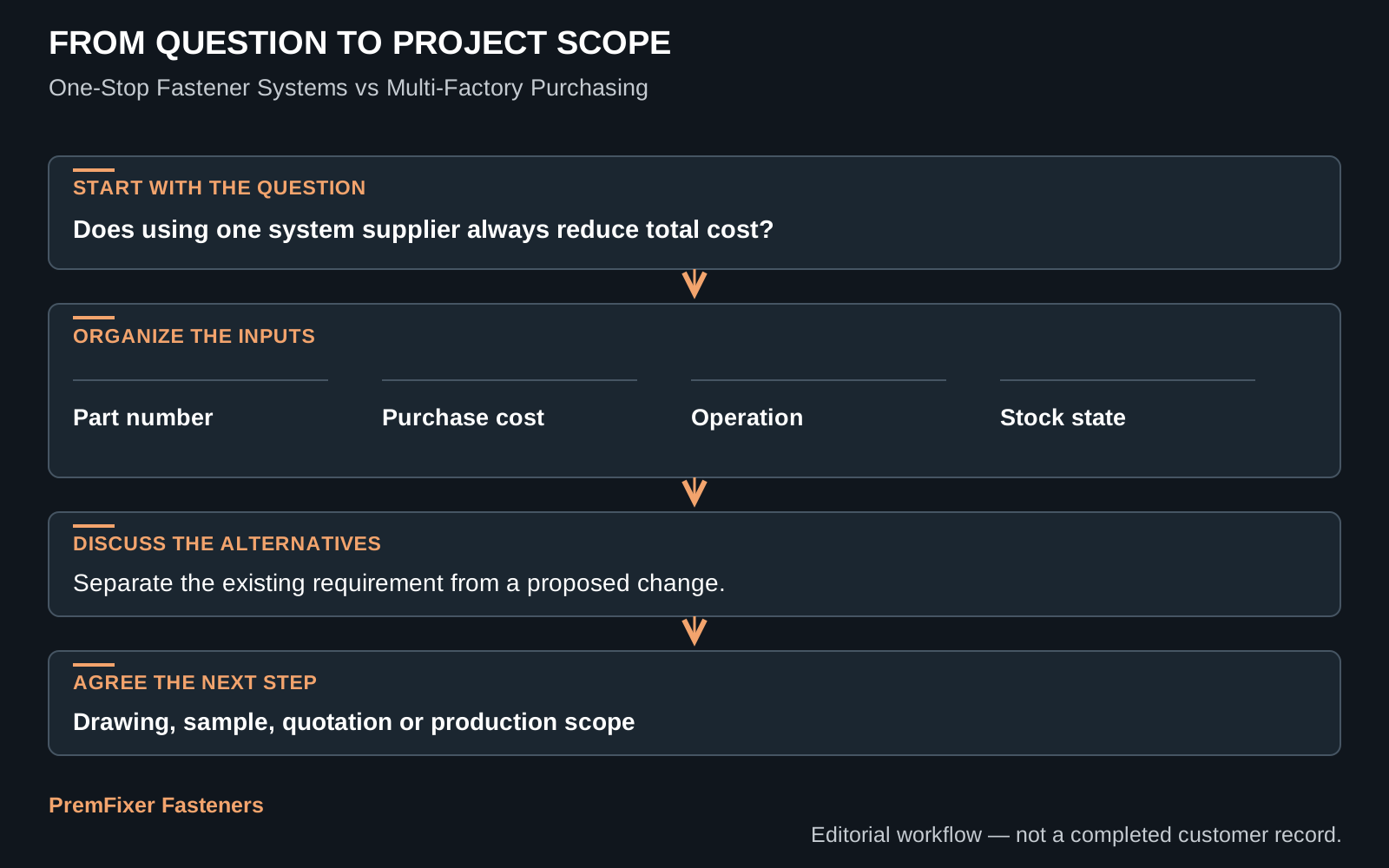
Provide the controlled BOM, drawings, annual and batch volumes, required delivery unit, inspection documents, packaging plan, forecast pattern and service expectation. Request a scope matrix that states who owns manufacturing, partner operations, conformity records, kitting, revision changes and nonconformance response.
Ask for separate prices where they support a decision: components, finishing, inspection documentation, kit packing, tooling and inventory services. Avoid asking for one blended number before the scope is clear, because it makes later exclusions difficult to identify.
PremFixer can quote individual drawing parts or a defined bicycle hardware package. A useful first review starts by deciding what must arrive together and which responsibilities the OEM wants the supplier to carry.
Work through a frame-kit example before selecting the model
Consider a frame kit with two machined axles, four special shoulder bolts, six spacers, standard locking screws and model-specific washers. In a multi-factory route, the axles and screws may come from different specialists, the spacers from a local machine shop and the final kit from the OEM warehouse. In a one-stop route, the lead supplier may manufacture some parts, purchase others and deliver one labelled set. Both routes can work; their internal work is different.
For the multi-factory offer, add the buyer time used to maintain separate orders, chase schedules and resolve a change that affects three mating parts. Add incoming checks and the operation that counts and packs each frame set. For the one-stop offer, confirm whether the system price includes those activities, how purchased components are approved and whether kit shortages are corrected before shipment or at the customer dock.
Then simulate a revision change to one axle and two spacers. Ask which stock becomes obsolete, who updates labels and how the effective date reaches every manufacturing source. This exercise exposes the cost of coordination without inventing a generic supplier-risk multiplier.
Finally, compare service supply. A production kit may contain every frame item, while a service kit may need only one joint and its locking hardware. Include the effort to create, identify and replenish both units. The sourcing model that looks best for production may need a separate service arrangement, and that decision belongs in the TCO record.
Questions buyers ask
Is one-stop fastener sourcing always cheaper?
No. It can reduce internal coordination, receiving and kitting work when those tasks are included, but specialist pricing, supplier margins, inventory terms and program complexity can change the result. Compare a matched delivered unit.
What belongs in a bicycle fastener TCO model?
Include purchase price, engineering-change administration, supplier coordination, quality-document review, receiving, inspection, sorting, kitting, inventory, service stock and the work required to resolve exceptions.
How can several factories supply one controlled kit?
Use one BOM owner, common revision effectivity, defined receiving criteria and a nominated consolidation point. Each component supplier can remain specialized while the integration responsibility stays explicit.
What should a one-stop supplier prove during a pilot?
The pilot should demonstrate BOM control, partner-process coordination, complete records, correct quantities, revision-labelled packaging and a practical response when an item or document does not match.
Should tooling and inventory be included in unit price?
They can be included or separated, but the commercial treatment should be visible. A transparent quote makes one-time tooling, recurring processing and any stock commitment easier to compare.
Compare Suppliers on the Same Scope
PremFixer can help convert a component list into a defined hardware package with visible handoffs, records and delivery responsibilities.
Request a TCO-Based Quote