
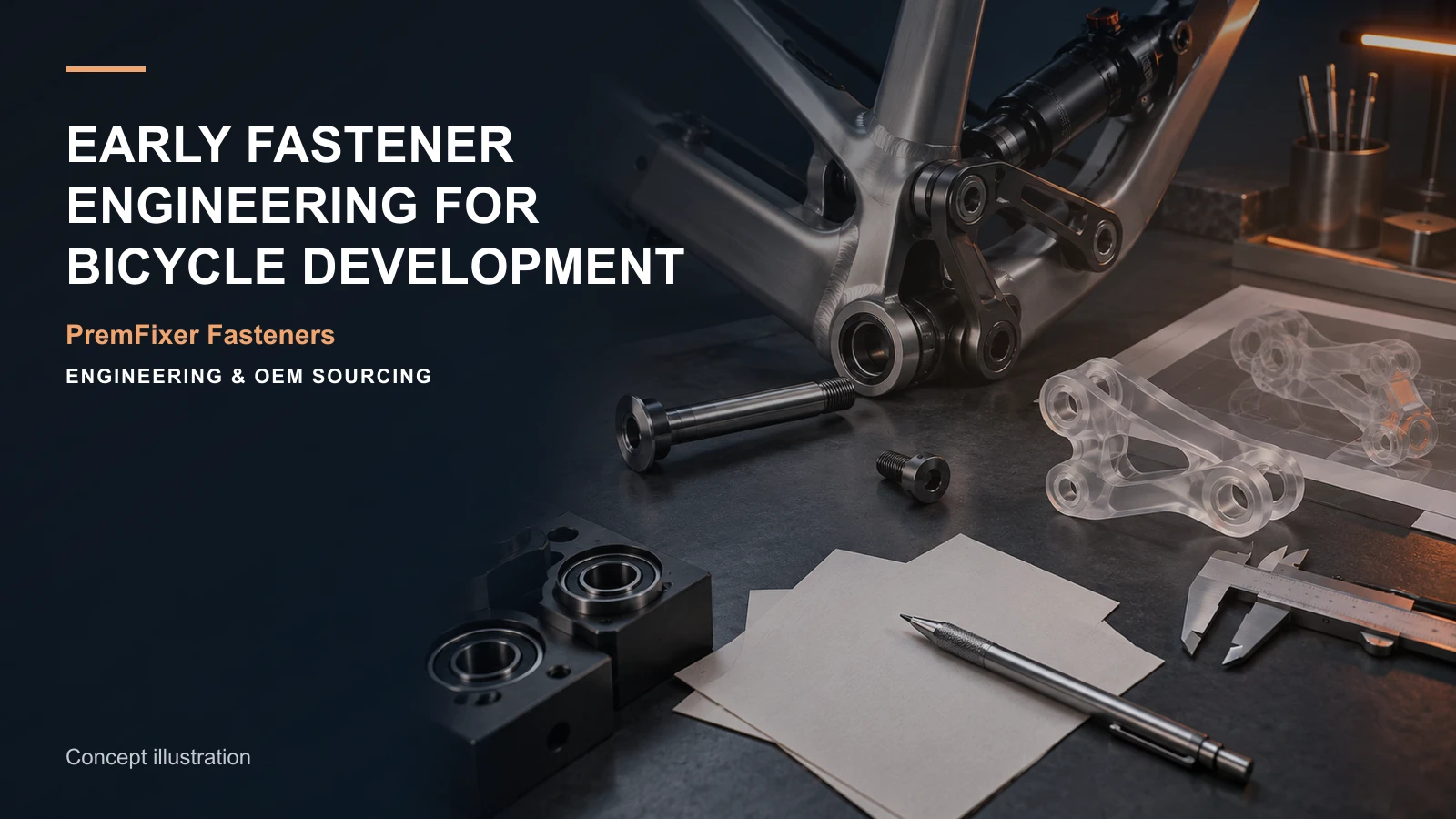
A frame model can look complete while its fastening decisions are still open. The pivot axle may lack a final locating strategy, the locking screw may conflict with tool access, or a material choice may have been made before the mating surfaces and service plan were understood.
Bicycle R&D teams need to resolve fastening interfaces while frame geometry can still change. The review should use the current drawing, BOM and project stage so that the recommendation applies to a real component or release.
A suspension frame concept has bearing locations but no final axle retention or service tool path. The review needs a defined baseline, named handoffs and a sample or RFQ that closes the next decision.
Find the fastening decisions still open
Start by locating the first point at which a production, torque or material problem enters the design. Many late manufacturing disputes are earlier interface decisions that were never assigned an owner.
Build the working record around Project stage, Open interface, Current revision and Decision owner. The practical output is an open-decision register linked to the current frame model.
For the "Find the fastening decisions still open" review, put joint function, mating geometry, assembly access, manufacturing route on the same sheet. Name the current revision, the decision owner and the condition that allows the part or program to move forward. The technical discussion then has a clear purchasing and release action.
Do not assume that every late change was a designer error or that the supplier can solve an undefined joint after release.
Bring the supplier into the interface discussion
The review should begin with load purpose, available space, mating components and the assembly motion, not an isolated solid model. Those relationships determine whether a feature is locating, clamping, retaining or simply providing access.
Keep the review anchored to Joint purpose, Mating parts, Tool path and Assembly sequence. The practical output is an interface definition that shows what the fastener must do.
Under "Bring the supplier into the interface discussion," compare the current and proposed conditions using Joint purpose, Mating parts, Tool path, Assembly sequence. Record the evidence source and any item that remains open. The buyer should be able to approve, reject or sample a specific supplier proposal.
A component model without its neighbours can hide stack, access and service constraints.
| Review stage | Project question | Inputs to connect | Expected output |
|---|---|---|---|
| 01 | Find the fastening decisions still open | Project stage / Open interface / Current revision / Decision owner | an open-decision register linked to the current frame model |
| 02 | Bring the supplier into the interface discussion | Joint purpose / Mating parts / Tool path / Assembly sequence | an interface definition that shows what the fastener must do |
| 03 | Develop structure, material and locking together | Geometry option / Material state / Locking method / Service access | a short option matrix with reasons for keeping or changing each feature |
| 04 | Turn design feedback into a manufacturable proposal | Drawing note / Machining access / Datum concept / Approval point | a proposed revision or marked-up drawing with a defined manufacturing rationale |
| 05 | Connect prototype learning to the next revision | Sample revision / Observed condition / Assembly feedback / Next change | a revision-linked prototype review with a clear next question |
| 06 | Start a joint development brief | Available model / Mating components / Target platform / Sample quantity | a scoped engineering and quotation discussion |
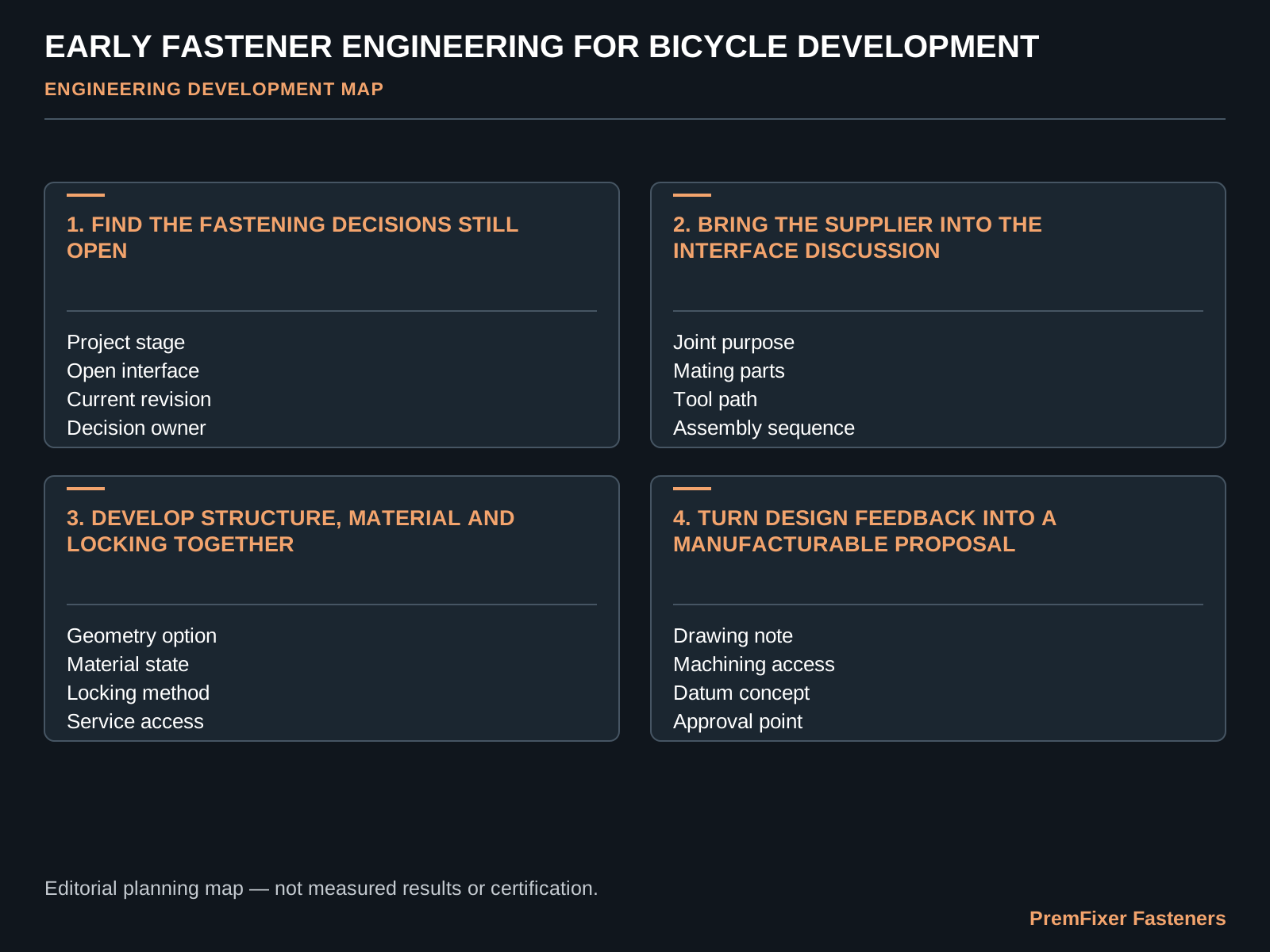
Develop structure, material and locking together
Geometry, material, locking method and tool access should be compared as one design problem. Changing one can alter bearing contact, thread engagement, tightening behaviour and future disassembly.
Put the following fields on the same revision-controlled page: Geometry option, Material state, Locking method and Service access. The practical output is a short option matrix with reasons for keeping or changing each feature.
In "Develop structure, material and locking together," follow joint function, mating geometry, assembly access, manufacturing route through the relevant handoff. The output from one operation or team should be a usable input for the next. Missing ownership at that boundary often causes more disruption than the operation itself.
Do not present a stronger alloy or additional locking feature as an automatic system improvement.
Turn design feedback into a manufacturable proposal
Engineering feedback becomes useful when it can be transferred into drawing notes, manufacturable geometry and an agreed question list. A verbal suggestion cannot control the sample that purchasing later orders.
Build the working record around Drawing note, Machining access, Datum concept and Approval point. The practical output is a proposed revision or marked-up drawing with a defined manufacturing rationale.
Use joint function, mating geometry, assembly access, manufacturing route to define the sample question for "Turn design feedback into a manufacturable proposal." The sample record should state what represents production, what is temporary and which decision follows the review. A conforming sample without that context can still leave the production route unsettled.
Keep recommendations distinguishable from customer-approved design changes.
Connect prototype learning to the next revision
Prototype observations should return to the drawing, BOM and assembly instruction that created the sample. Otherwise the next build can repeat the same uncertainty under a new purchase order.
Keep the review anchored to Sample revision, Observed condition, Assembly feedback and Next change. The practical output is a revision-linked prototype review with a clear next question.
After "Connect prototype learning to the next revision," carry joint function, mating geometry, assembly access, manufacturing route into repeat orders and service planning. Approved conditions should remain visible in stock, inspection records and packaging so that later lots do not depend on personal memory.
A successful machining operation does not by itself establish complete joint performance.
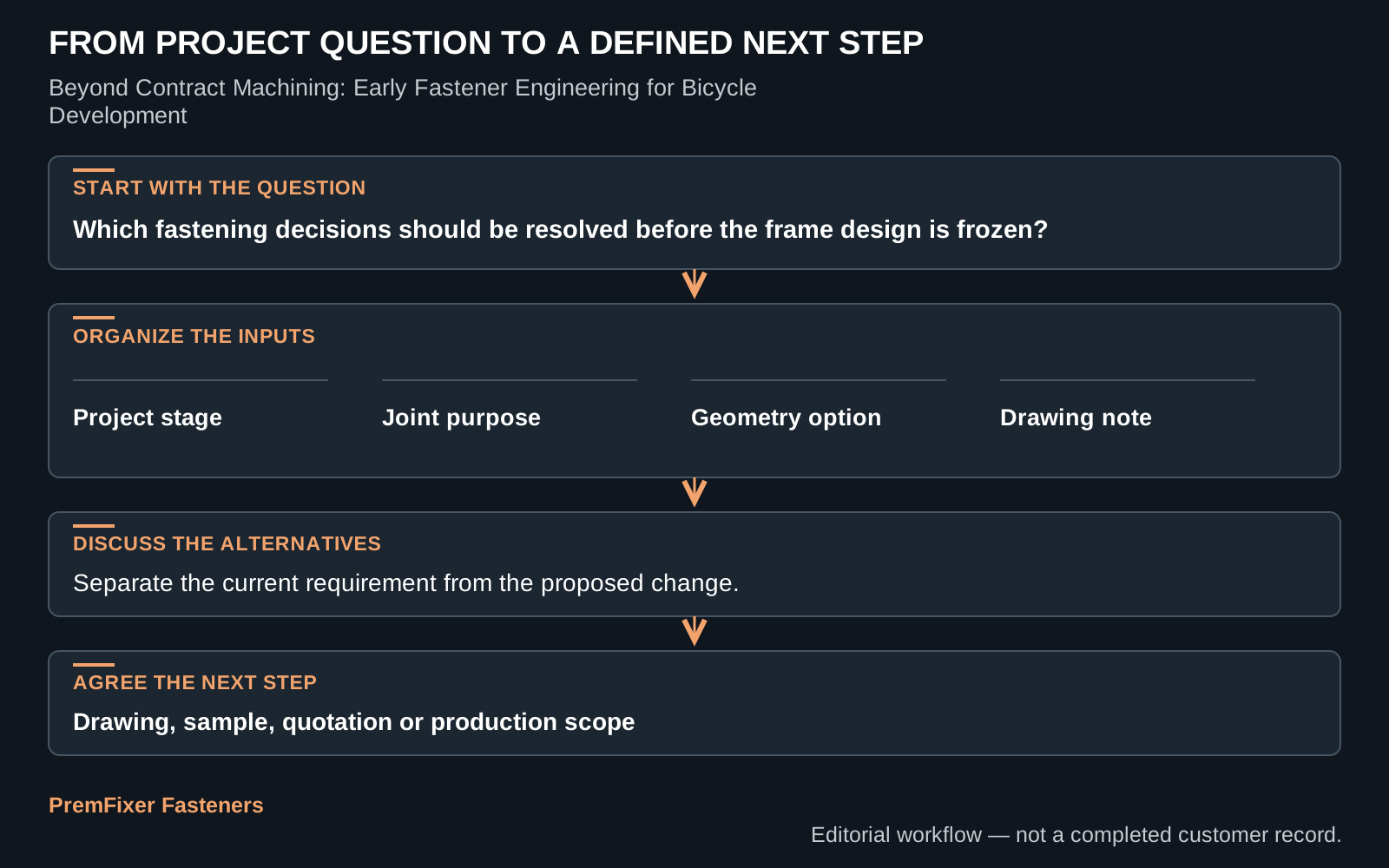
Start a joint development brief
A practical first brief states the model available, mating components, target platform, development stage and quantities. That is enough to identify missing information without delaying the conversation until every document is perfect.
Put the following fields on the same revision-controlled page: Available model, Mating components, Target platform and Sample quantity. The practical output is a scoped engineering and quotation discussion.
Convert the result of "Start a joint development brief" into a quotation line that identifies joint function, mating geometry, assembly access, manufacturing route. Ask the supplier to state included work, customer inputs, open assumptions and release evidence. Alternative offers are easier to compare when scope is not hidden inside one unit price.
The brief should define the immediate decision instead of asking for an undefined full-system redesign.
Turn the comparison into a controlled work package
A suspension frame concept has bearing locations but no final axle retention or service tool path. Map that case from customer input to accepted delivery, including every point where the part, information or approval changes hands.
For each beyond contract machining: early fastener engineering for bicycle development handoff, write the input, responsible person, expected output and rejection condition. This short record makes schedule and responsibility visible without a large process manual.
Late decisions can force extra parts, restricted tools or a process route that no longer fits the launch plan. Compare the proposed controls with the current route and choose evidence that can reveal the difference during a representative sample or pilot.
Once the result for beyond contract machining: early fastener engineering for bicycle development is accepted, update the released files and any stock or service identity affected by the change. Keep superseded material separate whenever interchangeability has not been approved.
Provide the current model, mating parts, project stage, target platform and sample quantity. A useful supplier reply links technical questions, commercial scope and release evidence to the same project revision.
Questions buyers ask
What baseline should the OEM freeze first?
Begin with the current configuration, then resolve fastening interfaces while frame geometry can still change. Name the owner and the output required before price, schedule or supplier preference is treated as final.
Which commercial inputs change the answer?
Send the current model, mating parts, project stage, target platform and sample quantity. Separate fixed requirements from open fields so the supplier can price the confirmed scope and respond to the engineering questions.
How does the team close an open point?
A suspension frame concept has bearing locations but no final axle retention or service tool path. A sample or pilot should answer named questions and disclose any material, finish, process or quantity that differs from production.
What can make an accepted part fail in the program?
Late decisions can force extra parts, restricted tools or a process route that no longer fits the launch plan. Connect the risk to a drawing characteristic, process handoff, approval or delivery record and verify its closure.
When should PremFixer join the discussion?
PremFixer can review the available drawing, model, BOM or sample with the current model, mating parts, project stage, target platform and sample quantity. The response can identify open questions, proposed scope and evidence for the next decision.
Open an early joint review
Share the current model, mating parts, project stage, target platform and sample quantity. The response will identify the proposed scope, open questions and the evidence needed before release.
Discuss This Project