

An engineering and manufacturing partner should do more than accept drawings, but it should not blur who approves the bicycle design. The practical value lies in continuity: manufacturing feedback reaches the OEM early, samples answer defined questions, production follows the approved revision and future changes return through the same controlled path.
Not every program needs that level of involvement. A stable catalogue screw may need only reliable build-to-print supply. A frame-specific pivot system with several mating parts, finish-sensitive dimensions and repeated platform variants can benefit from one team connecting design review, process planning, inspection and kit delivery.
This guide helps OEM teams decide which collaboration model they need and how to turn ‘partnership’ into measurable project responsibilities.
Choose the collaboration level by program need
Use three practical levels. Build-to-print supply fits released parts with stable requirements. Targeted engineering support fits a defined question such as tool access, tolerance strategy or finish sequence. Continuous program support fits families of custom hardware that move through concept, prototype, launch, repeat production and service.
Assign each BOM line to the lightest model that can control it. This avoids paying for engineering attention on simple catalogue positions while ensuring that frame-specific joints receive the review and change control they require.
Revisit the level when the design stabilizes. A component can move from collaborative development into repeat build-to-print production without losing its history.
| Collaboration level | Best fit | Expected deliverable |
|---|---|---|
| Build-to-print | Released and stable component | Quote, production plan, inspection and delivery |
| Targeted review | One known design or process question | Written proposal with approval path |
| Prototype support | Configuration still being proven | Samples tied to named decisions |
| Program partnership | Multi-part or multi-platform hardware family | Continuity from BOM review through service supply |
Establish one project record across functions
Create one controlled record containing part numbers, revisions, drawings, mating context, material and finish requirements, open questions, sample status, approved deviations and delivery scope. Engineering, purchasing, quality and manufacturing should be able to identify the same current state.
The record does not need to be a complex software system. A disciplined package and change log can be enough when ownership is clear. What matters is that decisions do not live only in individual inboxes or disappear when the project moves from prototype to production.
For a multi-part kit, link component changes to the assembly BOM. A revised axle may affect a spacer, label, service kit or inspection instruction even when those items keep their own revisions.
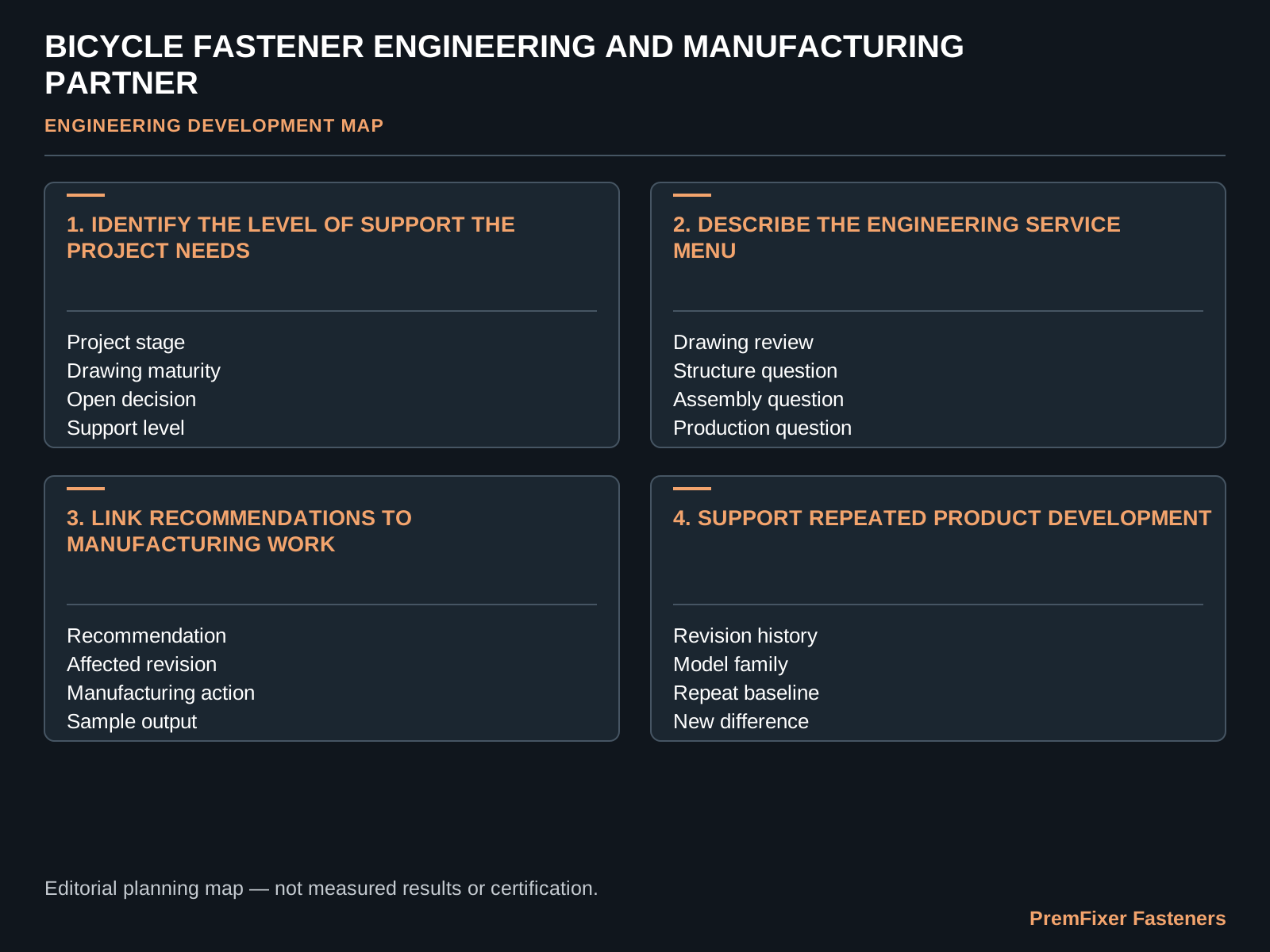
Make engineering feedback actionable
Supplier feedback should point to a feature, explain the manufacturing consequence and propose a next action. The OEM should be able to accept, reject or test the idea. General comments about ‘difficult machining’ or ‘high cost’ do not create a decision.
Prioritize feedback by project effect: function or assembly risk first, then lead time and repeatability, then cost and cosmetic refinement. This keeps discussion focused when launch timing is tight.
Every accepted change returns to the controlled drawing or BOM. The supplier’s role is to make implications visible; the customer remains responsible for product approval and complete-assembly validation.
Connect samples to production readiness
Define what each sample represents. Early pieces may confirm envelope and assembly. Later samples may use the intended material, finish, tooling and inspection route. A pilot lot may verify packaging, documentation and manufacturing flow at a more representative quantity.
Use readiness gates that match the program: drawing questions closed, critical characteristics identified, sample result accepted, process route agreed, required records available and production delivery condition confirmed.
Do not treat sample approval as a blanket waiver of unrepresented processes. If colour, heat treatment, marking or a partner operation changes later, identify the additional approval needed.
Measure the partnership during repeat orders
The value of continuity becomes visible after launch. Track response to forecast changes, retrieval of past records, handling of nonconformity, revision effectivity and service replenishment. These operating behaviours matter more than how often a supplier uses the word partnership.
Use a small review set tied to the actual program: accepted delivery condition, open corrective actions, schedule changes, stock by revision and upcoming engineering changes. Avoid scorecards that combine unrelated metrics into one number without an owner.
When performance or the platform changes, adjust the collaboration model. Stable parts can be simplified; emerging joint issues may need temporary engineering focus.
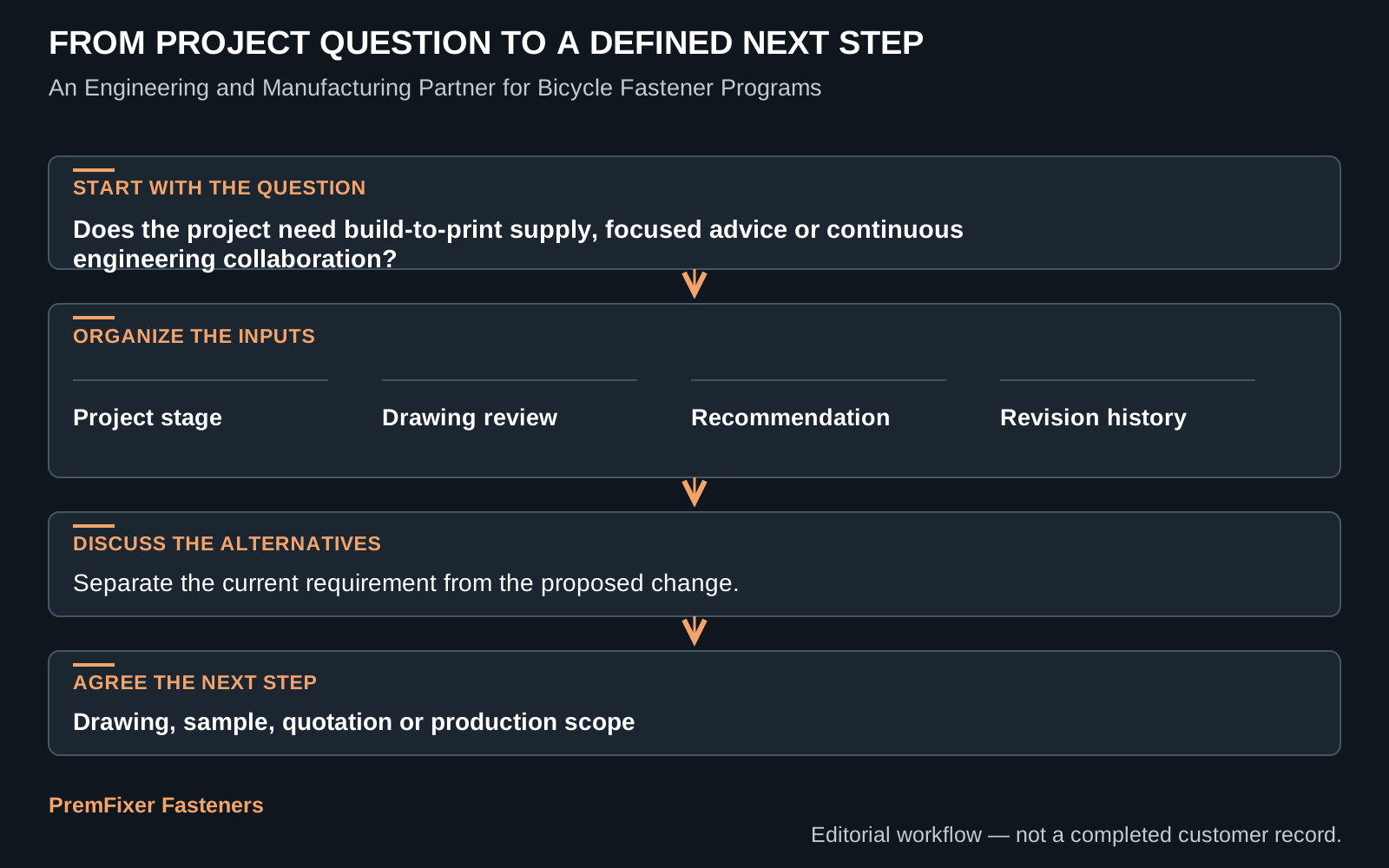
Start with a bounded work package
Select one hardware family or pivot kit and define the deliverables for the first phase. Provide the current files, project stage, quantities, timing and open questions. Ask the supplier to return a clarification log, process proposal, sample plan and quoted scope.
Name the contacts for engineering approval, commercial decisions and quality response on both sides. Set communication points around decisions rather than adding meetings without purpose.
PremFixer can support a program from drawing review through repeat production, but the first commitment should remain specific: a defined set of parts, a clear decision path and evidence that the working relationship can control them.
Set commercial boundaries for engineering work
Continuous collaboration still needs a clear commercial model. Define which clarification and routine DFM work is included in a quotation, which development tasks require a separate engineering or prototype order and how one-time tooling is owned. Transparent boundaries encourage useful feedback without turning every RFQ into an open-ended design project.
Link payment milestones to reviewable outputs where development is substantial: concept response, sample release, approved prototype, production tooling or pilot delivery. The customer can see what has been completed, and the supplier can allocate engineering and manufacturing resources against a real decision.
Protect project knowledge by agreeing on file ownership, confidential information, revision records and how customer-supplied samples or gauges are stored and returned. These details matter when a program spans several years or staff changes on either side.
For changes after launch, distinguish correction of a manufacturing nonconformity from a customer-requested design change and from a joint improvement proposal. Each has a different approval and commercial path. Mixing them can slow corrective action or create disagreement over cost.
A healthy partnership makes these boundaries easier to navigate, not less visible. The aim is fast, direct decisions with an auditable record—so both sides know which work is included, which revision is authorized and what evidence is needed before the next commitment.
The same discipline supports continuity when people change roles. Keep a concise program brief with the current BOM, technical contacts, commercial assumptions, open actions, approved samples and service commitment. A new engineer or buyer should be able to understand the current state without reconstructing months of chat messages. This continuity is one of the most practical differences between a transactional order and a managed hardware program. It also makes future quotation updates faster and easier to review. Add the next decision date and its owner so unfinished work remains visible instead of becoming an informal assumption in the next order.
Questions buyers ask
What does an engineering and manufacturing partner provide?
The supplier connects manufacturability feedback, sample planning, process ownership, inspection, production release and change control for a defined hardware program.
Does partnership mean the supplier owns bicycle design validation?
No. The supplier can provide manufacturing and component evidence, while the OEM retains approval of the design and validation of the complete bicycle and joint.
When is build-to-print supply enough?
It is often enough for stable parts with complete drawings, understood processes and no unresolved assembly or service questions.
How should a first partnership project be scoped?
Choose a bounded hardware family, define files and open questions, list expected deliverables and use named decision owners. Expand only after the workflow is demonstrated.
How can partnership performance be measured?
Review project-specific outcomes such as clarification closure, sample decisions, revision control, accepted delivery condition, response to exceptions and service replenishment.
Define a Working Partnership Around One Program
Start with specific deliverables and decision owners, then expand the scope after the engineering-to-production workflow is proven.
Discuss a Program Scope