

Hardware portfolios often accumulate near-duplicate part numbers through model updates, supplier changes and one-off service decisions. Some variations protect a real interface; others survive only because no one has compared the drawings and application history together.
Product-platform and sourcing teams need to reduce hardware complexity without erasing joint-specific requirements. The review should use the current drawing, BOM and project stage so that the recommendation applies to a real component or release.
A brand has several screws that differ only in finish or a small length increment across model families. That example provides a practical test for the technical and commercial choices discussed below.
Locate redundant and necessary variations
Compare similar BOM positions and drawings to separate function-based differences from historical or administrative duplicates. The goal is not the smallest possible SKU count but a clearer product family.
Build the working record around Part number, Application, Drawing difference and Reason for variation. The practical output is a redundant-versus-necessary variation map.
For the "Locate redundant and necessary variations" review, put part number, interface, model compatibility, inventory state on the same sheet. Name the current revision, the decision owner and the condition that allows the part or program to move forward. The technical discussion then has a clear purchasing and release action.
Do not remove a part number before its functional reason is understood.
Compare the interfaces before merging sizes
Check length, thread engagement, bearing surface, material, finish and available tool space across every candidate application. A visually similar screw can still create a different stack or service condition.
Keep the review anchored to Length and thread, Bearing face, Material and finish and Tool clearance. The practical output is a compatibility matrix by model and joint.
Under "Compare the interfaces before merging sizes," compare the current and proposed conditions using Length and thread, Bearing face, Material and finish, Tool clearance. Record the evidence source and any item that remains open. The buyer should be able to approve, reject or sample a specific supplier proposal.
Do not infer interchangeability from external appearance alone.
| Review stage | Project question | Inputs to connect | Expected output |
|---|---|---|---|
| 01 | Locate redundant and necessary variations | Part number / Application / Drawing difference / Reason for variation | a redundant-versus-necessary variation map |
| 02 | Compare the interfaces before merging sizes | Length and thread / Bearing face / Material and finish / Tool clearance | a compatibility matrix by model and joint |
| 03 | Develop a common hardware family | Common geometry / Size series / Drive form / Exception rule | a proposed common-hardware family |
| 04 | Translate changes into supply-chain effects | Purchase effect / Inventory effect / Packing effect / Service effect | a cross-functional impact summary |
| 05 | Plan the transition between old and new parts | Applicable models / Old stock / Replacement rule / Effective revision | a controlled part-number transition plan |
| 06 | Start with a focused SKU review | Pilot platform / Part family / Current BOM / Inventory state | a focused standardization workshop scope |
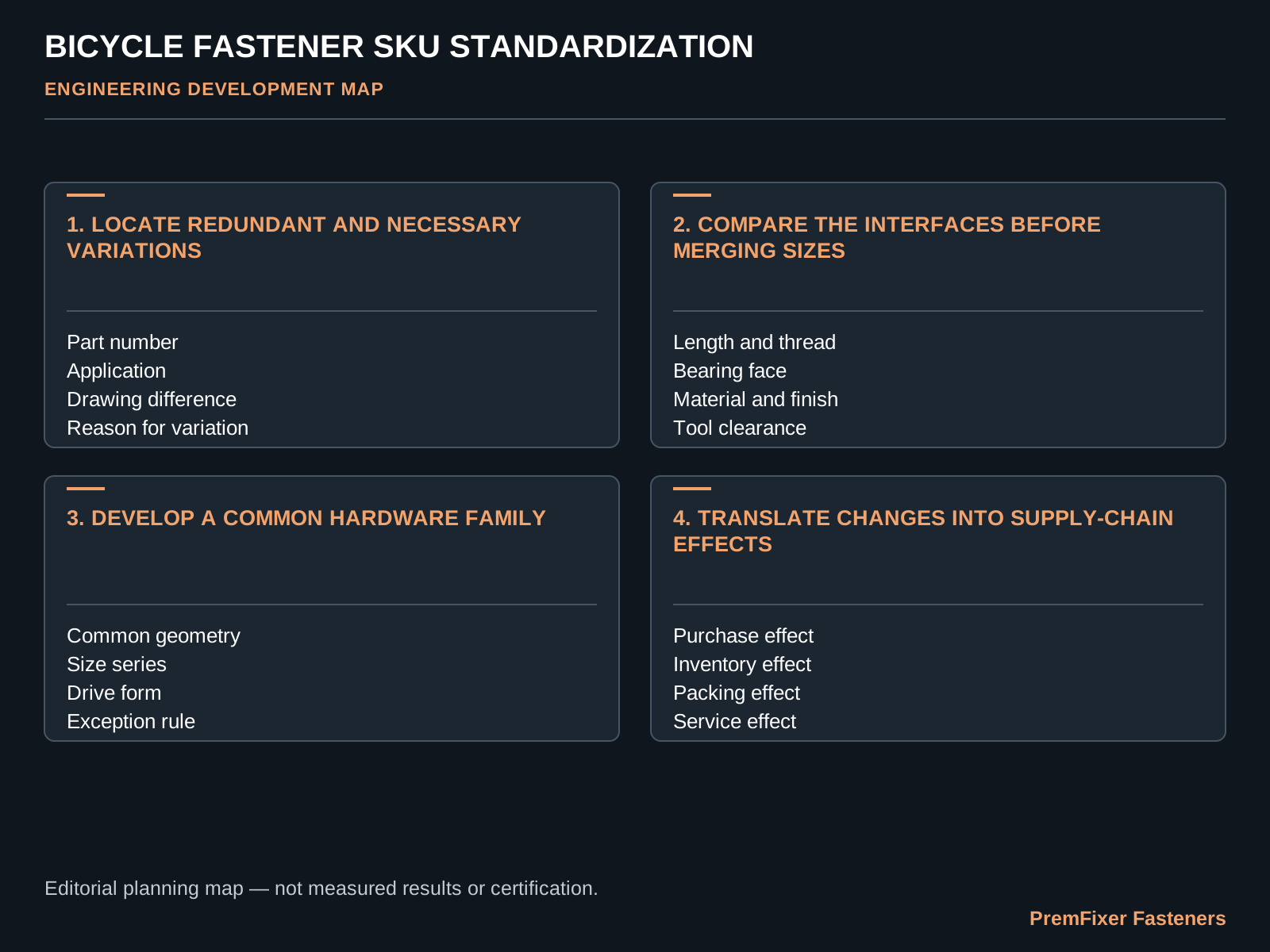
Develop a common hardware family
Define a controlled size series, drive strategy and shared geometry where the interfaces genuinely allow it. A family approach can simplify drawings and purchasing while preserving necessary variants.
Put the following fields on the same revision-controlled page: Common geometry, Size series, Drive form and Exception rule. The practical output is a proposed common-hardware family.
In "Develop a common hardware family," follow part number, interface, model compatibility, inventory state through the relevant handoff. The output from one operation or team should be a usable input for the next. Missing ownership at that boundary often causes more disruption than the operation itself.
Keep exceptions visible rather than forcing them into the common design.
Translate changes into supply-chain effects
Review purchasing, inventory, packaging, assembly documentation and service-parts impact for every consolidation proposal. A drawing simplification can create transition work elsewhere.
Build the working record around Purchase effect, Inventory effect, Packing effect and Service effect. The practical output is a cross-functional impact summary.
Use part number, interface, model compatibility, inventory state to define the sample question for "Translate changes into supply-chain effects." The sample record should state what represents production, what is temporary and which decision follows the review. A conforming sample without that context can still leave the production route unsettled.
Do not promise that all costs will fall at the same time.
Plan the transition between old and new parts
Define model applicability, old-stock disposition, replacement rules and effective dates for the new family. The transition is part of the engineering change, not a separate warehouse problem.
Keep the review anchored to Applicable models, Old stock, Replacement rule and Effective revision. The practical output is a controlled part-number transition plan.
After "Plan the transition between old and new parts," carry part number, interface, model compatibility, inventory state into repeat orders and service planning. Approved conditions should remain visible in stock, inspection records and packaging so that later lots do not depend on personal memory.
Do not mix old and new parts without an approved compatibility rule.
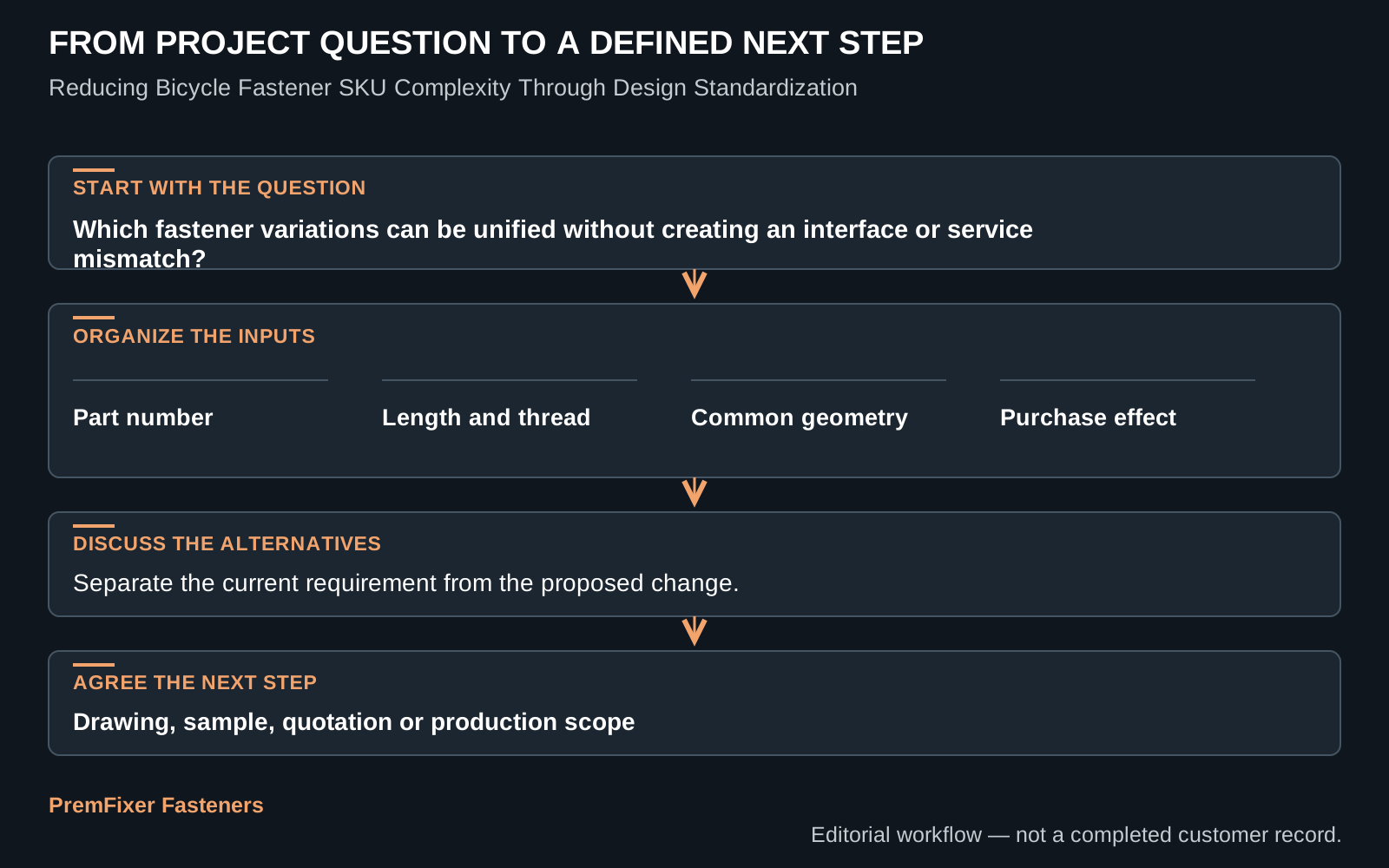
Start with a focused SKU review
Begin with one platform or part family where drawings, BOM use and inventory are available. A bounded pilot makes the decision visible before a wider portfolio change.
Put the following fields on the same revision-controlled page: Pilot platform, Part family, Current BOM and Inventory state. The practical output is a focused standardization workshop scope.
Convert the result of "Start with a focused SKU review" into a quotation line that identifies part number, interface, model compatibility, inventory state. Ask the supplier to state included work, customer inputs, open assumptions and release evidence. Alternative offers are easier to compare when scope is not hidden inside one unit price.
Do not attempt to unify the complete bicycle range before the first family has been validated.
Apply the decision to a working program
A brand has several screws that differ only in finish or a small length increment across model families. Identify the exact part numbers and revision involved, then name the teams that approve design, prepare supply, receive the lot and assemble the bicycle.
Place the current condition beside the proposed condition for reducing bicycle fastener sku complexity through design standardization. Record the drawing or BOM effect, process change, inspection evidence, schedule consequence and delivered state. Unknown inputs should remain open instead of becoming quoted assumptions.
Forced standardization can create extra spacers, mass or assembly confusion. Use the smallest sample, document check or pilot lot that can expose this issue, and state which production conditions the evidence does not cover.
Carry the accepted result for reducing bicycle fastener sku complexity through design standardization into the drawing, order, inspection plan and packaging identity that depend on it. Another model or revision stays outside the approval until its interfaces are shown to be equivalent.
Send the cross-model BOM, joint roles, dimensions, finishes, annual demand and service use. The supplier response should separate included work, customer approvals, external operations and open assumptions so product-platform and sourcing teams can make the next commitment.
Questions buyers ask
What baseline should the OEM freeze first?
Reduce hardware complexity without erasing joint-specific requirements. The comparison is credible only when every option uses the same part revision, quantity and delivered condition.
Which commercial inputs change the answer?
The first package should contain the cross-model BOM, joint roles, dimensions, finishes, annual demand and service use. It should also state the immediate decision the customer needs from the supplier response.
How does the team close an open point?
Base the pilot on this situation: a brand has several screws that differ only in finish or a small length increment across model families. Record the representative operations and the approval that follows the result.
What can make an accepted part fail in the program?
The main risk is that forced standardization can create extra spacers, mass or assembly confusion. Put one person in charge of the related drawing, handoff or release action.
When should PremFixer join the discussion?
For reducing bicycle fastener sku complexity through design standardization, PremFixer can organize the files and open points into a manufacturing, sample and quotation response for the defined component or hardware set.
Review the SKU family
Share the cross-model BOM, joint roles, dimensions, finishes, annual demand and service use. The response will identify the proposed scope, open questions and the evidence needed before release.
Discuss This Project