
Flexible production is often described as the ability to support a wide range of bicycle fastener quantities. That phrase can be useful, yet it does not describe the project stage, manufacturing route, one-time work or release conditions that make an order practical. A five-piece prototype and a rolling production release deserve different planning conversations.
Fixed-batch production can suit a stable configuration with a clear quantity and repeatable delivery condition. Flexible planning can support earlier-stage work, controlled pilots and changing demand. The choice should follow the information available, not a generic preference for small or large batches.
A launch moves from 40 pilot frames to uneven monthly replenishment before demand stabilizes. Following that case from drawing through release exposes which questions belong to engineering, manufacturing, quality and purchasing.
Define the comparison before comparing the price
Flexibility should be defined through the order that is being discussed. Is the team evaluating a concept sample, a pilot build, an approved production release or a replenishment order? Each stage uses different information and may carry different manufacturing, inspection, packing and change-control work.
A fixed-batch quote can be appropriate when the drawing, quantity and delivery condition are stable. A flexible plan can be appropriate when the project needs staged releases or contains open development inputs. Compare the same part revision and delivered condition before deciding that one cost or lead-time pattern is better.
For the "Define the comparison before comparing the price" review, put flexible bicycle fastener production, fixed batch fastener order, bicycle hardware prototype, fastener forecast and release on the same sheet. Name the current revision, the decision owner and the condition that allows the part or program to move forward. The technical discussion then has a clear purchasing and release action.
The first purchasing record should state what is committed now and what is only being forecast. This avoids treating planning demand as a firm order or treating an early sample request as an implied production commitment.
Match the production plan to the order stage
A production plan should state the purpose of the order. A prototype may be used to assess a selected feature or assembly condition. A pilot build may need a more complete kit and controlled packing. A production release may require a defined revision, routine inspection scope and replenishment logic. Naming the stage helps the supplier propose the right route.
Quantity still matters, but it is one field among several. A small order can require complex finishing or kit work; a larger order can remain sensitive to a late revision change. The plan needs the stage, released quantity, change window and delivery condition together.
Under "Match the production plan to the order stage," compare the current and proposed conditions using flexible bicycle fastener production, fixed batch fastener order, bicycle hardware prototype, fastener forecast and release. Record the evidence source and any item that remains open. The buyer should be able to approve, reject or sample a specific supplier proposal.
| Order stage | Primary question | Useful release record |
|---|---|---|
| Prototype | What must this sample demonstrate? | Sample revision, delivered condition and review purpose. |
| Pilot build | What needs to be checked before a broader release? | Pilot quantity, kit scope and open-item list. |
| Production release | Which configuration and quantity are committed? | Approved revision, delivery condition and change rule. |
| Replenishment | Which stock and revision may be used? | Inventory state, trigger and packing identity. |
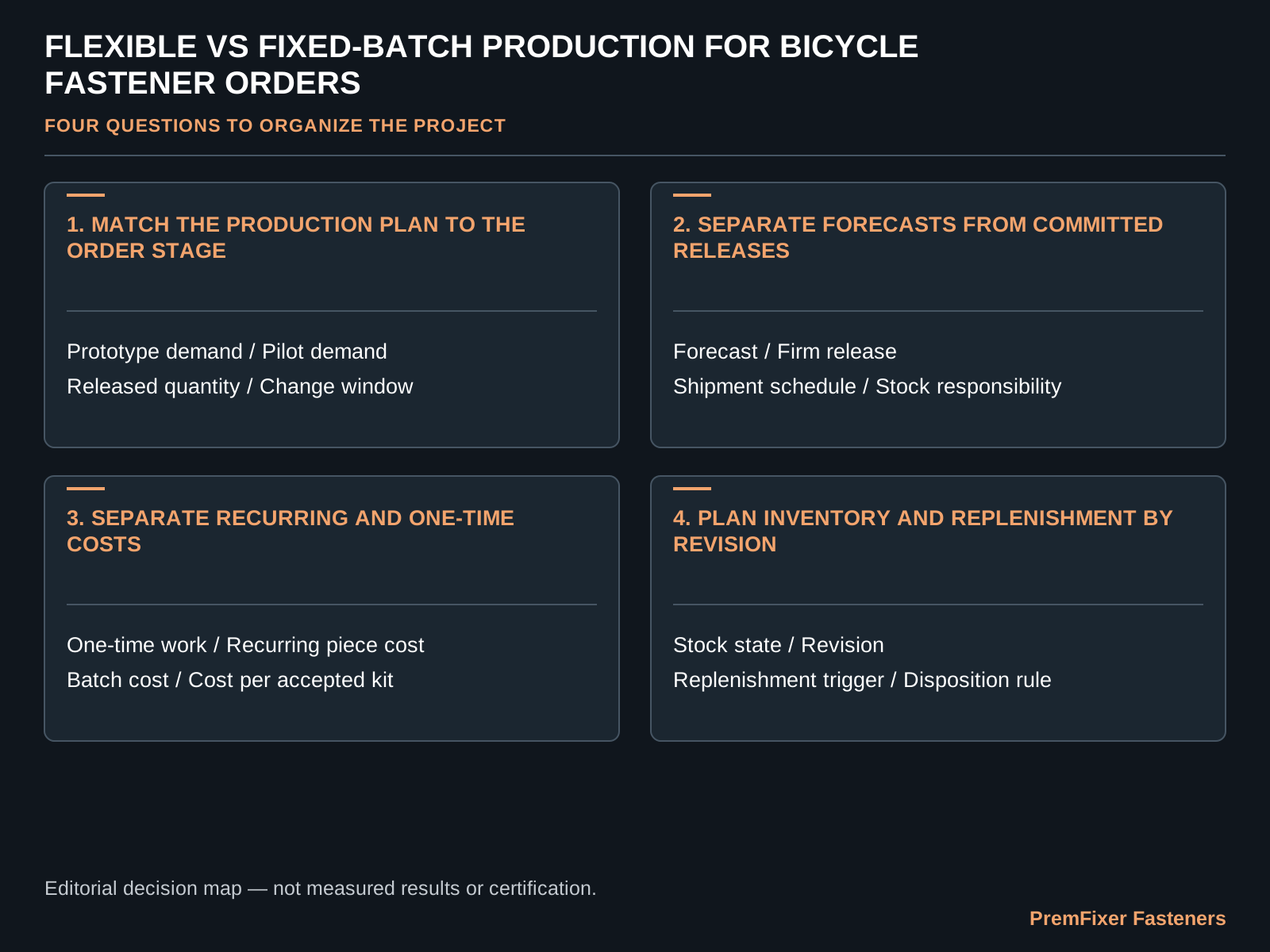
Separate forecasts from committed releases
A forecast helps a supplier and buyer plan materials, capacity or a future delivery window. A firm release authorizes a defined quantity under a controlled revision. They should be recorded separately, even when both are discussed in the same email or meeting.
For each line item, state the forecast horizon, firm release quantity, desired shipment schedule and responsibility for stock that has already been prepared. This makes the planning conversation more honest and gives both parties a practical way to manage a change in demand.
In "Separate forecasts from committed releases," follow flexible bicycle fastener production, fixed batch fastener order, bicycle hardware prototype, fastener forecast and release through the relevant handoff. The output from one operation or team should be a usable input for the next. Missing ownership at that boundary often causes more disruption than the operation itself.
| Planning field | Forecast | Firm release |
|---|---|---|
| Purpose | Supports material, capacity or timing discussion. | Authorizes a defined order against an approved configuration. |
| Quantity | Planning range or directional estimate. | Committed quantity and delivery condition. |
| Timing | Expected window subject to change. | Agreed shipment or delivery schedule. |
| Stock responsibility | States assumptions that need later agreement. | States the rule for released or prepared inventory. |
Separate recurring and one-time costs
Flexible and fixed-batch production can carry different cost shapes. One-time work may include drawing review, programming, setup, tooling preparation or first-sample work. Recurring cost may include material, machining, finish, routine inspection and packing. A fair comparison keeps those layers visible rather than hiding them inside a single number.
Use the same unit for both routes: an accepted part, an accepted kit or another agreed delivered unit. A shorter machining cycle or a larger order quantity can be meaningful inputs, but neither one by itself establishes the complete cost of a released bicycle hardware package.
Use flexible bicycle fastener production, fixed batch fastener order, bicycle hardware prototype, fastener forecast and release to define the sample question for "Separate recurring and one-time costs." The sample record should state what represents production, what is temporary and which decision follows the review. A conforming sample without that context can still leave the production route unsettled.
Plan inventory and replenishment by revision
Inventory planning needs its own revision rule. Separate raw material, work in process, finished stock, superseded stock and service kits. The replenishment record should identify which part number and revision can be used, what quantity triggers the next action and how a change is handled before more stock is committed.
This does not require a complicated system on the first order. It requires a visible decision about the stock state and the approved configuration. That record makes a future replenishment easier to quote, receive and service without treating a similar-looking part as interchangeable.
After "Plan inventory and replenishment by revision," carry flexible bicycle fastener production, fixed batch fastener order, bicycle hardware prototype, fastener forecast and release into repeat orders and service planning. Approved conditions should remain visible in stock, inspection records and packaging so that later lots do not depend on personal memory.
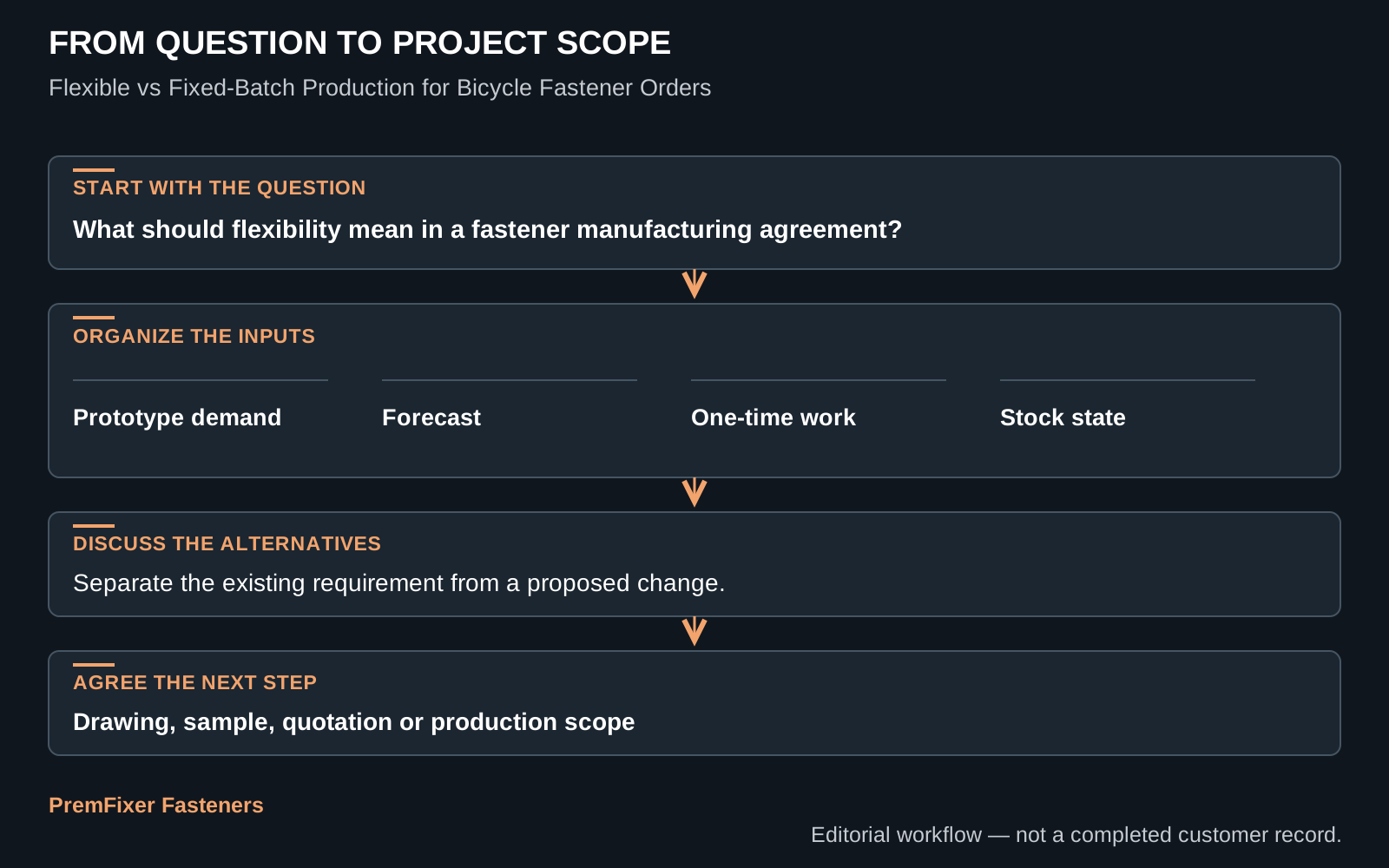
Turn the discussion into an RFQ conversation
For an initial production-planning discussion, share the drawing, BOM, model or sample description with the project stage, expected quantities and any target delivery window. Separate a directional forecast from the quantity that is ready to release. Include the part revision and the delivery condition required for the current stage.
PremFixer can use that package to discuss a production route, sample scope and quotation structure around the actual program. The useful result is a controlled next step: a defined sample, pilot quantity, firm release or replenishment record rather than a broad claim about batch flexibility.
Convert the result of "Turn the discussion into an RFQ conversation" into a quotation line that identifies flexible bicycle fastener production, fixed batch fastener order, bicycle hardware prototype, fastener forecast and release. Ask the supplier to state included work, customer inputs, open assumptions and release evidence. Alternative offers are easier to compare when scope is not hidden inside one unit price.
Turn the comparison into a controlled work package
A launch moves from 40 pilot frames to uneven monthly replenishment before demand stabilizes. Map that case from customer input to accepted delivery, including every point where the part, information or approval changes hands.
For each flexible vs fixed-batch production for bicycle fastener orders handoff, write the input, responsible person, expected output and rejection condition. This short record makes schedule and responsibility visible without a large process manual.
Oversized fixed lots create obsolete stock while unrestricted flexibility hides setup and capacity costs. Compare the proposed controls with the current route and choose evidence that can reveal the difference during a representative sample or pilot.
Once the result for flexible vs fixed-batch production for bicycle fastener orders is accepted, update the released files and any stock or service identity affected by the change. Keep superseded material separate whenever interchangeability has not been approved.
Provide the forecast, firm releases, revision state, MOQ options, packaging and service demand. A useful supplier reply links technical questions, commercial scope and release evidence to the same project revision.
Questions buyers ask
Where should the engineering review begin?
Fix the drawing and project state that frame the decision, then set batch rules that absorb forecast changes without losing revision and cost control. A recommendation without that baseline may solve a different configuration.
What information should the supplier receive?
Provide the forecast, firm releases, revision state, MOQ options, packaging and service demand, including any requirement that is still open to supplier feedback. That distinction prevents assumptions from being priced as approved scope.
What must a prototype demonstrate?
A launch moves from 40 pilot frames to uneven monthly replenishment before demand stabilizes. Use the pilot to examine that condition rather than treating one conforming part as approval of the complete route.
Which handoff deserves extra attention?
Oversized fixed lots create obsolete stock while unrestricted flexibility hides setup and capacity costs. The review should show where the issue can be detected and who can stop the next release.
What output should the RFQ request?
For this flexible vs fixed-batch production for bicycle fastener orders decision, PremFixer can return clarification questions, a proposed route and the records expected at sample or production release.
Plan a flexible release model
Share the forecast, firm releases, revision state, MOQ options, packaging and service demand. The response will identify the proposed scope, open questions and the evidence needed before release.
Discuss This Project