

International OEM programs differ less in slogans than in the details of how drawings are issued, samples are reviewed, surface appearance is approved and delivery documents are handed over. A useful global partnership model makes those expectations explicit at the start.
International bicycle program managers need to define the engineering behaviours required from a supplier across markets and functions. The review should use the current drawing, BOM and project stage so that the recommendation applies to a real component or release.
Use this case as the working baseline: a brand coordinates design in Europe, sourcing in Asia and assembly at two factories. Each section turns one part of the case into a reviewable project output.
Define the international project scope
Describe the target market, brand program, hardware scope and service stage without turning geographic reach into a performance claim. The project needs a clear working context before regional expectations can be discussed.
Build the working record around Target market, Program scope, Hardware family and Service stage. The practical output is an international project-scope statement.
For the "Define the international project scope" review, put target market, technical input, development stage, delivery handover on the same sheet. Name the current revision, the decision owner and the condition that allows the part or program to move forward. The technical discussion then has a clear purchasing and release action.
Do not add customer names, country lists or market-share claims that are not approved for publication.
Organize different technical expectations
Align drawing language, material definitions, appearance criteria and document requests for the actual customer team. These expectations vary by project and cannot be reduced to one national template.
Keep the review anchored to Drawing language, Material definition, Appearance criterion and Document request. The practical output is a technical-expectation matrix.
Under "Organize different technical expectations," compare the current and proposed conditions using Drawing language, Material definition, Appearance criterion, Document request. Record the evidence source and any item that remains open. The buyer should be able to approve, reject or sample a specific supplier proposal.
Do not invent a regional standard where the customer specification is the real source.
| Review stage | Project question | Inputs to connect | Expected output |
|---|---|---|---|
| 01 | Define the international project scope | Target market / Program scope / Hardware family / Service stage | an international project-scope statement |
| 02 | Organize different technical expectations | Drawing language / Material definition / Appearance criterion / Document request | a technical-expectation matrix |
| 03 | Adapt the development conversation | Model maturity / BOM maturity / Assembly information / Immediate decision | a stage-appropriate development agenda |
| 04 | Coordinate production and handover expectations | Sample handover / Production release / Document delivery / Receiving contact | a project handover map |
| 05 | Show the service model rather than invented projects | Requirement review / Engineering output / Sample decision / Production handover | a transparent engineering-partnership model |
| 06 | Invite a market-specific project brief | Target market / Current drawings / BOM state / Required stage | a market-specific engineering and quotation brief |
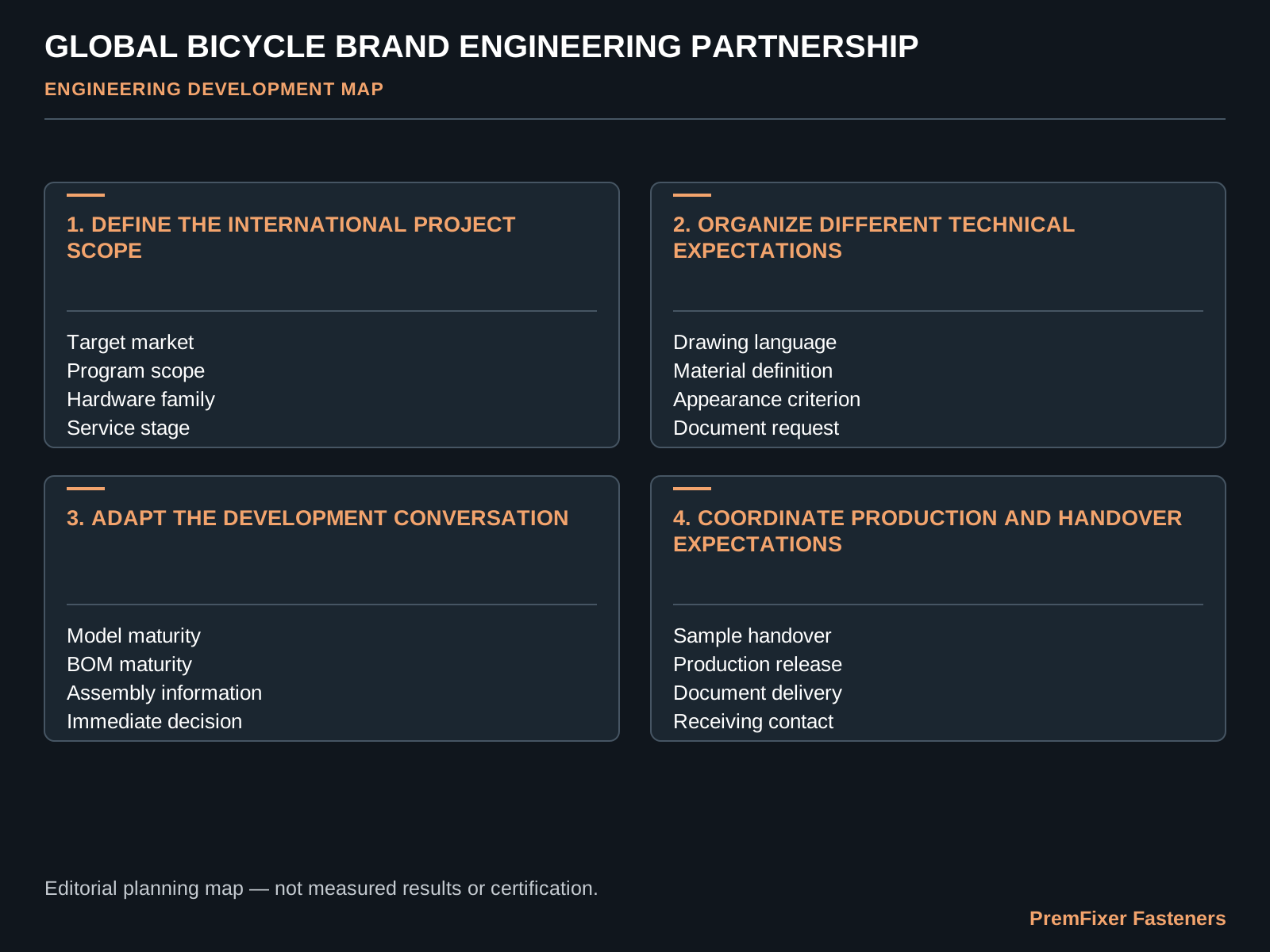
Adapt the development conversation
Match the review method to the maturity of the model, BOM and assembly information available. A new brand concept and a mature production transfer need different questions and outputs.
Put the following fields on the same revision-controlled page: Model maturity, BOM maturity, Assembly information and Immediate decision. The practical output is a stage-appropriate development agenda.
In "Adapt the development conversation," follow target market, technical input, development stage, delivery handover through the relevant handoff. The output from one operation or team should be a usable input for the next. Missing ownership at that boundary often causes more disruption than the operation itself.
Do not demand a complete production package before an early engineering conversation can begin.
Coordinate production and handover expectations
Connect samples, production releases, technical records, packing and receiving contacts at named handover points. Cross-border delays often begin as unclear ownership rather than a machining problem.
Build the working record around Sample handover, Production release, Document delivery and Receiving contact. The practical output is a project handover map.
Use target market, technical input, development stage, delivery handover to define the sample question for "Coordinate production and handover expectations." The sample record should state what represents production, what is temporary and which decision follows the review. A conforming sample without that context can still leave the production route unsettled.
Do not describe a smooth handover as proof of product approval.
Show the service model rather than invented projects
Explain the chain from requirements through engineering, sampling, production and delivery using the current service scope. A clear model is more useful than an anonymous success story with unverifiable results.
Keep the review anchored to Requirement review, Engineering output, Sample decision and Production handover. The practical output is a transparent engineering-partnership model.
After "Show the service model rather than invented projects," carry target market, technical input, development stage, delivery handover into repeat orders and service planning. Approved conditions should remain visible in stock, inspection records and packaging so that later lots do not depend on personal memory.
Do not invent model names, order values, timelines or customer outcomes.
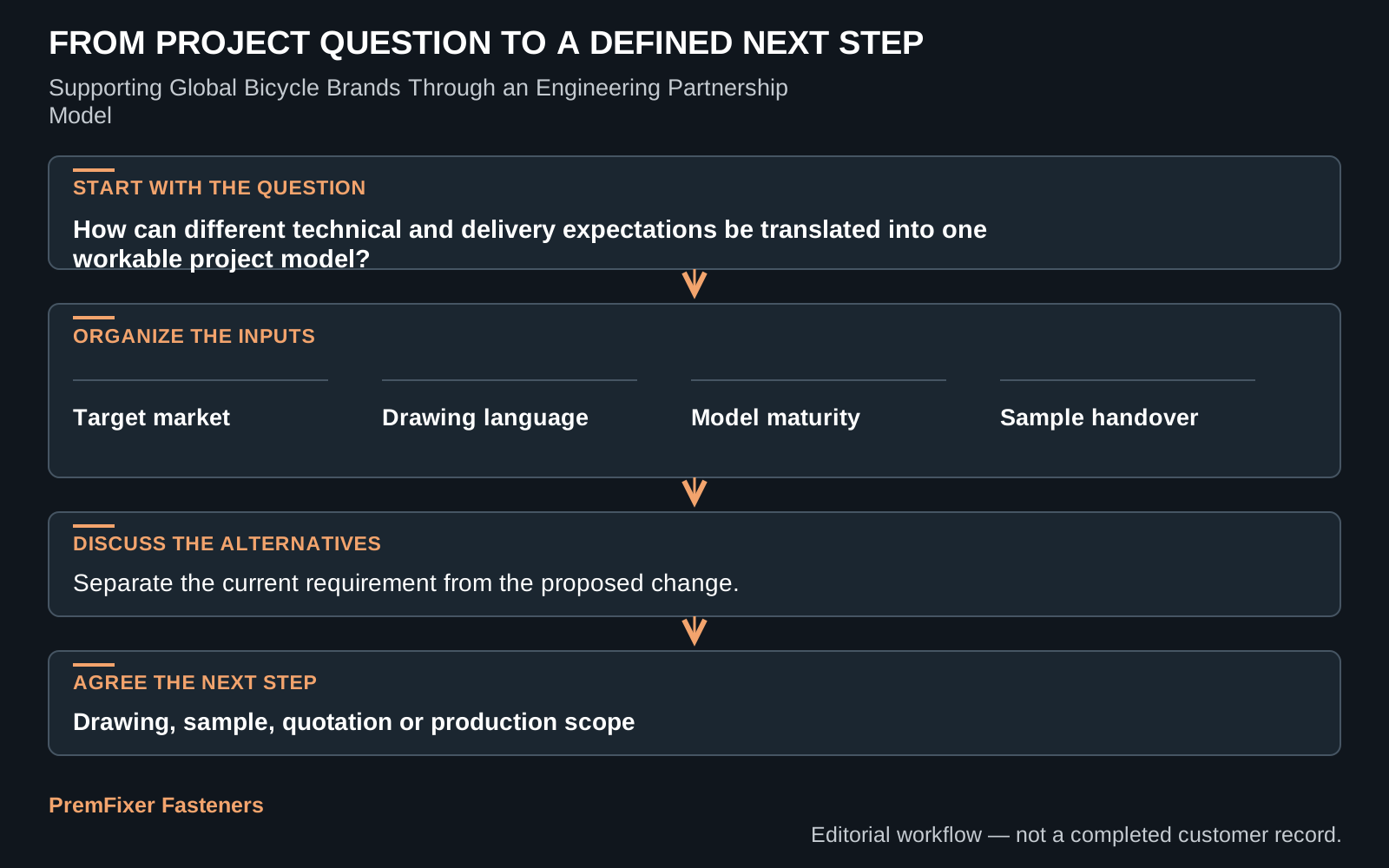
Invite a market-specific project brief
Ask for the target market, current drawings, BOM state, quantities and required service stage. Those inputs let the discussion adapt without relying on assumptions about the customer region.
Put the following fields on the same revision-controlled page: Target market, Current drawings, BOM state and Required stage. The practical output is a market-specific engineering and quotation brief.
Convert the result of "Invite a market-specific project brief" into a quotation line that identifies target market, technical input, development stage, delivery handover. Ask the supplier to state included work, customer inputs, open assumptions and release evidence. Alternative offers are easier to compare when scope is not hidden inside one unit price.
Keep compliance, validation and documentation requirements specific to the actual program.
Use a project example to test the proposal
Use one bounded work package to test the decision. A brand coordinates design in Europe, sourcing in Asia and assembly at two factories. Give the package a part list, revision, owner and required completion state.
For supporting global bicycle brands through an engineering partnership model, ask engineering to mark the functional interfaces and purchasing to define the quoted delivery unit. Quality can then identify the evidence needed at sample and production release.
Generic claims of global experience do not show how decisions, files and exceptions move. Build a check around the point where that failure enters the workflow, rather than adding broad inspection after every operation.
Review the first result against the stated question for supporting global bicycle brands through an engineering partnership model. If a material, finish, tool or quantity differs from production, keep the limitation with the sample record and decide whether another stage is required.
The RFQ should include the program organization, files, decision owners, locales, schedule and supplied scope. Request a scope matrix, timing assumptions and the exact output that will close the open project decision.
Questions buyers ask
How should purchasing frame this decision?
Fix the drawing and project state that frame the decision, then define the engineering behaviours required from a supplier across markets and functions. A recommendation without that baseline may solve a different configuration.
What should remain linked to the drawing revision?
Provide the program organization, files, decision owners, locales, schedule and supplied scope, including any requirement that is still open to supplier feedback. That distinction prevents assumptions from being priced as approved scope.
Which evidence is useful during sampling?
A brand coordinates design in Europe, sourcing in Asia and assembly at two factories. Use the pilot to examine that condition rather than treating one conforming part as approval of the complete route.
What should stay visible during repeat orders?
Generic claims of global experience do not show how decisions, files and exceptions move. The review should show where the issue can be detected and who can stop the next release.
What should the first supplier response contain?
For this supporting global bicycle brands through an engineering partnership model decision, PremFixer can return clarification questions, a proposed route and the records expected at sample or production release.
Define the global working model
Share the program organization, files, decision owners, locales, schedule and supplied scope. The response will identify the proposed scope, open questions and the evidence needed before release.
Discuss This Project