

A global bicycle launch rarely moves from one sample directly to a stable annual order. Engineering quantities, pilot builds, market introductions and replenishment waves overlap, while the hardware revision may still be changing.
Global launch and supply teams need to stage prototype, pilot and production releases while the BOM is still stabilizing. The review should use the current drawing, BOM and project stage so that the recommendation applies to a real component or release.
A bicycle launches in several markets with overlapping validation and replenishment waves. Following that case from drawing through release exposes which questions belong to engineering, manufacturing, quality and purchasing.
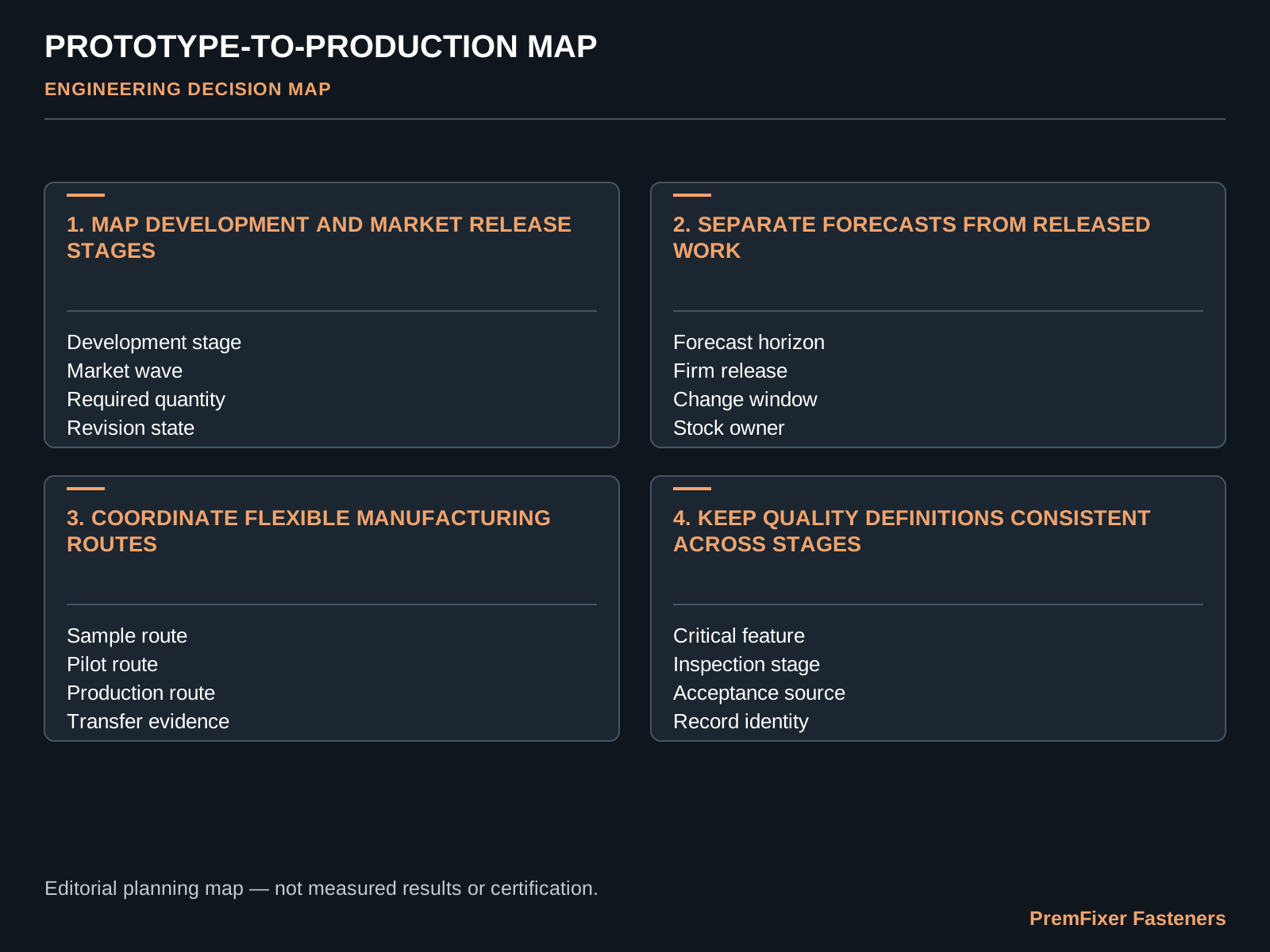
Map development and market release stages
Begin with the prototype, validation, pilot, launch and replenishment stages that the program actually uses. Each stage carries a different quantity, approval state and tolerance for change.
For the working record, connect Development stage, Market wave, Required quantity and Revision state. The immediate output should be a stage-and-release demand map. That record gives engineering, purchasing and manufacturing one configuration to discuss.
For the "Map development and market release stages" review, put development stage, released quantity, part revision, complete-kit timing on the same sheet. Name the current revision, the decision owner and the condition that allows the part or program to move forward. The technical discussion then has a clear purchasing and release action.
Do not treat a launch forecast as an approved production order. If geometry, material, finish, process or assembly changes, identify the affected configuration and the question the next stage must answer.
Separate forecasts from released work
Place indicative demand, capacity reservations and firm purchase releases in separate columns. This prevents materials or finished parts from being committed against an assumption that engineering has not released.
For the working record, connect Forecast horizon, Firm release, Change window and Stock owner. The immediate output should be a forecast-and-release responsibility table. It also keeps the next sample, inspection or quotation tied to the same revision.
Under "Separate forecasts from released work," compare the current and proposed conditions using Forecast horizon, Firm release, Change window, Stock owner. Record the evidence source and any item that remains open. The buyer should be able to approve, reject or sample a specific supplier proposal.
Do not promise unlimited flexibility after materials, finishes or dedicated packaging have been committed. If geometry, material, finish, process or assembly changes, identify the affected configuration and the question the next stage must answer.
| Stage | Decision to make | Inputs to connect | Controlled output |
|---|---|---|---|
| 01 | Map development and market release stages | Development stage / Market wave / Required quantity / Revision state | a stage-and-release demand map |
| 02 | Separate forecasts from released work | Forecast horizon / Firm release / Change window / Stock owner | a forecast-and-release responsibility table |
| 03 | Coordinate flexible manufacturing routes | Sample route / Pilot route / Production route / Transfer evidence | a staged manufacturing-route plan |
| 04 | Keep quality definitions consistent across stages | Critical feature / Inspection stage / Acceptance source / Record identity | a stage-aware quality plan |
| 05 | Organize shipment waves around complete kits | Kit BOM / Wave quantity / Pack identity / Required date | a complete-kit shipment schedule |
| 06 | Create a staged supply brief | Launch calendar / BOM revision / Quantity range / Delivery region | a scoped global flexible-supply proposal |
Coordinate flexible manufacturing routes
Define how prototype machining, pilot control and repeat production can change scale while retaining the approved features. A route that is appropriate for ten samples may not be the best controlled route for thousands of kits.
For the working record, connect Sample route, Pilot route, Production route and Transfer evidence. The immediate output should be a staged manufacturing-route plan. The result is a reviewable handover instead of an assumption passed between departments.
In "Coordinate flexible manufacturing routes," follow development stage, released quantity, part revision, complete-kit timing through the relevant handoff. The output from one operation or team should be a usable input for the next. Missing ownership at that boundary often causes more disruption than the operation itself.
Do not assume that changing equipment or batch size leaves every datum and surface condition unchanged. If geometry, material, finish, process or assembly changes, identify the affected configuration and the question the next stage must answer.
Keep quality definitions consistent across stages
Carry the same critical features, inspection language and revision identity from samples into production. The inspection frequency may change, but the intended function should not disappear during scale-up.
For the working record, connect Critical feature, Inspection stage, Acceptance source and Record identity. The immediate output should be a stage-aware quality plan. That record gives engineering, purchasing and manufacturing one configuration to discuss.
Use development stage, released quantity, part revision, complete-kit timing to define the sample question for "Keep quality definitions consistent across stages." The sample record should state what represents production, what is temporary and which decision follows the review. A conforming sample without that context can still leave the production route unsettled.
Do not convert a sample observation into a production acceptance rule without approval. If geometry, material, finish, process or assembly changes, identify the affected configuration and the question the next stage must answer.
Organize shipment waves around complete kits
Plan releases by assembly-ready sets rather than isolated part availability. A missing spacer or locking screw can stop a build even when the main axle quantity is complete.
For the working record, connect Kit BOM, Wave quantity, Pack identity and Required date. The immediate output should be a complete-kit shipment schedule. It also keeps the next sample, inspection or quotation tied to the same revision.
After "Organize shipment waves around complete kits," carry development stage, released quantity, part revision, complete-kit timing into repeat orders and service planning. Approved conditions should remain visible in stock, inspection records and packaging so that later lots do not depend on personal memory.
Do not report a kit as available until every released component and required record is present. If geometry, material, finish, process or assembly changes, identify the affected configuration and the question the next stage must answer.
Create a staged supply brief
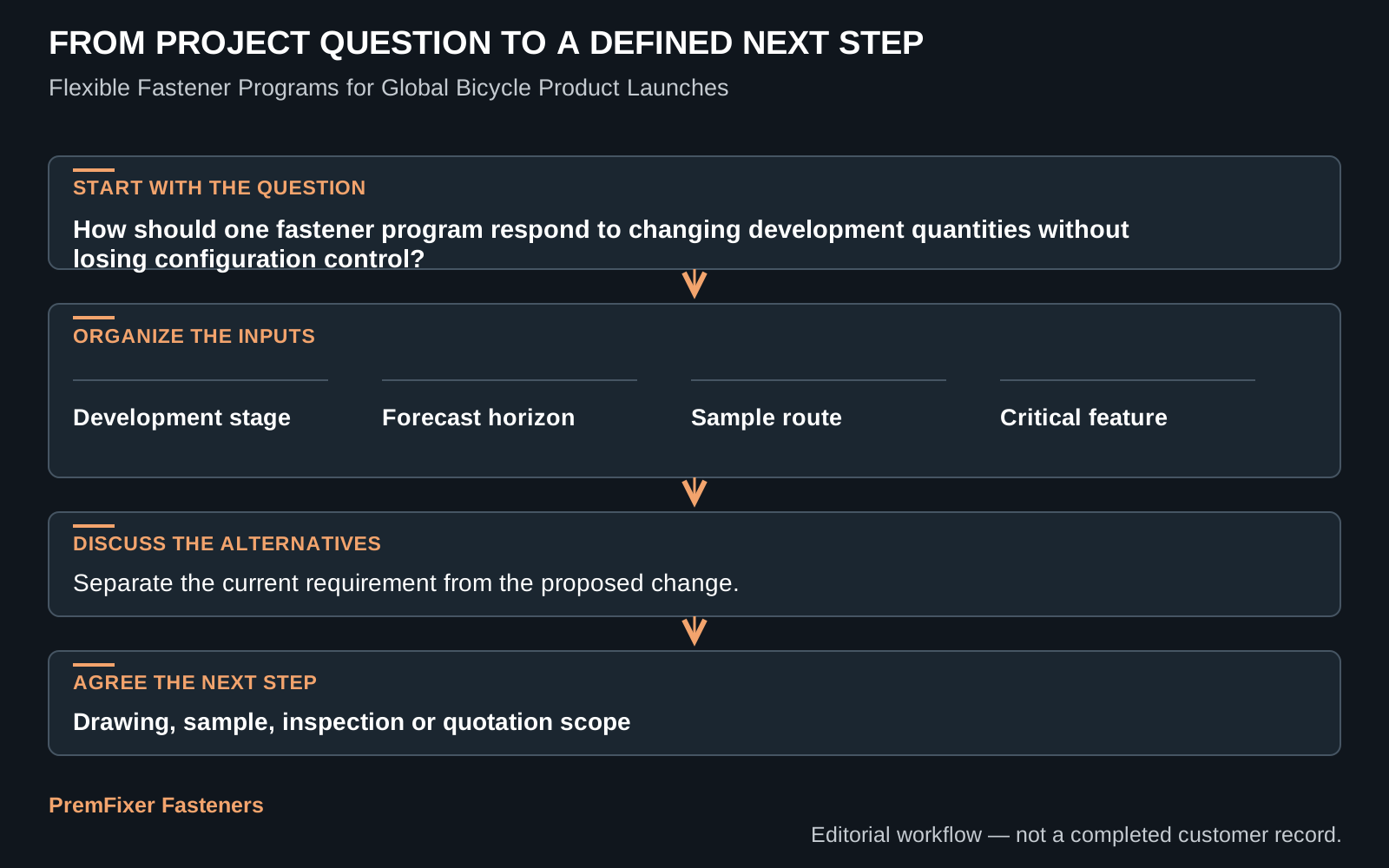
Bring the launch calendar, BOM revisions, quantities and delivery regions into one first-project brief. The supplier can then identify route changes and long-lead decisions before they interrupt the launch.
For the working record, connect Launch calendar, BOM revision, Quantity range and Delivery region. The immediate output should be a scoped global flexible-supply proposal. The result is a reviewable handover instead of an assumption passed between departments.
Convert the result of "Create a staged supply brief" into a quotation line that identifies development stage, released quantity, part revision, complete-kit timing. Ask the supplier to state included work, customer inputs, open assumptions and release evidence. Alternative offers are easier to compare when scope is not hidden inside one unit price.
Keep freight, duties and market compliance separate from the manufacturing scope unless explicitly included. If geometry, material, finish, process or assembly changes, identify the affected configuration and the question the next stage must answer.
Apply the decision to a working program
A bicycle launches in several markets with overlapping validation and replenishment waves. Identify the exact part numbers and revision involved, then name the teams that approve design, prepare supply, receive the lot and assemble the bicycle.
Place the current condition beside the proposed condition for flexible fastener programs for global bicycle product launches. Record the drawing or BOM effect, process change, inspection evidence, schedule consequence and delivered state. Unknown inputs should remain open instead of becoming quoted assumptions.
Flexibility without firm release rules can mix forecasts, revisions and kit dates. Use the smallest sample, document check or pilot lot that can expose this issue, and state which production conditions the evidence does not cover.
Carry the accepted result for flexible fastener programs for global bicycle product launches into the drawing, order, inspection plan and packaging identity that depend on it. Another model or revision stays outside the approval until its interfaces are shown to be equivalent.
Send the launch calendar, current BOM, stage quantities, forecast, market sequence and pack plan. The supplier response should separate included work, customer approvals, external operations and open assumptions so global launch and supply teams can make the next commitment.
Questions buyers ask
Where should the engineering review begin?
Fix the drawing and project state that frame the decision, then stage prototype, pilot and production releases while the BOM is still stabilizing. A recommendation without that baseline may solve a different configuration.
What information should the supplier receive?
Provide the launch calendar, current BOM, stage quantities, forecast, market sequence and pack plan, including any requirement that is still open to supplier feedback. That distinction prevents assumptions from being priced as approved scope.
What must a prototype demonstrate?
A bicycle launches in several markets with overlapping validation and replenishment waves. Use the pilot to examine that condition rather than treating one conforming part as approval of the complete route.
Which handoff deserves extra attention?
Flexibility without firm release rules can mix forecasts, revisions and kit dates. The review should show where the issue can be detected and who can stop the next release.
What output should the RFQ request?
For this flexible fastener programs for global bicycle product launches decision, PremFixer can return clarification questions, a proposed route and the records expected at sample or production release.
Plan the staged fastener program
Share the launch calendar, current BOM, stage quantities, forecast, market sequence and pack plan. The response will identify the proposed scope, open questions and the evidence needed before release.
Discuss This Project