

A fastener shipment can meet the purchase quantity and still arrive with the wrong label structure, an incomplete record chain or packaging that does not fit the receiving process. Global delivery planning connects technical and logistics decisions before the cartons are closed.
Global OEM logistics and quality teams need to define quality release and packaging for the destination and assembly point. The review should use the current drawing, BOM and project stage so that the recommendation applies to a real component or release.
The program becomes concrete when one hardware program feeds factories in Europe and Asia with different pack quantities and document needs. The review can then focus on the evidence required before the next commitment.
Separate market, customer and order requirements
List applicable market obligations, customer specifications and contract-level instructions as separate inputs. They can overlap, but they do not come from the same authority or apply automatically to every shipment.
Build the working record around Destination market, Customer requirement, Purchase condition and Product scope. The practical output is a requirement map for the specific order.
For the "Separate market, customer and order requirements" review, put destination, part identity, document scope, packaging condition on the same sheet. Name the current revision, the decision owner and the condition that allows the part or program to move forward. The technical discussion then has a clear purchasing and release action.
Do not claim that every country or customer follows one shared approval rule.
Build an order-level documentation map
Group material, inspection, process and lot records by the question each document must answer. A list of certificate names does not show how the records support the delivered parts.
Keep the review anchored to Document purpose, Part number, Lot identity and Delivery method. The practical output is an order-level technical-document matrix.
Under "Build an order-level documentation map," compare the current and proposed conditions using Document purpose, Part number, Lot identity, Delivery method. Record the evidence source and any item that remains open. The buyer should be able to approve, reject or sample a specific supplier proposal.
Do not include unrelated records to make the package appear more complete.
| Review stage | Project question | Inputs to connect | Expected output |
|---|---|---|---|
| 01 | Separate market, customer and order requirements | Destination market / Customer requirement / Purchase condition / Product scope | a requirement map for the specific order |
| 02 | Build an order-level documentation map | Document purpose / Part number / Lot identity / Delivery method | an order-level technical-document matrix |
| 03 | Design packaging around the shipment | Protection need / Pack quantity / Part separation / Receiving method | a shipment-specific packaging specification |
| 04 | Connect records to part and kit identity | Part number / Revision / Lot label / Carton or kit | a traceable part-to-record chain |
| 05 | Coordinate delivery habits and handovers | Communication window / Document handover / Receiving contact / Escalation point | a practical order-handover plan |
| 06 | Prepare the international delivery brief | Destination / Purchase scope / Required records / Delivery method | an international delivery and quotation brief |
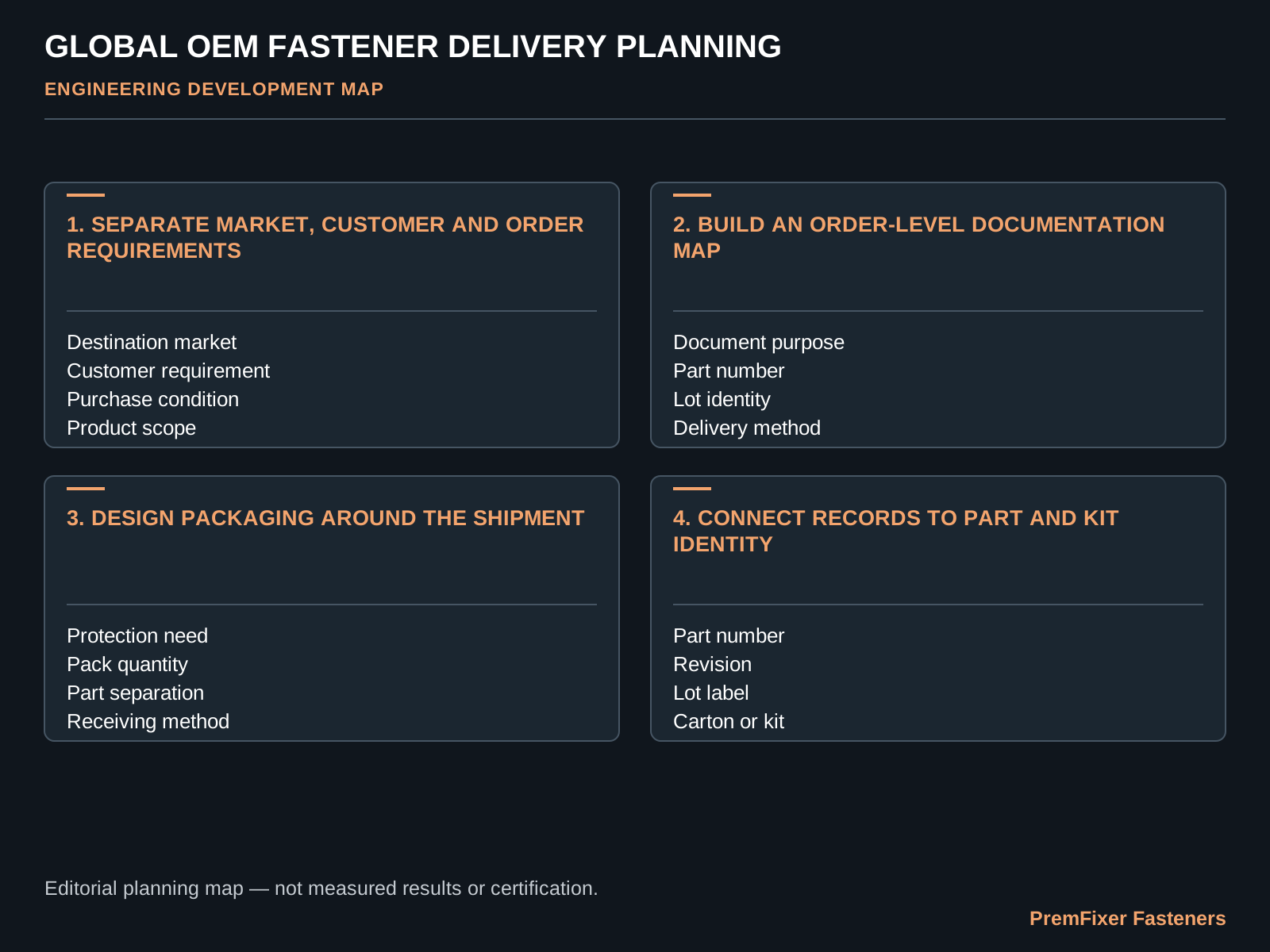
Design packaging around the shipment
Define protection, cleanliness, part separation, quantity per pack and label visibility for the actual transport and receiving route. Packaging is part of the delivered manufacturing scope.
Put the following fields on the same revision-controlled page: Protection need, Pack quantity, Part separation and Receiving method. The practical output is a shipment-specific packaging specification.
In "Design packaging around the shipment," follow destination, part identity, document scope, packaging condition through the relevant handoff. The output from one operation or team should be a usable input for the next. Missing ownership at that boundary often causes more disruption than the operation itself.
Do not assume one sealed or bulk format suits every finish and assembly flow.
Connect records to part and kit identity
Link reports, BOM positions, package labels and carton lists to the same part numbers, revisions and lots. The customer must be able to reconcile the document with what is physically received.
Build the working record around Part number, Revision, Lot label and Carton or kit. The practical output is a traceable part-to-record chain.
Use destination, part identity, document scope, packaging condition to define the sample question for "Connect records to part and kit identity." The sample record should state what represents production, what is temporary and which decision follows the review. A conforming sample without that context can still leave the production route unsettled.
Do not mix revisions or lots under a generic hardware description.
Coordinate delivery habits and handovers
Agree communication windows, document transmission, receiving contacts and escalation points for the actual customer team. Good handover is a defined working arrangement, not a stereotype about a region.
Keep the review anchored to Communication window, Document handover, Receiving contact and Escalation point. The practical output is a practical order-handover plan.
After "Coordinate delivery habits and handovers," carry destination, part identity, document scope, packaging condition into repeat orders and service planning. Approved conditions should remain visible in stock, inspection records and packaging so that later lots do not depend on personal memory.
Do not invent national habits or imply that one approach fits every overseas customer.
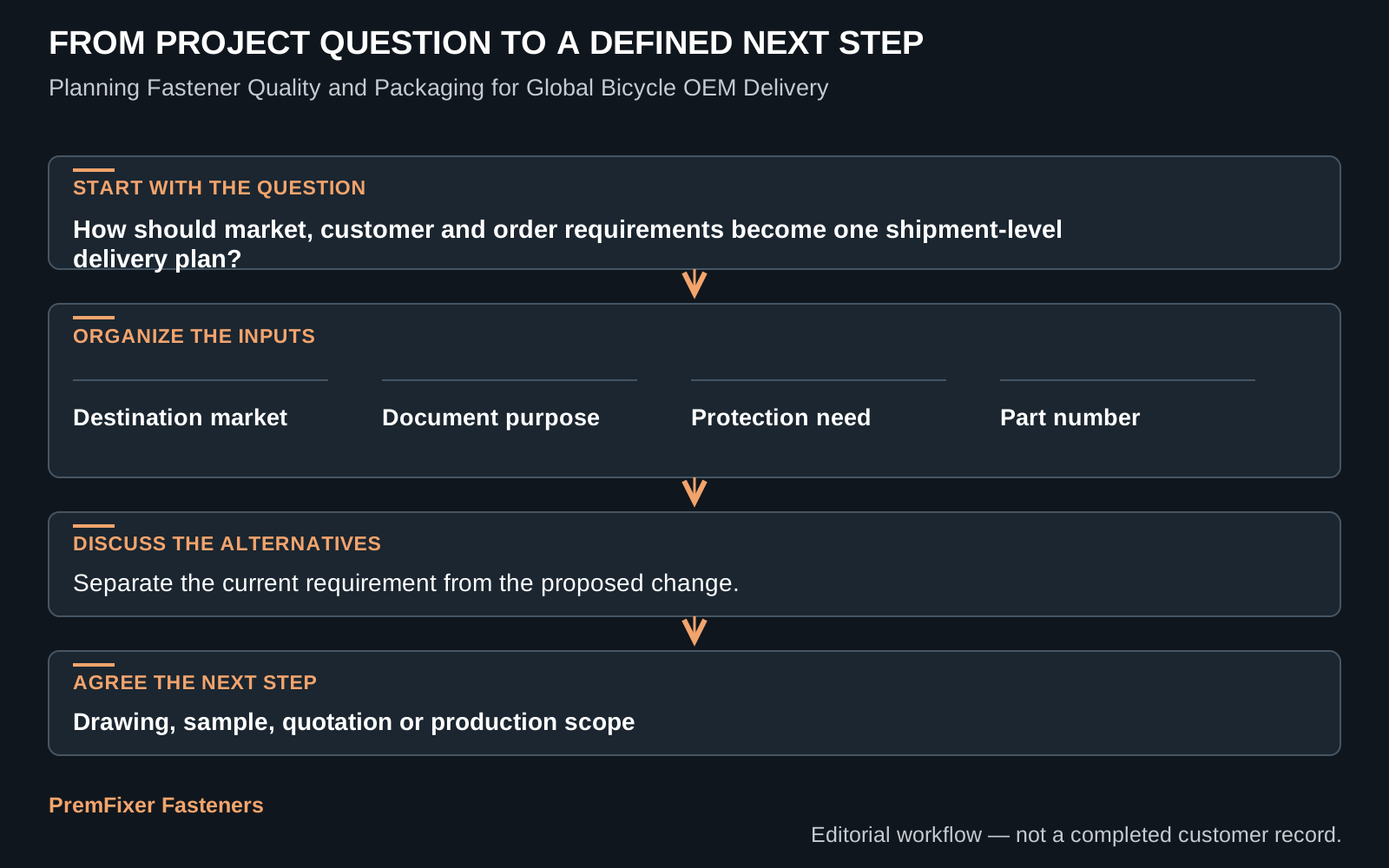
Prepare the international delivery brief
Combine destination, purchasing scope, record requirements, packaging and delivery method in the RFQ. That allows quotation and production planning to cover the complete delivered scope.
Put the following fields on the same revision-controlled page: Destination, Purchase scope, Required records and Delivery method. The practical output is an international delivery and quotation brief.
Convert the result of "Prepare the international delivery brief" into a quotation line that identifies destination, part identity, document scope, packaging condition. Ask the supplier to state included work, customer inputs, open assumptions and release evidence. Alternative offers are easier to compare when scope is not hidden inside one unit price.
Keep any market-specific conformity work tied to the actual product and applicable requirement.
Check the decision against a production scenario
A production scenario gives the discussion a clear boundary: one hardware program feeds factories in Europe and Asia with different pack quantities and document needs. State the model, volume stage, revision and destination before comparing alternatives.
For planning fastener quality and packaging for global bicycle oem delivery, list the decisions that the customer has already made and the items still open to supplier input. Each open item should have one owner and one expected output.
A common part can still fail receiving when labels, kits or release documents differ by plant. Test the control where the issue can first be detected, then decide how the accepted condition will remain visible during repeat orders.
Use the pilot result for planning fastener quality and packaging for global bicycle oem delivery to update the drawing, BOM, process or packing record. Avoid carrying an informal email decision into production when the controlled file still says something else.
Start the quotation with the BOM, destination list, pack units, labels, records, forecast and shipping sequence. Ask for inclusions, exclusions, one-time work and the evidence supplied with the sample or lot.
Questions buyers ask
Where should the engineering review begin?
Begin with the current configuration, then define quality release and packaging for the destination and assembly point. Name the owner and the output required before price, schedule or supplier preference is treated as final.
What information should the supplier receive?
Send the BOM, destination list, pack units, labels, records, forecast and shipping sequence. Separate fixed requirements from open fields so the supplier can price the confirmed scope and respond to the engineering questions.
What must a prototype demonstrate?
One hardware program feeds factories in Europe and Asia with different pack quantities and document needs. A sample or pilot should answer named questions and disclose any material, finish, process or quantity that differs from production.
Which handoff deserves extra attention?
A common part can still fail receiving when labels, kits or release documents differ by plant. Connect the risk to a drawing characteristic, process handoff, approval or delivery record and verify its closure.
What output should the RFQ request?
PremFixer can review the available drawing, model, BOM or sample with the BOM, destination list, pack units, labels, records, forecast and shipping sequence. The response can identify open questions, proposed scope and evidence for the next decision.
Design the global delivery package
Share the BOM, destination list, pack units, labels, records, forecast and shipping sequence. The response will identify the proposed scope, open questions and the evidence needed before release.
Discuss This Project