
A team may benchmark the expectations associated with major international bicycle brands, but a benchmark is not a private specification and it is not evidence of supplier approval. The project still needs the customer's actual drawings, assembly requirements and release rules.
OEM quality, engineering and sourcing teams need to translate brand requirements into one controlled supplier package. The review should use the current drawing, BOM and project stage so that the recommendation applies to a real component or release.
Consider this working situation: a global customer sends drawings, a quality manual and packaging rules owned by different departments. It connects the topic to the records, approvals and quotation inputs the program needs.
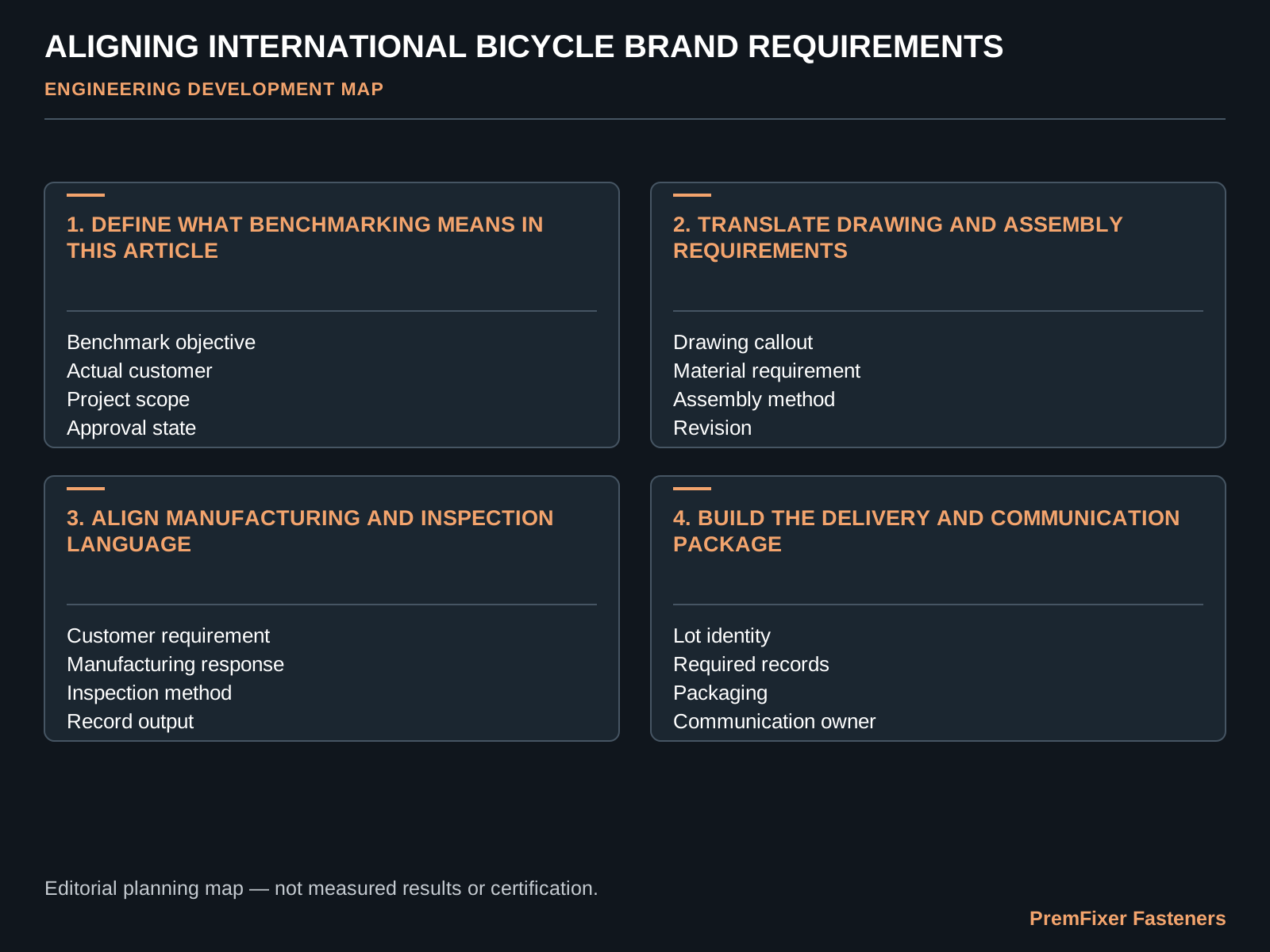
Define what benchmarking means in this article
Use named market references only as examples of an expected working level, not as proof of customer relationship or certification. The useful task is to identify requirement categories that the actual project must define.
Build the working record around Benchmark objective, Actual customer, Project scope and Approval state. The practical output is a clear benchmark-versus-approval statement.
For the "Define what benchmarking means in this article" review, put customer specification, drawing requirement, inspection response, delivery package on the same sheet. Name the current revision, the decision owner and the condition that allows the part or program to move forward. The technical discussion then has a clear purchasing and release action.
Do not claim supply, certification or endorsement by Decathlon, Specialized, SCOTT, Panasonic or any other benchmark brand.
Translate drawing and assembly requirements
Convert the customer's dimensional, material, tightening and assembly language into controlled part and process inputs. Private values cannot be inferred from a public brand name.
Keep the review anchored to Drawing callout, Material requirement, Assembly method and Revision. The practical output is a project-specific technical requirement matrix.
Under "Translate drawing and assembly requirements," compare the current and proposed conditions using Drawing callout, Material requirement, Assembly method, Revision. Record the evidence source and any item that remains open. The buyer should be able to approve, reject or sample a specific supplier proposal.
Do not invent proprietary tolerances, torque values or approval criteria.
| Review stage | Project question | Inputs to connect | Expected output |
|---|---|---|---|
| 01 | Define what benchmarking means in this article | Benchmark objective / Actual customer / Project scope / Approval state | a clear benchmark-versus-approval statement |
| 02 | Translate drawing and assembly requirements | Drawing callout / Material requirement / Assembly method / Revision | a project-specific technical requirement matrix |
| 03 | Align manufacturing and inspection language | Customer requirement / Manufacturing response / Inspection method / Record output | a requirement-to-response matrix |
| 04 | Build the delivery and communication package | Lot identity / Required records / Packaging / Communication owner | a controlled delivery and handover package |
| 05 | Keep benchmark targets separate from approval | Capability target / Sample status / Customer review / Approval status | a transparent qualification-stage record |
| 06 | Invite the actual customer specification | Customer specification / Current drawing / Assembly method / Delivery scope | a project-specific alignment and quotation brief |
Align manufacturing and inspection language
Show how each manufacturing and inspection response addresses a named customer requirement. Equipment claims do not demonstrate that the project question has been answered.
Put the following fields on the same revision-controlled page: Customer requirement, Manufacturing response, Inspection method and Record output. The practical output is a requirement-to-response matrix.
In "Align manufacturing and inspection language," follow customer specification, drawing requirement, inspection response, delivery package through the relevant handoff. The output from one operation or team should be a usable input for the next. Missing ownership at that boundary often causes more disruption than the operation itself.
Do not replace the customer's acceptance language with a generic factory checklist.
Build the delivery and communication package
Include lot identity, records, packaging, shipment notes and communication ownership in the alignment work. Delivery is part of the approved program, not an afterthought after machining.
Build the working record around Lot identity, Required records, Packaging and Communication owner. The practical output is a controlled delivery and handover package.
Use customer specification, drawing requirement, inspection response, delivery package to define the sample question for "Build the delivery and communication package." The sample record should state what represents production, what is temporary and which decision follows the review. A conforming sample without that context can still leave the production route unsettled.
Do not treat one package as suitable for every market or customer.
Keep benchmark targets separate from approval
Track capability work, sampling, customer review and formal approval as separate stages. The team needs to know what has been demonstrated and what remains open.
Keep the review anchored to Capability target, Sample status, Customer review and Approval status. The practical output is a transparent qualification-stage record.
After "Keep benchmark targets separate from approval," carry customer specification, drawing requirement, inspection response, delivery package into repeat orders and service planning. Approved conditions should remain visible in stock, inspection records and packaging so that later lots do not depend on personal memory.
Do not create supplier badges or imply an approval that has not been granted.
Invite the actual customer specification
Request the current specification, drawings, assembly method and delivery scope for the real program. Those documents allow the benchmark conversation to become a precise engineering task.
Put the following fields on the same revision-controlled page: Customer specification, Current drawing, Assembly method and Delivery scope. The practical output is a project-specific alignment and quotation brief.
Convert the result of "Invite the actual customer specification" into a quotation line that identifies customer specification, drawing requirement, inspection response, delivery package. Ask the supplier to state included work, customer inputs, open assumptions and release evidence. Alternative offers are easier to compare when scope is not hidden inside one unit price.
Keep every response tied to the supplied requirement and current revision.
Check the decision against a production scenario
A production scenario gives the discussion a clear boundary: a global customer sends drawings, a quality manual and packaging rules owned by different departments. State the model, volume stage, revision and destination before comparing alternatives.
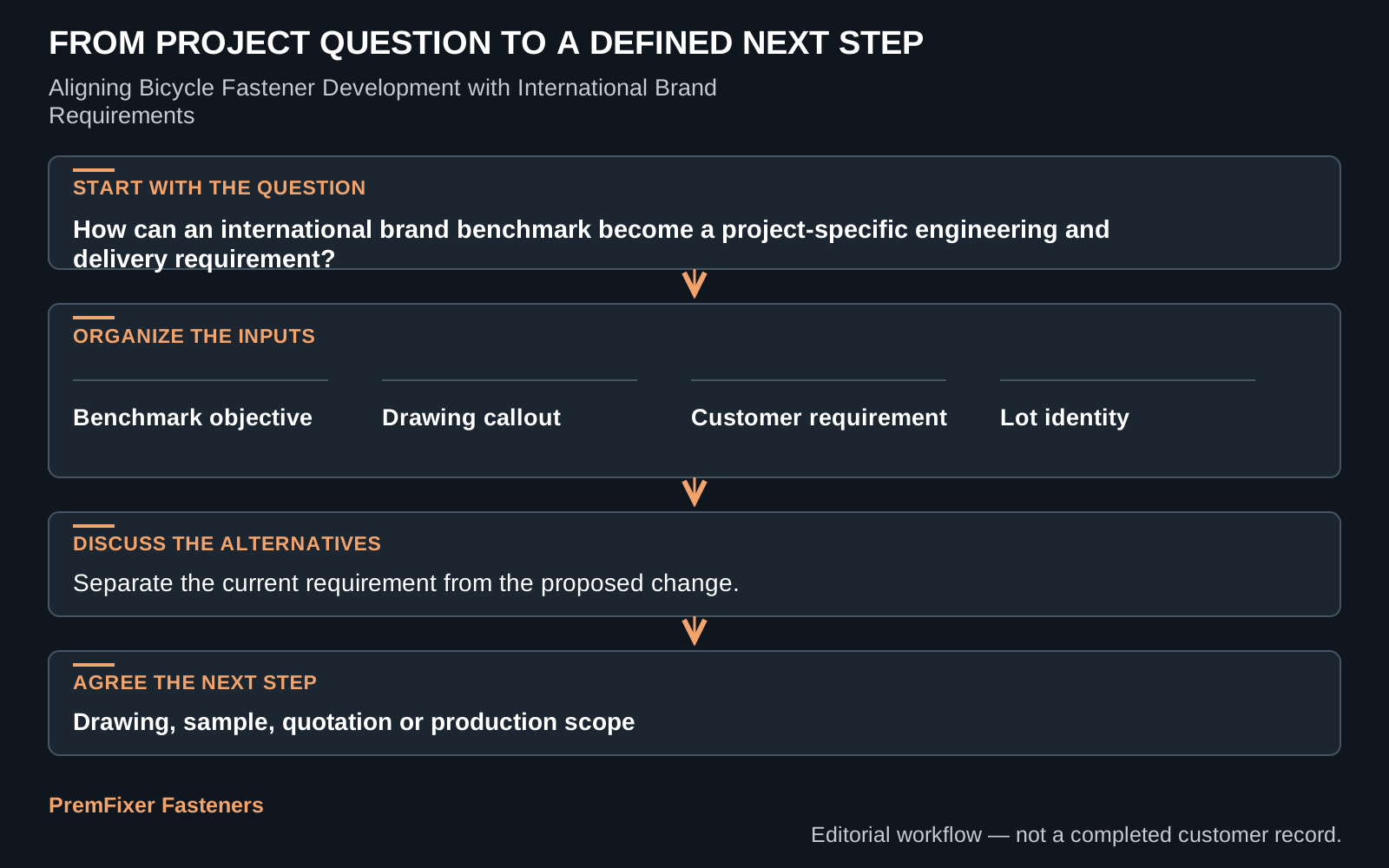
For aligning bicycle fastener development with international brand requirements, list the decisions that the customer has already made and the items still open to supplier input. Each open item should have one owner and one expected output.
Requirements can conflict or remain unquoted when no one maps them to part and process outputs. Test the control where the issue can first be detected, then decide how the accepted condition will remain visible during repeat orders.
Use the pilot result for aligning bicycle fastener development with international brand requirements to update the drawing, BOM, process or packing record. Avoid carrying an informal email decision into production when the controlled file still says something else.
Start the quotation with the drawing set, supplier manual, quality records, packaging rules, destinations and approval matrix. Ask for inclusions, exclusions, one-time work and the evidence supplied with the sample or lot.
Questions buyers ask
What should buyers define before comparing offers?
Translate brand requirements into one controlled supplier package. The comparison is credible only when every option uses the same part revision, quantity and delivered condition.
Which files make the review useful?
The first package should contain the drawing set, supplier manual, quality records, packaging rules, destinations and approval matrix. It should also state the immediate decision the customer needs from the supplier response.
When is a pilot needed?
Base the pilot on this situation: a global customer sends drawings, a quality manual and packaging rules owned by different departments. Record the representative operations and the approval that follows the result.
What commonly remains hidden?
The main risk is that requirements can conflict or remain unquoted when no one maps them to part and process outputs. Put one person in charge of the related drawing, handoff or release action.
How can PremFixer support the next step?
For aligning bicycle fastener development with international brand requirements, PremFixer can organize the files and open points into a manufacturing, sample and quotation response for the defined component or hardware set.
Build the requirement matrix
Share the drawing set, supplier manual, quality records, packaging rules, destinations and approval matrix. The response will identify the proposed scope, open questions and the evidence needed before release.
Discuss This Project