

A bicycle brand may carry several frame platforms, finishes and model years that use visually similar hardware. Combining them can improve planning, but a mixed run becomes risky when small length, material or revision differences disappear between machining and final kitting.
Brand operations and supplier planners need to group shared hardware while keeping model-specific revisions and demand visible. The review should use the current drawing, BOM and project stage so that the recommendation applies to a real component or release.
Consider this working situation: three bicycle models share screws but use different pivot axles and market launch dates. It connects the topic to the records, approvals and quotation inputs the program needs.
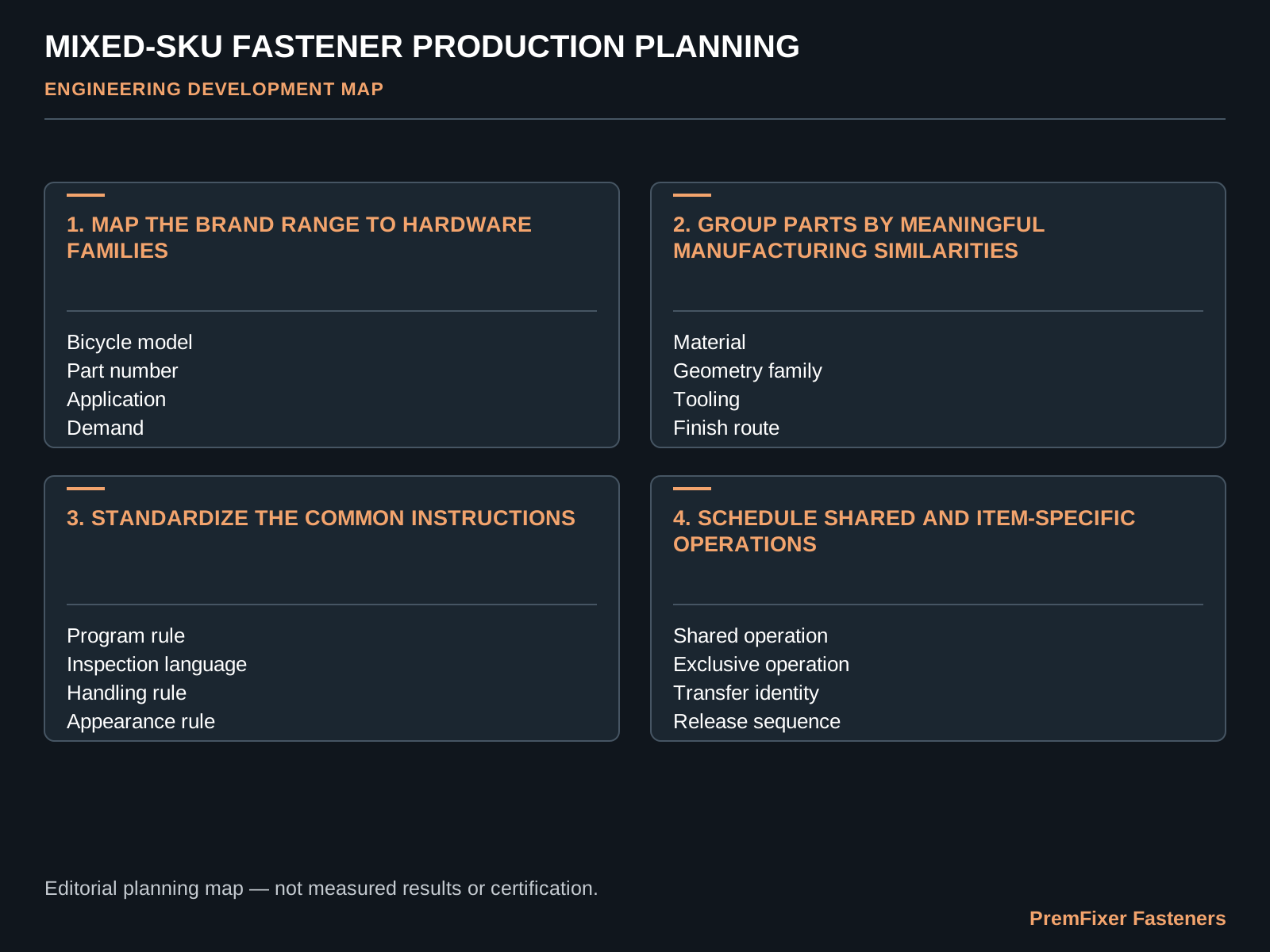
Map the brand range to hardware families
Build a matrix connecting each model, part number, application, revision and quantity. This exposes common parts as well as near-duplicates that still serve different interfaces.
Build the working record around Bicycle model, Part number, Application and Demand. The practical output is a model-to-hardware matrix.
For the "Map the brand range to hardware families" review, put model matrix, part family, shared operation, kit delivery on the same sheet. Name the current revision, the decision owner and the condition that allows the part or program to move forward. The technical discussion then has a clear purchasing and release action.
Do not merge parts based only on appearance or naming.
Group parts by meaningful manufacturing similarities
Group parts by material, geometry, workholding, tool route and finishing path rather than a broad product label. A real manufacturing family shares controllable operations.
Keep the review anchored to Material, Geometry family, Tooling and Finish route. The practical output is a production-family map with exceptions.
Under "Group parts by meaningful manufacturing similarities," compare the current and proposed conditions using Material, Geometry family, Tooling, Finish route. Record the evidence source and any item that remains open. The buyer should be able to approve, reject or sample a specific supplier proposal.
Keep item-specific functional differences visible inside each family.
| Review stage | Project question | Inputs to connect | Expected output |
|---|---|---|---|
| 01 | Map the brand range to hardware families | Bicycle model / Part number / Application / Demand | a model-to-hardware matrix |
| 02 | Group parts by meaningful manufacturing similarities | Material / Geometry family / Tooling / Finish route | a production-family map with exceptions |
| 03 | Standardize the common instructions | Program rule / Inspection language / Handling rule / Appearance rule | a shared instruction set plus part-specific supplements |
| 04 | Schedule shared and item-specific operations | Shared operation / Exclusive operation / Transfer identity / Release sequence | a mixed-SKU routing and identity plan |
| 05 | Coordinate appearance and delivery windows | Finish batch / Kit BOM / Required date / Shortage risk | a kit-aware finish and delivery schedule |
| 06 | Offer a range-level planning workshop | Model matrix / Annual demand / Revision roadmap / Launch window | a phased mixed-SKU production plan |
Standardize the common instructions
Use common program-control, inspection language, handling and appearance rules where the parts genuinely share them. Standard instructions reduce ambiguity without forcing one tolerance onto unrelated features.
Put the following fields on the same revision-controlled page: Program rule, Inspection language, Handling rule and Appearance rule. The practical output is a shared instruction set plus part-specific supplements.
In "Standardize the common instructions," follow model matrix, part family, shared operation, kit delivery through the relevant handoff. The output from one operation or team should be a usable input for the next. Missing ownership at that boundary often causes more disruption than the operation itself.
Do not standardize away a functional feature or drawing requirement.
Schedule shared and item-specific operations
Plan common machining or preparation stages alongside operations that remain exclusive to a part number. The schedule must preserve identity through every transfer.
Build the working record around Shared operation, Exclusive operation, Transfer identity and Release sequence. The practical output is a mixed-SKU routing and identity plan.
Use model matrix, part family, shared operation, kit delivery to define the sample question for "Schedule shared and item-specific operations." The sample record should state what represents production, what is temporary and which decision follows the review. A conforming sample without that context can still leave the production route unsettled.
Do not allow a common batch label to replace individual part and revision records.
Coordinate appearance and delivery windows
Connect finishing batches to model-level kit dates and quantities rather than planning only total pieces. A large output is not useful when one missing item delays the assembly set.
Keep the review anchored to Finish batch, Kit BOM, Required date and Shortage risk. The practical output is a kit-aware finish and delivery schedule.
After "Coordinate appearance and delivery windows," carry model matrix, part family, shared operation, kit delivery into repeat orders and service planning. Approved conditions should remain visible in stock, inspection records and packaging so that later lots do not depend on personal memory.
Do not mix appearance references or revisions merely to fill a treatment batch.
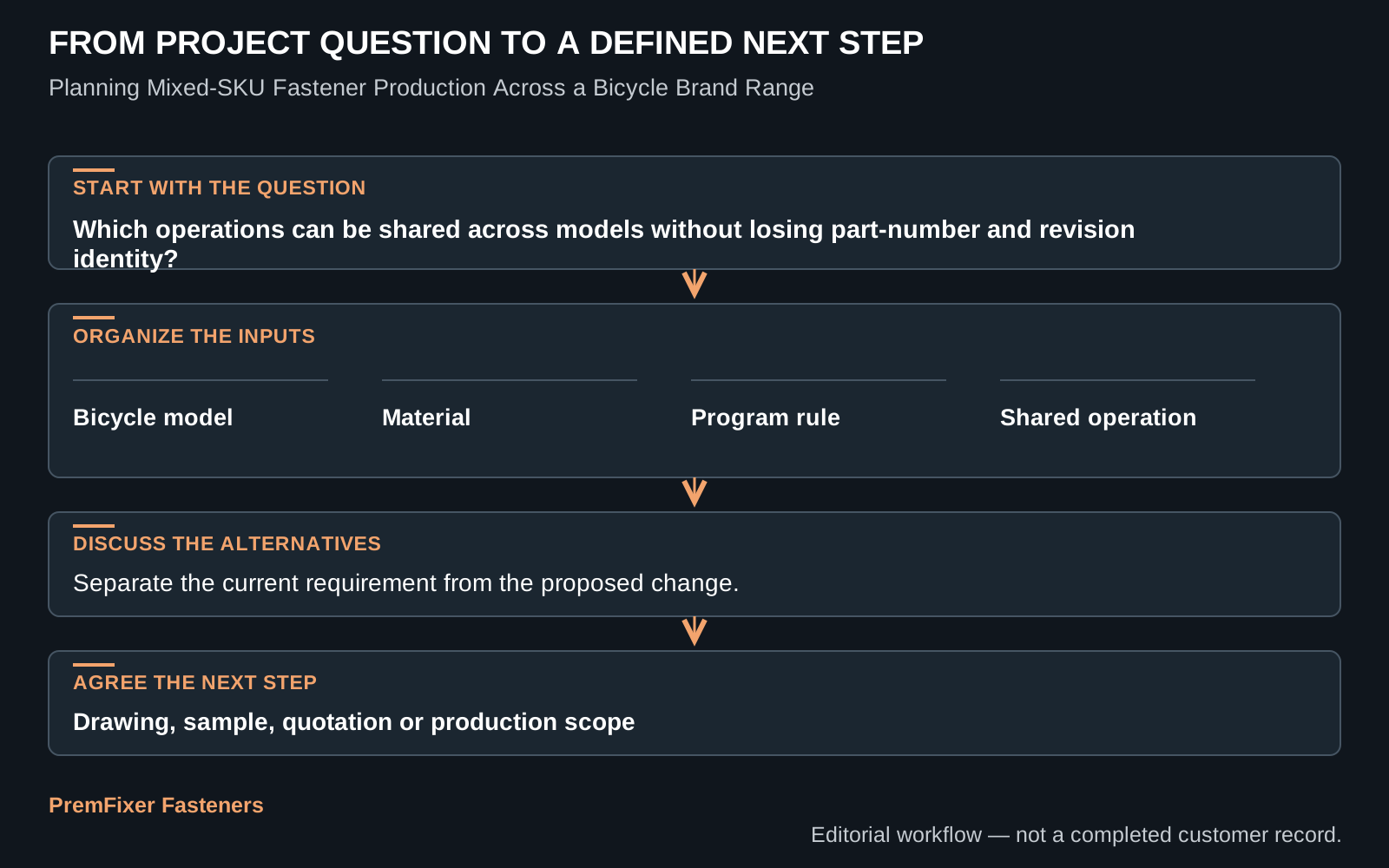
Offer a range-level planning workshop
Start with the model matrix, annual demand, current revisions and known launch windows. A focused range review can identify the first useful grouping without reorganizing the complete supply chain at once.
Put the following fields on the same revision-controlled page: Model matrix, Annual demand, Revision roadmap and Launch window. The practical output is a phased mixed-SKU production plan.
Convert the result of "Offer a range-level planning workshop" into a quotation line that identifies model matrix, part family, shared operation, kit delivery. Ask the supplier to state included work, customer inputs, open assumptions and release evidence. Alternative offers are easier to compare when scope is not hidden inside one unit price.
Keep forecasts and committed releases commercially separate.
Use a project example to test the proposal
Use one bounded work package to test the decision. Three bicycle models share screws but use different pivot axles and market launch dates. Give the package a part list, revision, owner and required completion state.
For planning mixed-sku fastener production across a bicycle brand range, ask engineering to mark the functional interfaces and purchasing to define the quoted delivery unit. Quality can then identify the evidence needed at sample and production release.
Poor grouping creates excess stock or mixes near-identical model-specific parts. Build a check around the point where that failure enters the workflow, rather than adding broad inspection after every operation.
Review the first result against the stated question for planning mixed-sku fastener production across a bicycle brand range. If a material, finish, tool or quantity differs from production, keep the limitation with the sample record and decide whether another stage is required.
The RFQ should include the model BOMs, common and unique parts, forecasts, revisions, batch rules and kit dates. Request a scope matrix, timing assumptions and the exact output that will close the open project decision.
Questions buyers ask
Which project decision comes first?
Group shared hardware while keeping model-specific revisions and demand visible. The comparison is credible only when every option uses the same part revision, quantity and delivered condition.
What belongs in the first RFQ?
The first package should contain the model BOMs, common and unique parts, forecasts, revisions, batch rules and kit dates. It should also state the immediate decision the customer needs from the supplier response.
How should the sample be judged?
Base the pilot on this situation: three bicycle models share screws but use different pivot axles and market launch dates. Record the representative operations and the approval that follows the result.
Which risk needs an owner?
The main risk is that poor grouping creates excess stock or mixes near-identical model-specific parts. Put one person in charge of the related drawing, handoff or release action.
What can PremFixer review before quotation?
For planning mixed-sku fastener production across a bicycle brand range, PremFixer can organize the files and open points into a manufacturing, sample and quotation response for the defined component or hardware set.
Plan the mixed-SKU program
Share the model BOMs, common and unique parts, forecasts, revisions, batch rules and kit dates. The response will identify the proposed scope, open questions and the evidence needed before release.
Discuss This Project