
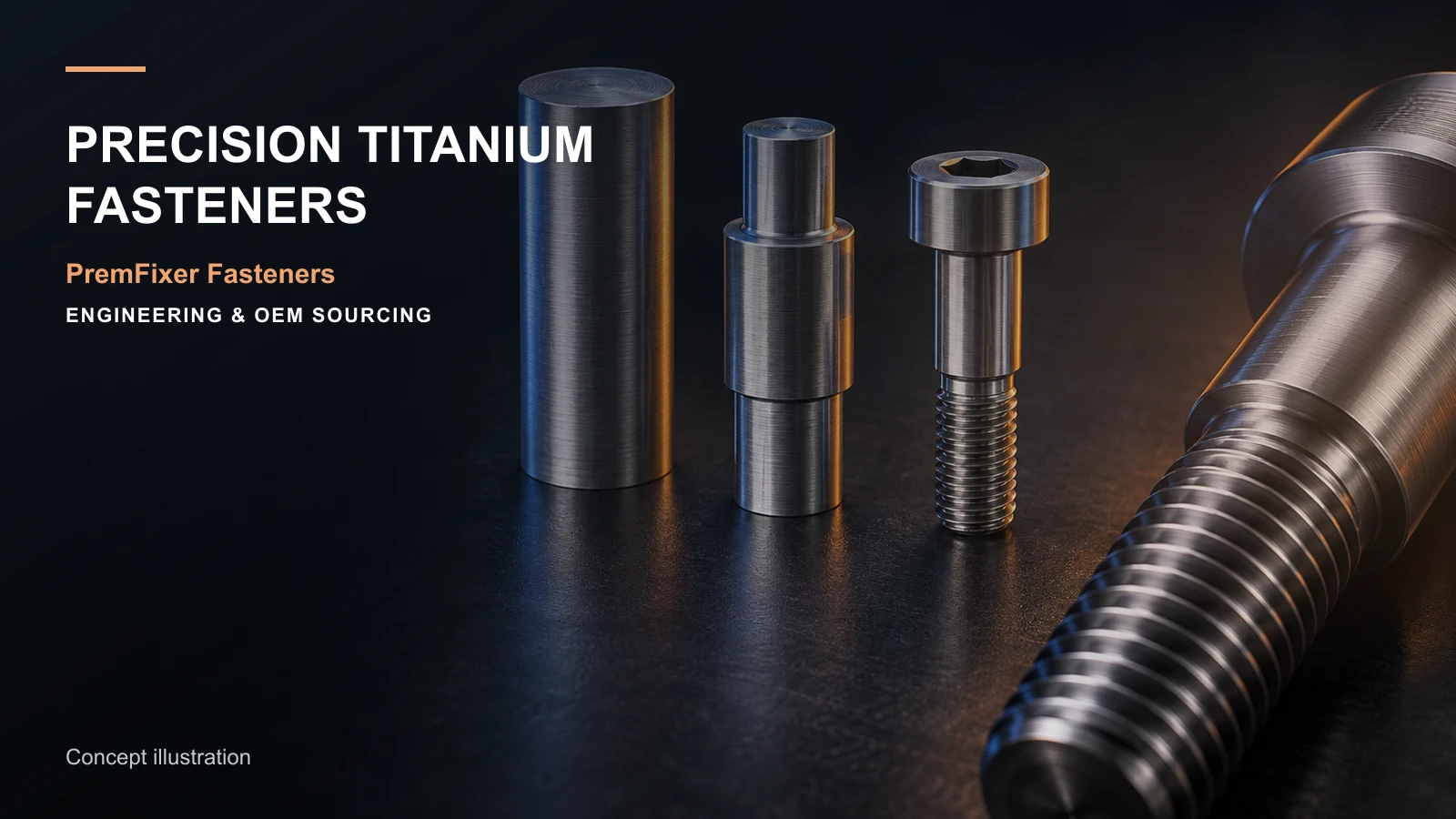
Two titanium fasteners can share the same general silhouette and still represent very different manufacturing scopes. One may have a released material condition, controlled bearing seat, defined thread class, functional-surface requirements and inspection plan. The other may be described only by nominal dimensions and an appearance sample. The difference is not visible from a polished photograph.
Precision titanium work begins by identifying which features matter and in what condition they will be accepted. Material behavior, slender geometry, workholding, tooling and chip control influence the machining route. Thread form, mating material and assembly practice influence the joint. Anodizing, polishing or another surface request adds a further delivered state that must remain connected to dimensional and functional requirements.
Use this case as the working baseline: two Grade 5 axle quotes use the same material label but different datum plans and finished-diameter controls. Each section turns one part of the case into a reviewable project output.
Define the comparison before comparing the price
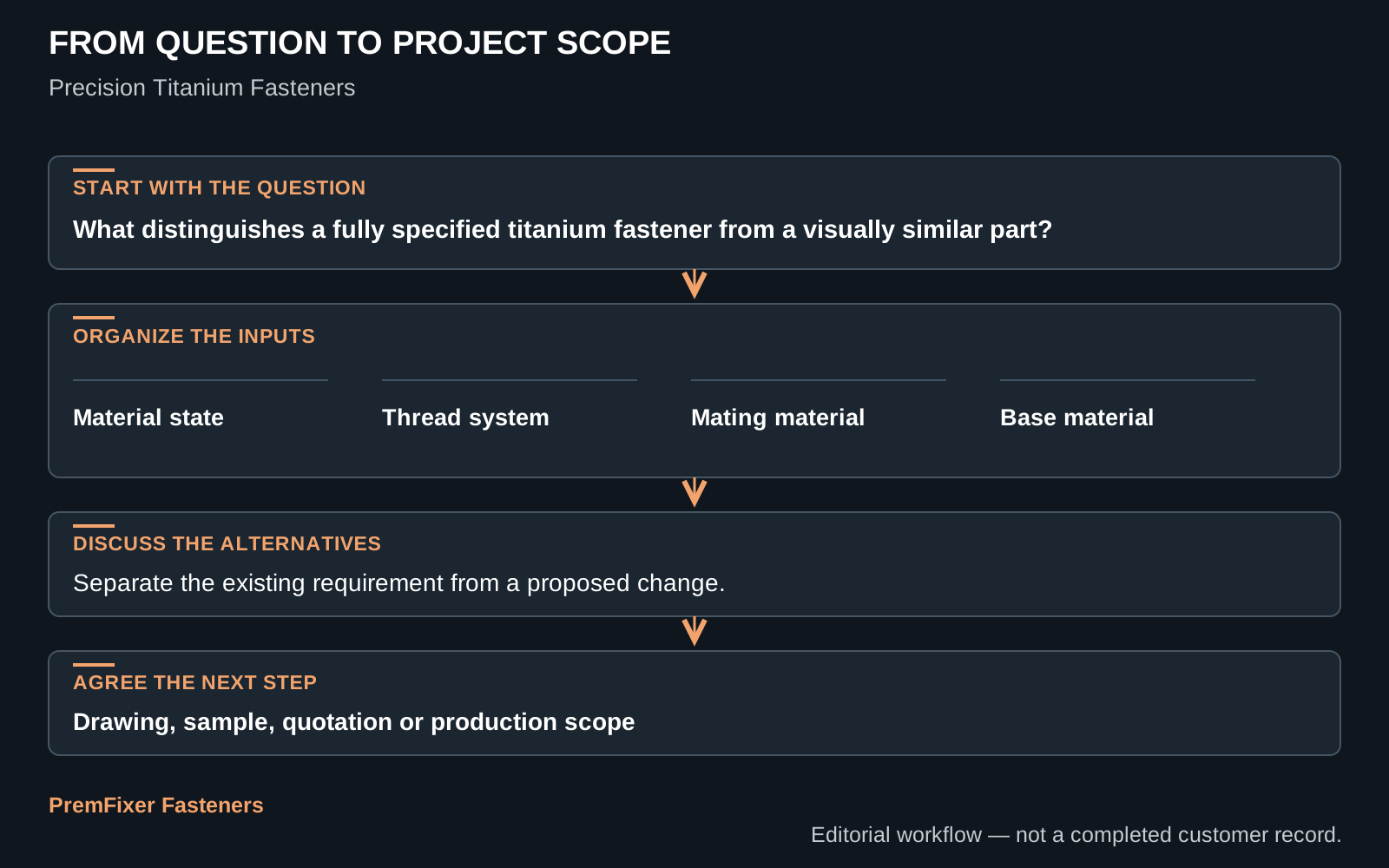
What distinguishes a fully specified titanium fastener from a visually similar part? The released definition names the material condition, functional geometry, thread, surface state and acceptance requirements, while the manufacturing proposal explains how those requirements will be produced and checked. Appearance can support acceptance, but it does not replace the functional specification.
Compare quotes using the same stock form, component revision, quantity, finish and inspection scope. A machined-only price is not equivalent to a price for a finished component whose functional surfaces are protected and whose thread is checked in the delivered state. Likewise, a generic titanium label does not establish alloy condition, traceability or suitability for the joint.
For the "Define the comparison before comparing the price" review, put precision titanium bicycle fasteners, titanium fastener machining, titanium thread specification, titanium galling prevention on the same sheet. Name the current revision, the decision owner and the condition that allows the part or program to move forward. The technical discussion then has a clear purchasing and release action.
The decision should follow the component through its complete delivered scope. Ask what material is issued, how critical features are supported during cutting, how threads and contact surfaces are accepted, what anti-galling assumptions are included and which finish requirements apply.
Explain the titanium cutting strategy
No single cutting recipe covers every titanium fastener. Material condition, stock form, part length, wall thickness, shoulder geometry and the relationship between features affect rigidity and heat generation. A short solid screw and a hollow pivot axle may require different support and operation sequences even when the specified alloy family is the same.
Workholding should support the functional geometry without damaging a finished surface or distorting a thin section. Tool selection and path planning should address access, edge condition and chip evacuation. Coolant strategy and chip control are part of maintaining a stable cut and a safe process, but published generic speeds are not substitutes for a route developed around the actual machine, tool and part.
Under "Explain the titanium cutting strategy," compare the current and proposed conditions using precision titanium bicycle fasteners, titanium fastener machining, titanium thread specification, titanium galling prevention. Record the evidence source and any item that remains open. The buyer should be able to approve, reject or sample a specific supplier proposal.
A useful proposal explains the sequence at the level needed for engineering review: which features share a setup, where the part is transferred, what condition is monitored and when finished dimensions are checked. It does not need to expose every proprietary machining parameter.
| Cutting field | Question for the proposal | Engineering relevance |
|---|---|---|
| Material state | Which alloy condition and stock form enter the route? | Connects the process plan to the released material requirement. |
| Workholding | How are slender, hollow or finished features supported and protected? | Addresses stability and contact with functional surfaces. |
| Tooling | Which feature types drive tool geometry, access and edge management? | Shows that the route reflects the actual component. |
| Chip and coolant strategy | How will heat and chips be managed for the chosen operations? | Frames process control without inventing universal cutting values. |
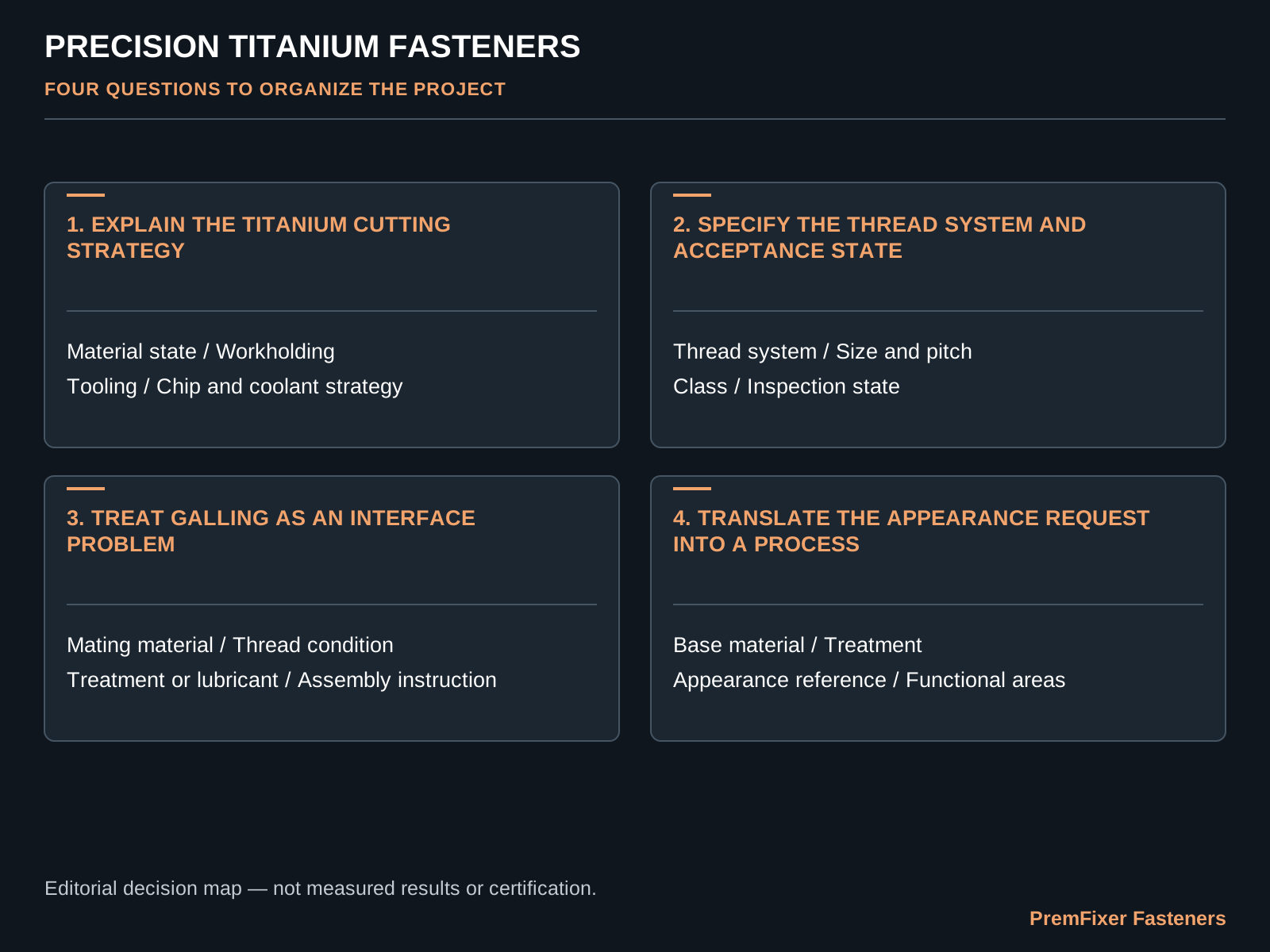
Specify the thread system and acceptance state
A thread requirement needs the system, nominal size, pitch, class and inspection state. A metric class such as 6g or 6H belongs to a defined metric thread context; it should not be copied onto an imperial, trapezoidal or proprietary form. The drawing should also identify any special lead-in, thread length, undercut or mating requirement that influences manufacture and assembly.
Acceptance state matters when a treatment changes the surface. If a coating, anodized layer, lubricant, patch or other specified process is present, agree whether thread inspection occurs before, after or in both states and which state controls delivery. A gauge result answers a defined geometry question; it does not by itself establish clamp load, locking behavior or fatigue life.
In "Specify the thread system and acceptance state," follow precision titanium bicycle fasteners, titanium fastener machining, titanium thread specification, titanium galling prevention through the relevant handoff. The output from one operation or team should be a usable input for the next. Missing ownership at that boundary often causes more disruption than the operation itself.
The mating thread belongs in the discussion. Internal-thread material, engagement, surface condition and cleanliness influence assembly even when the external thread meets its drawing.
| Thread field | What to specify | Boundary to preserve |
|---|---|---|
| Thread system | Metric, unified or another explicitly defined form. | Do not transfer class designations between unrelated systems. |
| Size and pitch | Nominal diameter, pitch and required threaded length. | A class without size and pitch is incomplete. |
| Class | The applicable fit or tolerance designation for that system. | Thread class is not a material-strength grade. |
| Inspection state | Machined, finished, lubricated or another agreed condition. | Keeps gauge and delivered-part requirements aligned. |
Treat galling as an interface problem
Galling is an interface risk, not a defect eliminated by the word precision. Adhesive wear can develop when compatible metal surfaces slide under load, and titanium threaded pairs can be sensitive to the combination of material, surface, cleanliness, speed and contact pressure. A smoother appearance or tighter tolerance alone is not an anti-galling plan.
Define the mating material and thread condition, then select any treatment or lubricant and assembly instruction as one configuration. The instruction may need to address cleanliness, application method, tightening procedure and whether the fastener is reusable. A change to the lubricant, coating or mating component can change the relationship and should not inherit an earlier torque instruction automatically.
Use precision titanium bicycle fasteners, titanium fastener machining, titanium thread specification, titanium galling prevention to define the sample question for "Treat galling as an interface problem." The sample record should state what represents production, what is temporary and which decision follows the review. A conforming sample without that context can still leave the production route unsettled.
Inspection should confirm what can actually be controlled before assembly: thread form, relevant surface state and correct application of a specified treatment. Assembly evaluation belongs to the intended joint or an agreed representative setup.
| Interface field | Decision to define | Why it cannot stand alone |
|---|---|---|
| Mating material | The nut, insert, frame or receiver material and condition. | Galling behavior belongs to a material pair and contact state. |
| Thread condition | Cleanliness, finish and relevant geometry state. | A nominal thread designation does not describe the complete contact. |
| Treatment or lubricant | The approved product or process and application state. | Changing it can alter friction and assembly behavior. |
| Assembly instruction | Approved tightening, service and reuse rules. | Manufacturing conformance does not create a universal torque value. |
Translate the appearance request into a process
A finish request should identify the base material, actual treatment, appearance reference and functional areas that need protection or masking. A color name alone can leave differences in preparation, process and acceptance. If the customer uses a physical sample or controlled visual range, name how it will be used and under what viewing condition the comparison occurs.
Functional surfaces deserve separate treatment. Bearing seats, thread flanks, sealing contacts and clamping faces may have dimensional, friction or contact requirements that differ from decorative surfaces. The process plan should explain whether they are treated, masked, reworked or inspected in the finished state according to the drawing.
After "Translate the appearance request into a process," carry precision titanium bicycle fasteners, titanium fastener machining, titanium thread specification, titanium galling prevention into repeat orders and service planning. Approved conditions should remain visible in stock, inspection records and packaging so that later lots do not depend on personal memory.
Different treatments can produce similar appearances while creating different surface conditions. Keep proposed alternatives explicit and review their effect on dimensions, thread acceptance and assembly.
| Finish field | What the RFQ should state | Acceptance use |
|---|---|---|
| Base material | The released alloy condition receiving the process. | Prevents a finish description from replacing material identity. |
| Treatment | The actual finishing or surface process requested. | Lets manufacturing review compatibility and sequence. |
| Appearance reference | Controlled sample, range or written appearance requirement. | Provides a shared comparison basis without invented numeric data. |
| Functional areas | Threads, seats, contacts or faces needing defined handling. | Protects fit and assembly requirements during finishing. |
Apply the discussion to a PremFixer Fasteners project
Begin with the available drawing, model, BOM or sample description, plus quantities and project stage. Identify the titanium material condition, thread system, mating component and desired finish. Mark functional surfaces and state whether an assembly instruction, lubricant or locking process already belongs to the approved joint.
PremFixer Fasteners can then separate the released requirement from proposed manufacturing choices. The quotation can state the machining and finishing scope, the thread acceptance state, open interface questions and the records expected with the delivered parts. This gives engineering and purchasing a comparable definition without turning a generic process description into a performance guarantee.
Convert the result of "Apply the discussion to a PremFixer Fasteners project" into a quotation line that identifies precision titanium bicycle fasteners, titanium fastener machining, titanium thread specification, titanium galling prevention. Ask the supplier to state included work, customer inputs, open assumptions and release evidence. Alternative offers are easier to compare when scope is not hidden inside one unit price.
Share your available drawings, BOM or project description with PremFixer Fasteners, together with quantities and the project stage, to discuss precision titanium fasteners.
Check the decision against a production scenario
A production scenario gives the discussion a clear boundary: two Grade 5 axle quotes use the same material label but different datum plans and finished-diameter controls. State the model, volume stage, revision and destination before comparing alternatives.
For precision titanium fasteners: comparing manufacturing scope and finish, list the decisions that the customer has already made and the items still open to supplier input. Each open item should have one owner and one expected output.
Material reputation can hide machining, galling, finish and measurement differences. Test the control where the issue can first be detected, then decide how the accepted condition will remain visible during repeat orders.
Use the pilot result for precision titanium fasteners: comparing manufacturing scope and finish to update the drawing, BOM, process or packing record. Avoid carrying an informal email decision into production when the controlled file still says something else.
Start the quotation with the grade, drawing, mating interfaces, surface condition, quantity and inspection expectations. Ask for inclusions, exclusions, one-time work and the evidence supplied with the sample or lot.
Questions buyers ask
What should buyers define before comparing offers?
Fix the drawing and project state that frame the decision, then compare titanium quotations by geometry, process sequence, finish and inspection scope. A recommendation without that baseline may solve a different configuration.
Which files make the review useful?
Provide the grade, drawing, mating interfaces, surface condition, quantity and inspection expectations, including any requirement that is still open to supplier feedback. That distinction prevents assumptions from being priced as approved scope.
When is a pilot needed?
Two Grade 5 axle quotes use the same material label but different datum plans and finished-diameter controls. Use the pilot to examine that condition rather than treating one conforming part as approval of the complete route.
What commonly remains hidden?
Material reputation can hide machining, galling, finish and measurement differences. The review should show where the issue can be detected and who can stop the next release.
How can PremFixer support the next step?
For this precision titanium fasteners: comparing manufacturing scope and finish decision, PremFixer can return clarification questions, a proposed route and the records expected at sample or production release.
Compare the complete titanium route
Share the grade, drawing, mating interfaces, surface condition, quantity and inspection expectations. The response will identify the proposed scope, open questions and the evidence needed before release.
Discuss This Project