
Fast replenishment is not simply a conventional order moved to the front of a queue. A bicycle brand may need a small release for a promotion, service demand or a rolling assembly schedule, but the supplier still has to know which revision, material, finish, quantity and packing configuration the release requires. If one of those inputs is open, urgency can move uncertainty downstream instead of shortening the real lead time.
This guide follows four connected decisions: inventory by revision, production stage, forecast versus firm commitment, and packaging for the receiving point. Together they show whether an urgent replenishment request is genuinely release-ready and which costs or responsibilities remain open between the OEM and the supplier.
A promotion creates an immediate need for 300 service kits while two similar axle revisions remain in stock. Following that case from drawing through release exposes which questions belong to engineering, manufacturing, quality and purchasing.
Define the comparison before comparing the price
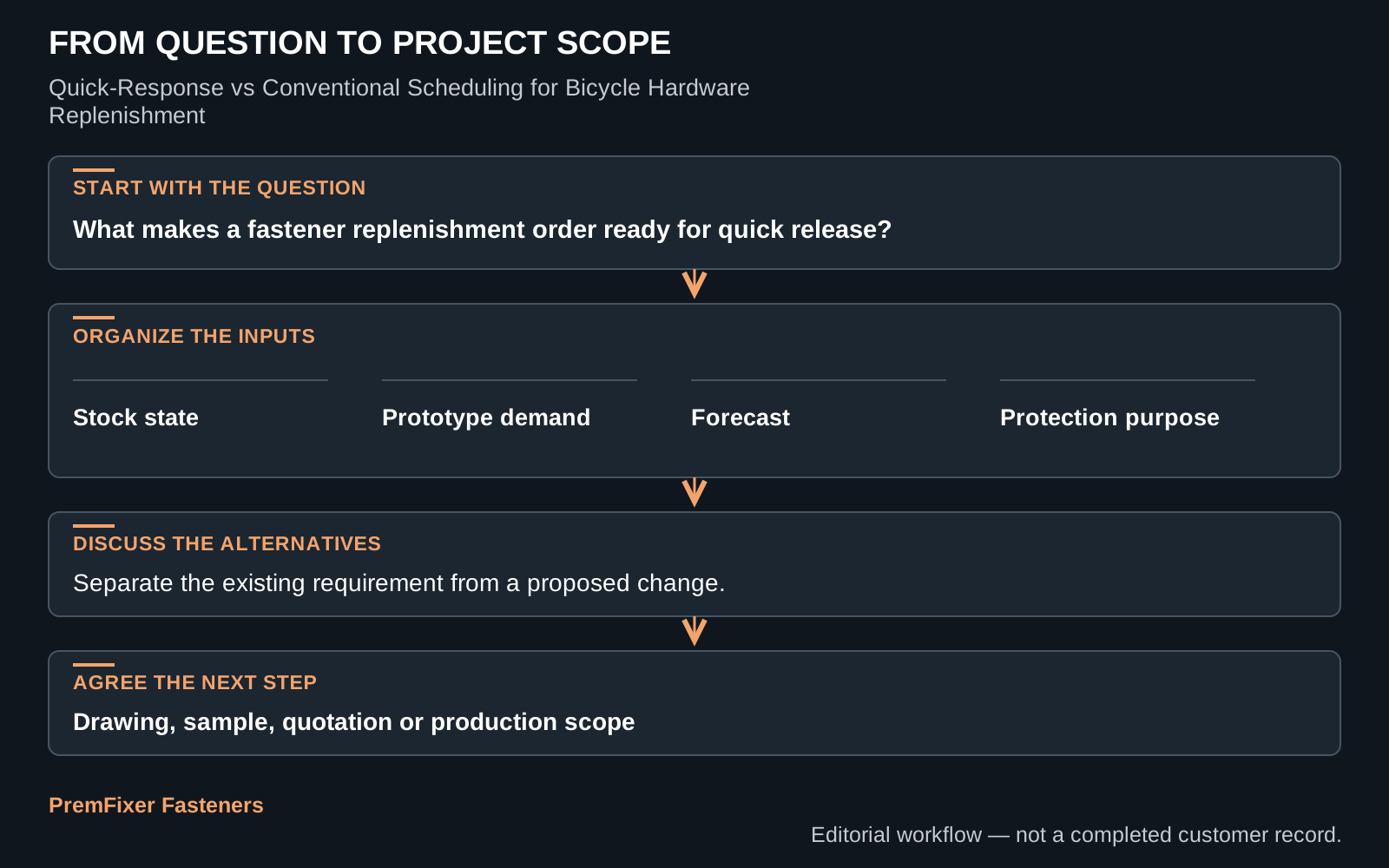
What makes a fastener replenishment order ready for quick release? The requested parts must be connected to an approved revision and delivered condition, and the supplier must be able to identify suitable material, work in process or finished stock for that exact configuration. Quantity, destination and packing identity also need to be known. A request marked urgent is not release-ready if the team is still deciding which axle length, surface finish or kit quantity belongs to the order.
The commercial comparison should show the preparation being purchased. Ask what is stocked, which operations remain, when capacity becomes firm, how changes affect prepared stock and what condition leaves the factory. That creates a usable basis for deciding whether a faster replenishment arrangement is valuable for the actual order profile.
For the "Define the comparison before comparing the price" review, put quick response bicycle hardware supply, bicycle fastener replenishment, fastener production scheduling, OEM hardware inventory on the same sheet. Name the current revision, the decision owner and the condition that allows the part or program to move forward. The technical discussion then has a clear purchasing and release action.
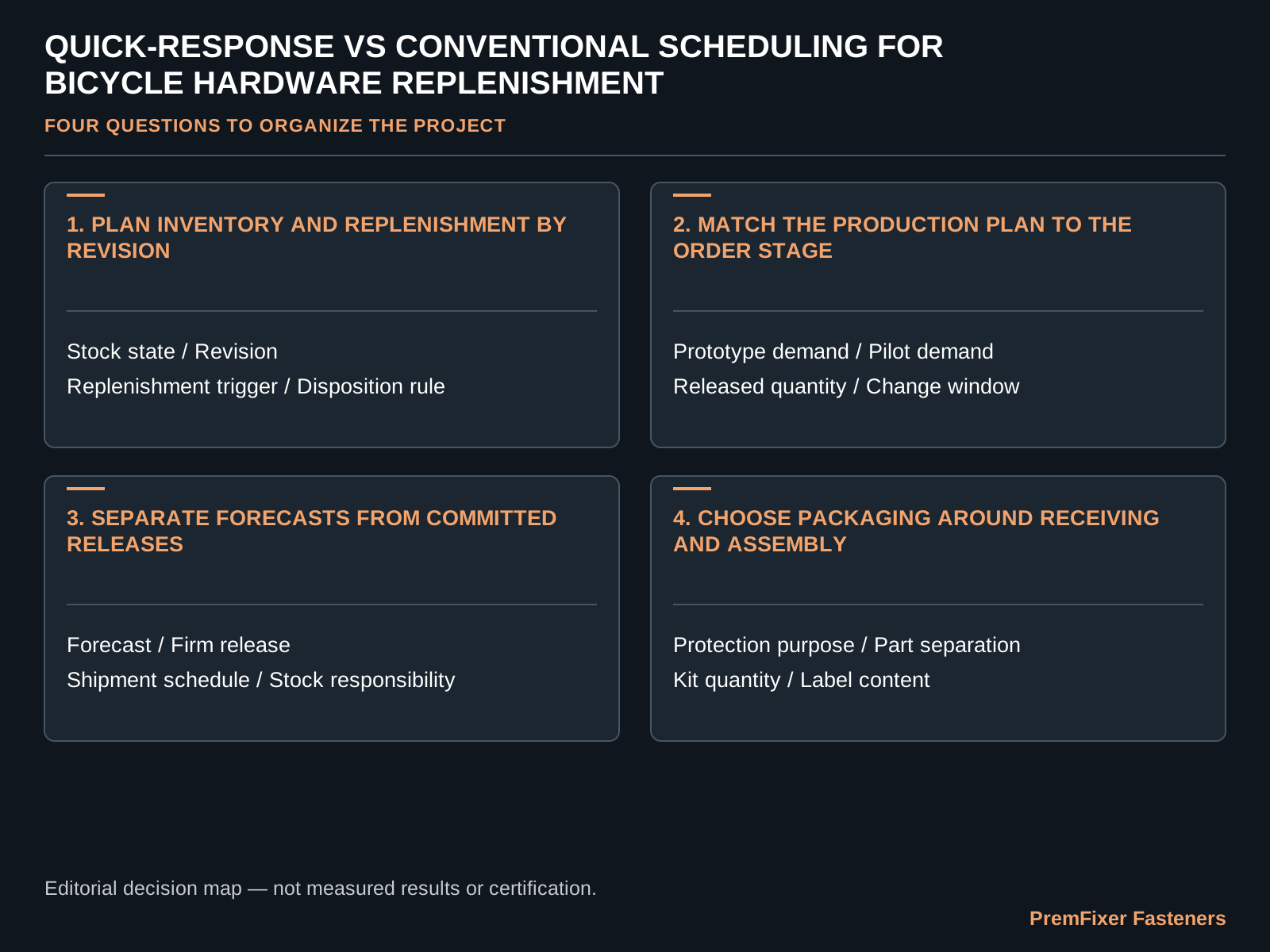
Plan inventory and replenishment by revision
Inventory should be separated by state. Raw material is flexible but still requires every manufacturing step. Semi-finished stock can shorten selected operations, provided the blank geometry and material condition suit the released part. Finished stock offers the shortest physical path, but it is also the least adaptable when a revision, finish or label changes. Service stock may need its own identity because its demand and packaging differ from production-line supply.
Revision is the connection between prepared stock and a valid release. A tray of unfinished pivot axles is not a useful buffer if its shoulder geometry belongs to an earlier frame version. Likewise, finished screws should not be reassigned because they look similar. Record the stock state, applicable revision, replenishment trigger and disposition rule before presenting inventory as a lead-time solution.
Under "Plan inventory and replenishment by revision," compare the current and proposed conditions using quick response bicycle hardware supply, bicycle fastener replenishment, fastener production scheduling, OEM hardware inventory. Record the evidence source and any item that remains open. The buyer should be able to approve, reject or sample a specific supplier proposal.
The disposition rule matters when demand moves. It should explain whether prepared material can transfer to another approved part, remain reserved, require rework or become obsolete.
| Inventory field | Question to resolve | Why it matters |
|---|---|---|
| Stock state | Is the buffer raw material, semi-finished work, finished parts or service stock? | Shows which operations and checks still remain before shipment. |
| Revision | Which released drawing, BOM and finish state does the stock support? | Prevents visually similar inventory from being assigned to the wrong configuration. |
| Replenishment trigger | Does a forecast, minimum level or firm order start the next action? | Separates planning signals from authorization to manufacture or ship. |
| Disposition rule | What happens after a revision change, cancellation or delayed release? | Makes responsibility for prepared material visible before the exception occurs. |
Match the production plan to the order stage
Prototype, pilot and released production quantities do different jobs. A prototype may explore geometry, tool access or assembly fit. A pilot order can exercise the intended routing and documentation on a limited quantity. A released production order supplies an approved configuration, while rolling releases divide that demand into planned shipment windows. Treating all four as one quantity range hides the decisions required between them.
A flexible route can support very small samples and much larger production demand, but the process does not remain identical across that range. Workholding, cycle planning, inspection frequency, material purchasing and packaging may change as quantity grows. Quick response means those transitions are anticipated and communicated; it does not mean every volume receives the same unit cost or that any change can be absorbed immediately.
In "Match the production plan to the order stage," follow quick response bicycle hardware supply, bicycle fastener replenishment, fastener production scheduling, OEM hardware inventory through the relevant handoff. The output from one operation or team should be a usable input for the next. Missing ownership at that boundary often causes more disruption than the operation itself.
Use a change window for each stage. Before material is cut, several requirements may remain open.
| Planning field | What to define | Release implication |
|---|---|---|
| Prototype demand | Purpose, revision and delivered condition of the sample. | Clarifies what the first parts are intended to demonstrate. |
| Pilot demand | Limited quantity, intended route and review outputs. | Creates a controlled transition rather than an informal pre-production batch. |
| Released quantity | Approved configuration and quantity authorized for manufacture or shipment. | Distinguishes a firm order from planning information. |
| Change window | The point after which a change affects material, schedule, inspection or packaging. | Makes the cost and timing of late changes understandable. |
Separate forecasts from committed releases
A forecast helps a supplier plan material, tooling and capacity, but it is not automatically an order. A firm release authorizes the work defined in the agreement. Keeping those signals separate allows a brand to share expected demand without creating an ambiguous obligation, while the supplier can state which preparation it is willing to make against the forecast.
Define a freeze period or decision point around the work that cannot be changed without consequence. Material purchasing, semi-finished production and reserved machine capacity have different exposure. The agreement should state which activities may begin from forecast information and which wait for a firm release. It should also address stock already created to the approved revision if the forecast falls or the model changes.
Use quick response bicycle hardware supply, bicycle fastener replenishment, fastener production scheduling, OEM hardware inventory to define the sample question for "Separate forecasts from committed releases." The sample record should state what represents production, what is temporary and which decision follows the review. A conforming sample without that context can still leave the production route unsettled.
Shipment schedules belong to the firm-release side of the record. They should name quantities, required delivery windows, destinations and packing configurations.
| Planning signal | Purpose | Responsibility to state |
|---|---|---|
| Forecast | Communicates expected demand over an agreed horizon. | What planning or material action may be taken before commitment. |
| Firm release | Authorizes a defined quantity and configuration. | Which revision, price basis and requested date are binding for that release. |
| Shipment schedule | Divides released demand into receiving events. | Destination, pack format and change cut-off for each shipment. |
| Stock responsibility | Addresses prepared material and parts when demand changes. | Disposition, ownership and any agreed transfer or rework route. |
Choose packaging around receiving and assembly
Packaging should solve a receiving and handling problem. Individual bags can separate variants and protect finished surfaces. Compartment trays can preserve orientation and simplify counts. Sealed packs can limit handling before the parts reach a workstation. Bulk containers may remain efficient for robust, high-volume standard items when identification and surface protection are still adequate.
Start with the protection purpose, then define part separation, kit quantity and label content. A premium appearance does not by itself make a pack useful. If a bicycle assembly needs one left-side axle, two spacers and one locking component, a kit identity can reduce ambiguity at receiving. If parts feed an automated bowl, individual sealing may add labor without improving the intended process.
After "Choose packaging around receiving and assembly," carry quick response bicycle hardware supply, bicycle fastener replenishment, fastener production scheduling, OEM hardware inventory into repeat orders and service planning. Approved conditions should remain visible in stock, inspection records and packaging so that later lots do not depend on personal memory.
Do not treat sealed packaging as a cleanroom classification or a guarantee against every transport condition. Corrosion protection, impact protection and contamination control each require their own material and handling choices.
| Packaging field | Decision question | Practical output |
|---|---|---|
| Protection purpose | Which surface or condition must be preserved in handling and transit? | A pack material and arrangement linked to the actual risk. |
| Part separation | Which variants or contact surfaces must remain apart? | Compartments, sleeves or individual packs where they add value. |
| Kit quantity | What should one receiving or assembly unit contain? | A count that matches the customer's workstation or service package. |
| Label content | Which part number, revision, lot and quantity must be visible? | A receiving identity connected to the released order. |
Apply the discussion to a PremFixer Fasteners project
A replenishment discussion can begin with the drawing or BOM already in use, the current revision, expected release pattern and the condition in which parts are needed. Mark whether any material, semi-finished or finished stock already exists and which changes are still possible. Add the receiving destination and packaging unit so the quote reflects the whole release rather than machining alone.
PremFixer Fasteners can then separate the base requirement from a proposed quick-response arrangement. The proposal can identify preparation before release, remaining operations, inspection and packing scope, plus the point at which forecast information becomes a firm instruction. That makes the value of readiness visible without promising that every urgent request bypasses configuration control.
Convert the result of "Apply the discussion to a PremFixer Fasteners project" into a quotation line that identifies quick response bicycle hardware supply, bicycle fastener replenishment, fastener production scheduling, OEM hardware inventory. Ask the supplier to state included work, customer inputs, open assumptions and release evidence. Alternative offers are easier to compare when scope is not hidden inside one unit price.
Share your available drawings, BOM or project description with PremFixer Fasteners, together with quantities and the project stage, to discuss quick-response hardware replenishment.
Apply the decision to a working program
A promotion creates an immediate need for 300 service kits while two similar axle revisions remain in stock. Identify the exact part numbers and revision involved, then name the teams that approve design, prepare supply, receive the lot and assemble the bicycle.
Place the current condition beside the proposed condition for quick-response vs conventional scheduling for bicycle hardware replenishment. Record the drawing or BOM effect, process change, inspection evidence, schedule consequence and delivered state. Unknown inputs should remain open instead of becoming quoted assumptions.
Speed without revision, quantity and packing identity moves errors into receiving. Use the smallest sample, document check or pilot lot that can expose this issue, and state which production conditions the evidence does not cover.
Carry the accepted result for quick-response vs conventional scheduling for bicycle hardware replenishment into the drawing, order, inspection plan and packaging identity that depend on it. Another model or revision stays outside the approval until its interfaces are shown to be equivalent.
Send the approved BOM, revision, quantity, destination, stock state and required pack format. The supplier response should separate included work, customer approvals, external operations and open assumptions so OEM supply planners can make the next commitment.
Questions buyers ask
What baseline should the OEM freeze first?
Fix the drawing and project state that frame the decision, then separate true release readiness from an urgent request. A recommendation without that baseline may solve a different configuration.
Which commercial inputs change the answer?
Provide the approved BOM, revision, quantity, destination, stock state and required pack format, including any requirement that is still open to supplier feedback. That distinction prevents assumptions from being priced as approved scope.
How does the team close an open point?
A promotion creates an immediate need for 300 service kits while two similar axle revisions remain in stock. Use the pilot to examine that condition rather than treating one conforming part as approval of the complete route.
What can make an accepted part fail in the program?
Speed without revision, quantity and packing identity moves errors into receiving. The review should show where the issue can be detected and who can stop the next release.
When should PremFixer join the discussion?
For this quick-response vs conventional scheduling for bicycle hardware replenishment decision, PremFixer can return clarification questions, a proposed route and the records expected at sample or production release.
Prepare a release-ready replenishment
Share the approved BOM, revision, quantity, destination, stock state and required pack format. The response will identify the proposed scope, open questions and the evidence needed before release.
Discuss This Project