
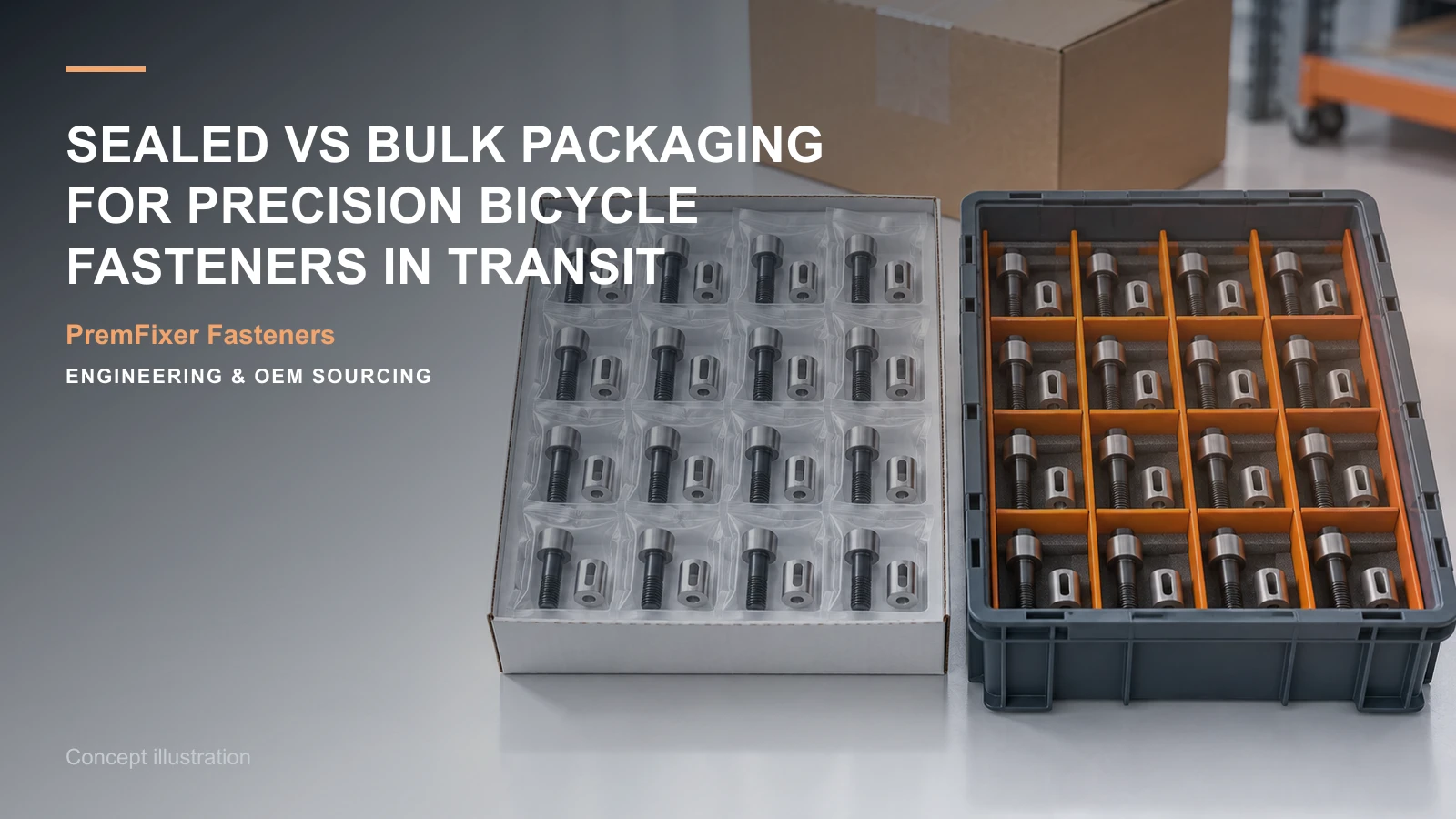
Precision bicycle hardware can leave the factory within specification and still arrive with avoidable handling damage. Finished heads can rub together, sharp edges can mark adjacent parts, mixed variants can be difficult to count and moisture or contamination can become relevant during a long logistics route. Packaging is therefore part of the delivered condition, not merely a container around the product.
Individual sealing, divided trays and bulk bags solve different problems. A sealed pouch may separate finished surfaces and preserve identity, but it does not automatically provide corrosion protection, impact protection or a certified clean environment. A well-designed bulk pack may be appropriate when the parts are robust, identical and transferred directly into a controlled receiving process.
The program becomes concrete when finished pivot parts cross multiple warehouses before arriving at a humid assembly site. The review can then focus on the evidence required before the next commitment.
Define the comparison before comparing the price
When is individually sealed packaging worth considering? It is useful when separation, surface protection, cleanliness, quantity control or receiving identity matters to the agreed delivery. The decision should be tied to a named risk or handling requirement. A generic instruction to use premium packaging does not show which function the additional work must provide.
Compare the same part revision, quantity, finish and logistics route. One offer may place every component in a sealed pouch with a kit-level outer pack. Another may use divided trays or a bulk bag inside a rigid carton. If the labeling, separation and transport protection differ, the packaging prices are not describing the same delivered service.
For the "Define the comparison before comparing the price" review, put sealed bicycle fastener packaging comparison, precision fastener transit packaging, bicycle hardware kit packaging, fastener surface protection on the same sheet. Name the current revision, the decision owner and the condition that allows the part or program to move forward. The technical discussion then has a clear purchasing and release action.
Include packing labor, material, receiving time, waste handling and the consequence of mixed or damaged components in the discussion. Do not invent a transport-perfect percentage.
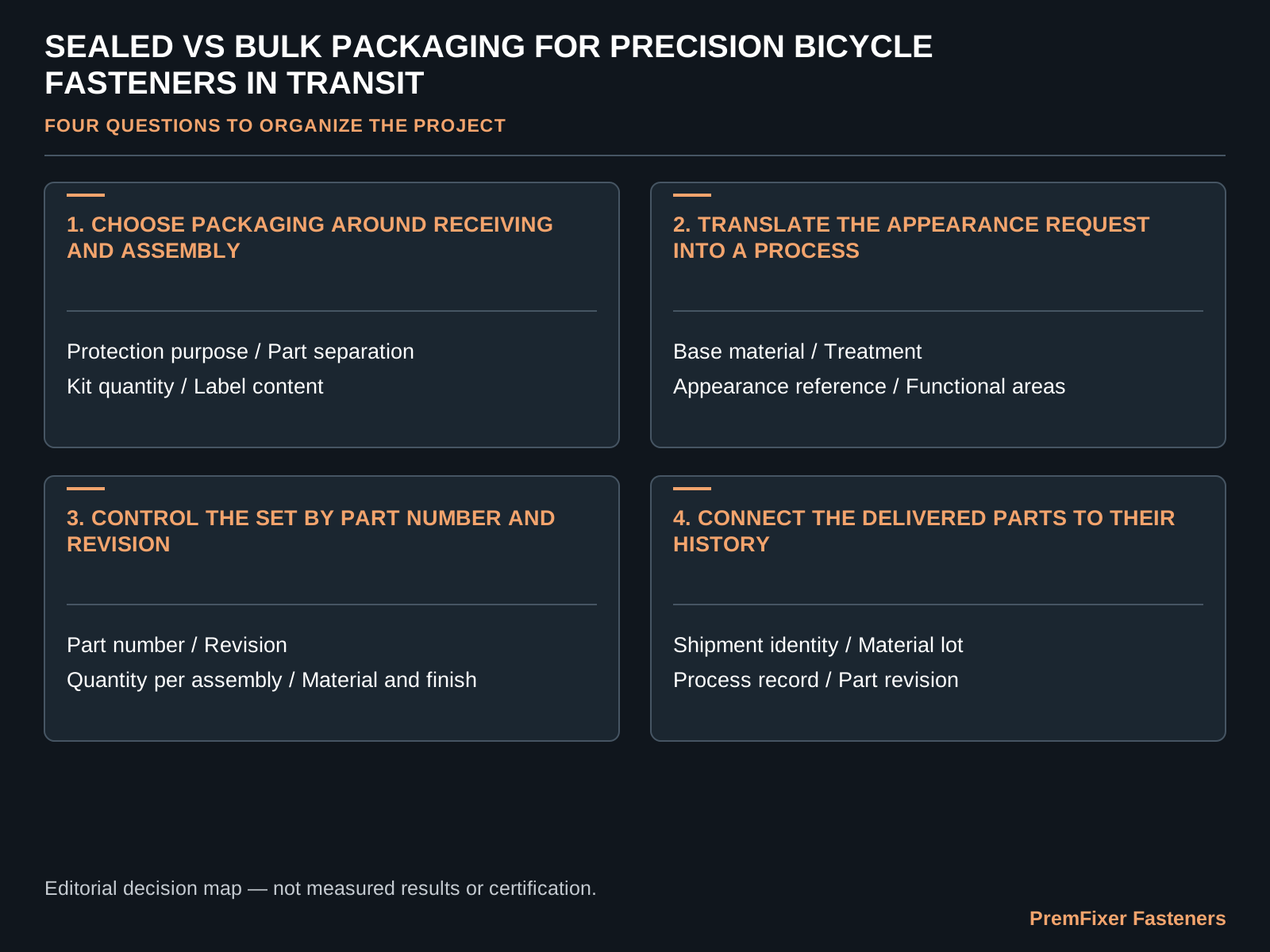
Choose packaging around receiving and assembly
Start with the protection purpose. Decorative heads may need separation from other metal surfaces. Precision shoulders or threads may need contact protection. A complete hardware kit may need a controlled quantity for one bicycle or joint. The pack should make the required state easy to preserve and easy to verify at receipt.
Follow the pack into the customer's process. A pouch that protects one item may add unnecessary opening work at a high-volume assembly station. A divided tray may support visual counting and presentation but consume more space. A bulk pack may be efficient for a single robust SKU when receiving already has controlled counting and handling.
Under "Choose packaging around receiving and assembly," compare the current and proposed conditions using sealed bicycle fastener packaging comparison, precision fastener transit packaging, bicycle hardware kit packaging, fastener surface protection. Record the evidence source and any item that remains open. The buyer should be able to approve, reject or sample a specific supplier proposal.
Label content should support identification without carrying unsupported claims. Part number, revision, quantity, lot or shipment identity can be agreed as project fields.
| Packaging field | Question to ask | Possible project output |
|---|---|---|
| Protection purpose | What damage, contamination or mix-up is the pack intended to prevent? | A named protective function linked to the component. |
| Part separation | Which surfaces or variants must not contact or mix? | Individual, divided or grouped handling appropriate to the risk. |
| Kit quantity | How many pieces belong to one bicycle, joint or receiving unit? | A countable pack aligned with the BOM. |
| Label content | Which identities must remain visible through receiving? | An agreed label field set without fictional certification marks. |
Translate the appearance request into a process
Packaging protects a delivered surface, but the finish itself must first be specified. Name the base material, actual treatment, appearance reference and functional areas. A request for black, polished or anodized hardware can describe a visual target while leaving the manufacturing route and critical surfaces unresolved.
Separate appearance from function. A decorative head may use an approved visual reference, while a bearing seat, thread, under-head face or electrical contact area may need dimensional or surface constraints. The packaging plan should protect those specific areas rather than assuming that every visible mark has the same consequence.
In "Translate the appearance request into a process," follow sealed bicycle fastener packaging comparison, precision fastener transit packaging, bicycle hardware kit packaging, fastener surface protection through the relevant handoff. The output from one operation or team should be a usable input for the next. Missing ownership at that boundary often causes more disruption than the operation itself.
Where an alternative treatment is proposed, keep it separate from the base quotation and review material compatibility, dimensional effect and assembly implications. Similar colors do not establish equivalent corrosion behavior, friction or coating thickness.
| Finish field | Definition needed | Packaging implication |
|---|---|---|
| Base material | The material and condition before finishing. | Select barrier and contact materials compatible with the part. |
| Treatment | The actual finishing or coating process specified. | Consider sensitivity to abrasion, contact and handling. |
| Appearance reference | An approved sample or controlled visual requirement where relevant. | Protect visible surfaces and keep review criteria separate from the pack label. |
| Functional areas | Threads, seats, faces or contacts needing special treatment. | Prevent packaging contact from compromising the intended interface. |
Control the set by part number and revision
A sealed kit still needs item-level definition. Give each bolt, axle, sleeve, spacer or nut a part number, revision, quantity and material or finish condition. Keep left and right variants, model options and service parts explicit even when they share one outer package.
The packaging BOM should state how item quantities roll into the receiving unit. One bag might contain one complete joint, one bicycle kit or a replenishment quantity for an assembly line. Without that basis, a label can look complete while still leaving receiving unable to confirm what one pack represents.
Use sealed bicycle fastener packaging comparison, precision fastener transit packaging, bicycle hardware kit packaging, fastener surface protection to define the sample question for "Control the set by part number and revision." The sample record should state what represents production, what is temporary and which decision follows the review. A conforming sample without that context can still leave the production route unsettled.
When a component revision changes, review the kit identity, existing packed stock and any shared artwork or label data. Do not place old and new configurations under one undifferentiated package.
| BOM field | What the pack must preserve | Receiving question |
|---|---|---|
| Part number | The identity of each supplied component. | Which exact item is inside? |
| Revision | The configuration approved for this shipment. | Does the pack match the current drawing and BOM? |
| Quantity per assembly | The count required for one joint, bicycle or kit. | What does one receiving unit represent? |
| Material and finish | The delivered state specified for each line item. | Are unlike conditions separated and identified? |
Connect the delivered parts to their history
Traceability becomes useful when the shipment identity leads to the relevant part revision, material lot and agreed process or inspection records. A label is the entry point to that chain; it is not a substitute for the records. Define the depth required by the order and keep it proportionate to the product and application.
For multi-part kits, decide whether traceability is held at item, lot, kit or shipment level. The answer can vary by component. A critical machined axle and a standard washer may not require identical records, yet the receiving package should still allow the customer to reconcile the delivered set with the approved BOM.
After "Connect the delivered parts to their history," carry sealed bicycle fastener packaging comparison, precision fastener transit packaging, bicycle hardware kit packaging, fastener surface protection into repeat orders and service planning. Approved conditions should remain visible in stock, inspection records and packaging so that later lots do not depend on personal memory.
If a nonconformance is found, the identity chain should support containment without assuming that every part in every shipment is affected. Clear lot and revision links help teams locate the relevant stock, review supporting evidence and decide the next action.
| Traceability field | Connection required | Practical use |
|---|---|---|
| Shipment identity | The delivery, pack or receiving reference. | Starts the record search from the physical goods. |
| Material lot | The relevant material identity for the supplied item. | Supports targeted review when material evidence is requested. |
| Process record | The agreed manufacturing, finish or inspection record. | Links supporting evidence to the delivered scope. |
| Part revision | The drawing and BOM state represented by the pack. | Prevents mixed configurations from being treated as interchangeable. |
Apply the discussion to a PremFixer Fasteners project
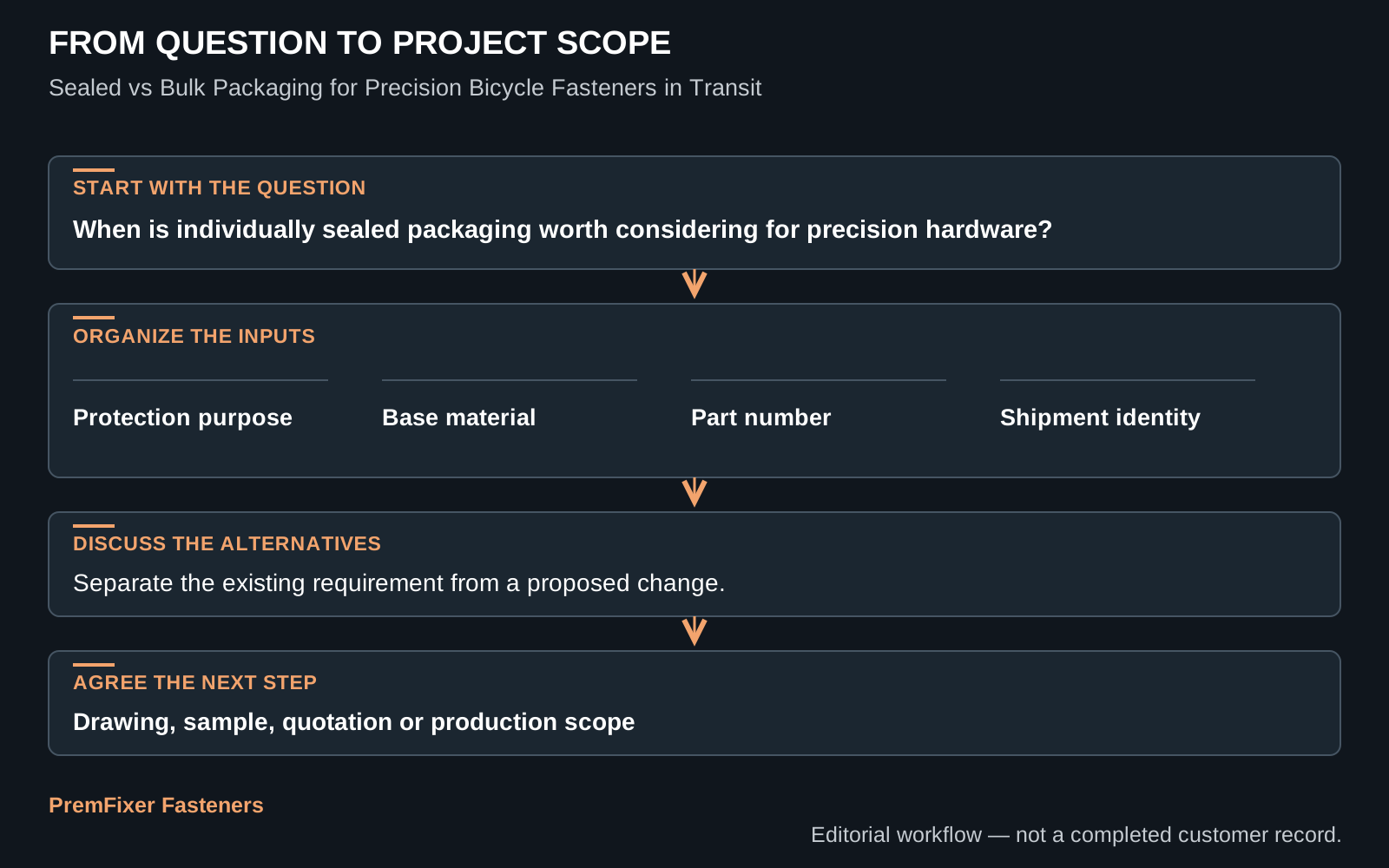
Begin with the component drawing or BOM, quantity, finish and expected logistics route. Describe the surfaces that need protection, how receiving will count or identify the parts and whether the pack represents an individual component, a joint or a complete bicycle hardware set.
PremFixer Fasteners can organize the packaging discussion around separation, kit quantity, approved finish and traceability fields. The quotation can show the base packing method and any proposed alternative separately so the customer can compare delivered scope without assuming that more plastic or more labels automatically provide better protection.
Convert the result of "Apply the discussion to a PremFixer Fasteners project" into a quotation line that identifies sealed bicycle fastener packaging comparison, precision fastener transit packaging, bicycle hardware kit packaging, fastener surface protection. Ask the supplier to state included work, customer inputs, open assumptions and release evidence. Alternative offers are easier to compare when scope is not hidden inside one unit price.
Share your available drawing, BOM or project description with PremFixer Fasteners, together with quantities and the project stage, to discuss sealed precision-hardware packaging.
Check the decision against a production scenario
A production scenario gives the discussion a clear boundary: finished pivot parts cross multiple warehouses before arriving at a humid assembly site. State the model, volume stage, revision and destination before comparing alternatives.
For sealed vs bulk packaging for precision bicycle fasteners in transit, list the decisions that the customer has already made and the items still open to supplier input. Each open item should have one owner and one expected output.
Sealed packs add handling and material, while bulk bins can allow abrasion, mixing or moisture exposure. Test the control where the issue can first be detected, then decide how the accepted condition will remain visible during repeat orders.
Use the pilot result for sealed vs bulk packaging for precision bicycle fasteners in transit to update the drawing, BOM, process or packing record. Avoid carrying an informal email decision into production when the controlled file still says something else.
Start the quotation with the part geometry, finish, route, pack quantity, receiving process and storage environment. Ask for inclusions, exclusions, one-time work and the evidence supplied with the sample or lot.
Questions buyers ask
Which project decision comes first?
Begin with the current configuration, then choose packaging from contamination, counting, line presentation and service needs. Name the owner and the output required before price, schedule or supplier preference is treated as final.
What belongs in the first RFQ?
Send the part geometry, finish, route, pack quantity, receiving process and storage environment. Separate fixed requirements from open fields so the supplier can price the confirmed scope and respond to the engineering questions.
How should the sample be judged?
Finished pivot parts cross multiple warehouses before arriving at a humid assembly site. A sample or pilot should answer named questions and disclose any material, finish, process or quantity that differs from production.
Which risk needs an owner?
Sealed packs add handling and material, while bulk bins can allow abrasion, mixing or moisture exposure. Connect the risk to a drawing characteristic, process handoff, approval or delivery record and verify its closure.
What can PremFixer review before quotation?
PremFixer can review the available drawing, model, BOM or sample with the part geometry, finish, route, pack quantity, receiving process and storage environment. The response can identify open questions, proposed scope and evidence for the next decision.
Specify the delivered pack condition
Share the part geometry, finish, route, pack quantity, receiving process and storage environment. The response will identify the proposed scope, open questions and the evidence needed before release.
Discuss This Project