
A delivery note confirms a commercial shipment. It can identify the order, packages and quantities, but it does not normally establish material identity, dimensional acceptance, process history or a product's status under a destination requirement. Those questions require different records, selected for the actual component and supply scope.
The opposite mistake is to treat a thick technical file as automatic market access. A material document from one heat, an inspection report from another revision and a general environmental declaration do not become a coherent package merely because they are delivered together. The buyer needs to know what each document answers and how it connects to the fasteners in the box.
The program becomes concrete when a delivery note confirms quantity but the receiving team cannot connect material, inspection and finish records to the lot. The review can then focus on the evidence required before the next commitment.
Define the comparison before comparing the price
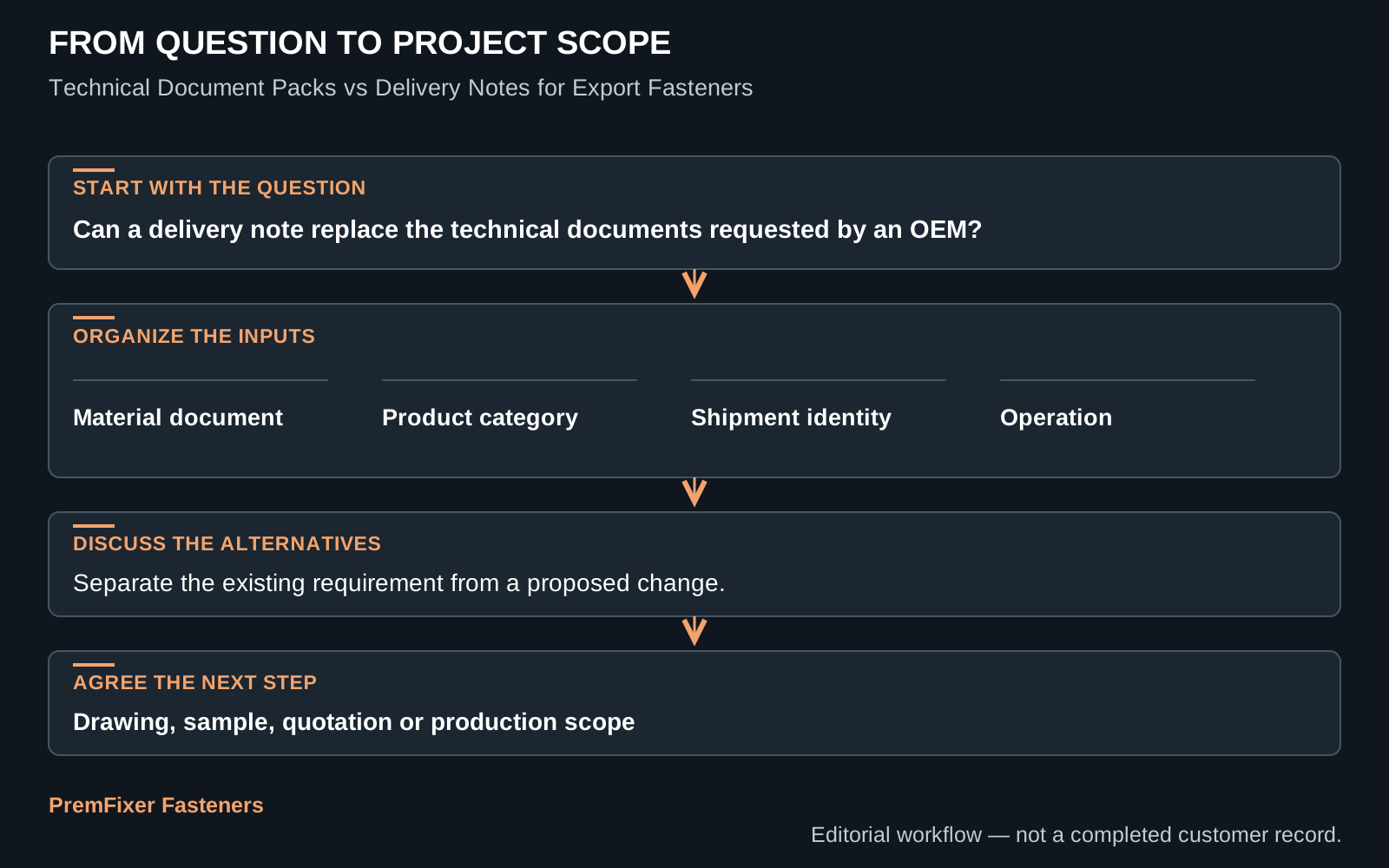
Can a delivery note replace the technical documents requested by an OEM? No. It serves a different purpose. The delivery note supports the commercial and logistics transaction; the technical package supports questions such as which material was used, which characteristics were inspected, which specified process was completed and which revision was packed.
Begin the comparison with the same part number, revision, quantity, delivered finish and destination. Then list the records the buyer actually requires. A quote that includes material linkage, an inspection record and controlled packing identity covers more work than a quote that supplies parts and a delivery note. That scope difference should be visible before the unit prices are compared.
For the "Define the comparison before comparing the price" review, put bicycle fastener export documents, technical document pack, fastener inspection report, export fastener traceability on the same sheet. Name the current revision, the decision owner and the condition that allows the part or program to move forward. The technical discussion then has a clear purchasing and release action.
A complete package is complete only relative to a defined requirement. A standard bicycle screw, a drawing-controlled pivot axle and a component entering a regulated vehicle program may need different evidence.
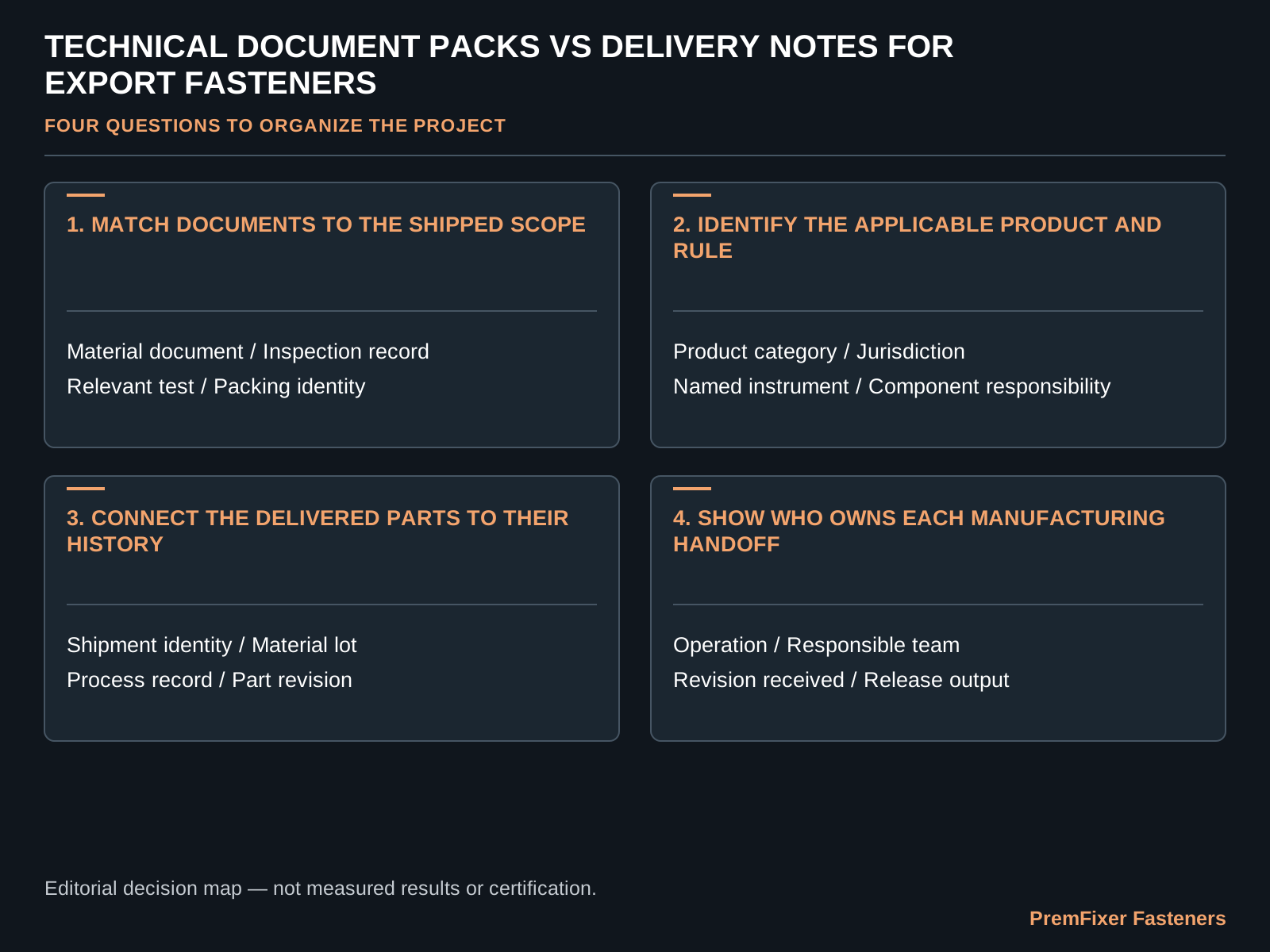
Match documents to the shipped scope
Separate document types by the question they answer. A material document identifies the supplied material or its source record. An inspection record reports agreed characteristics and acceptance results for the named lot or sample. A process or test report addresses a specified treatment or test. Packing identity connects those records to what the customer receives.
The package should also state what is not included. A dimensional report does not establish fatigue life. A salt-spray report for a specified coating and exposure does not approve every application or market. A material declaration does not replace vehicle-level conformity work. Clear scope makes a document more useful because the buyer can place it in the correct technical file.
Under "Match documents to the shipped scope," compare the current and proposed conditions using bicycle fastener export documents, technical document pack, fastener inspection report, export fastener traceability. Record the evidence source and any item that remains open. The buyer should be able to approve, reject or sample a specific supplier proposal.
Agree whether documents travel with every shipment, are supplied electronically, or remain retrievable by lot. The choice can vary by program, but the identity must remain stable.
| Document field | Question it answers | Connection required |
|---|---|---|
| Material document | What material identity or condition supports this supply? | Link to the material lot used for the delivered parts. |
| Inspection record | Which named characteristics were checked and accepted? | Part number, revision, lot and inspection state. |
| Relevant test | Which specified process or performance question was evaluated? | Test configuration, sample identity and applicable requirement. |
| Packing identity | What exactly is inside each package? | Order, part, revision, lot and quantity as agreed. |
Identify the applicable product and rule
Regulatory language starts with classification. Identify the product or vehicle category, destination jurisdiction and named instrument before deciding what a fastener supplier must provide. A bicycle, e-bike and electric motorcycle can sit in different legal and technical frameworks even when some hardware looks similar. A broad reference to export compliance is therefore not a usable component requirement.
Next, separate vehicle-level responsibility from component evidence. The OEM or responsible economic operator may own the complete product assessment. The fastener supplier can provide agreed material, process, inspection and traceability records within its component scope. Those records can support the wider file, but they should not be described as a universal vehicle approval.
In "Identify the applicable product and rule," follow bicycle fastener export documents, technical document pack, fastener inspection report, export fastener traceability through the relevant handoff. The output from one operation or team should be a usable input for the next. Missing ownership at that boundary often causes more disruption than the operation itself.
Record the version or date of the named requirement when it matters, and define who interprets any open obligation. This is particularly important when a buyer serves multiple regions.
| Scope field | Question to answer | Useful output |
|---|---|---|
| Product category | What vehicle, component or replacement-part category is involved? | A defined subject for the documentation review. |
| Jurisdiction | Where will the product be placed on the market or used? | A destination-specific review rather than a global assumption. |
| Named instrument | Which standard, regulation or customer specification is being applied? | A precise reference and applicable version where required. |
| Component responsibility | Which evidence belongs to the fastener supplier and which belongs to the OEM? | A responsibility boundary for the technical file. |
Connect the delivered parts to their history
Traceability gives the document pack a route back to the product. Start with the shipment or package identity and connect it to the part number, revision and material lot. Then identify the manufacturing and inspection records retained or delivered for that supply. The required depth depends on the order; the chain should be explicit rather than inferred from a folder name.
Digital systems can support this relationship, but a screenshot of a database is not the evidence the buyer needs. The useful output is a repeatable lookup: from a delivered label to the applicable configuration and records, and from an affected material or process lot to the shipments that may contain it. The method may be digital, paper-based or combined as long as identity remains controlled.
Use bicycle fastener export documents, technical document pack, fastener inspection report, export fastener traceability to define the sample question for "Connect the delivered parts to their history." The sample record should state what represents production, what is temporary and which decision follows the review. A conforming sample without that context can still leave the production route unsettled.
If parts are split, repacked or combined into kits, preserve the link. A new internal package identifier should not sever the material or process history.
| Traceability field | Record question | Buyer use |
|---|---|---|
| Shipment identity | Which order, package or lot did the customer receive? | Starts the lookup from the physical delivery. |
| Material lot | Which source material record applies? | Supports material reconciliation and targeted review. |
| Process record | Which agreed operations or inspections are connected? | Shows the history relevant to the ordered scope. |
| Part revision | Which released configuration was manufactured? | Prevents records for an older or adjacent part from being substituted. |
Show who owns each manufacturing handoff
A document pack also needs ownership. For every relevant operation, identify who receives the released input, who performs the work, who records the result and who releases the output. This can apply inside one facility or across an approved specialist partner. The organization model does not remove the need for a clear handoff.
Use the current revision as the common input. If a finishing provider receives only a purchase description while machining uses a controlled drawing, the record chain can split. The handoff should state the part and lot identity, applicable process requirement, acceptance output and route back into final inspection or packing.
After "Show who owns each manufacturing handoff," carry bicycle fastener export documents, technical document pack, fastener inspection report, export fastener traceability into repeat orders and service planning. Approved conditions should remain visible in stock, inspection records and packaging so that later lots do not depend on personal memory.
The same map helps a buyer review an exception. When a report is missing or a result is questioned, the team can identify where the record should have been created and who owns the next action.
| Handoff field | What to record | Control purpose |
|---|---|---|
| Operation | The machining, finishing, inspection or packing step in scope. | Defines where the record belongs in the route. |
| Responsible team | Who performs the work and who reviews or releases it. | Makes technical and commercial ownership visible. |
| Revision received | The drawing, specification or work instruction used. | Prevents a correct record from supporting the wrong configuration. |
| Release output | Accepted parts, report, status or identity passed forward. | Connects one operation to the next and ultimately to shipment. |
Apply the discussion to a PremFixer Fasteners project
Start with the part drawing or BOM, destination, quantity and current project stage. List the documents already required by the OEM or customer specification, then mark any open regulatory or traceability question. This avoids asking for a universal compliance pack before the supplied component and destination have been defined.
PremFixer Fasteners can organize the proposed deliverables around material identity, agreed inspection, relevant process records and packing linkage. The quotation can state which documents accompany the shipment, which remain retrievable, and which vehicle-level decisions remain with the customer or designated compliance owner.
Convert the result of "Apply the discussion to a PremFixer Fasteners project" into a quotation line that identifies bicycle fastener export documents, technical document pack, fastener inspection report, export fastener traceability. Ask the supplier to state included work, customer inputs, open assumptions and release evidence. Alternative offers are easier to compare when scope is not hidden inside one unit price.
Share your available drawings, BOM or project description with PremFixer Fasteners, together with quantities and the project stage, to discuss export fastener documentation.
Use a project example to test the proposal
Use one bounded work package to test the decision. A delivery note confirms quantity but the receiving team cannot connect material, inspection and finish records to the lot. Give the package a part list, revision, owner and required completion state.
For technical document packs vs delivery notes for export fasteners, ask engineering to mark the functional interfaces and purchasing to define the quoted delivery unit. Quality can then identify the evidence needed at sample and production release.
Documents create little value when identifiers do not match the part, batch and purchase order. Build a check around the point where that failure enters the workflow, rather than adding broad inspection after every operation.
Review the first result against the stated question for technical document packs vs delivery notes for export fasteners. If a material, finish, tool or quantity differs from production, keep the limitation with the sample record and decide whether another stage is required.
The RFQ should include the part list, lot definition, required certificates, inspection results, language and file format. Request a scope matrix, timing assumptions and the exact output that will close the open project decision.
Questions buyers ask
How should purchasing frame this decision?
Begin with the current configuration, then define which technical records must travel with a precision fastener shipment. Name the owner and the output required before price, schedule or supplier preference is treated as final.
What should remain linked to the drawing revision?
Send the part list, lot definition, required certificates, inspection results, language and file format. Separate fixed requirements from open fields so the supplier can price the confirmed scope and respond to the engineering questions.
Which evidence is useful during sampling?
A delivery note confirms quantity but the receiving team cannot connect material, inspection and finish records to the lot. A sample or pilot should answer named questions and disclose any material, finish, process or quantity that differs from production.
What should stay visible during repeat orders?
Documents create little value when identifiers do not match the part, batch and purchase order. Connect the risk to a drawing characteristic, process handoff, approval or delivery record and verify its closure.
What should the first supplier response contain?
PremFixer can review the available drawing, model, BOM or sample with the part list, lot definition, required certificates, inspection results, language and file format. The response can identify open questions, proposed scope and evidence for the next decision.
Define the shipment document pack
Share the part list, lot definition, required certificates, inspection results, language and file format. The response will identify the proposed scope, open questions and the evidence needed before release.
Discuss This Project