
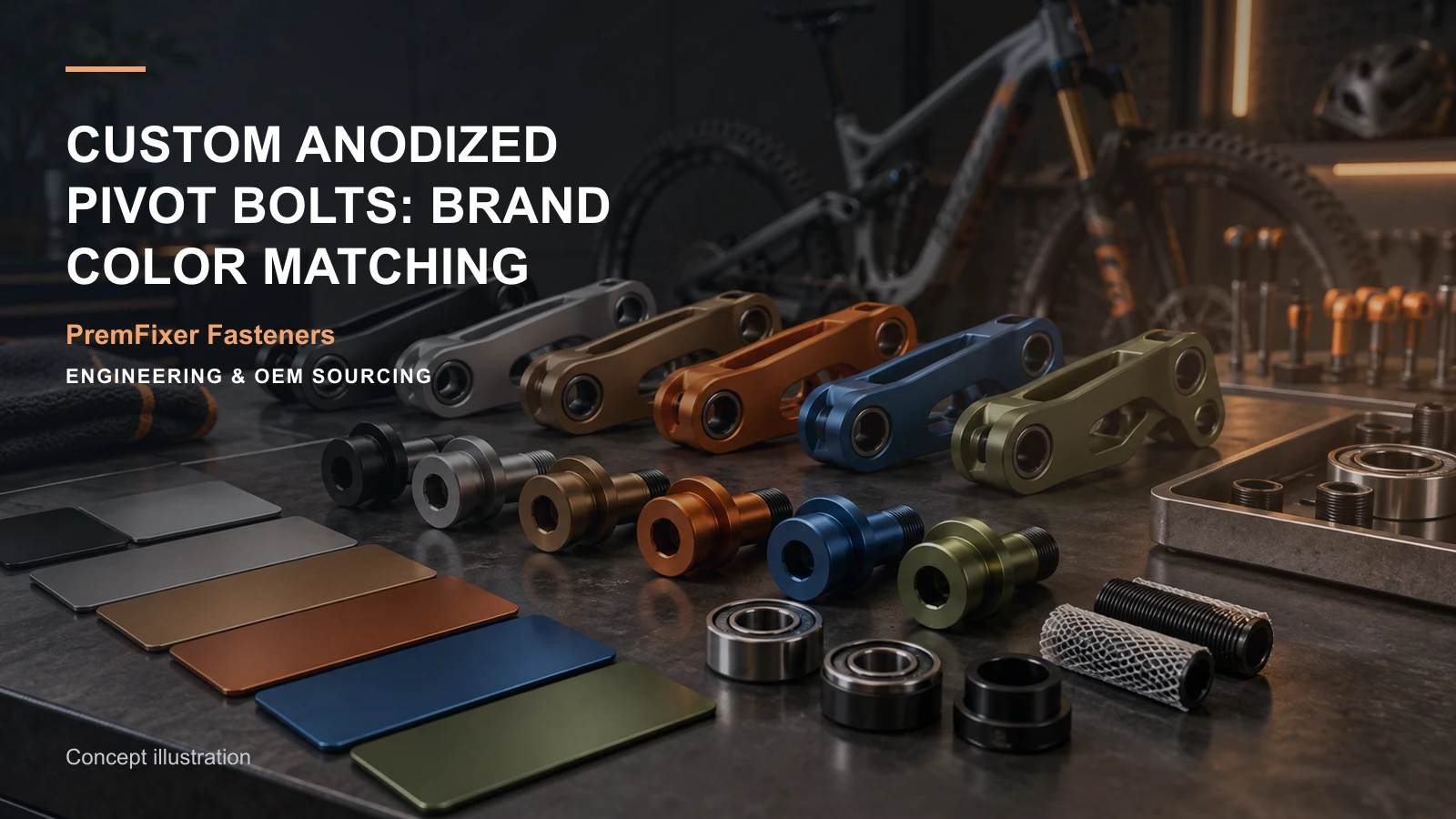
For anodized aluminum pivot hardware, color matching should start with physical reference samples and a defined substrate, not a screen color or a promise of an exact universal shade. Alloy condition, machining texture, preparation, anodizing conditions and lighting can change the perceived finish. The OEM must decide what appearance range is acceptable and which surfaces still need a controlled fit after treatment. This matters especially when a visible head shares a part with a bearing or sleeve interface. A finish chosen for brand color must not silently alter the joint geometry or be presented as proof of durability without a separate requirement and test.
Approve a physical appearance range
Specify an approved color reference or range of limit samples on representative material and surface preparation. QUALANOD's appearance guidance emphasizes reference samples and notes that alloy structure and anodizing conditions affect the visible result. Its guidance concerns anodized aluminum appearance generally; it does not certify a particular PremFixer part.
State viewing light, distance and the visible surfaces to be judged. A glossy rendered image is useful for design intent but not a production acceptance standard.
Keep the alloy and surface preparation fixed
A color trial on one aluminum alloy or finish texture may not transfer to another stock condition. Record alloy designation, temper where relevant, raw-surface preparation and whether machining marks are acceptable on cosmetic faces. If a supplier changes stock or pretreatment, review the reference range again.
Avoid calling a single shade a guaranteed match across every batch. Define a repeatable comparison method and a customer-approved limit instead.
QUALANOD appearance guidance · Material choices
| Requirement | Specification choice | Risk | Verification |
|---|---|---|---|
| Brand appearance | Physical limit samples | Screen color differs from metal | Agreed viewing comparison |
| Substrate changes | Fix alloy and surface preparation | Color shifts between materials | Trial on representative stock |
| Bearing or sleeve fit | Define treated or masked seat | Finish changes working diameter | Post-process measurement |
| Mixed-material kit | Finish each substrate separately | Assuming all parts share one process | Item-level BOM and finish review |
Protect functional dimensions
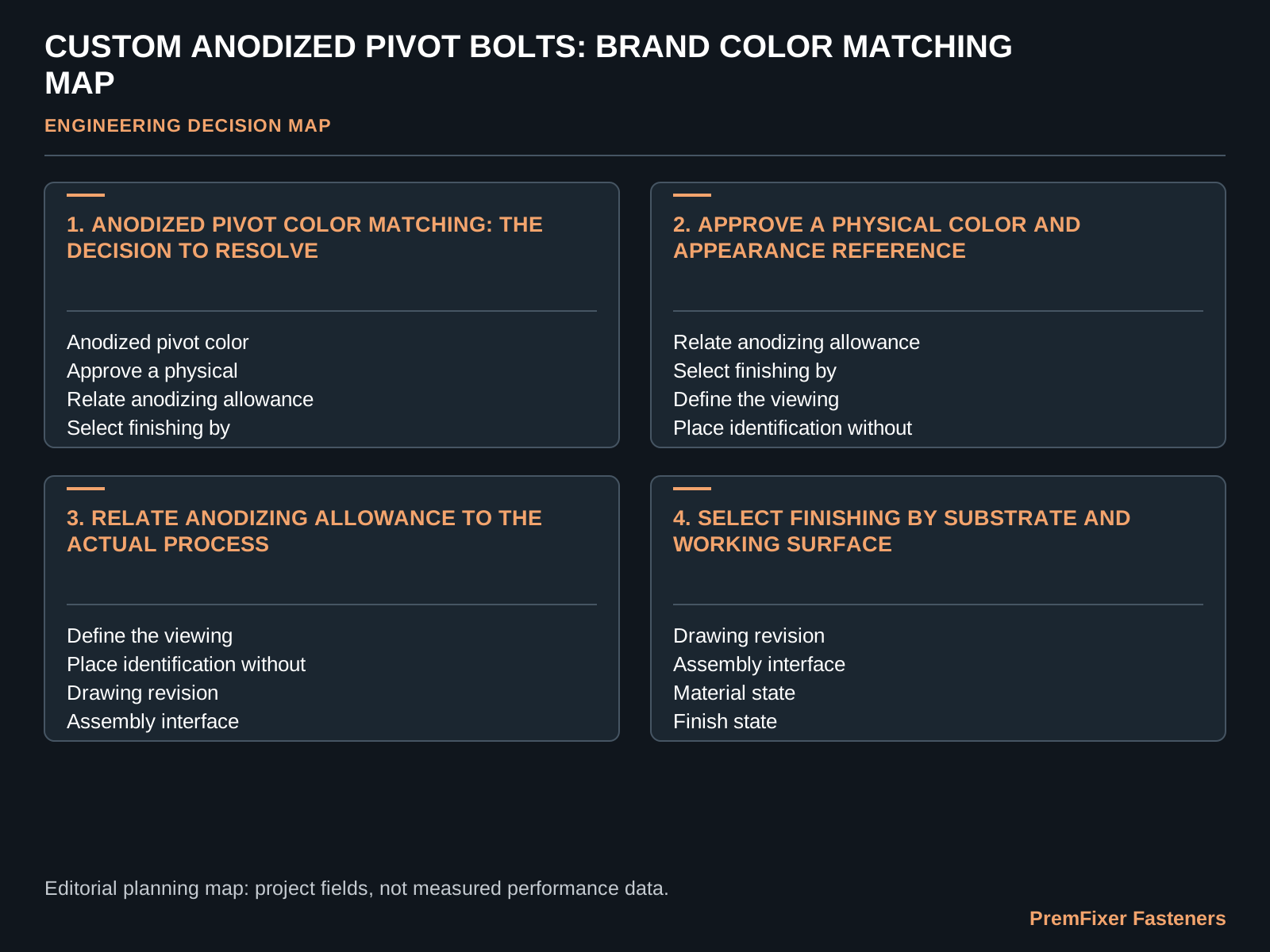
Identify bearing seats, sleeve fits, threads and under-head contact faces on the drawing. State whether anodizing reaches each surface, whether masking is needed and whether the final accepted dimension applies after treatment. Surface treatment may change size or contact behavior, so a visible color decision and a fit decision cannot share an undefined acceptance rule.
If an aluminum component works alongside steel or titanium parts, specify each substrate's finish separately rather than treating the whole pivot kit as one anodized item.
Illustrative engineering example: assume an OEM wants an orange aluminum pivot head beside a black frame. A color chip on a different alloy looks suitable in a render but does not establish the part's final appearance. The OEM supplies a representative machined sample and two acceptable limit references, then identifies a sleeve-contact surface that must be dimensionally checked after finishing. The sample review addresses color and fit separately. No actual match or test result is claimed.
Plan the process boundary and sample approval
PremFixer Fasteners performs the confirmed machining operations in-house and coordinates anodizing through qualified partners when specified. The OEM should approve the material, appearance reference, finish scope and post-process dimensional check. A color sample can establish visual direction; it does not by itself approve the assembled joint.
Keep the accepted physical reference and drawing revision tied to the order. If a later revision moves the head or changes the raw alloy, reopen the affected appearance and fit checks.
Make a color-matching RFQ measurable
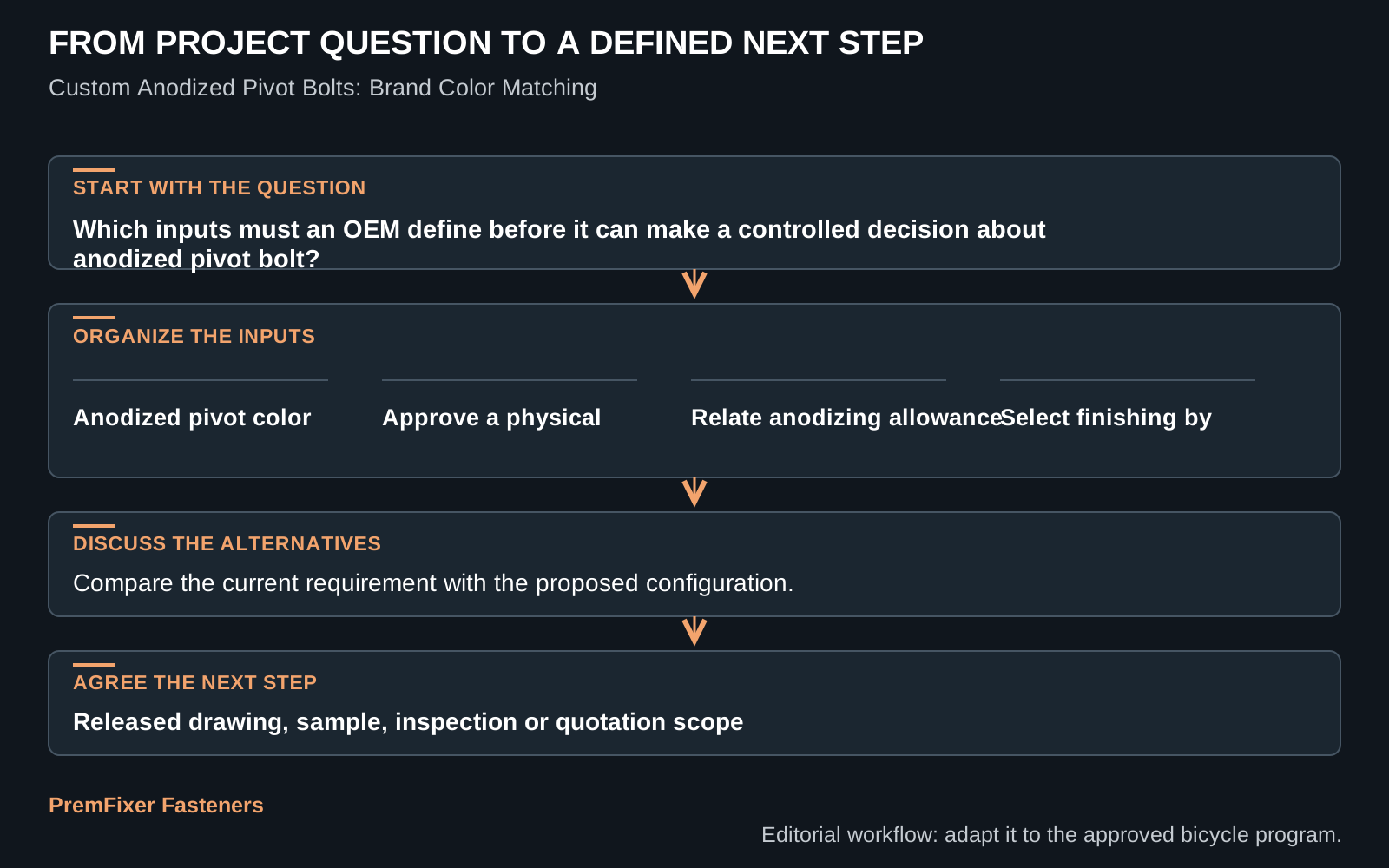
Send the component drawing, STEP model, aluminum alloy and condition, finish specification, photographs only as supplemental context, physical reference or limit samples, visible-face definition and order quantity. Mark mating surfaces that cannot change.
The manufacturing review can separate cosmetic trial pieces from fit-validation samples and quote partner finishing to the agreed scope.
Submit color and fit requirements
Questions buyers need to resolve
Can a Pantone or RGB code alone control anodized color?
No. It describes design intent but not the complete metal appearance. Add physical references, alloy and surface preparation, viewing conditions and an acceptable range.
Can steel and titanium pivot bolts be anodized like aluminum?
Do not assume the same process or appearance. Specify the actual substrate and suitable treatment separately; the aluminum anodizing approach cannot simply be copied to every metal in a kit.
Should bearing seats be anodized?
Only if the joint design and finish specification permit it. Mark the seat, required final dimension and contact duty on the drawing; masking or post-process finishing may be needed.
Does an approved color sample approve the whole pivot?
No. Appearance approval is separate from dimensional fit, clamp behavior and application validation. Keep both acceptance paths tied to the same drawing and process state.
What should a color-matching RFQ include?
Send the drawing, alloy and condition, surface preparation, physical reference samples, visible-face limits, protected mating surfaces, finish requirement and quantity. State which samples need cosmetic versus fit review.
Specify Color and Fit Separately
Share the aluminum part drawing, alloy, physical color references, critical mating surfaces and quantities. PremFixer can review machining and partner-anodizing scope and identify the sample checks needed for appearance and fit.
Discuss the drawing and BOM