
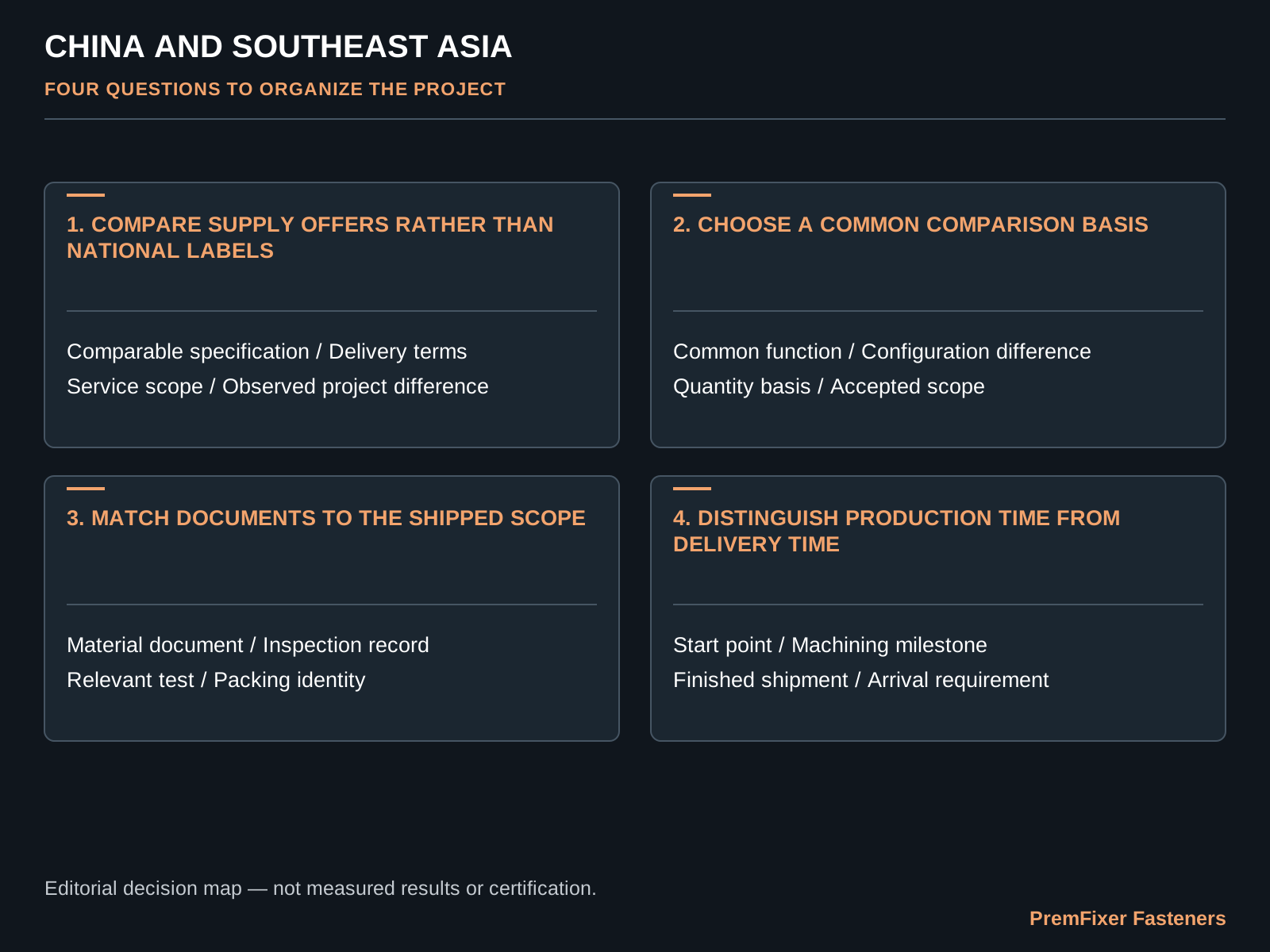
A China-versus-Southeast-Asia fastener decision is often framed around unit price, tariff or headline lead time. Those factors matter, but regional labels are too broad to select a precision bicycle hardware source. The useful comparison is between named supplier offers for the same drawing, material condition, process scope, quality evidence, delivery term and production scenario.
Two quotations can look comparable while one excludes surface treatment, dedicated inspection, export packing or tooling. They can also assume different order quantities, payment terms or transport routes. Before drawing a sourcing conclusion, convert every offer into a common commercial and technical baseline.
This guide provides a neutral comparison method. It does not rank countries or claim that one region is universally cheaper, faster or more capable.
Issue one controlled RFQ package
Send every candidate the same drawing revision, 3D model where relevant, material and finish requirements, annual and batch quantities, critical characteristics, required documentation, packaging and destination. State the quotation currency, Incoterm and validity period you want returned.
Use a clarification deadline before the final quote. If suppliers interpret an open note differently, answer once and distribute the controlled response to all participants. This keeps later price differences from being created by different assumptions.
For a multi-part package, include quantity per bicycle and indicate which items must arrive as a kit. Otherwise, some suppliers may quote individual pieces while others include consolidation work.
| Normalization field | Why it changes the comparison | Required response |
|---|---|---|
| Process scope | Secondary operations may be excluded | Included and excluded route steps |
| Order profile | MOQ and setup absorption affect unit cost | Price by common batch and annual volume |
| Delivery basis | Freight, duty and local handling differ | Named Incoterm, destination and pack condition |
| Quality evidence | Document effort can be part of scope | Sample and production record list |
Separate ex-works price from landed and usable cost
Build the comparison from supplier price to the condition required at the receiving dock or assembly line. Add tooling, inland freight, export handling, international transport, insurance, applicable duty, broker charges, local transport, incoming inspection and any local kitting. Use current quotes from the relevant service providers rather than generic country assumptions.
Then account for commercial terms. Deposits, payment timing, currency exposure, minimum order and inventory ownership can affect working capital even when the quoted piece price is lower.
Keep uncertain items as ranges or named scenarios. False precision is especially risky when trade measures and freight conditions can change between sourcing study and production release.
Compare process depth for the real part
Assess whether each supplier directly performs the operations most important to the component and how it controls the rest. A precision pivot axle may depend on CNC turning, milling, threads, finish-sensitive dimensions and a reliable treatment partner. A volume screw may depend more on forming tooling and high-rate secondary operations.
Ask for the proposed route, the owner of each external handoff and the inspection point after a process that can alter critical characteristics. Equipment lists without an application to the quoted part do not answer these questions.
If the sourcing plan includes several factories, decide whether the OEM, a local integrator or the component supplier owns final kit conformity.
Model schedule risk as events
Instead of assigning a vague regional risk rating, map specific events: delayed material, overloaded treatment partner, failed sample, port disruption, documentation error or revision change during production. For each event, identify visibility, recovery owner and the stock or time buffer available.
Request a milestone schedule that separates material, tooling, sample manufacture, approval, production, finish, inspection and transport. A quoted ‘lead time’ may begin after an unspoken approval or material commitment, so define its starting point.
Run the same disruption scenario for every supplier. This reveals differences in response design without pretending to predict which event will occur.
Use samples to compare working behaviour
A sourcing sample should test more than dimensional output. Observe clarification quality, time to close questions, revision identification, report completeness, packaging and the speed with which an exception is understood. These behaviours influence production workload long after the first article is approved.
Keep sample conditions equivalent. If one factory submits an unfinished machining sample and another submits a production-finished part, record the difference rather than treating them as direct alternatives.
Where possible, place a contained trial order using the intended communication and logistics path. Actual workflow data is more useful than a long supplier questionnaire.
Build a sourcing decision record
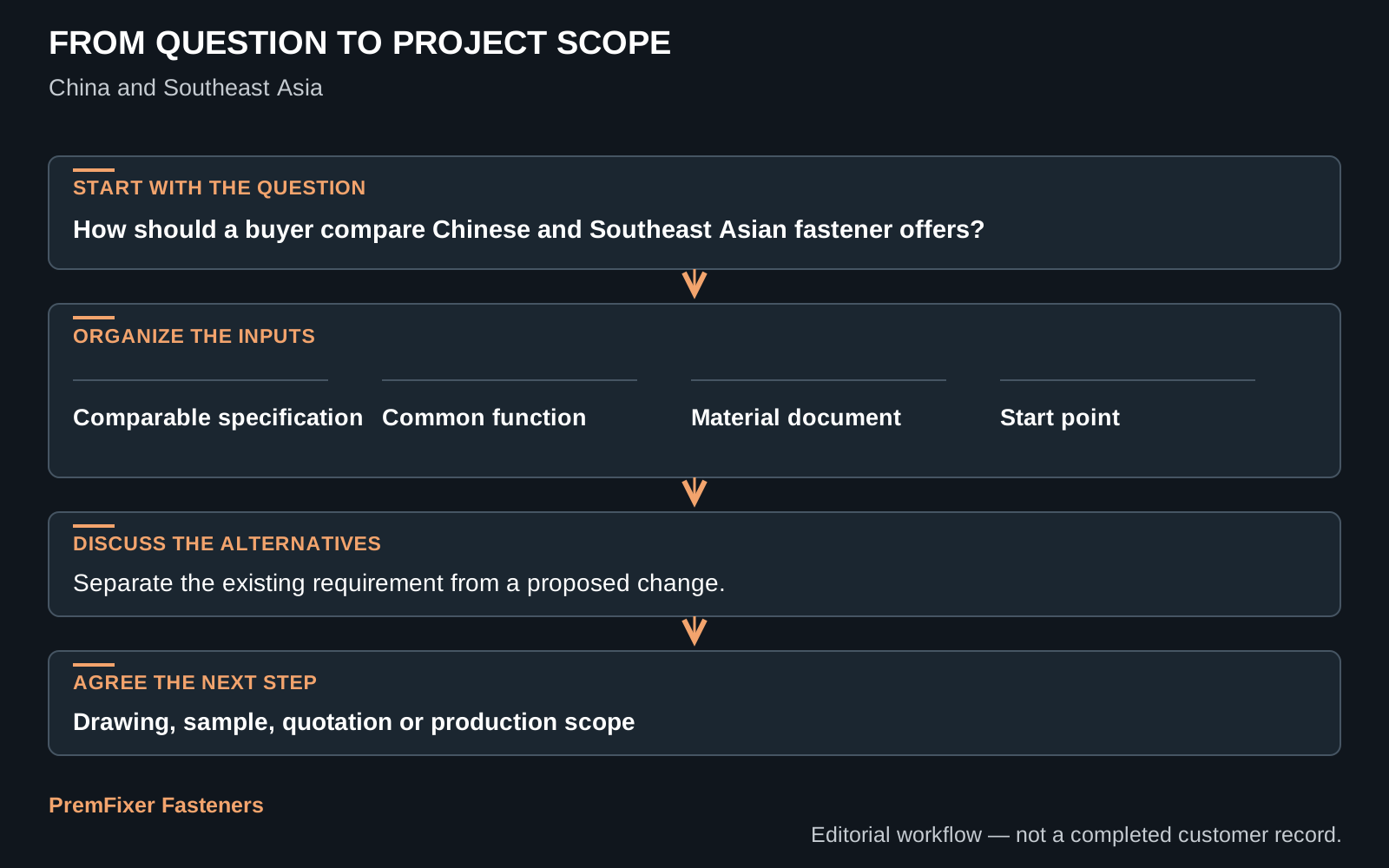
Summarize each offer against the same fields: compliant scope, open deviations, landed-cost scenario, tooling ownership, sample result, schedule, quality records, capacity evidence, communication and recovery plan. Do not collapse unlike evidence into a single unexplained score.
The final choice may be one supplier, a primary-and-backup arrangement or a split by process family. State the reason at component level so the strategy can be revisited when volume, trade conditions or the bicycle platform changes.
PremFixer can participate in this process with a drawing-based offer from China. The comparison will be most useful when the RFQ defines the same technical and delivery scope for every candidate.
Keep the decision usable when market conditions change
Freight rates, trade measures, currency and capacity conditions can change after the sourcing study. Build the comparison so those volatile inputs can be refreshed without repeating the technical qualification. Keep supplier price, logistics, duty, internal handling and inventory as separate lines with a date and source for each input.
Create at least three demand cases: launch, expected production and upside or downside volume. A supplier with the lowest price at one full-container quantity may not be the best fit for pilot batches or service replenishment. Compare minimum order, batch flexibility, tooling absorption and stock commitment in each case.
If resilience is a goal, define what the backup must actually do. A second quotation is not a qualified alternate source. The backup may need an approved sample, controlled drawing access, reserved tooling, periodic order or a documented activation lead time. Include that readiness cost in the strategy.
Finally, assign triggers for reconsidering the decision: major volume shift, tariff change, repeated delivery failure, new platform revision or a process move. This is not a fixed-day optimization cycle. It is an event-based rule that keeps the original comparison relevant when the underlying business condition changes.
The decision record should remain readable to a new buyer or engineer. State which evidence was supplier-specific, which commercial inputs were time-sensitive and which engineering requirements must not change without reapproval. That separation lets the company update cost while preserving technical control.
When presenting the result to management, show the trade-offs rather than a country winner. One offer may provide the best launch flexibility, another the strongest mature-volume economics and a third the most credible alternate-source readiness. Naming those roles prevents a single blended score from hiding why a supplier was selected and what condition would justify changing the allocation.
Questions buyers ask
Is China or Southeast Asia cheaper for bicycle fasteners?
There is no reliable region-wide answer for a specific drawing. Compare supplier quotes after normalizing process scope, quantity, tooling, quality records, Incoterm, freight, duty, receiving and kitting.
How should lead times be compared?
Define the start and finish points, then separate material, tooling, sampling, approval, production, finishing, inspection and transport. Compare schedules built from the same assumptions.
Should tariffs decide the sourcing region?
Tariffs and trade measures belong in landed cost, but they are only one input. Process suitability, change response, quality evidence, inventory and recovery design also affect the decision.
What should be checked during supplier sampling?
Check the part and the workflow: clarification, revision identity, representative process, measurement report, packaging, communication and exception response.
Can an OEM use suppliers in both regions?
Yes. A dual-region or split-process strategy can be appropriate when responsibilities, drawings, validation, revision control and kit integration remain explicit.
Add a Comparable China Offer to Your Sourcing Study
PremFixer can respond against the same drawing, process, document and delivery scope used for your other candidate suppliers.
Request a Comparable Quote