
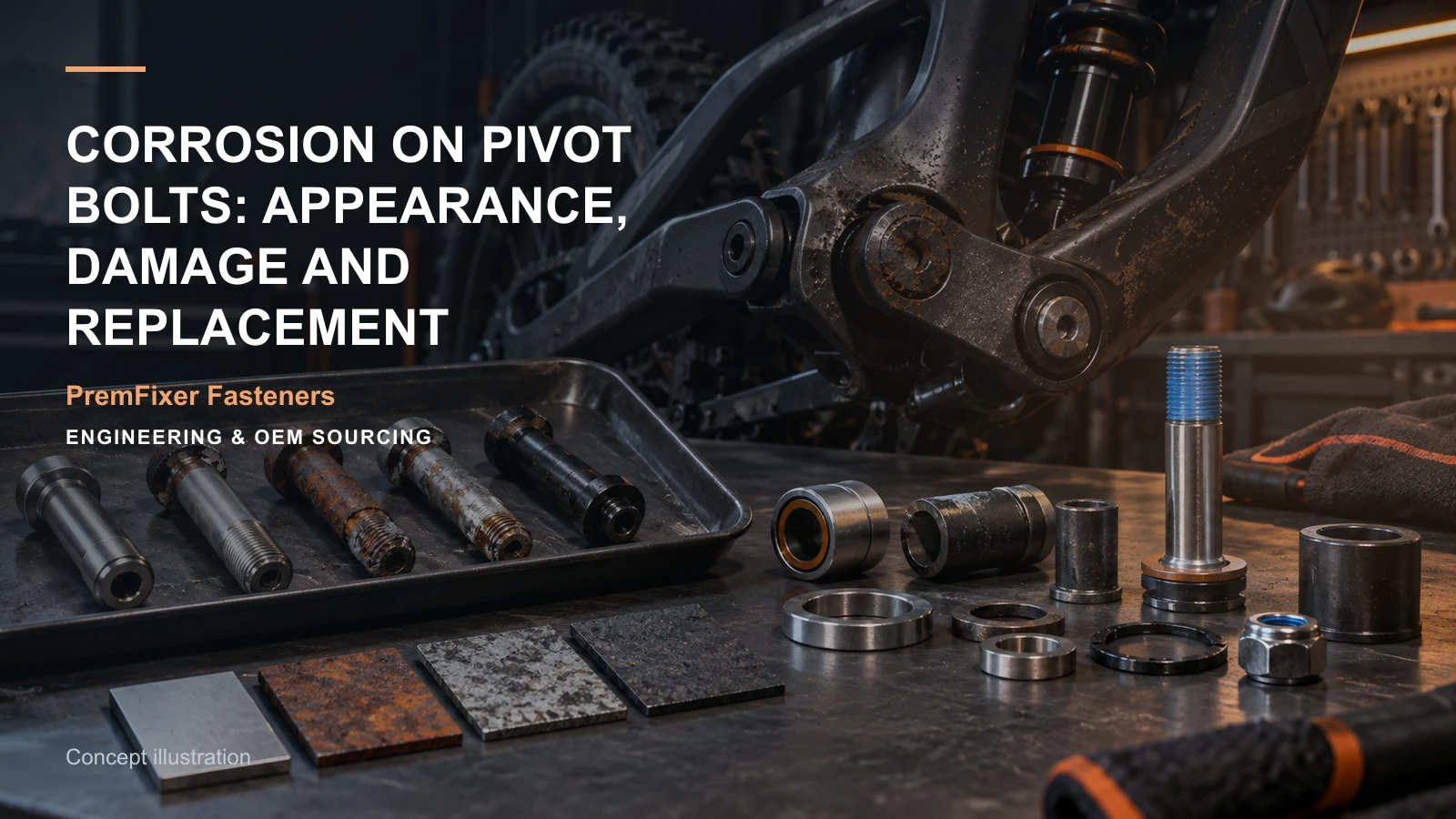
Do not use tightening feel as a structural assessment. Distinguish coating discoloration, deposits and actual metal loss, and consider where the damage occurs. Follow the component maker replacement criteria or obtain a qualified assessment. A visual check alone may not establish the remaining capacity of a damaged safety-critical fastener. The practical starting point is to identify coating condition, pitting location, thread damage, then connect those requirements to the component or purchasing decision.
For an OEM team, rusted pivot bolt assessment becomes useful when Define the corrosion, Coating condition and, Separate method, duration and Thread damage: connect are tied to one component or purchase decision. This guide follows the six stages in the source framework and keeps manufacturing, inspection and delivery assumptions visible as the project moves forward.
The rusted pivot bolt assessment examples are planning methods, not universal acceptance values. Apply them to the released bicycle platform, mating parts and approved validation plan, and keep any open field identified until the responsible team closes it.
Define the corrosion question and exposure
Start with the current part, assembly or order state rather than a blank specification. For rusted pivot bolt assessment, this means the team should define the corrosion question and exposure with Define the corrosion visible in the discussion. The purpose is to connect the article topic to an actual bicycle component, hardware family or purchase order rather than treat the heading as a general capability claim.
Place Define the corrosion, Coating condition and, Separate method, duration and Thread damage: connect in the same working record. A change to one field can alter machining access, final fit, inspection effort, batch planning or the delivered condition. The immediate output is a define the corrosion question and exposure record that states the current revision, the proposed change and the point that still needs approval.
The first record should show what is known, what is assumed and which decision the project team needs next. In a practical rusted pivot bolt assessment review, engineering should explain the functional reason, purchasing should confirm quantity and supplied scope, and manufacturing should identify the route or information needed to proceed. The team can then compare alternatives without mixing an unapproved proposal into the released requirement.
For a prototype or first order, write one or two questions that the part, report or delivery can answer. Keep the result with the relevant drawing, material and finish state. If geometry, quantity, processing or assembly changes later, reopen the stage 1 working record for the affected configuration rather than extending the earlier conclusion without review.
Coating condition and Pitting location: define the working relationship
Translate the requirement into feature-level inputs that design, purchasing and manufacturing can all read. For rusted pivot bolt assessment, this means the team should coating condition and Pitting location: define the working relationship with Coating condition and visible in the discussion. The purpose is to connect the article topic to an actual bicycle component, hardware family or purchase order rather than treat the heading as a general capability claim.
Place Separate method, duration, Thread damage: connect, Compare material and and Service disposition: turn in the same working record. A change to one field can alter machining access, final fit, inspection effort, batch planning or the delivered condition. The immediate output is a coating condition and pitting location: define the working relationship record that states the current revision, the proposed change and the point that still needs approval.
This is where an attractive concept becomes a controlled drawing, process question or supply definition. In a practical rusted pivot bolt assessment review, engineering should explain the functional reason, purchasing should confirm quantity and supplied scope, and manufacturing should identify the route or information needed to proceed. The team can then compare alternatives without mixing an unapproved proposal into the released requirement.
For a prototype or first order, write one or two questions that the part, report or delivery can answer. Keep the result with the relevant drawing, material and finish state. If geometry, quantity, processing or assembly changes later, reopen the stage 2 working record for the affected configuration rather than extending the earlier conclusion without review.
| Stage | Project decision | Inputs to connect | Working output |
|---|---|---|---|
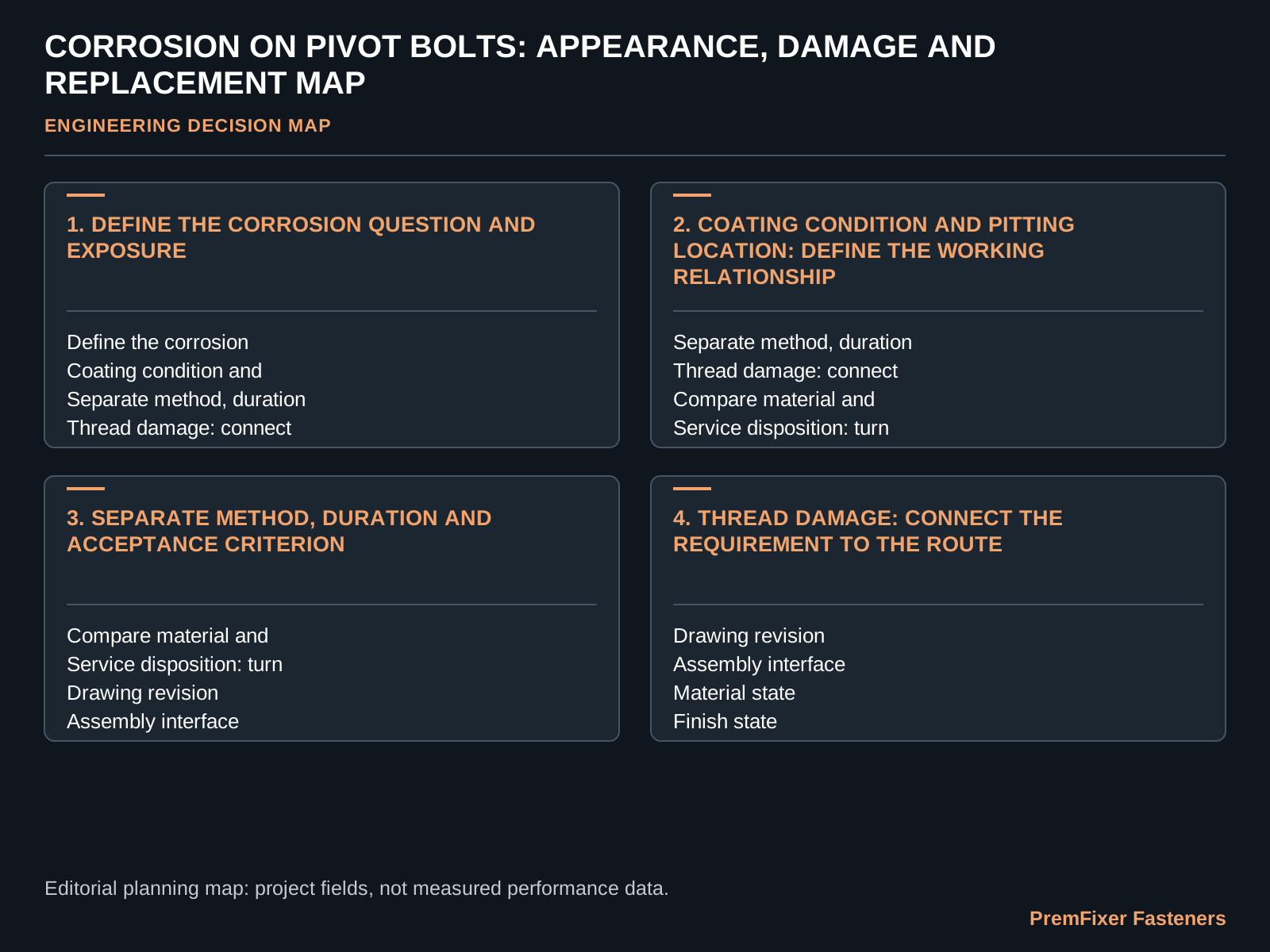
| 01 | Define the corrosion question and exposure | Define the corrosion / Coating condition and / Separate method, duration | define the corrosion question and exposure record |
| 02 | Coating condition and Pitting location: define the working relationship | Separate method, duration / Thread damage: connect / Compare material and | coating condition and pitting location: define the working relationship record |
| 03 | Separate method, duration and acceptance criterion | Compare material and / Service disposition: turn / Drawing revision | separate method, duration and acceptance criterion record |
| 04 | Thread damage: connect the requirement to the route | Drawing revision / Assembly interface / Material state | thread damage: connect the requirement to the route record |
| 05 | Compare material and finish routes on equal conditions | Material state / Finish state / Order quantity | compare material and finish routes on equal conditions record |
| 06 | Service disposition: turn the review into a clear next step | Order quantity / Inspection method / Delivery scope | service disposition: turn the review into a clear next step record |
Separate method, duration and acceptance criterion
Connect the selected option to the machining route and the interfaces that the finished part must serve. For rusted pivot bolt assessment, this means the team should separate method, duration and acceptance criterion with Separate method, duration visible in the discussion. The purpose is to connect the article topic to an actual bicycle component, hardware family or purchase order rather than treat the heading as a general capability claim.
Place Compare material and, Service disposition: turn, Drawing revision and Assembly interface in the same working record. A change to one field can alter machining access, final fit, inspection effort, batch planning or the delivered condition. The immediate output is a separate method, duration and acceptance criterion record that states the current revision, the proposed change and the point that still needs approval.
A sample should answer a named question instead of acting as a general promise about future production. In a practical rusted pivot bolt assessment review, engineering should explain the functional reason, purchasing should confirm quantity and supplied scope, and manufacturing should identify the route or information needed to proceed. The team can then compare alternatives without mixing an unapproved proposal into the released requirement.
For a prototype or first order, write one or two questions that the part, report or delivery can answer. Keep the result with the relevant drawing, material and finish state. If geometry, quantity, processing or assembly changes later, reopen the stage 3 working record for the affected configuration rather than extending the earlier conclusion without review.
Thread damage: connect the requirement to the route
Define how the result will be checked and which revision or lot the record belongs to. For rusted pivot bolt assessment, this means the team should thread damage: connect the requirement to the route with Thread damage: connect visible in the discussion. The purpose is to connect the article topic to an actual bicycle component, hardware family or purchase order rather than treat the heading as a general capability claim.
Place Drawing revision, Assembly interface, Material state and Finish state in the same working record. A change to one field can alter machining access, final fit, inspection effort, batch planning or the delivered condition. The immediate output is a thread damage: connect the requirement to the route record that states the current revision, the proposed change and the point that still needs approval.
The measurement or review method must evaluate the relationship described by the drawing and assembly. In a practical rusted pivot bolt assessment review, engineering should explain the functional reason, purchasing should confirm quantity and supplied scope, and manufacturing should identify the route or information needed to proceed. The team can then compare alternatives without mixing an unapproved proposal into the released requirement.
For a prototype or first order, write one or two questions that the part, report or delivery can answer. Keep the result with the relevant drawing, material and finish state. If geometry, quantity, processing or assembly changes later, reopen the stage 4 working record for the affected configuration rather than extending the earlier conclusion without review.
Compare material and finish routes on equal conditions
Carry the engineering decision into batch, assembly, service or delivery planning. For rusted pivot bolt assessment, this means the team should compare material and finish routes on equal conditions with Compare material and visible in the discussion. The purpose is to connect the article topic to an actual bicycle component, hardware family or purchase order rather than treat the heading as a general capability claim.
Place Material state, Finish state, Order quantity and Inspection method in the same working record. A change to one field can alter machining access, final fit, inspection effort, batch planning or the delivered condition. The immediate output is a compare material and finish routes on equal conditions record that states the current revision, the proposed change and the point that still needs approval.
This prevents a technically sound decision from being lost when quantities, operators or suppliers change. In a practical rusted pivot bolt assessment review, engineering should explain the functional reason, purchasing should confirm quantity and supplied scope, and manufacturing should identify the route or information needed to proceed. The team can then compare alternatives without mixing an unapproved proposal into the released requirement.
For a prototype or first order, write one or two questions that the part, report or delivery can answer. Keep the result with the relevant drawing, material and finish state. If geometry, quantity, processing or assembly changes later, reopen the stage 5 working record for the affected configuration rather than extending the earlier conclusion without review.
Service disposition: turn the review into a clear next step
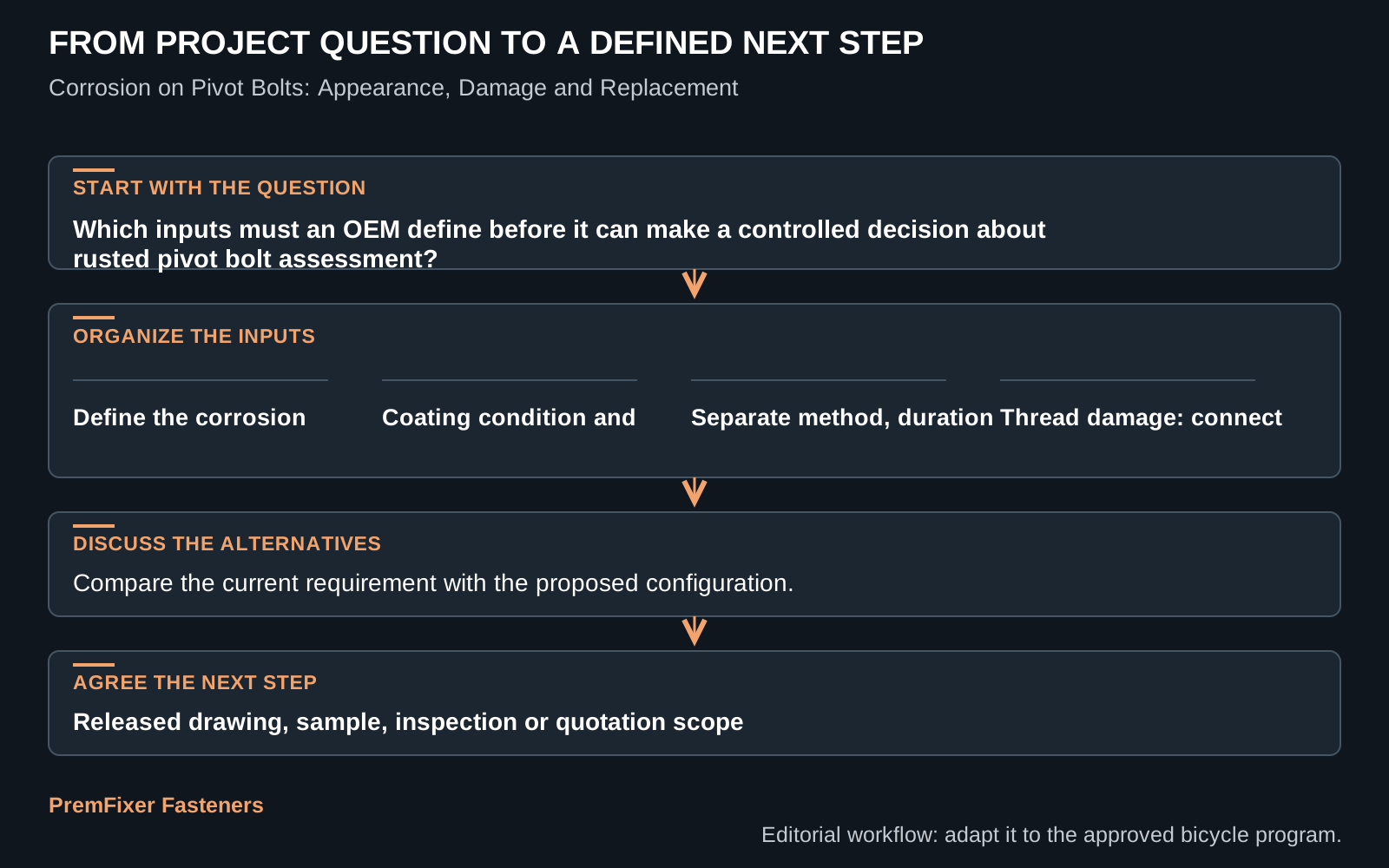
Close the topic with a release-ready project package and one responsible owner for each open point. For rusted pivot bolt assessment, this means the team should service disposition: turn the review into a clear next step with Service disposition: turn visible in the discussion. The purpose is to connect the article topic to an actual bicycle component, hardware family or purchase order rather than treat the heading as a general capability claim.
Place Order quantity, Inspection method, Delivery scope and Define the corrosion in the same working record. A change to one field can alter machining access, final fit, inspection effort, batch planning or the delivered condition. The immediate output is a service disposition: turn the review into a clear next step record that states the current revision, the proposed change and the point that still needs approval.
The supplier can then quote or plan work against a visible scope while the OEM retains approval of the final application. In a practical rusted pivot bolt assessment review, engineering should explain the functional reason, purchasing should confirm quantity and supplied scope, and manufacturing should identify the route or information needed to proceed. The team can then compare alternatives without mixing an unapproved proposal into the released requirement.
For a prototype or first order, write one or two questions that the part, report or delivery can answer. Keep the result with the relevant drawing, material and finish state. If geometry, quantity, processing or assembly changes later, reopen the stage 6 working record for the affected configuration rather than extending the earlier conclusion without review.
Questions buyers ask
Can surface rust be ignored if the bolt still tightens?
Do not use tightening feel as a structural assessment. Distinguish coating discoloration, deposits and actual metal loss, and consider where the damage occurs. Follow the component maker replacement criteria or obtain a qualified assessment. A visual check alone may not establish the remaining capacity of a damaged safety-critical fastener.
Do salt spray hours translate directly into service life?
No. A controlled chamber test is not the same as a natural duty cycle. Read the method, specimen condition, duration and evaluation together. Without appropriate supporting correlation, do not convert a test exposure into outdoor years or use it as a universal warranty.
Does a longer test duration prove a better material?
Only a controlled comparison can support a conclusion within its scope. Different finishes, specimen geometries, edges or acceptance rules can make the numbers incomparable. State what was tested and how it was evaluated before drawing a material or supplier ranking.
Does ASTM B117 itself set the pass duration for this bicycle part?
Its role is the salt-fog test practice; a project still needs to specify its specimen and acceptance scope. Do not assume one exposure duration is mandatory for every fastener. The product or customer requirement determines the question the test is intended to answer.
Can 316 stainless be assigned a fixed salt spray lifetime?
Not solely from the grade name. The condition, geometry, preparation, surface state and evaluation method matter. Use a result tied to an identified specimen and setup rather than inventing one number for every component made from the same stainless family.
Turn the Rusted Pivot Bolt Assessment Question into a Controlled RFQ
Share your available drawing, BOM or sample information with PremFixer Fasteners, together with quantities and the project stage, to discuss rusted pivot bolt assessment and the required manufacturing or delivery scope.
Discuss the RFQ