
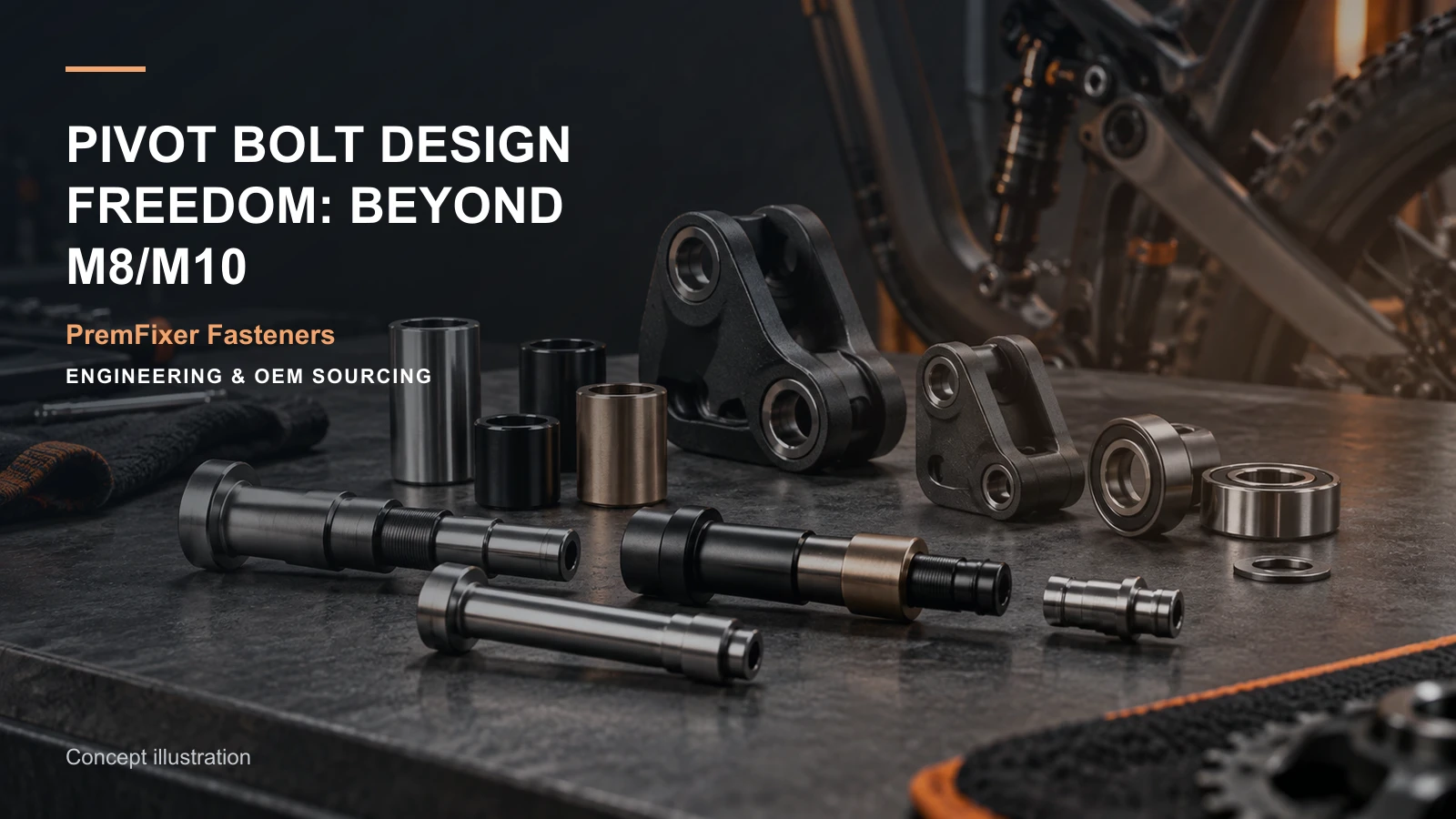
A bicycle pivot bolt can use geometry beyond a familiar M8 or M10 designation because that designation describes the nominal thread, not the entire joint. The bearing or sleeve seat, shoulder span, head clearance and thread position can each require different dimensions. Start with the frame, bearing and clamp interfaces, then select a thread that provides the intended fastening function. A larger nominal thread does not automatically improve the pivot, and a nonstandard shoulder does not automatically require a nonstandard thread. The OEM must define the working diameters and acceptance method on a drawing before manufacturing can quote the design reliably.
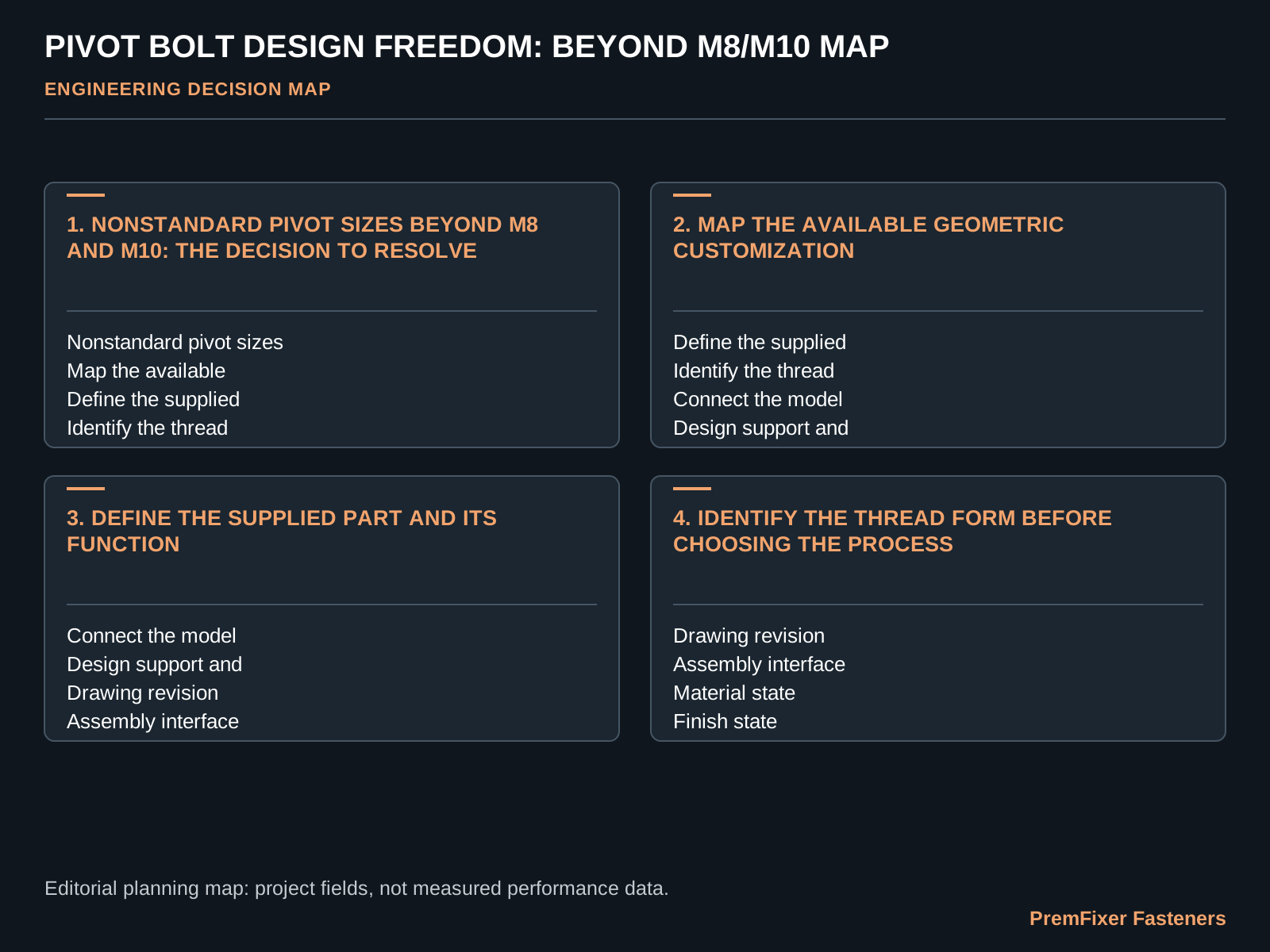
Separate thread size from shaft geometry
The thread engages a nut or tapped member and helps create clamp force. The unthreaded shoulder may locate a sleeve or bearing inner ring. Those features can have different diameters and tolerance needs. Specify each on the drawing instead of describing the part as an M8 or M10 pivot and expecting the supplier to infer the remaining geometry.
ISO 888 addresses nominal lengths and thread lengths for metric-thread bolts, screws and studs. It does not define the working seat of a particular bicycle pivot. If the design instead requires an inch-series or another nonstandard thread, name the governing thread form, pitch, mating component and gauging expectation explicitly; availability and process feasibility must be checked rather than inferred from the metric designation.
Derive the seat from the mating component
Use the actual bearing designation, bushing drawing or sleeve bore and identify whether the mating ring is intended to rotate relative to the seat. Shaft-fit guidance depends on load and relative ring motion, so copying a fit from another pivot can be wrong. Define the acceptable clearance or interference through the OEM's joint design and validation.
The seat length matters as well as diameter. A shoulder ending inside a bearing or sleeve can change the load transfer and complicate assembly.
Bearing fit guidance · Material selection
| Design condition | Geometry decision | Risk | Verification |
|---|---|---|---|
| Thread is adequate but seat differs | Keep thread; customize shoulder | Thread size mistaken for seat size | Inspect seat against mating bore |
| Bearing or sleeve width differs | Specify shoulder span | Clamped stack binds or has play | Assembly-stack measurement |
| Head envelope is restricted | Change head or drive | Tool access or bearing-face loss | Tool and clamp-face check |
| New transition or hollow section | Review section and radius | Local stress concentration | Engineering analysis and approved validation |
Check the transition and available section
A larger shoulder stepping down to a smaller thread creates a transition whose radius, undercut and available section need design review. A hollow axle, cross-hole or flat adds another local interaction. The joint owner should evaluate the actual load path and fatigue requirement rather than using thread size as a proxy for strength.
Keep tool access, head bearing face and thread engagement visible in the assembly model. If the part needs more than one setup or special gauging, that affects feasibility and cost.
Illustrative engineering example: assume an OEM's bearing and frame stack require a shoulder diameter that no selected M8-thread catalog shoulder screw offers. The team retains the proven M8 mating thread, defines a new shoulder diameter and length from the actual bearing and sleeve, and checks the transition section in the assembly. A sample is then measured and assembled. No specific fit class, torque or fatigue result is assumed.
Dimension and inspect the nonstandard features
Place datums on the surfaces that locate the part. Call out seat diameter, span, concentric relationships where function requires them, transition geometry and the material/finish state in which dimensions are accepted. A STEP model is useful for machining review; the drawing tells the supplier what variation is permitted.
For a sample, inspect the specified features and test assembly on the intended frame and bearing revision. Do not imply a universal torque or life result from dimensional conformity alone.
Submit a size-led RFQ
PremFixer Fasteners can review drawing-defined turned geometry, thread-making options and the requested finishing route. It can suggest manufacturability changes for OEM approval, but the OEM controls the final joint and validation requirement.
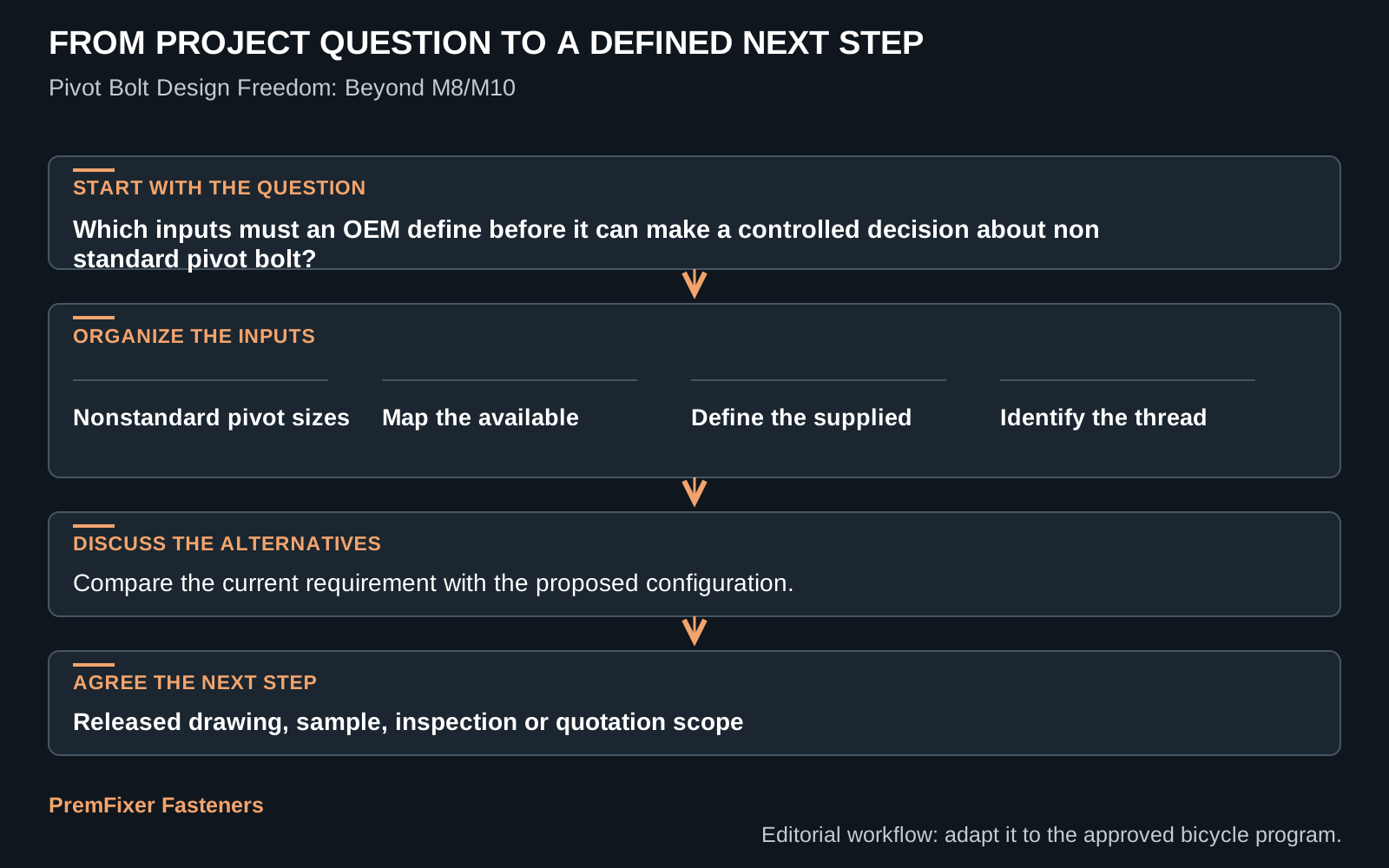
Provide 2D and STEP files, mating-part dimensions, material and finish requirements, expected quantity and the inspection features that matter. Note any available sample of the current pivot to establish the interface.
Questions buyers need to resolve
Does M8 describe the pivot's shoulder diameter?
No. M8 identifies a nominal metric thread. The shoulder diameter, tolerance and length are separate drawing fields set by the bearing or sleeve interface.
Can a custom shoulder use a standard thread?
Yes. Keep the standard thread when its mating engagement and clamp function are suitable, while defining the required shoulder independently. Review the transition between the two diameters.
Is a larger thread always a stronger pivot?
No. The loaded section, material condition, shoulder geometry, joint support and clamp path all matter. An OEM should assess the complete joint and validate the changed design.
Which size needs the tightest control?
The functional mating surfaces usually need the most deliberate control, but the drawing owner sets the actual tolerances. Identify bearing seats, sleeve fits, shoulder span and head bearing face before assigning tolerances.
What should a nonstandard-size RFQ contain?
Supply the dimensioned drawing, STEP assembly, bearing or sleeve details, thread mating part, material, finish and required quantity. State the intended inspection and assembly checks.
Define the Pivot Beyond Its Thread
Send the drawing, STEP assembly, bearing or sleeve specification, mating thread, material and order quantity. PremFixer can review the nonstandard shoulder geometry, machining route and inspection features.
Discuss the drawing and BOM