

Does a tighter shaft tolerance automatically remove sensor drift? No. Define which mechanical characteristic affects the sensor interface, and distinguish it from electronics, temperature compensation and calibration. The shaft drawing should specify the relevant geometry, material and surface state. Those controls support an intended interface; they do not by themselves establish the accuracy of the complete sensor.
For an OEM team, torque sensor shaft requirements becomes useful when Define the special, Sensing zone and, Review tool access and Surface condition: connect are tied to one component or purchase decision. This guide follows the six stages in the source framework and keeps manufacturing, inspection and delivery assumptions visible as the project moves forward.
The torque sensor shaft requirements examples are planning methods, not universal acceptance values. Apply them to the released bicycle platform, mating parts and approved validation plan, and keep any open field identified until the responsible team closes it.
Define the special feature and its mating task
Start with the current part, assembly or order state rather than a blank specification. For torque sensor shaft requirements, this means the team should define the special feature and its mating task with Define the special visible in the discussion. The purpose is to connect the article topic to an actual bicycle component, hardware family or purchase order rather than treat the heading as a general capability claim.
Place Define the special, Sensing zone and, Review tool access and Surface condition: connect in the same working record. A change to one field can alter machining access, final fit, inspection effort, batch planning or the delivered condition. The immediate output is a define the special feature and its mating task record that states the current revision, the proposed change and the point that still needs approval.
The first record should show what is known, what is assumed and which decision the project team needs next. In a practical torque sensor shaft requirements review, engineering should explain the functional reason, purchasing should confirm quantity and supplied scope, and manufacturing should identify the route or information needed to proceed. The team can then compare alternatives without mixing an unapproved proposal into the released requirement.
For a prototype or first order, write one or two questions that the part, report or delivery can answer. Keep the result with the relevant drawing, material and finish state. If geometry, quantity, processing or assembly changes later, reopen the stage 1 working record for the affected configuration rather than extending the earlier conclusion without review.
Sensing zone and Mounting flat: define the working relationship
Translate the requirement into feature-level inputs that design, purchasing and manufacturing can all read. For torque sensor shaft requirements, this means the team should sensing zone and Mounting flat: define the working relationship with Sensing zone and visible in the discussion. The purpose is to connect the article topic to an actual bicycle component, hardware family or purchase order rather than treat the heading as a general capability claim.
Place Review tool access, Surface condition: connect, Specify inspection and and Calibration boundary: turn in the same working record. A change to one field can alter machining access, final fit, inspection effort, batch planning or the delivered condition. The immediate output is a sensing zone and mounting flat: define the working relationship record that states the current revision, the proposed change and the point that still needs approval.
This is where an attractive concept becomes a controlled drawing, process question or supply definition. In a practical torque sensor shaft requirements review, engineering should explain the functional reason, purchasing should confirm quantity and supplied scope, and manufacturing should identify the route or information needed to proceed. The team can then compare alternatives without mixing an unapproved proposal into the released requirement.
For a prototype or first order, write one or two questions that the part, report or delivery can answer. Keep the result with the relevant drawing, material and finish state. If geometry, quantity, processing or assembly changes later, reopen the stage 2 working record for the affected configuration rather than extending the earlier conclusion without review.
| Stage | Project decision | Inputs to connect | Working output |
|---|---|---|---|
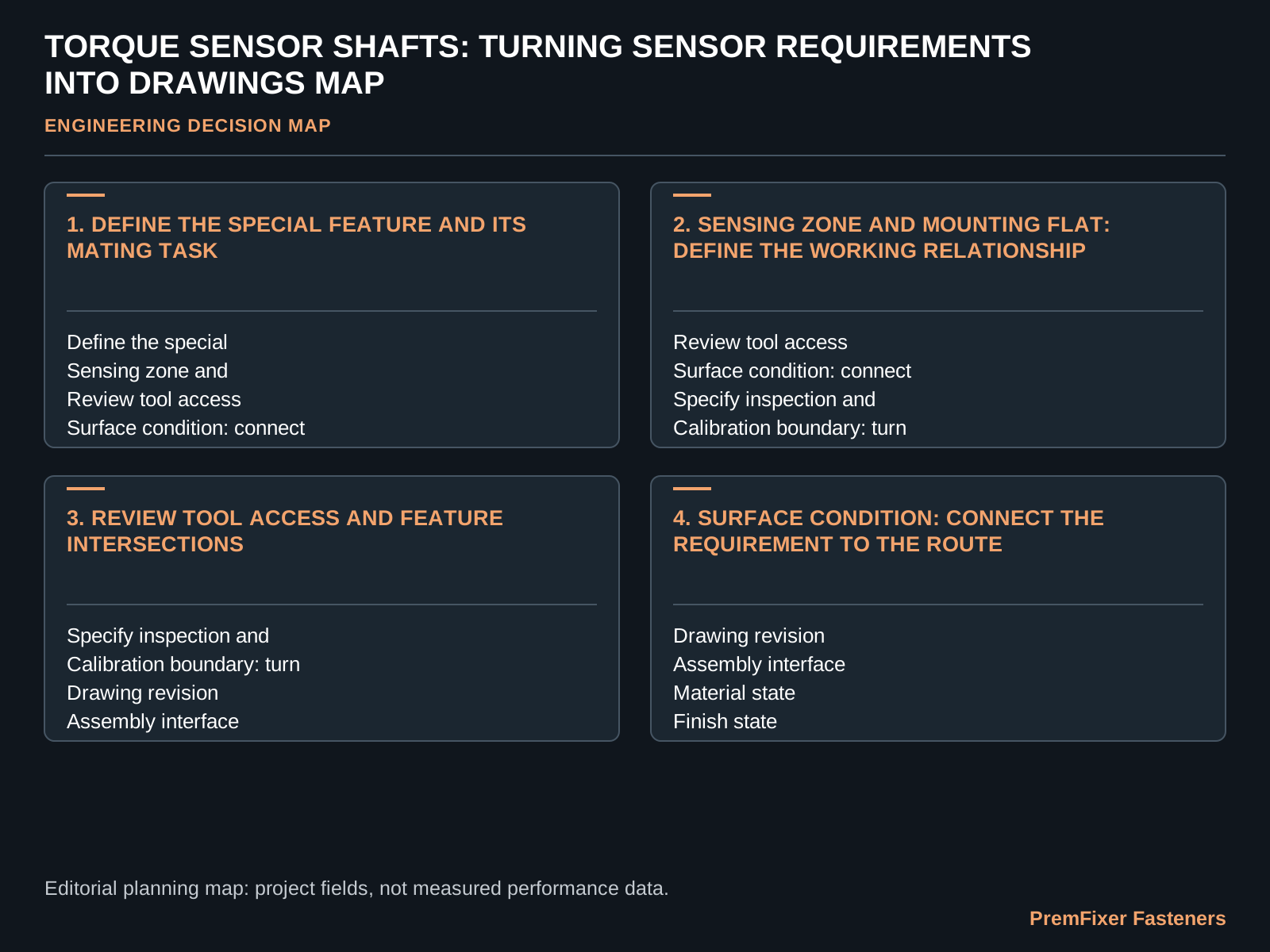
| 01 | Define the special feature and its mating task | Define the special / Sensing zone and / Review tool access | define the special feature and its mating task record |
| 02 | Sensing zone and Mounting flat: define the working relationship | Review tool access / Surface condition: connect / Specify inspection and | sensing zone and mounting flat: define the working relationship record |
| 03 | Review tool access and feature intersections | Specify inspection and / Calibration boundary: turn / Drawing revision | review tool access and feature intersections record |
| 04 | Surface condition: connect the requirement to the route | Drawing revision / Assembly interface / Material state | surface condition: connect the requirement to the route record |
| 05 | Specify inspection and functional confirmation | Material state / Finish state / Order quantity | specify inspection and functional confirmation record |
| 06 | Calibration boundary: turn the review into a clear next step | Order quantity / Inspection method / Delivery scope | calibration boundary: turn the review into a clear next step record |
Review tool access and feature intersections
Connect the selected option to the machining route and the interfaces that the finished part must serve. For torque sensor shaft requirements, this means the team should review tool access and feature intersections with Review tool access visible in the discussion. The purpose is to connect the article topic to an actual bicycle component, hardware family or purchase order rather than treat the heading as a general capability claim.
Place Specify inspection and, Calibration boundary: turn, Drawing revision and Assembly interface in the same working record. A change to one field can alter machining access, final fit, inspection effort, batch planning or the delivered condition. The immediate output is a review tool access and feature intersections record that states the current revision, the proposed change and the point that still needs approval.
A sample should answer a named question instead of acting as a general promise about future production. In a practical torque sensor shaft requirements review, engineering should explain the functional reason, purchasing should confirm quantity and supplied scope, and manufacturing should identify the route or information needed to proceed. The team can then compare alternatives without mixing an unapproved proposal into the released requirement.
For a prototype or first order, write one or two questions that the part, report or delivery can answer. Keep the result with the relevant drawing, material and finish state. If geometry, quantity, processing or assembly changes later, reopen the stage 3 working record for the affected configuration rather than extending the earlier conclusion without review.
Surface condition: connect the requirement to the route
Define how the result will be checked and which revision or lot the record belongs to. For torque sensor shaft requirements, this means the team should surface condition: connect the requirement to the route with Surface condition: connect visible in the discussion. The purpose is to connect the article topic to an actual bicycle component, hardware family or purchase order rather than treat the heading as a general capability claim.
Place Drawing revision, Assembly interface, Material state and Finish state in the same working record. A change to one field can alter machining access, final fit, inspection effort, batch planning or the delivered condition. The immediate output is a surface condition: connect the requirement to the route record that states the current revision, the proposed change and the point that still needs approval.
The measurement or review method must evaluate the relationship described by the drawing and assembly. In a practical torque sensor shaft requirements review, engineering should explain the functional reason, purchasing should confirm quantity and supplied scope, and manufacturing should identify the route or information needed to proceed. The team can then compare alternatives without mixing an unapproved proposal into the released requirement.
For a prototype or first order, write one or two questions that the part, report or delivery can answer. Keep the result with the relevant drawing, material and finish state. If geometry, quantity, processing or assembly changes later, reopen the stage 4 working record for the affected configuration rather than extending the earlier conclusion without review.
Specify inspection and functional confirmation
Carry the engineering decision into batch, assembly, service or delivery planning. For torque sensor shaft requirements, this means the team should specify inspection and functional confirmation with Specify inspection and visible in the discussion. The purpose is to connect the article topic to an actual bicycle component, hardware family or purchase order rather than treat the heading as a general capability claim.
Place Material state, Finish state, Order quantity and Inspection method in the same working record. A change to one field can alter machining access, final fit, inspection effort, batch planning or the delivered condition. The immediate output is a specify inspection and functional confirmation record that states the current revision, the proposed change and the point that still needs approval.
This prevents a technically sound decision from being lost when quantities, operators or suppliers change. In a practical torque sensor shaft requirements review, engineering should explain the functional reason, purchasing should confirm quantity and supplied scope, and manufacturing should identify the route or information needed to proceed. The team can then compare alternatives without mixing an unapproved proposal into the released requirement.
For a prototype or first order, write one or two questions that the part, report or delivery can answer. Keep the result with the relevant drawing, material and finish state. If geometry, quantity, processing or assembly changes later, reopen the stage 5 working record for the affected configuration rather than extending the earlier conclusion without review.
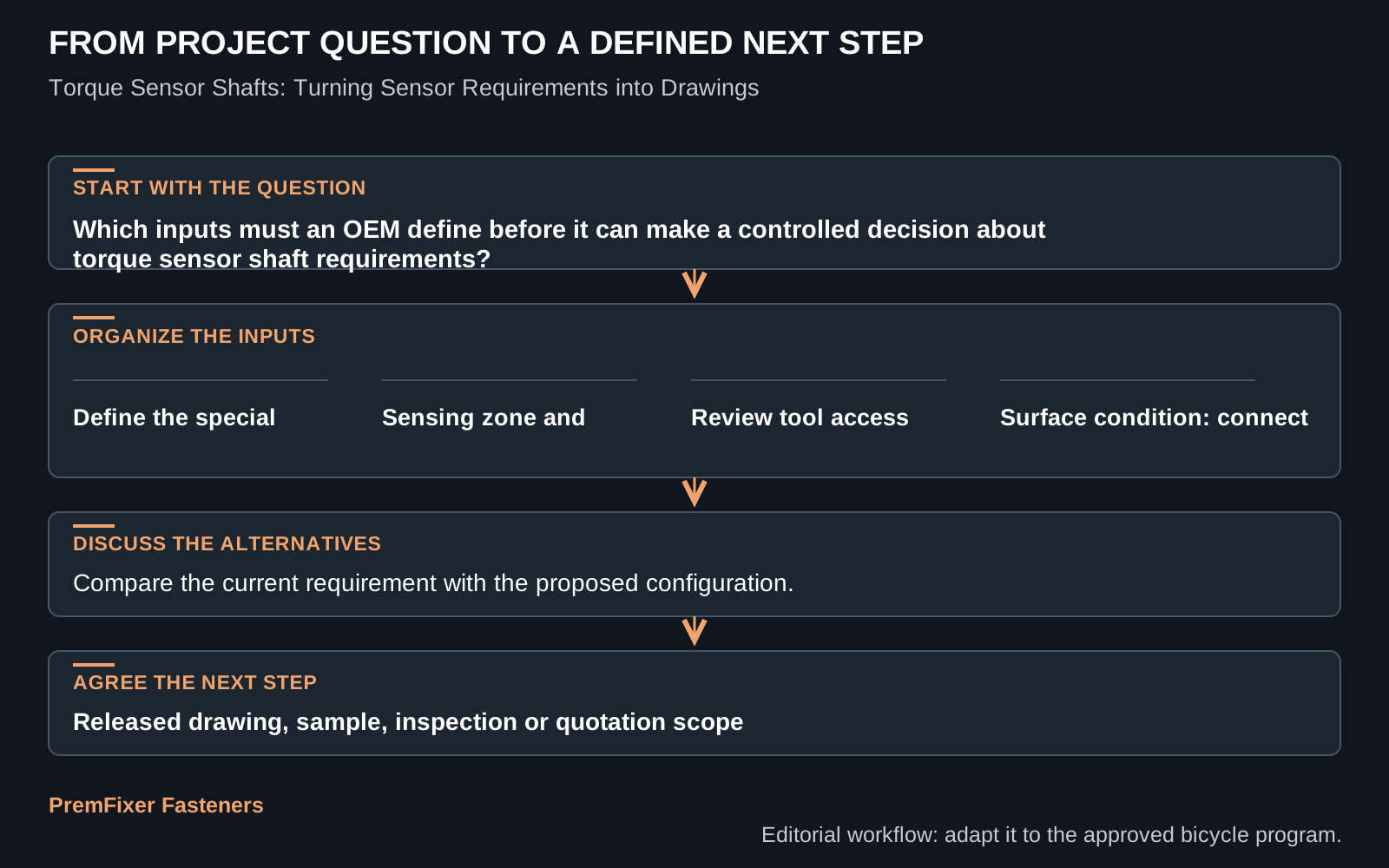
Calibration boundary: turn the review into a clear next step
Close the topic with a release-ready project package and one responsible owner for each open point. For torque sensor shaft requirements, this means the team should calibration boundary: turn the review into a clear next step with Calibration boundary: turn visible in the discussion. The purpose is to connect the article topic to an actual bicycle component, hardware family or purchase order rather than treat the heading as a general capability claim.
Place Order quantity, Inspection method, Delivery scope and Define the special in the same working record. A change to one field can alter machining access, final fit, inspection effort, batch planning or the delivered condition. The immediate output is a calibration boundary: turn the review into a clear next step record that states the current revision, the proposed change and the point that still needs approval.
The supplier can then quote or plan work against a visible scope while the OEM retains approval of the final application. In a practical torque sensor shaft requirements review, engineering should explain the functional reason, purchasing should confirm quantity and supplied scope, and manufacturing should identify the route or information needed to proceed. The team can then compare alternatives without mixing an unapproved proposal into the released requirement.
For a prototype or first order, write one or two questions that the part, report or delivery can answer. Keep the result with the relevant drawing, material and finish state. If geometry, quantity, processing or assembly changes later, reopen the stage 6 working record for the affected configuration rather than extending the earlier conclusion without review.
Questions buyers ask
What roughness does a torque sensor shaft require?
The required roughness comes from the function of the identified surface, such as a locating seat, seal contact or sensing interface. State the measurement method and condition as well as the parameter. Do not assume that one Ra value determines signal accuracy, or that a smooth mechanical surface replaces sensor calibration.
How tight should a sensor-shaft flat tolerance be?
Use the sensor interface and actual design requirement to define its position, size and orientation. A very small tolerance is not automatically beneficial. Distinguish the locating feature from the sensing zone and keep mechanical measurement separate from electronic calibration and signal performance.
Does machining accuracy equal sensor accuracy?
No. Mechanical accuracy can support the intended interface, while sensing accuracy also involves the sensor, electronics, calibration and operating conditions. Allocate mechanical requirements from the system specification and report them separately from any measured sensing performance.
Can a magnet mount use a generic mounting gap?
Use the actual sensor and target requirements. The operating distance, alignment, motion and surrounding arrangement can matter. Do not create one universal gap for every cadence, speed or torque sensor from a general CNC capability statement.
What should be checked after moving a sensor mounting feature?
Identify the affected mechanical references, target geometry, motion and cable or connector access, then assess any system-level calibration implications. A small physical change is not automatically insignificant to the sensor, but the required work depends on the actual system.
Turn the Torque Sensor Shaft Requirements Question into a Controlled RFQ
Share your available drawing, BOM or sample information with PremFixer Fasteners, together with quantities and the project stage, to discuss torque sensor shaft requirements and the required manufacturing or delivery scope.
Discuss the RFQ