
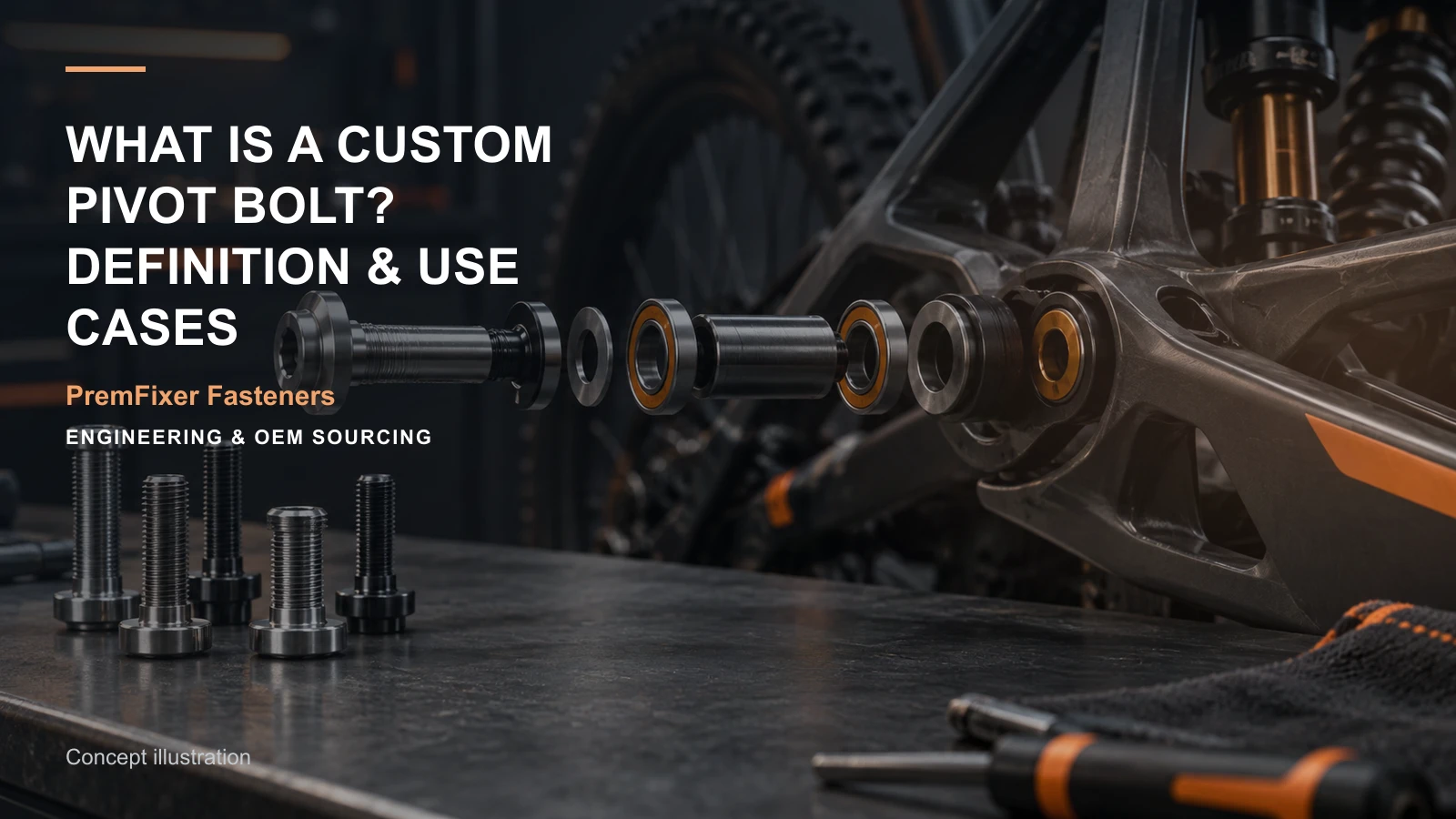
A custom pivot bolt is a bicycle-joint fastener made to a project-specific drawing or agreed specification because a selected catalog part does not fully satisfy the interface. It may clamp a linkage, locate a bearing inner ring, establish a shoulder span or retain a spacer stack. The first decision is therefore functional: which surface carries load, which surface locates the joint and which feature supplies clamp force? A nonstandard shape alone does not make the joint better. Compare the proposed part with a real catalog alternative against the same mating dimensions, assembly method and validation plan before requesting a manufacturing quote.
Define the bolt by its job in the joint
In a suspension linkage, the word bolt can hide several jobs. A threaded end may generate clamp force while an unthreaded shoulder locates a sleeve or bearing inner ring. A separate sleeve may carry the bearing contact, leaving the bolt to clamp the sleeve between frame tabs. Those two arrangements require different surface and stack definitions even when the visible head looks similar.
Mark the fixed frame member, moving link, bearing or bushing, spacers and retention features on an assembly view. Specify which component is intended to rotate relative to which surface. This prevents a threaded shank from being selected as a bearing seat merely because its nominal diameter appears close.
Decide whether standard hardware covers the interface
A catalog shoulder screw can be an efficient answer when its shoulder diameter, effective shoulder length, head access, thread engagement and material specification all serve the joint. ISO 7379 defines one family of hexagon-socket shoulder screws; citing that standard does not prove that a particular bicycle interface fits a standard size. Compare the actual catalog drawing with the frame and bearing stack.
A custom drawing is justified when the required shoulder span, head clearance, retention arrangement or controlled mating surface falls outside the available part specification. It is not justified merely by preferring a proprietary-looking head or by assuming custom parts have inherently tighter quality. Purchasing should compare the same acceptance criteria and service scope for both routes.
Compare standard and custom options · ISO 7379 scope
| Joint condition | Candidate | Main risk | How to verify |
|---|---|---|---|
| Catalog shoulder matches bearing or sleeve seat and clamp stack | Use the specified catalog part | Assuming nominal size proves the complete fit | Check catalog dimensions against the assembly and required acceptance criteria |
| Required shoulder span or head access is unavailable | Draw a custom pivot bolt | A changed shoulder shifts clamp or service clearance | Review assembly stack, drawing datums and first article |
| Bearing runs on a separate sleeve | Control sleeve and bolt as distinct parts | Treating the bolt shank as a bearing seat | Confirm load path and which interface rotates |
| Variant needs matched spacer selection | Supply a revision-controlled kit | Mixing parts across frames | Check kit BOM and assembly identification |
Put the functional differences on the drawing
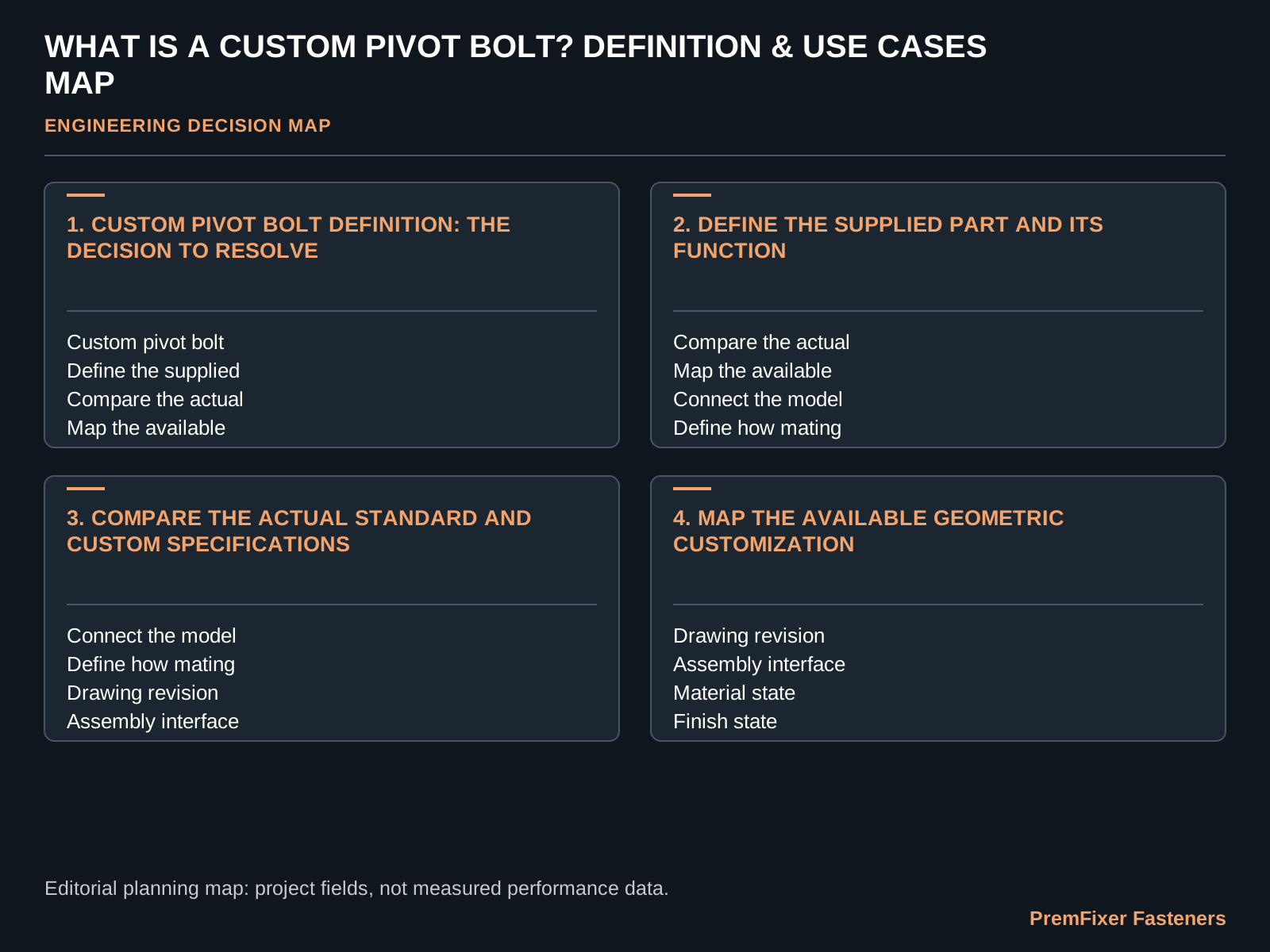
The 2D drawing should identify the shoulder diameter and span, head bearing face, thread form and engagement, edge breaks, material condition, finish and the datums used to inspect the surfaces that matter. A STEP model helps explain shape and tool access, but it does not by itself establish allowable variation, acceptance method or whether finish thickness changes a fit.
Show the assembly stack as well as the isolated bolt. If a sleeve is clamped between frame tabs, specify its length and the intended clearance to the moving link. If the bolt is a bearing seat, identify the bearing designation and which ring sees relative rotation under load; fit selection cannot be inferred from a nominal thread size.
Illustrative engineering example: assume a new frame uses a bearing whose inner ring is supported by a sleeve between two tabs. A catalog bolt has adequate thread size but its head fouls a nearby link and its shoulder ends inside the sleeve. The engineering team first confirms that the sleeve, not the bolt, is the bearing seat. It then compares a lower head and a revised shoulder span on a drawing, checks tool access and clamp stack in the CAD assembly, and requests a first article for fit review. This is a decision method, not a tested PremFixer customer result.
Treat kits and compatibility as separate questions
A bolt may be ordered alone, with washers and sleeves, or as a controlled pivot kit. The supplied scope should identify each item and its revision. A kit does not automatically establish interchangeability across frame sizes or model years. If a spacer is selected to suit a measured frame width, describe it as a selected set rather than a universally interchangeable kit.
For service work, identify how the right parts remain associated with the right interface. The geometry, material and finish can be correct while a mixed washer or sleeve creates a new axial-stack problem.
Request a manufacturing review with the right inputs
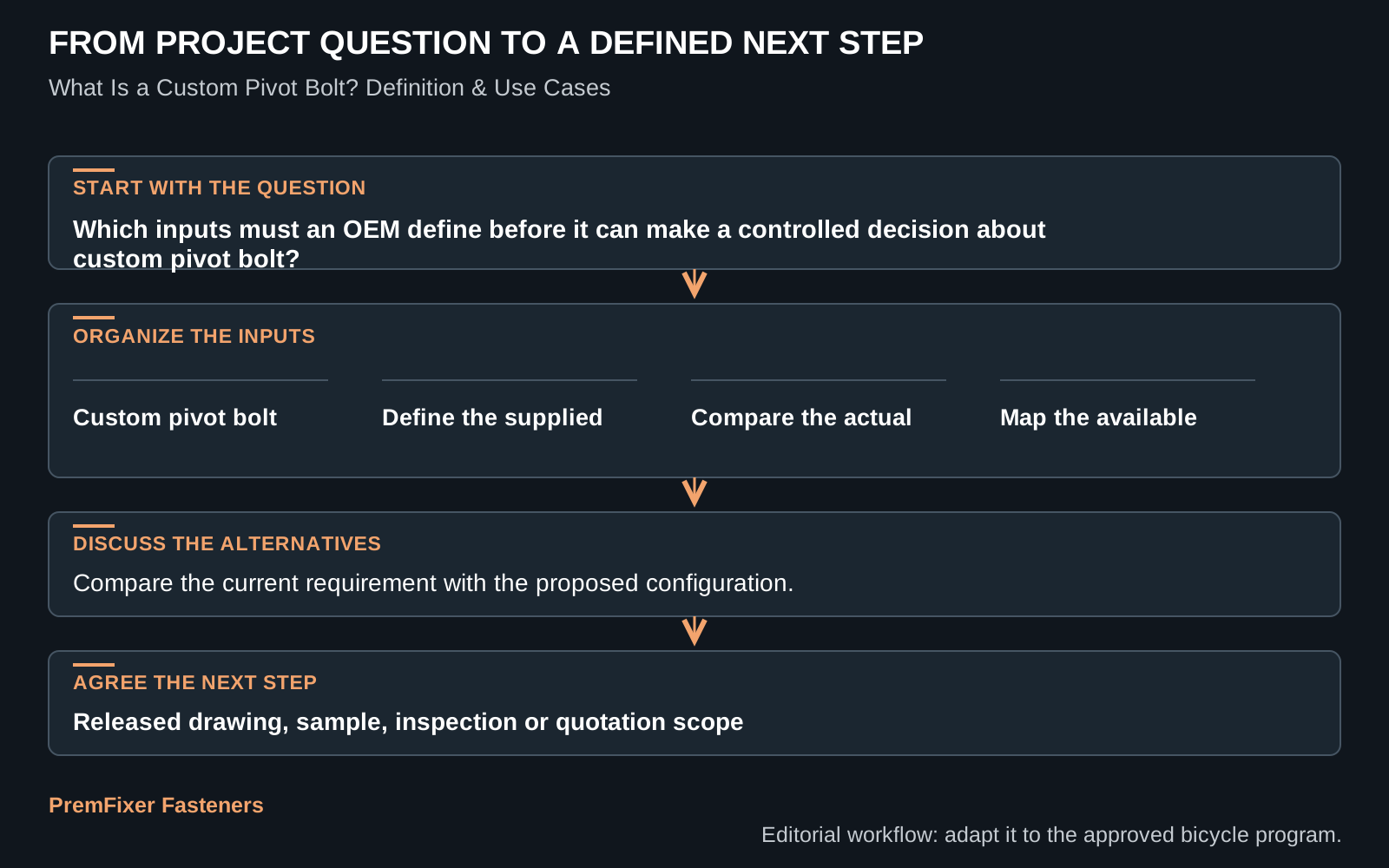
PremFixer Fasteners manufactures drawing-led bicycle hardware through in-house cold heading, CNC machining, thread rolling and tooling, with qualified partner operations where surface treatment or testing is specified. A first review can determine whether the requested geometry is manufacturable, which features need an agreed inspection method and whether the quote covers a bolt or a complete kit. It does not transfer design approval from the OEM.
Send the latest 2D drawing and STEP file if available, a mating-part or assembly view, the bearing or bushing designation, material and finish requirements, quantities and any existing sample. Identify unresolved fit or clamp questions explicitly so the review produces a meaningful next decision.
Manufacturing routes · Full-suspension application · Drawing and BOM RFQ
Questions buyers need to resolve
Is every CNC-machined pivot bolt custom?
No. Custom means the controlled requirement differs from the selected catalog specification. A CNC process does not establish that difference; compare shoulder geometry, head clearance, thread, material and supplied scope against the actual joint.
Can a standard shoulder screw be used in a bicycle pivot?
Yes, if its published dimensions and material meet the joint's fit, clamp and service requirements. Check the bearing or sleeve seat, shoulder span, head access and thread engagement in the assembly before adopting it.
Does the bolt always act as the bearing shaft?
No. A separate sleeve can support the bearing inner ring while the bolt clamps the sleeve. Identify the rotating interface and load path on the assembly drawing; that choice changes which diameter and surface need control.
Is a STEP file enough to quote the part?
It can support an initial feasibility discussion, but a production quote also needs tolerances, material condition, finish, quantities and inspection expectations. A 2D drawing or agreed specification resolves those fields and any model conflict.
What should be sent with a custom pivot bolt RFQ?
Send the current drawing and STEP file, mating assembly, bearing or bushing designation, material and finish requirements, quantities and any sample. State whether washers or sleeves are included; that changes manufacturing and kit scope.
Define the Pivot Bolt Before Quoting It
Share your 2D drawing, STEP assembly, bearing or sleeve details, BOM scope and required quantity. PremFixer can review the functional surfaces, feasible manufacturing route and open fit questions for a drawing-based RFQ.
Discuss the drawing and BOM