
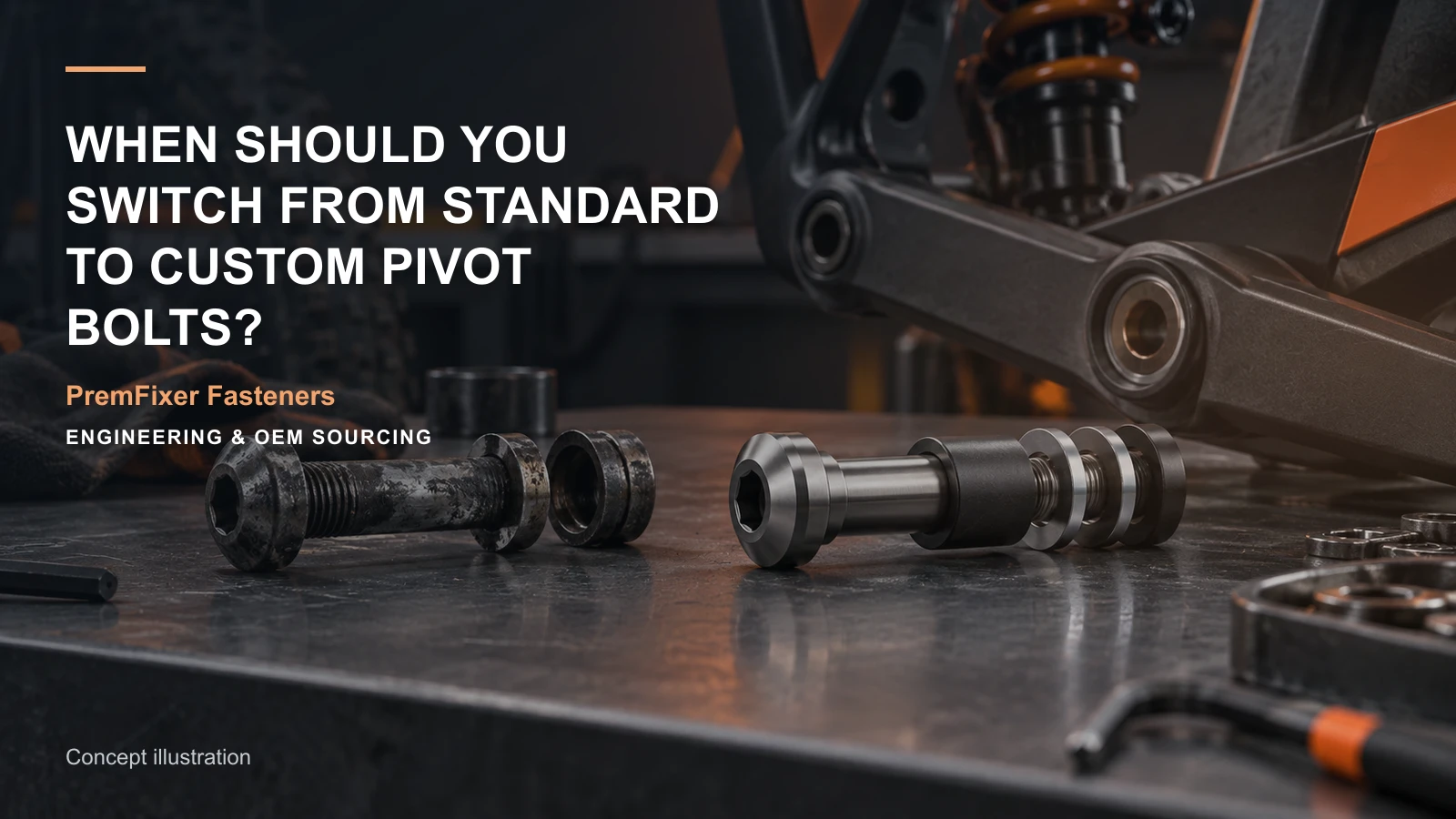
Switch from a standard to a custom pivot bolt when a defined requirement cannot be met by the current part and the proposed bolt change addresses the cause. Play, noise, uneven wear or difficult assembly is evidence to investigate, not proof that the bolt is wrong. In a bicycle suspension joint, the source can be a bearing, spacer, frame bore, clamp stack, finish or service procedure. Record the symptom and inspect the mating parts before ordering a replacement geometry. A useful custom request names the failed interface, the change being proposed and the check that will show whether the change worked.
Start with the observed failure mode
Describe when the symptom appears: before tightening, after the pivot is clamped, during travel or after service. Inspect which component moves relative to which surface. Side play can reflect an axial gap; rough rotation can reflect bearing damage or a stack that compresses the wrong ring. A worn bolt may be a consequence of an unstable interface rather than the original cause.
Keep photographs, the removed parts and the current assembly revision together. Do not assume a new material or tighter general tolerance will fix a mechanism that has not been located.
Trace the load and clamp paths
Identify the radial support path through the moving link, bearing or bushing, sleeve, bolt and frame. Separately trace the axial clamp path under tightening. If the bolt clamps a sleeve between frame tabs, length mismatch between sleeve and neighboring parts can change whether the joint rotates freely. A change to the bolt alone may be ineffective when the sleeve is short or the frame faces are not aligned.
Bearing seat selection depends on load direction and which ring rotates relative to the load; manufacturer fit guidance uses those conditions rather than a universal clearance. Use the actual bearing designation and joint architecture for the review.
SKF shaft and housing fit guidance · Pivot bolt functions
| Observed condition | Possible interface cause | Is a custom bolt justified? | Verification |
|---|---|---|---|
| Joint has side play before load | Axial stack or worn bearing | Only if bolt span is the cause | Measure stack and inspect bearing condition |
| Link binds after tightening | Sleeve/clamp path mismatch | Possibly, after comparing sleeve alternatives | Assemble with controlled sleeve and check rotation |
| Tool cannot access the head | Head envelope clashes with frame | Yes if no catalog head or assembly change works | Tool-access check on the actual frame |
| Wear occurs at one bearing seat | Fit, alignment or load path | Only after cause isolation | Inspect both mating surfaces and frame alignment |
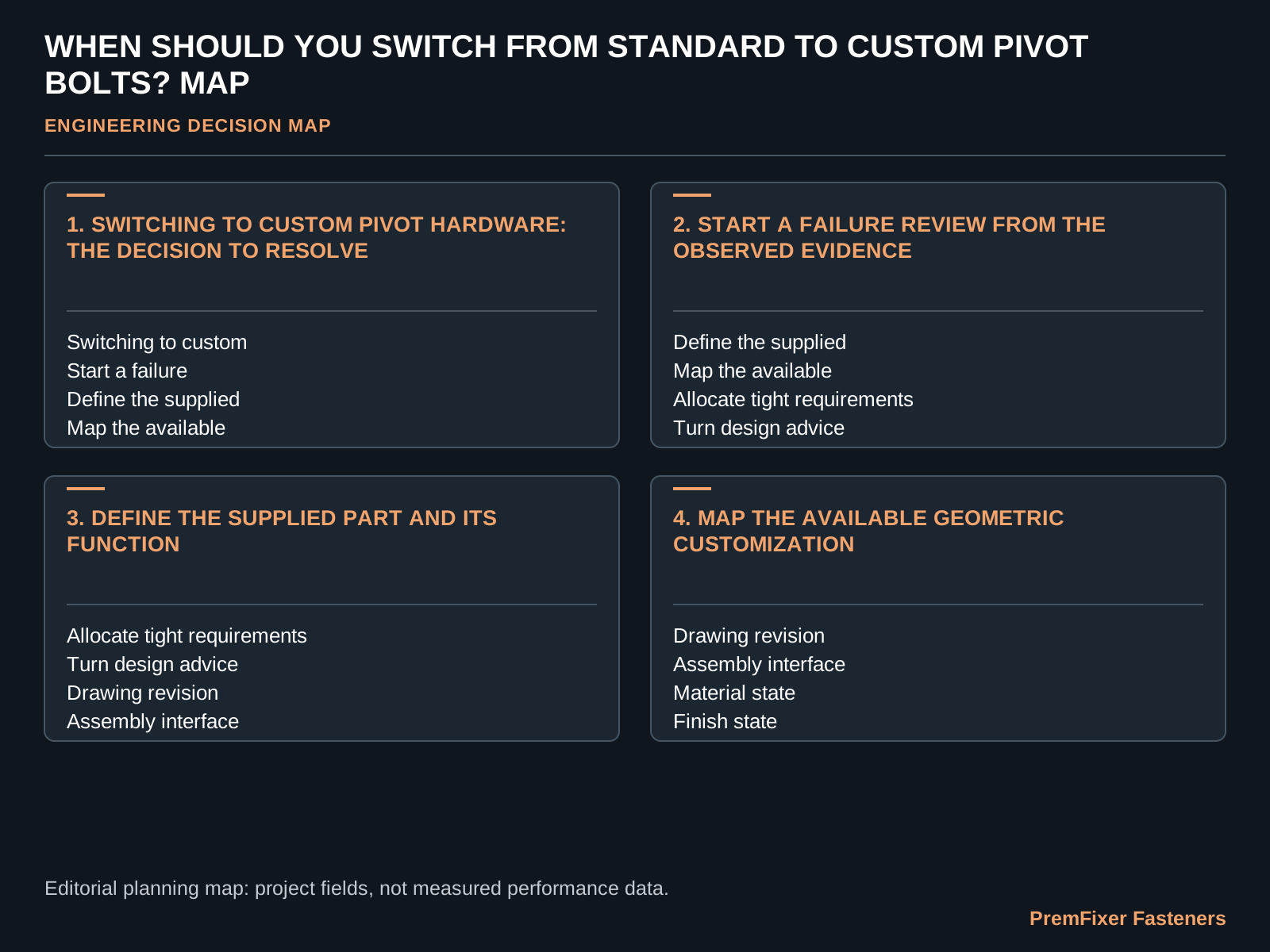
Identify a bolt-specific trigger
A custom bolt is a candidate when the required shoulder span, locating diameter, head access, thread position or retention feature cannot be met by the current catalog part. Other reasons can include a validated weight target, a controlled appearance requirement, a proprietary frame interface or inconsistent multi-supplier kit scope. Each still needs a specific requirement and acceptance condition; none is a general instruction to make the bolt stronger or more precise.
Check whether a catalog alternative, revised sleeve or assembly change solves the same problem with less new drawing control. If the observed fault is a damaged bearing, a custom bolt may add cost without addressing it.
Illustrative engineering example: assume a test frame develops axial play after repeated assembly. The current bolt meets its catalog dimensions, but a spacer is missing from one service build. Ordering a tighter custom bolt would not replace that spacer or restore the intended clamp path. The team first corrects the BOM and assembly instruction, then rechecks the joint. If play remains and the required shoulder span is unavailable commercially, a custom drawing becomes a justified next option. No life or performance result is claimed.
Test the change that matters
For a proposed new shoulder, compare its diameter and span with the mating interfaces on the drawing, then assemble the sample in the correct frame revision. For an access problem, test the intended tool in the actual clearance envelope. For a suspected clamp-stack issue, verify the sleeve and spacer lengths alongside the bolt; a single-part inspection is insufficient.
Treat any sample outcome as configuration-specific. A successful fit on one frame or bearing revision does not establish universal compatibility.
Sample route · Suspension applications
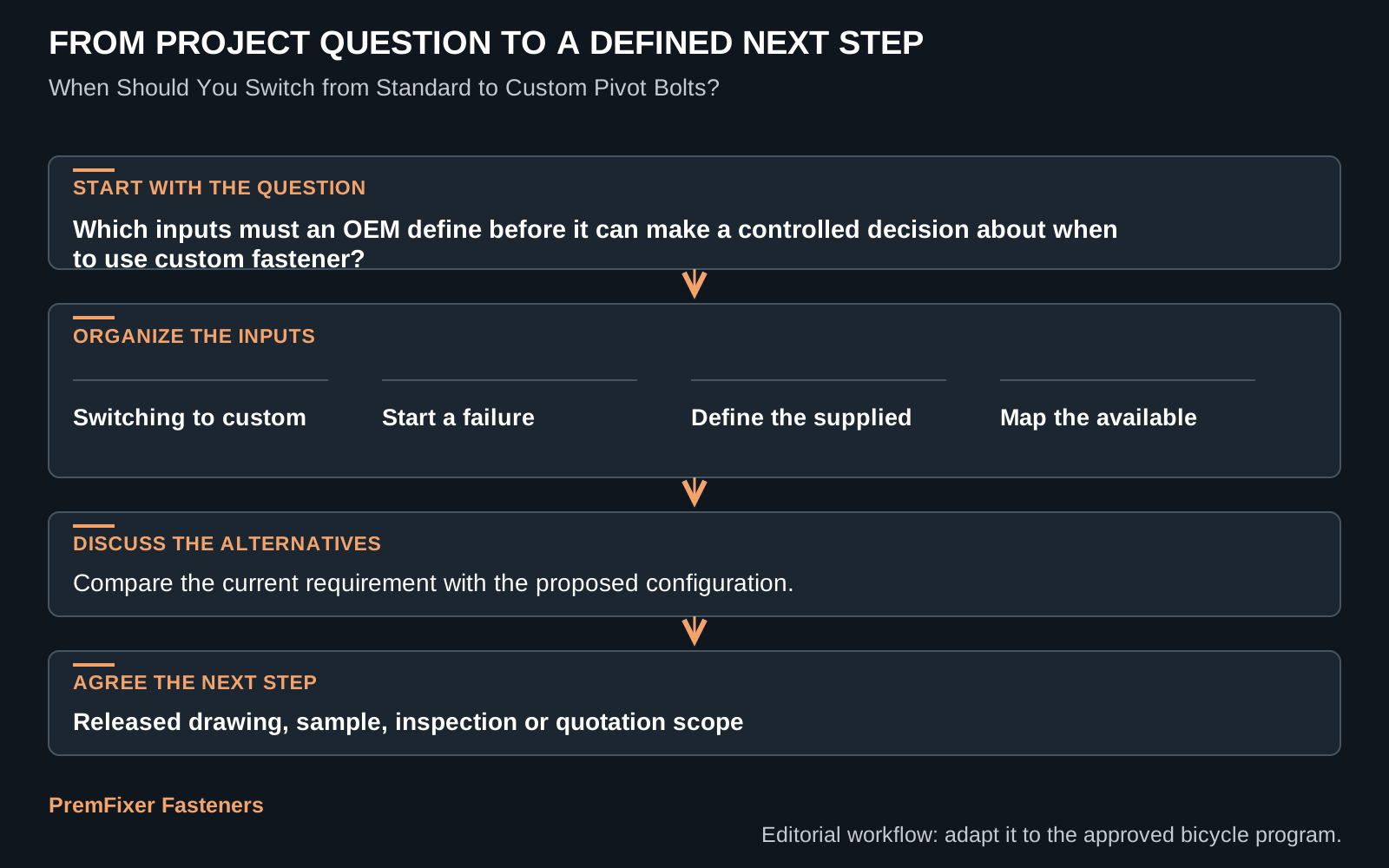
Make the change request actionable
The request should state the current part and revision, observed condition, inspected mating parts, proposed changed feature and acceptance check. Include quantity and whether service spares are required. PremFixer Fasteners can then review machining feasibility and drawing clarity without claiming to have diagnosed an unseen bicycle.
If the cause remains ambiguous, scope the first work as an engineering and sample review rather than a production release. This makes the unresolved evidence visible to both purchasing and manufacturing.
Questions buyers need to resolve
Does pivot play prove the bolt is undersized?
No. Play may come from bearing wear, spacer length, frame interface or bolt fit. Identify the direction and location of movement, then compare measured parts with the current assembly drawing.
When is a custom shoulder length warranted?
When the controlled clamp or locating span cannot be achieved with the selected catalog part or a suitable sleeve. Define the mating stack and the surface that must carry clamp load before setting the new span.
Can a different material solve a noisy pivot?
Not without diagnosing the contact and movement causing noise. Material may affect wear or corrosion behavior, but bearing condition, fit, lubrication and clamp path must be checked first.
What should the first replacement sample prove?
It should prove the named correction: assembled clearance, free rotation after tightening, tool access or measured seat fit. Record the frame, bearing, sleeve and drawing revisions used for that check.
What evidence should accompany a redesign RFQ?
Provide the current part and assembly drawings, observed symptom, photographs or removed samples, mating-part measurements, proposed change, quantities and intended validation method. These details distinguish a bolt problem from a system problem.
Diagnose the Pivot Before Redesigning the Bolt
Share the current drawing, STEP assembly, worn sample or symptom record, bearing and spacer details, and proposed quantities. PremFixer can review whether a bolt feature change is manufacturable and what sample check should resolve the open interface question.
Discuss the drawing and BOM