
High-speed machining of 7075 pivot hardware is useful only when it improves the required output within a suitable manufacturing route. A high spindle rpm does not prove a shorter machine cycle, accepted daily production or earlier delivery of a finished kit. Separate the cutting segment from tool changes, handling and inspection, then identify which activity controls the intended order milestone. Select conditions for the actual stock, tool and feature rather than a universal aluminum speed threshold. For the buyer, the meaningful comparison is the same accepted component or kit at the same finish and evidence scope, with the time basis clearly stated.
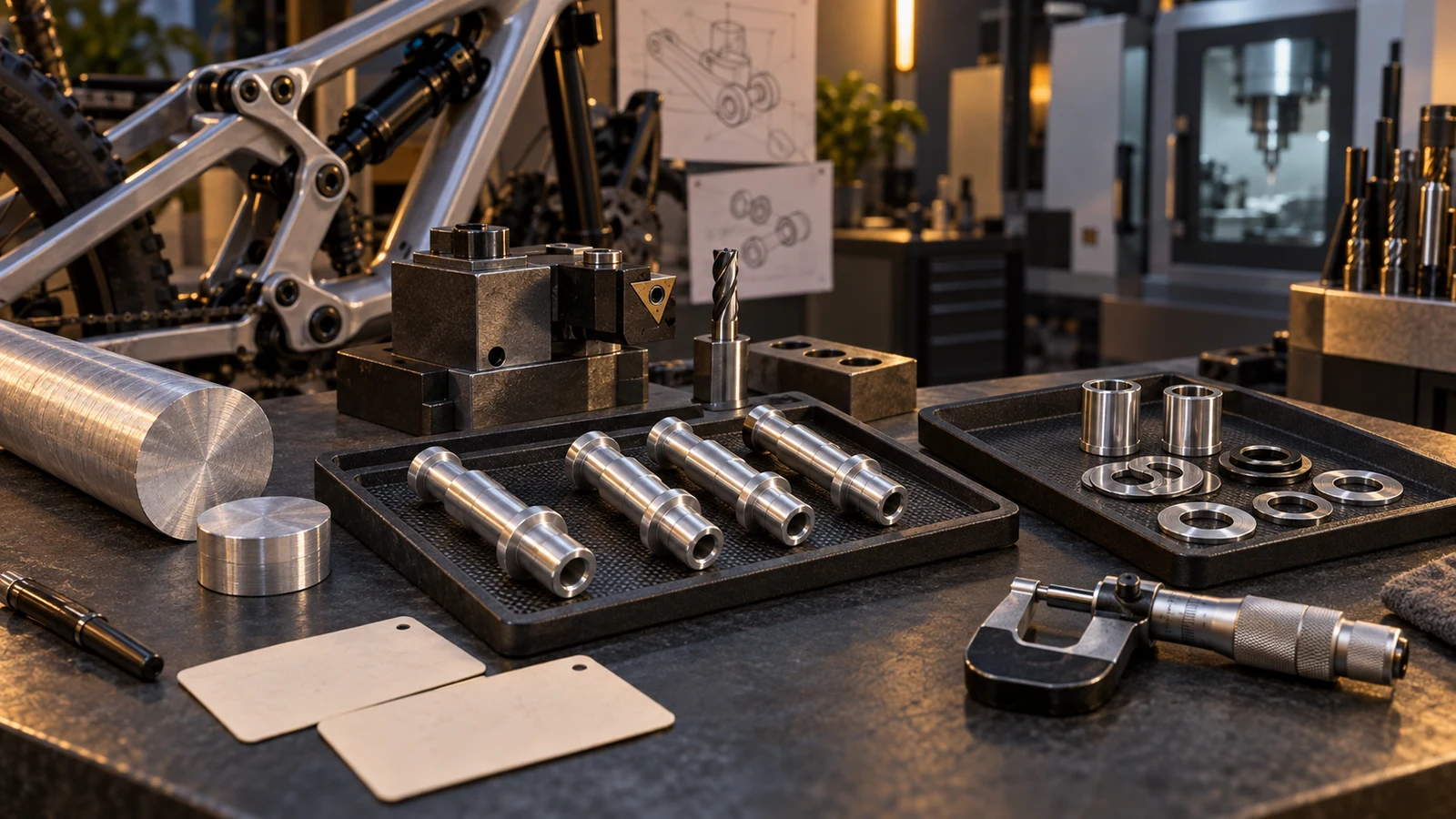
Hero: concept illustration of example hardware and its application. It is not a factory photograph, tested component or approved production geometry.
Four time descriptions can refer to different outcomes
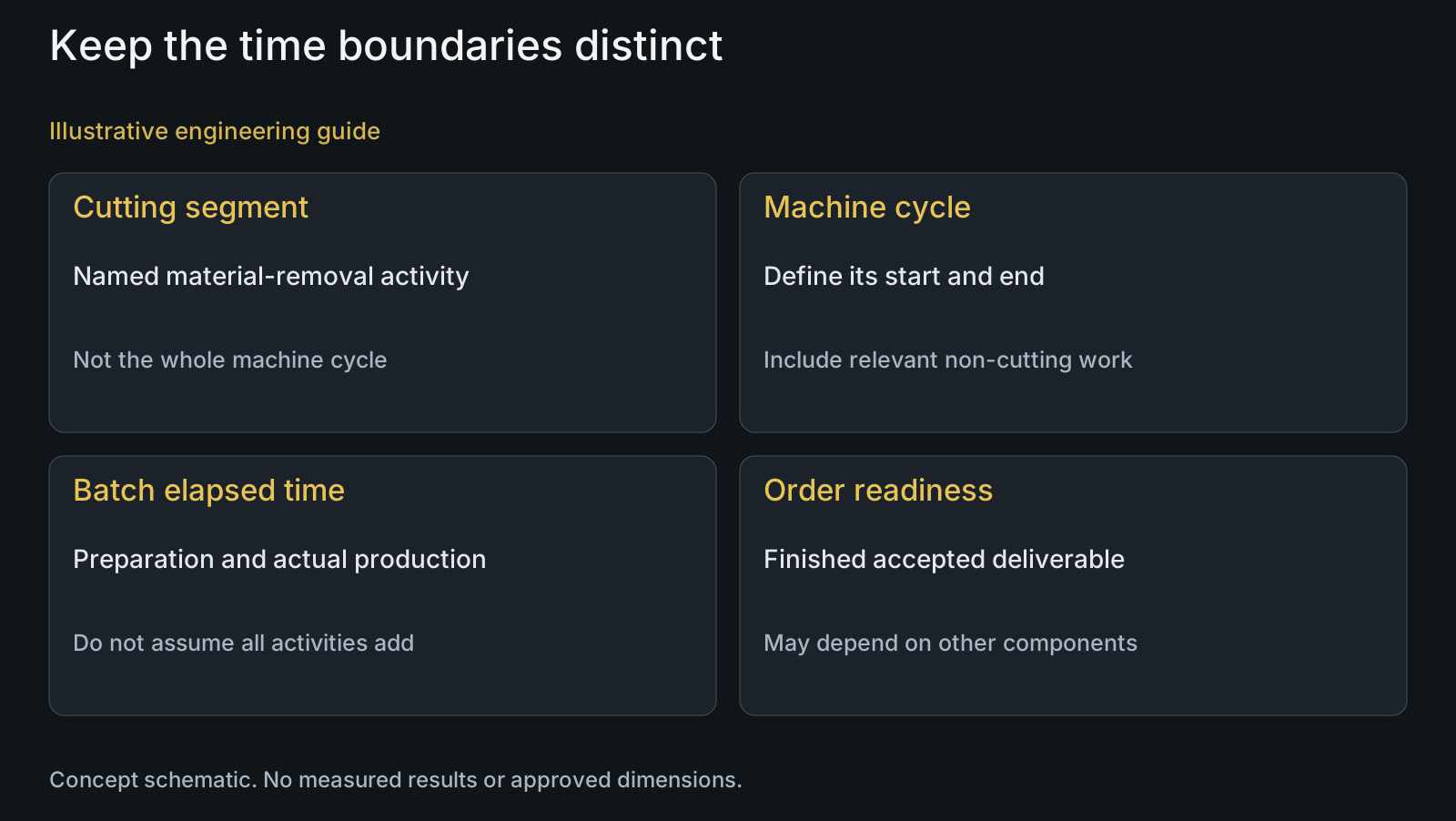
Cutting time covers the represented material-removal operation. A machine cycle can also include positioning, tool changes and other programmed movements. Batch elapsed time adds the relevant preparation and production interruptions. Order readiness can include later processing, acceptance, companion parts and packing. Do not use these labels as synonyms.
Ask what starts and ends a quoted timing measurement. A cutting demonstration may omit loading, while a cycle quotation may use a different cycle boundary. Compare like boundaries before using either observation to plan production. Activities that overlap also cannot simply be added as though every step occurs sequentially.
The custom 7075 lead-time guide explains dispatch and kit-readiness milestones. This article instead asks which part of the manufacturing time a speed proposal actually changes. It supplies no measured cycle, schedule promise or production-rate claim.
Relate the selected speed to the actual feature
7075 specifies an alloy, not a universal operating rpm. Include stock form and condition, represented cut, tool arrangement and support. An external locating diameter and a secondary drive recess can impose different constraints even when they belong to the same axle.
Sandvik Coromant's workpiece-material guidance treats material condition and tooling as selection inputs and discusses aluminum machining within its material groups. Its general guidance does not approve a particular 7075 pivot speed or establish PremFixer output capacity.
The general-turning definitions distinguish spindle rotation from cutting speed and feed. State units and represented diameter. Review the real tool and machine limits; this article offers no operating parameter recipe or authorization to accelerate an existing program.
| Reported benefit | Relevant boundary | Risk if generalized | Evidence to request |
|---|---|---|---|
| Faster cutting segment | Named tool and operation | One cut is called a full-cycle gain | Represented cut and preserved feature results |
| Shorter machine cycle | Defined start and end of cycle | Loading or other movements omitted | Comparable complete-cycle boundary |
| Higher batch output | Accepted units over a stated interval | Started or unfinished pieces counted as ready | Same revision, supplied state and acceptance scope |
| Earlier finished components | All required component operations | Unchanged secondary work ignored | Actual completion dependency |
| Earlier complete kits | Required BOM and finished-set readiness | Fast axle substitutes for missing sleeve | Same complete deliverable and release schedule |
Identify the time that remains unchanged
Break the proposal into the changed cutting activity and the remaining work. If loading, tool exchange or a secondary feature occupies much of the represented cycle, increasing speed in one short cut addresses only that segment. The useful question is how the complete cycle changes, not how impressive the spindle setting looks.
A different fixture or sequence may affect handling or transfers without changing cutting speed. Compare the affected feature relationships and inspection scope before accepting the alternative. Fewer operations do not automatically prove better conformity, and keeping separate operations does not automatically prove inefficiency.
If the supplier proposes a geometry change to simplify machining, identify it separately from a process-only change. A revised drive, bore or shoulder can alter the intended component. The responsible design team must review the functional effect; a time-saving proposal is not drawing approval.
Count accepted units at a named completion state
Identify the numerator in an output comparison: started pieces, machined pieces, accepted components or complete kits. They answer different questions. A higher count of unfinished pieces does not establish more usable assembly inputs, and a shorter interval does not erase outstanding inspection or treatment.
Use the same part revision, finish and required evidence when comparing routes. State how interruptions, tool actions and nonconforming output are represented in any actual production observations. Do not invent standard rejection allowances or use a short demonstration as a whole-shift capacity guarantee.
Keep the output unit consistent with the purchase requirement. If the order is for axle-and-sleeve sets, main-axle machining is only one input. The capacity-planning review addresses allocation and kit units; a faster operation should be connected to that planning basis, not substituted for it.
A faster cut may or may not move kit readiness
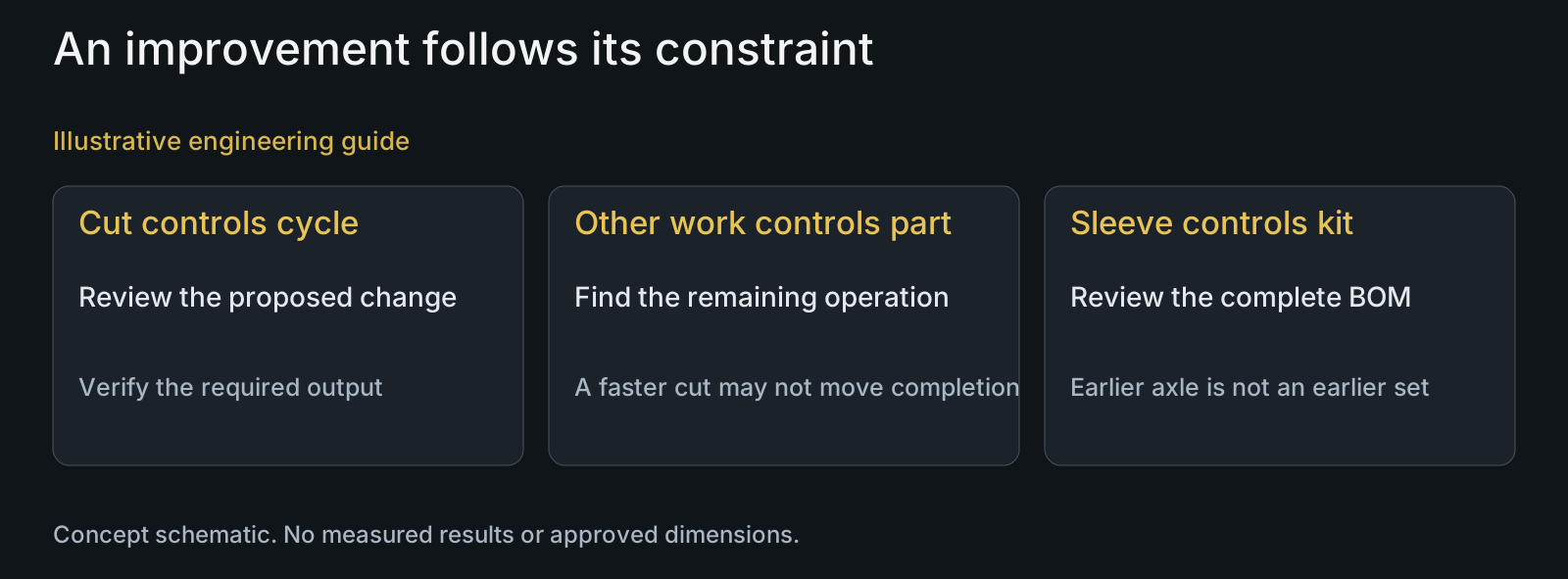
Illustrative engineering example: assume a supplier proposes a shorter external cutting segment for a 7075 axle while retaining its finished dimensions. The same order also needs a secondary drive operation and a finished sleeve. No actual timings, quantities, yields or supplier allocation records are assumed.
If the external cut controls the relevant machine cycle, the proposal may improve that cycle, subject to output verification. If the secondary operation controls component completion, its unchanged timing may still limit that milestone. If the sleeve controls the complete set, an earlier axle alone may not advance kit readiness.
Compare the applicable constraints rather than selecting one outcome in advance. The example reports no percentage saving, earlier shipment or measured output gain. It demonstrates why the engineering team should ask which time boundary and deliverable the proposed improvement is expected to affect.
Ask for the comparison scope, not a headline rate
Provide the controlled geometry, stock condition, final finish, quantities and release pattern. Identify whether the next task is sample manufacture, repeat components or a complete kit. PremFixer can review the CNC manufacturing route against that definition rather than treat all aluminum pivots as one production unit.
Compare fixed preparation, recurring manufacture and downstream surface treatment as included in the offer. A faster cut can have commercial value without making every other cost disappear. Ask for actual comparable evidence when numerical savings are proposed, and keep unverified assumptions out of the purchase decision.
The original topic's spindle threshold and daily-capacity figure are not established as universal PremFixer facts. Useful efficiency reporting names the component, route, output state and represented interval. It also explains whether the proposal affects manufacturing capacity, recurring cost or the requested delivery milestone.
Questions buyers need to confirm
Does high spindle rpm prove that 7075 pivots are delivered faster?
No. Identify the cut, full cycle and finished-order milestone. A proposed speed change advances delivery only when relevant constraints and accepted output support that conclusion.
Can a general aluminum daily-rate figure be applied to my drawing?
Not without a matching basis. Specify geometry, stock condition, final finish, inspection, quantities and output state. Different pivot features and required operations can represent different production tasks.
Should a cycle-time comparison include handling?
State the boundary explicitly and use the same boundary for both routes. Do not compare an isolated cutting segment with a cycle that includes handling, or assume overlapping tasks are sequential.
Can fewer setups justify a revised pivot geometry?
Not by itself. Identify the changed functional feature and obtain design-owner review. A manufacturing improvement does not approve a change to the shoulder, bore or drive requirements.
Why can earlier axle machining leave the kit date unchanged?
Another dependency may control readiness, such as a secondary operation or required sleeve. Compare the same finished set and identify what actually prevents its completion.
What should accompany an efficiency-focused 7075 RFQ?
Send the drawing and STEP, stock specification and condition, final finish, acceptance requirements, quantities and releases. Name the outcome you want compared: machining cycle, accepted component output, complete cost or kit readiness.
Technical references and scope
Sandvik Coromant: Workpiece materials. General selection and aluminum machining sections read. No hardness classification, numeric cutting data, tooling recipe or pivot-capacity claim adopted.
Sandvik Coromant: General turning definitions. Parameter and unit distinction. No operating settings or tool speed limits inferred.
Explore related component, material and sourcing decisions in the customer decision knowledge center. For a drawing review, use the Drawing/BOM RFQ path.
Find the constraint in your 7075 pivot production route
Send the drawing, STEP file, 7075 stock condition, required finish, BOM and planned release quantities. PremFixer will review the route and comparison scope to identify which operations affect accepted component output and complete-kit readiness; no universal speed or daily capacity is assumed.
Discuss the drawing and BOM