
Micro-arc oxidation can be considered for titanium hardware, but a hard ceramic layer does not automatically improve every pivot interface. An OEM considering a coated axle or sleeve needs to identify the actual contact, complete surface system and delivered geometry before comparing a hardness value. The finish must be assessed with the mating material, movement and assembly requirements. Wear, corrosion and fatigue are different evidence questions, and a successful result for one does not settle the others. A proposed development route should therefore be reviewed against the particular component, not purchased as a universal upgrade to all threads, seats and shoulders.
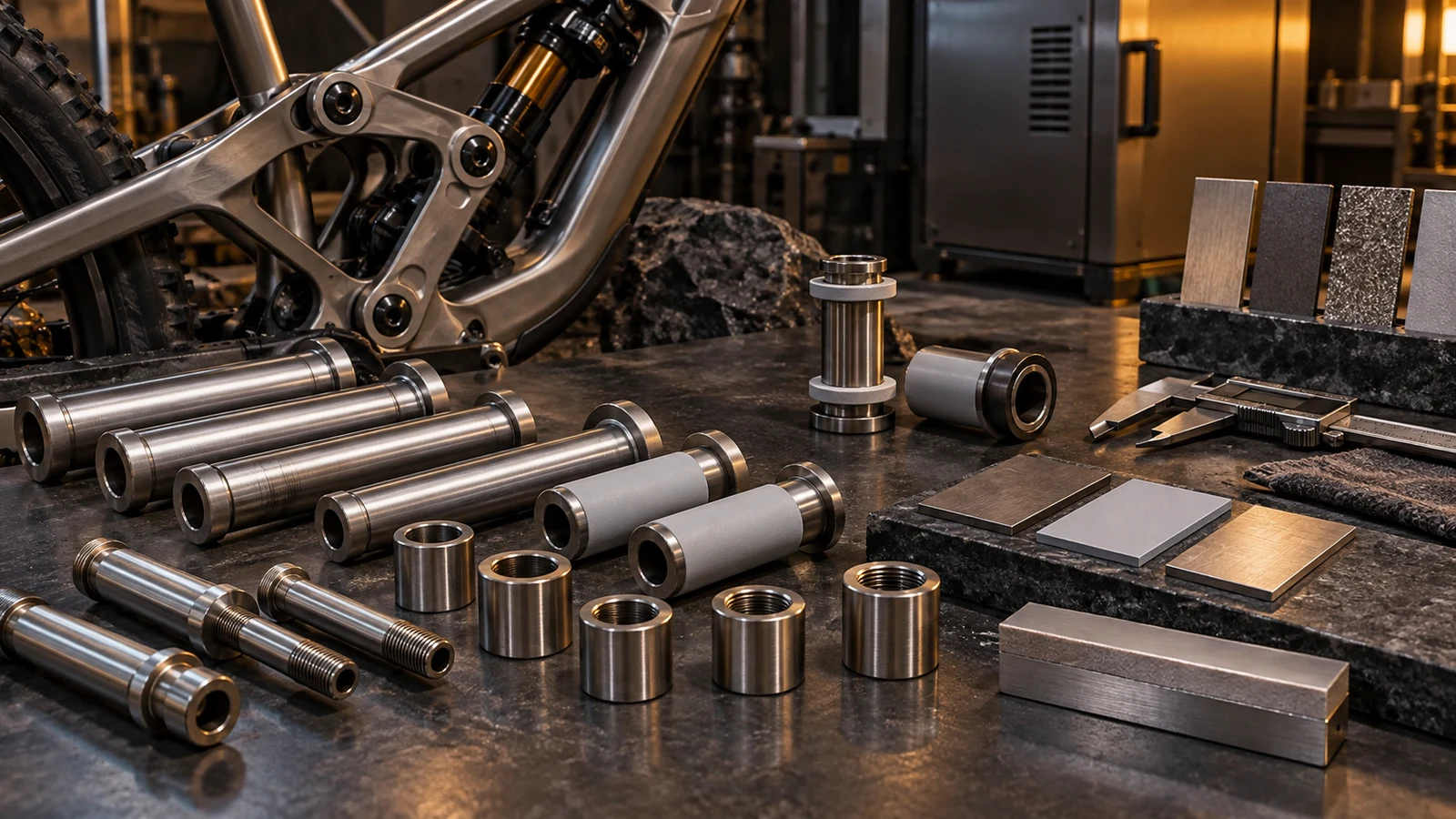
Hero: concept illustration of example hardware and its application. It is not a factory photograph, tested component or approved production geometry.
A ceramic surface system is not just a different color
Micro-arc oxidation proposals are commonly discussed under plasma electrolytic oxidation, or PEO. Identify the processor's actual system, substrate scope and complete route rather than order only the process acronym. The proposed layer and any subsequent treatment need to be described together.
Curtiss-Wright's Keronite PEO description identifies ceramic surface systems for light alloys including titanium and describes application-tailored processing. It establishes that titanium PEO systems exist, not that a named commercial system is used by PremFixer or qualified for this pivot.
Compare this functional proposal with the titanium finish-selection guide. A color reference communicates an appearance goal; it does not describe the required working surface, coverage, dimensional condition or evidence for a ceramic system.
Locate the contact that actually needs a wear solution
Determine whether the axle slides against a sleeve, locates a bearing assembly, or mainly provides a clamping interface. Different pivot architectures assign movement to different parts. Do not treat every cylindrical surface as a rotating wear surface simply because it belongs to a suspension joint.
Identify the mating material, relative motion, lubrication state and exposure relevant to the target zone. For engineering analysis, these inputs define what a wear comparison should represent. A result from another contact pair may be informative without being sufficient for your assembled component.
Use the full-suspension application context and the drawing to identify the load path and moving interface. If the real issue is an incorrect spacer stack or contact location, adding a hard layer does not by itself correct that geometry.
| Question | Relevant subject | Risk of shortcut | Useful evidence |
|---|---|---|---|
| Can titanium receive the system? | Identified substrate and process | Commercial example called current order capability | Provider scope and actual proposal |
| Is the layer hard? | Defined indentation measurement | Hardness called complete durability | Method and represented surface condition |
| Will the contact wear acceptably? | Actual mating pair and motion | Different coupon contact transferred unchanged | Relevant contact comparison and endpoint |
| Will the assembly fit? | Final seat, thread and shoulder geometry | Nominal layer value used everywhere | Finished feature and boundary assessment |
| Is corrosion evidence relevant? | Complete surface and exposure definition | Hours converted into service life | Specimen, method and outcome scope |
| What happens under cyclic load? | Finished structural component | Wear result called fatigue validation | Relevant component loading and result |
Hardness does not establish the complete contact behavior
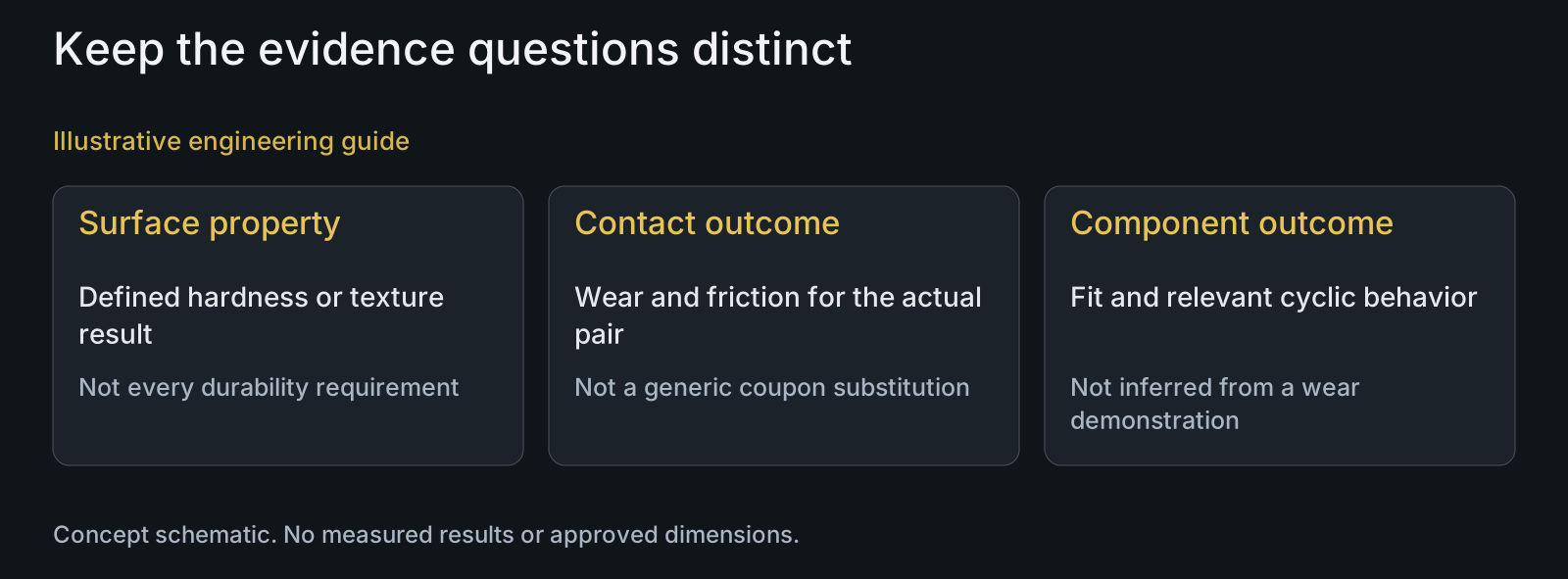
A hardness result addresses its defined indentation measurement. It does not establish coating integrity under the actual contact, acceptable friction, wear of the counterface or survival under cyclic loading. Specify the intended outcome rather than assemble several performance promises from one number.
Review surface texture, layer distribution and the supporting substrate with the process provider. Ask what evidence represents the delivered contact zone rather than assume a flat coupon describes a curved seat or recessed feature. This is a review question, not a universal rejection of every porous or textured ceramic surface.
Keep corrosion exposure evidence separate from the wear comparison. Its specimen, surface system, test method and endpoint need identification. No uniform hardness or salt-spray duration is prescribed, and an exposure result is not converted into years of bicycle service.
Final fit includes the complete treatment and finishing route
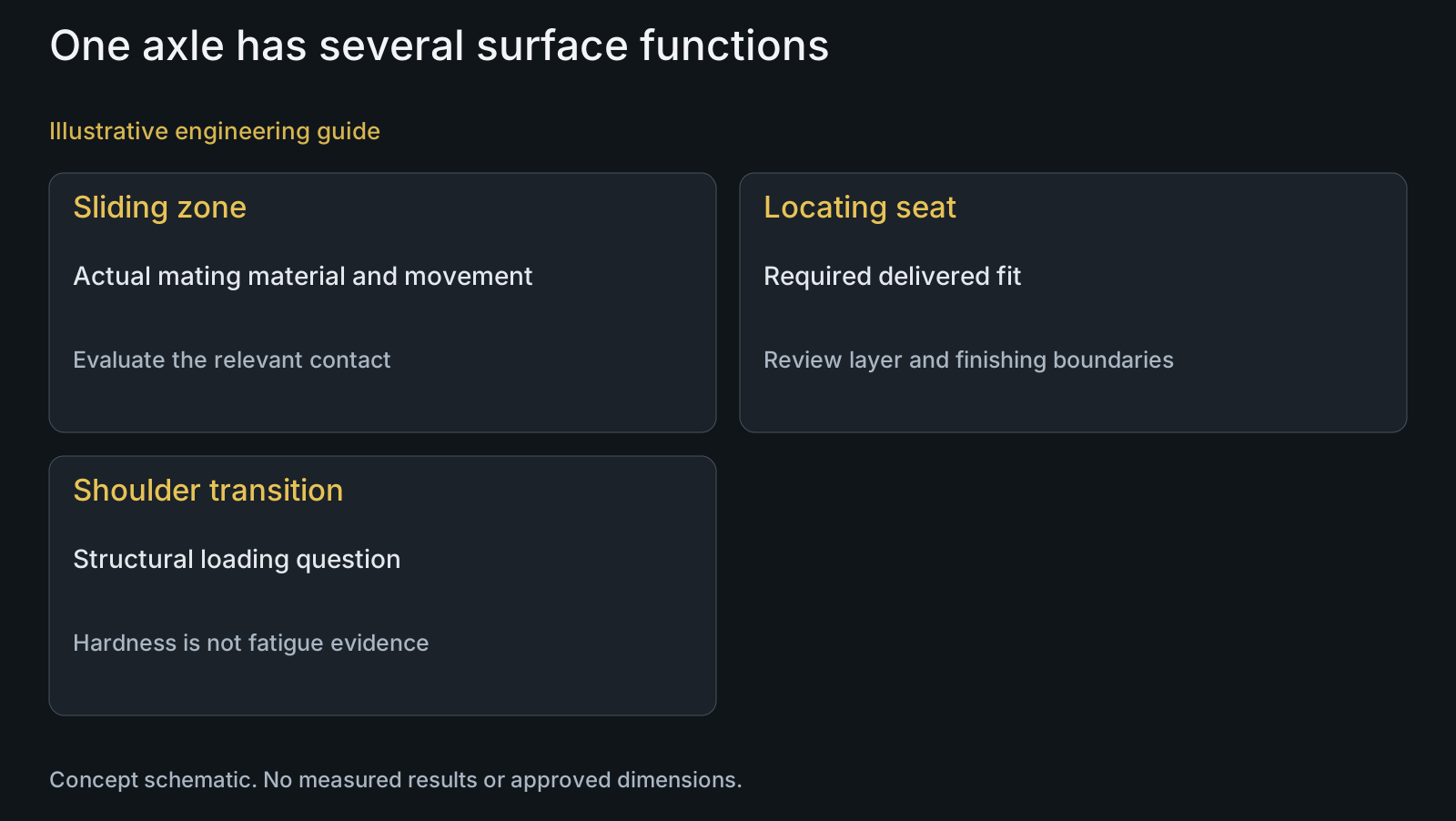
Map treated and excluded regions on the drawing. A sliding zone, locating seat, working thread and shoulder face need their own requirements. If a proposed coating boundary crosses a functional interface, define whether that boundary is acceptable before the component is assessed.
Ask how the processor accounts for the actual final geometry and whether subsequent finishing is permitted. Do not adopt a generic thickness as a radial allowance for every feature. The substrate, preparation, layer distribution and finishing route need a component-specific assessment.
If polishing or machining is proposed afterward, identify the surface state that will remain and which evidence covers it. A measurement or contact result for an unfinished layer should not be attributed to the changed final system. The surface-treatment review can connect this issue to the drawing requirements.
Fatigue remains a separate structural question
A Ti-6Al-4V PEO study examined different substrate roughness conditions and reported effects on coating defects and fatigue behavior. Its defined specimens and axial-loading assessment illustrate why surface condition matters; they do not predict a fatigue result for an actual pivot axle.
Treat that research as a reason to retain the component's structural evidence requirement, not as a rule that all ceramic coatings improve or reduce fatigue by the same amount. The study does not approve a universal roughness value or prescribe the geometry and process for your part.
For engineering review, identify critical transitions and any changes affecting them, together with the relevant loading and finished state. A contact-wear demonstration does not answer that structural question. The pivot analysis-scope guide distinguishes the component question from a broader system assumption.
A wear proposal can leave the axle-seat decision open
Illustrative engineering example: assume an OEM considers a ceramic oxide system for the sliding zone of a titanium axle. The same part also has a locating seat and a load-bearing shoulder transition. The proposal cites coating hardness but supplies no contact-pair, finished-fit or component-fatigue evidence.
The review separates the sliding-zone objective from the seat and transition requirements. It asks whether the route can preserve the required boundaries and final geometry, then defines the contact and structural assessments needed for the actual finished state. Whole-part coating is not selected merely because the demonstration sample looks uniform.
No wear improvement, accepted fit or successful qualification is claimed. PremFixer can discuss the manufacturing scope from customer drawings, samples and BOM, including whether a proposed specialist treatment is available and supportable. This does not establish an owned PEO line or routine availability for every order.
Questions buyers need to confirm
Can a ceramic oxide system be applied to titanium?
Commercial PEO descriptions include titanium, and published Ti-6Al-4V research studies such coatings. That does not approve every process for every alloy condition or establish routine availability for a particular PremFixer order.
Does higher coating hardness guarantee less pivot wear?
No. Identify the actual contact pair, motion, surface condition and relevant wear evidence. An indentation result does not establish counterface wear, friction or coating integrity under that application.
Should the whole axle and its threads be treated?
Not by default. Map the intended sliding region, locating seats, threads and critical transitions. Define coverage and exclusion boundaries according to their functions rather than assume one uniform system suits every surface.
Can finishing after oxidation be ignored?
No. Identify any permitted polishing or machining and the retained surface state. Geometry and functional evidence should represent that final system, not a different unfinished layer.
Does wear evidence establish fatigue performance?
No. A contact comparison and a structural cyclic-loading assessment answer different questions. Research on coated Ti-6Al-4V also shows that substrate surface condition belongs in the fatigue discussion; no universal result is transferred here.
What should a titanium micro-arc oxidation RFQ include?
Send drawing, STEP and BOM, titanium grade and condition, contact pair, motion and lubrication, treated and excluded zones, final-fit requirements and proposed process documents. Include available wear, exposure and structural evidence separately, with quantities and the development stage.
Technical references and scope
Curtiss-Wright: Keronite PEO coating. Commercial ceramic-system and titanium substrate context only; no proprietary capability, certification or numerical benefit transferred to PremFixer.
Effects of Substrate Roughness on Microstructure and Fatigue Behavior of PEO-Coated Ti-6Al-4V, 2022. Defined research specimens, roughness and fatigue context; no numerical fatigue change, roughness prescription or pivot qualification adopted.
Explore related component, material and sourcing decisions in the customer decision knowledge center. For a drawing review, use the Drawing/BOM RFQ path.
Review the ceramic system at the actual pivot interface
Submit drawing, STEP or sample and BOM with titanium condition, target sliding zone, mating material, movement, lubrication, protected interfaces and final-fit requirements. The review will distinguish a specialist treatment proposal from the contact, geometry and structural evidence needed for your component.
Discuss the drawing and BOM