
Assess a pivot supplier's engineering response using an authorised representative drawing and a specific unresolved interface or manufacturing question. A useful response identifies what is missing, explains why it matters and compares options without silently changing the design. Ask whether the proposed action concerns machining, inspection or application validation, because those decisions need different evidence and authority. Then follow the issue beyond the first acknowledgement to the customer's actual choice and the controlling definition. Reply speed alone cannot show that the question was understood. Nor can a simulation image establish that the model represents your assembly or that its recommendation has been validated for the intended use.
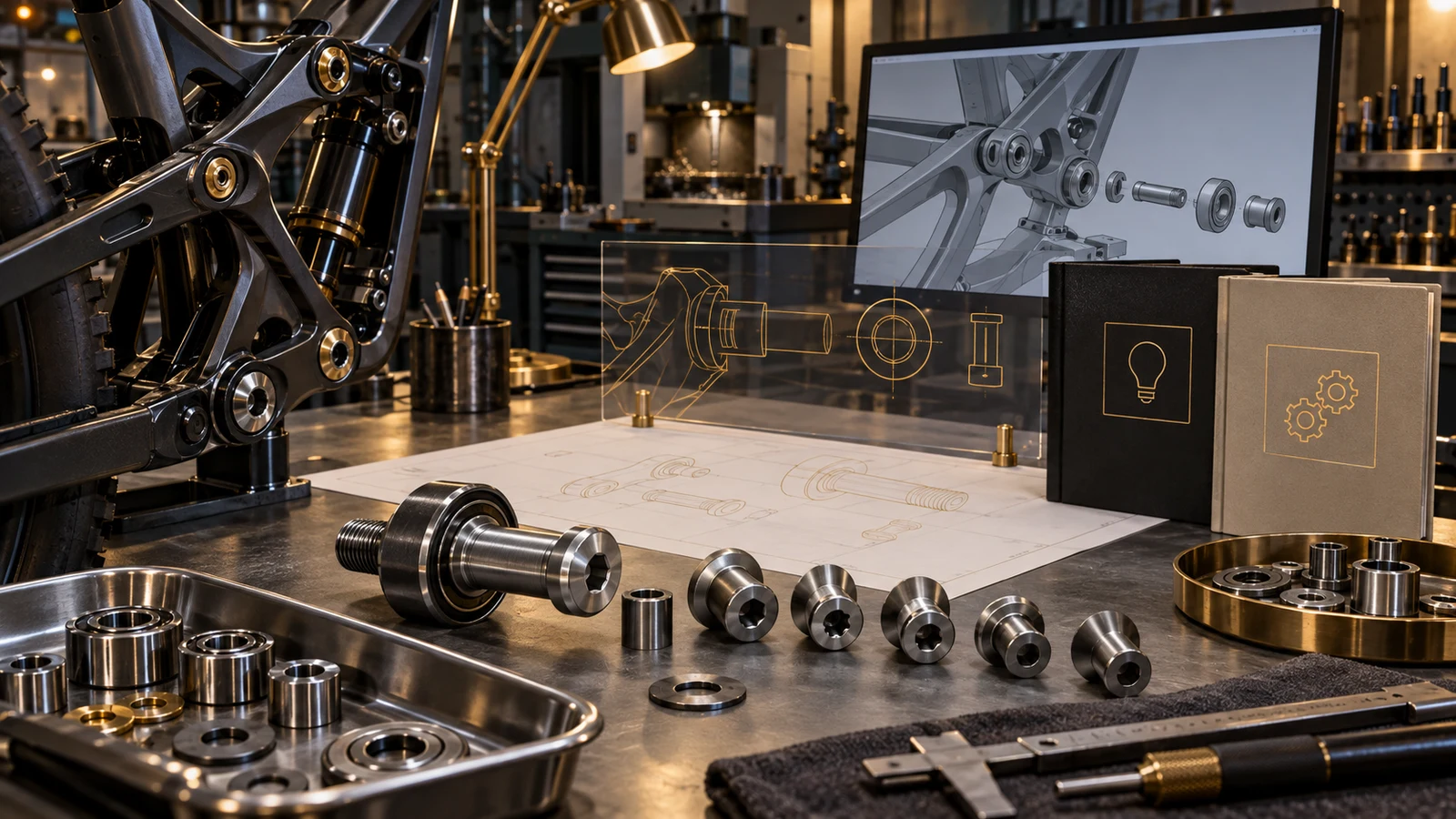
Hero: concept illustration of example hardware and its application. It is not a factory photograph, tested component or approved production geometry.
Give the candidate a question that exposes its reasoning
Choose a feature relevant to the proposed work: a shoulder transition, inaccessible cross-hole, treated locating surface or ambiguous mating requirement. Provide the existing drawing and model authority, not a deliberately misleading test file. State which requirements must remain unchanged.
Ask the candidate to identify its assumptions and required inputs before deciding whether to propose a change. If the bearing or spacer definition is missing, the response should explain which interface decision remains open. An unsupported yes-we-can-make-it answer is not enough to evaluate that reasoning.
The DFM report guide develops a usable report format. This article instead assesses the supplier's behaviour across one issue: how it asks, reasons, responds to constraints and follows the decision. The two tasks should not be scored as though a polished report automatically proves effective collaboration.
Look for a manufacturing mechanism, not an adjective
A useful access comment identifies the obstructing feature, the proposed tool or operation approach and the consequence for the required geometry. A tolerance comment identifies the controlled relationship and inspection question. Saying a design is optimised does not tell the OEM what changed or why.
Separate a limitation of the quoted route from a universal design impossibility. The supplier may need another operation, workholding approach or specialist process while the baseline geometry remains unchanged. A different route can change price or timing without necessarily requiring the designer to accept a new interface.
Use the manufacturing overview to discuss the relevant operations and partner boundaries. Do not infer that PremFixer offers every analytical tool or performs every test in-house. The proposed support should identify its deliverables and limits rather than promise unrestricted free engineering.
| Response element | Useful explanation | Weak substitute | Decision supported |
|---|---|---|---|
| Missing input | Exact mate or requirement and its effect | It depends on your drawing | What information changes the answer |
| Route concern | Feature and manufacturing mechanism | Difficult to make | Whether another route can retain it |
| Alternative | Changed feature and protected interface | Optimised design | What the designer must evaluate |
| Analysis proposal | Question, model basis and limits | Colour plot or software name | Whether analysis addresses the use |
| Customer response | Updated option after a constraint | Repeated original suggestion | Whether the choice is still applicable |
| Issue closure | Specific authority and controlling definition | Fast acknowledgement | What is resolved and still open |
Evaluate alternatives against protected interface requirements
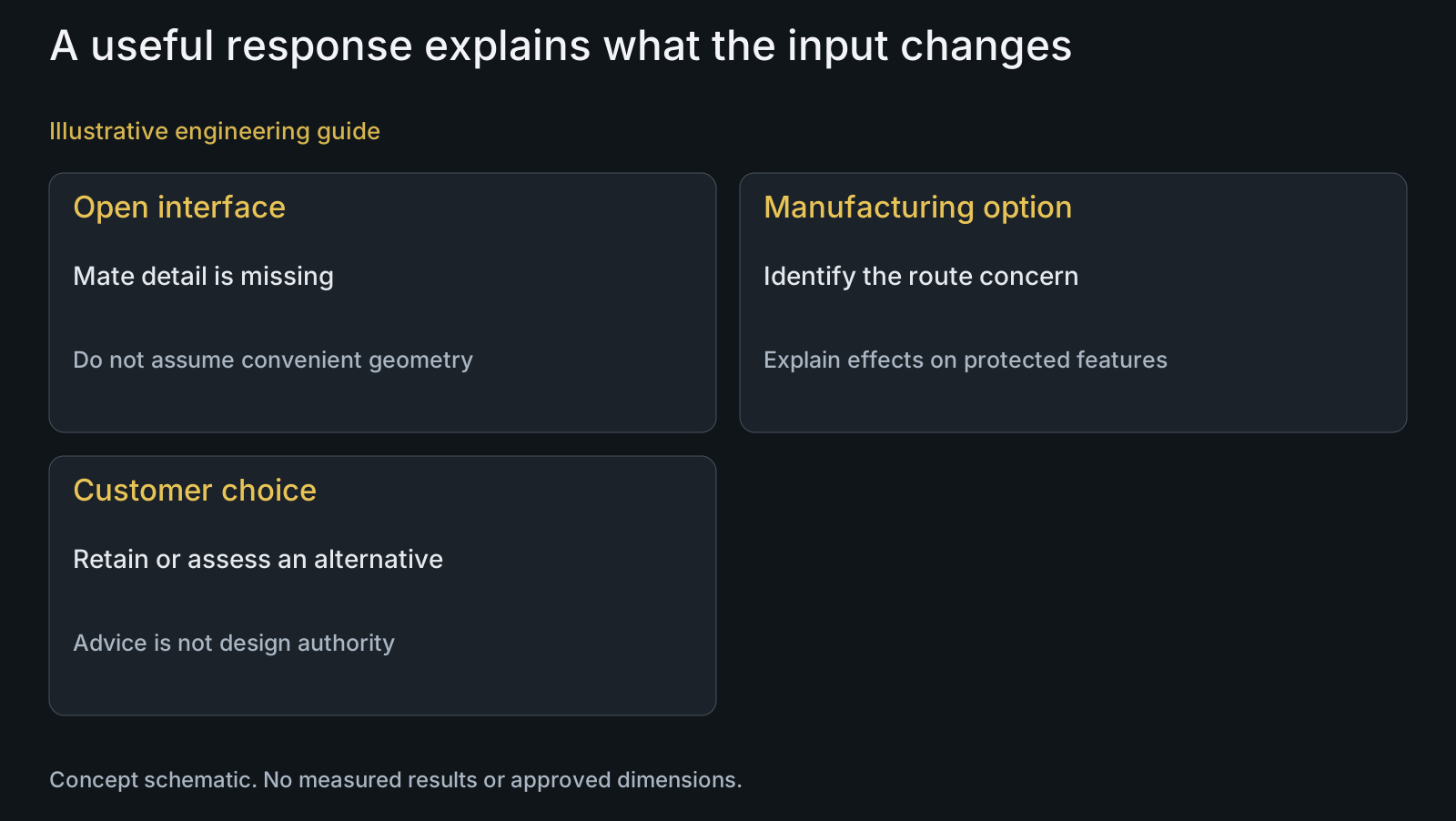
Ask which manufacturing concern each option addresses and what remains unchanged. A proposed shoulder transition may require review of the mate's seating geometry. A drive change may affect tool access and a customer's assembly procedure. The responsible design team should see those consequences before accepting the alternative.
Compare at least the unchanged baseline route and the proposed alternative where both are feasible. If the baseline is not offered, ask why and which unresolved requirement prevents it. A recommendation that only describes its advantage can conceal a transferred burden on the frame, bearing or assembly team.
The five-issue pivot DFM guide develops common feature concerns. For supplier assessment, examine whether the candidate preserves the customer's constraint when asked to revise its proposal, rather than assume that the first suggestion is a completed engineering answer.
Ask what a simulation can actually support
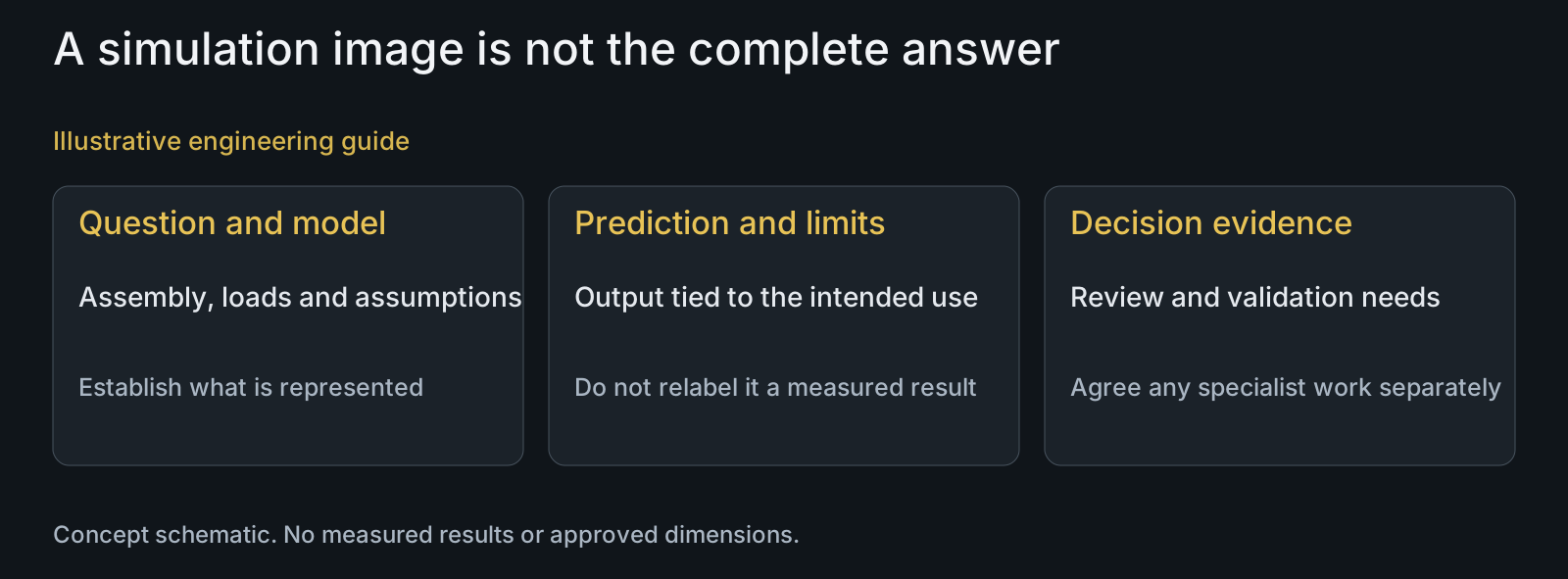
If analysis is proposed, identify the question, represented assembly, materials, contacts, loads and restraints before evaluating the output. Those inputs explain what the model addresses. A displayed stress colour does not establish that the real pivot's boundary conditions were represented.
NASA's public models-and-simulations scope addresses development, use and credibility within NASA activities. It supplies context for asking about an analysis basis, not a mandatory bicycle-supplier rule or evidence of a PremFixer FEA service.
Request the interpretation and limitations, including what evidence would support the intended decision. Keep analytical predictions distinct from measured assembly behaviour. Where the required inputs or expertise are unavailable, narrow the answer to the manufacturing question that can be addressed and identify any separately agreed specialist analysis.
Follow the issue through a real decision, not just a quick reply
Distinguish acknowledgement, substantive response and closure. A prompt reply can identify an owner and a needed input; it does not close the geometry question. Conversely, a longer justified response is not automatically poor support if it resolves a consequential interface correctly.
Ask how the candidate handles a rejected recommendation or a clarified mate. Does it update the proposed route and identify the remaining question, or keep quoting the earlier assumption? Useful collaboration should leave the current choice understandable without requiring the buyer to reconstruct an ambiguous email chain.
A proposal remains advice until the responsible customer authorises the specific design decision. Reflect any accepted change in the controlling definition and clarify affected supply before proceeding. The revision-compatibility guide separately addresses physical stock and configuration consequences after a change.
Illustrative assessment: a proposed transition meets a protected mate
Illustrative engineering example: assume a candidate suggests changing a pivot shoulder transition to suit its proposed machining route. The OEM says the mating bearing and axial seating arrangement must remain unchanged, but the necessary mate detail has not yet been provided. No actual geometry, analysis result or saving is assumed.
A useful response identifies the needed mate information and explains that the proposed transition must be checked against it. It also states whether another manufacturing route could retain the existing shoulder. The assessment concerns the supplier's reasoning and handling of the constraint, not a claim that either geometry is already acceptable.
The customer can then retain the baseline, request another route or review a defined alternative. An unsupported simulation screenshot or blanket approval email cannot replace that choice. The example shows how asking the right question can advance the project without inventing a validated redesign, cost reduction or supplier ranking.
Questions buyers need to confirm
What is a useful way to test engineering support before sourcing?
Provide one authorised representative drawing and a defined question. Evaluate missing-input identification, manufacturing reasoning and handling of a protected requirement. Do not judge only the first response time or ask for confidential evidence from another customer's design.
Does a fast reply mean the DFM issue is closed?
No. Separate acknowledgement from a substantive answer and an authorised decision. Ask whether the current response resolves the identified feature and what remains open. A quick message can be useful without authorising production or accepting a geometry change.
Can the supplier change a bearing interface for easier machining?
It can propose a defined alternative, but the responsible designer must evaluate and authorise it. Identify the affected mate and seating requirements. Ask whether another route retains the baseline rather than presume manufacturability advice permits an unrecorded interface change.
What should accompany a proposed FEA result?
Identify the question, represented assembly, material assumptions, contacts, loads, restraints and result limitations. Explain how the prediction supports the intended decision and what evidence remains needed. A colour plot alone does not demonstrate a validated assembly or an offered supplier service.
Is detailed redesign included with initial drawing feedback?
Not automatically. Agree whether the support covers clarification, route feedback, CAD changes, analysis or tests, and identify any separate work and charges. No universal free redesign, FEA deliverable or unlimited engineering-service commitment is established here.
What should an engineering-review RFQ contain?
Send the controlling drawing and STEP revision, mating parts or interfaces, material and finish, protected requirements and the question to resolve. Add the proposed supply scope and decision owner. This lets feedback distinguish a route proposal from a design change or separately scoped validation.
Technical references and scope
NASA models and simulations public scope. Official public description concerns model development, use and credibility for NASA activities; cited as analysis-review context, not a bicycle mandate or evidence of an actual supplier simulation service.
Explore related component, material and sourcing decisions in the customer decision knowledge center. For a drawing review, use the Drawing/BOM RFQ path.
Assess the response to one defined engineering question
Send the drawings or STEP files, mating details and kit BOM through the Drawing/BOM RFQ path. Mark the open feature, protected interfaces and decision you need. The review will identify relevant manufacturing inputs and alternatives, while any design authorisation, specialist analysis or testing remains separately defined.
Discuss the drawing and BOM