
For a stainless suspension pivot bolt, an aluminum-style anodizing instruction is not a usable finish specification. Aluminum anodizing forms an oxide associated with its substrate; that does not define a stainless treatment. Ask whether the customer needs a color, a cleaner surface, a particular texture or a functional coating, then identify a suitable stainless route. Passivation and electropolishing address different surface objectives and should not be described as interchangeable colored finishes. The head, bearing shoulder, thread and seating face may also need different requirements. Approve the actual process and delivered geometry rather than a photograph carrying the word anodized.
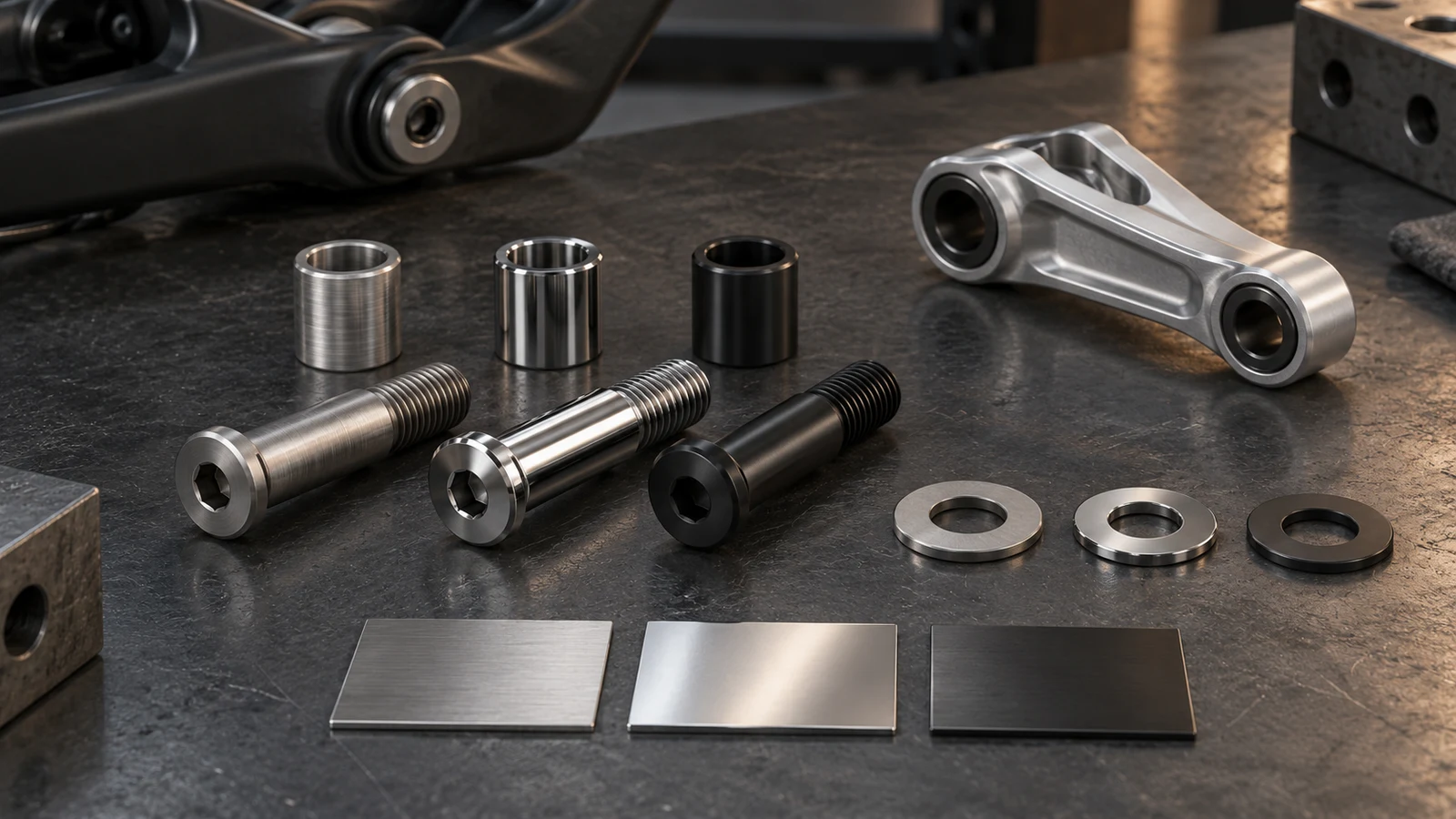
Hero: concept illustration of example hardware and its application. It is not a factory photograph, tested component or approved production geometry.
Separate the requested appearance from the process name
A buyer may use anodized to describe a dark or colored sample without knowing its substrate or treatment. Obtain the sample's material identity and the proposed process description before turning that word into a drawing note. A color photograph cannot distinguish an oxide, deposited layer or mechanically prepared surface, and lighting can disguise texture differences.
Aluminum Anodizers Council guidance explains the aluminum-oxide mechanism of aluminum anodizing. BSSA describes stainless electropolishing as anodic dissolution: the part is an anode, but material is removed rather than an aluminum oxide layer being built. The shared electrical term does not make the two operations equivalent. Avoid the opposite overstatement that every possible electrochemical coloring process on stainless is impossible.
Ask the designer to separate visible color, gloss, texture and permitted variation. Then ask engineering which surfaces carry load, locate the pivot or engage the locking feature. A treatment proposal can be evaluated only when both the visual objective and the functional restrictions are known. Materials is the starting point for substrate selection, not proof that any requested finish is available.
Compare cleaning, smoothing and adding a layer
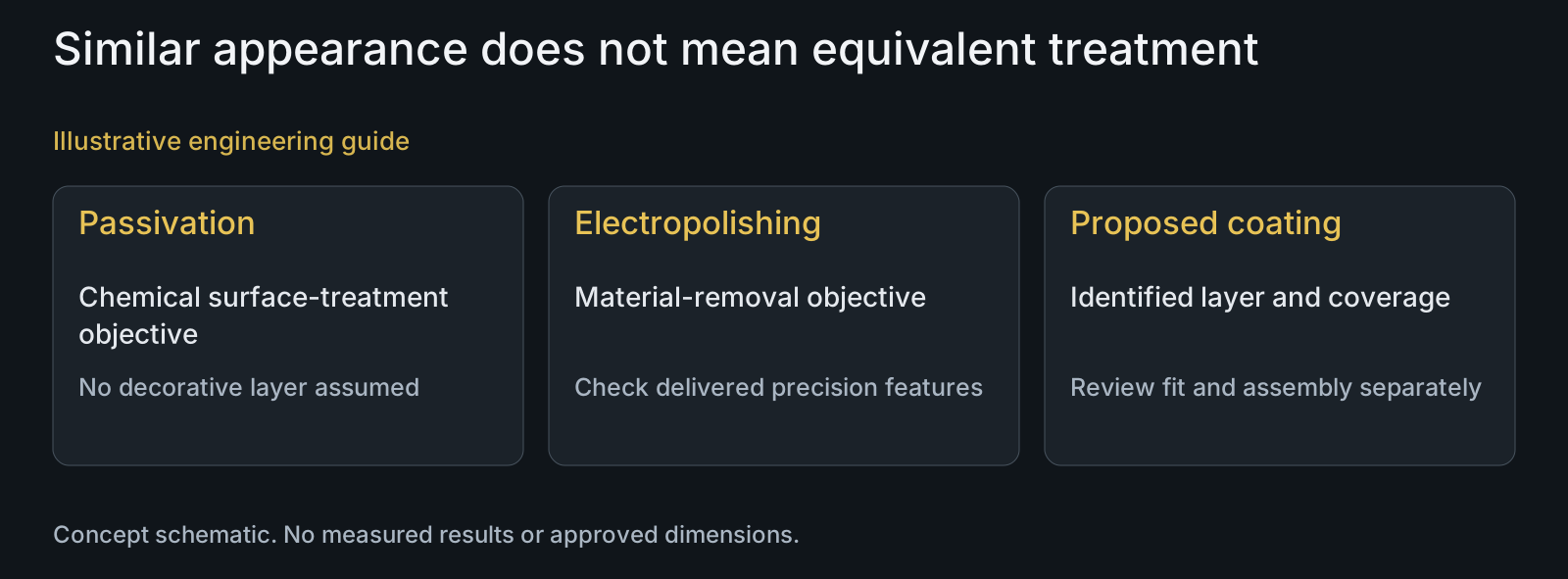
Passivation is a chemical treatment selected for a stainless surface under an applicable specification. It is not a deposited decorative color layer, nor a substitute for removal of damage. Refer to passivation for stainless pivot bolts for the order and verification question. Here, the decision is whether that route addresses the requested surface objective at all.
Electropolishing removes surface material and can change the delivered surface condition. A bright appearance alone is not evidence of a specified removal amount or final roughness. For precision pivot features, establish which dimensions are required after treatment and whether the selected route can maintain them. Do not use a generic removal value from a technical article as this part's machining allowance.
If a deposited coating is proposed for appearance or contact behavior, obtain its actual process and compatibility information. Identify coating coverage, preparation, dimensional effects and acceptance. A dark coating does not automatically reduce thread friction or prevent wear at a bearing contact. Those are separate assembly and service requirements, not benefits that follow from color.
| Route or request | Useful purpose | Main limitation | Evidence to request |
|---|---|---|---|
| Aluminum-style anodizing callout | Clarify a borrowed process term | Does not define a stainless finishing route | Actual substrate and proposed process |
| Chemical passivation | Specified stainless surface treatment | Not a decorative deposited color layer | Applicable treatment and verification requirement |
| Electropolishing | Surface smoothing through material removal | May affect precision features | Final dimensions and agreed surface acceptance |
| Proposed deposited coating | Defined appearance or functional objective | Coverage and contact behavior need review | Process, boundary, compatibility and final-state checks |
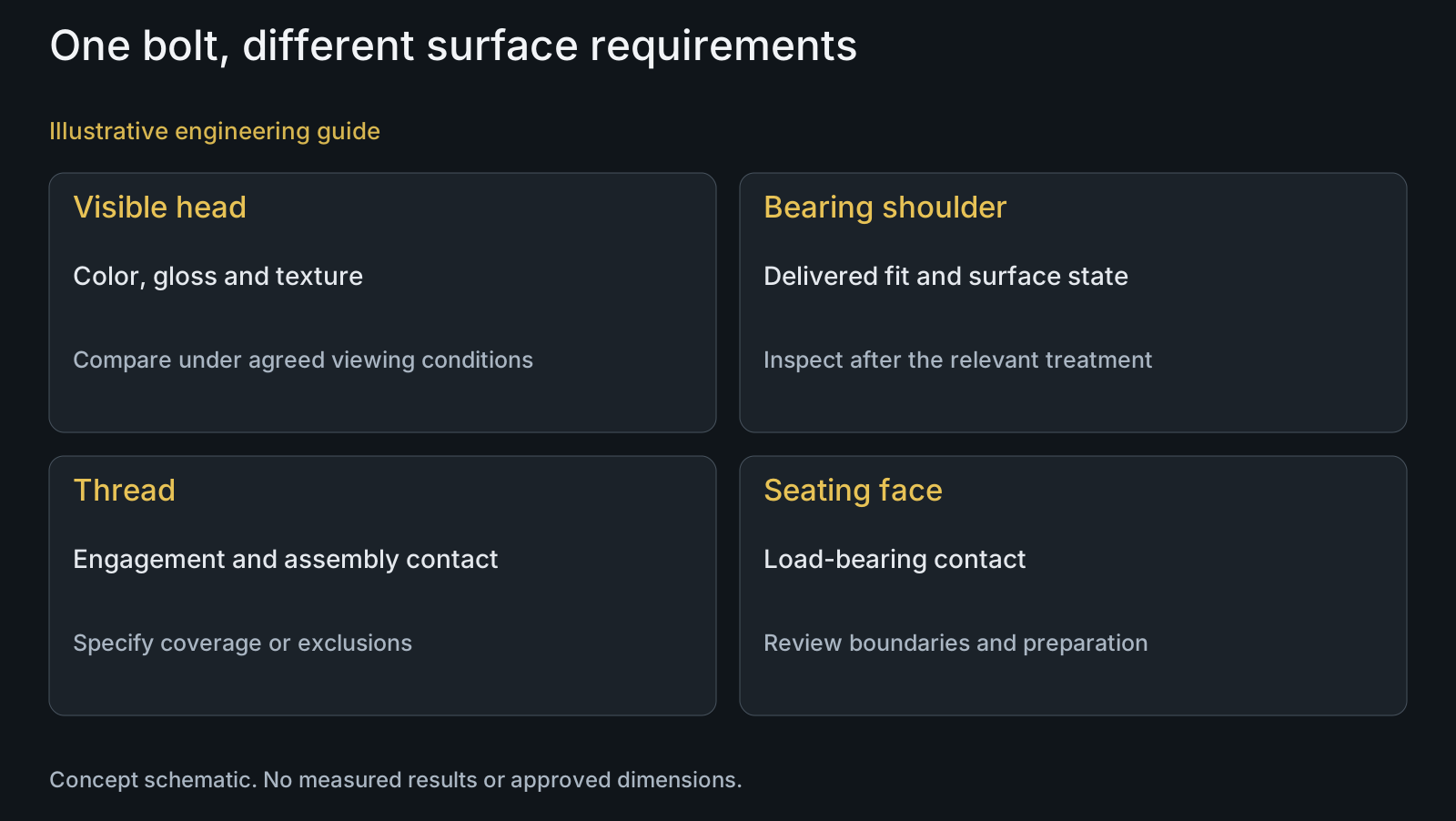
Give functional zones their own finished-state requirements
The bearing shoulder should retain the specified fit and surface condition after the selected finishing sequence. The thread should meet its delivered-state requirement, including any agreed exclusion or masking. The seating face must support the intended joint contact. These features cannot be approved solely from a head-face appearance sample.
Show finish boundaries on the drawing where a treatment is restricted to visible surfaces. Ask the finishing provider how the boundary is produced and checked, including transition areas and handling marks. Masking may be a proposed method, not a universal solution. A boundary that creates an unwanted ridge at a seating contact must be reviewed as a geometry issue.
Do not add a roughness-to-corrosion table without data for the material, route and exposure being compared. Surface texture can matter, but one roughness value cannot predict a universal salt-spray result or life in a wet bicycle joint. Separate measurable texture acceptance from the corrosion assessment the project actually needs.
Review the effect of a finishing change on assembly
A finish substitution is an engineering change when it affects a threaded or loaded contact. Identify the mating material, lubricant, threadlocker and assembly procedure used with the current part. A torque instruction qualified with one surface state should not silently be carried to another. The review must address the changed contact, not assume a fixed tightening correction.
Inspection should follow the final manufacturing sequence. If a shoulder is accepted before a material-removing treatment, that result does not prove the delivered fit. If a layer is added after thread gauging, the delivered thread needs the agreed check. Record the point in the sequence at which each requirement is assessed.
PremFixer's drawing-led manufacturing review can identify the machining features and proposed partner-finishing scope. Availability, exclusions and acceptance for a specific process must be agreed for the order. Do not interpret an editorial finish comparison or a concept product image as confirmation of an in-house treatment line.
Illustrative review of a black pivot-head request
Illustrative engineering example: assume a stainless shoulder bolt has an accepted natural appearance, and a designer requests a black anodized head to match the rocker. The shoulder fit, threaded engagement and assembly procedure are to remain unchanged. No coating route or test result has yet been supplied.
The review first corrects the ambiguous process name without dismissing the color objective. A finishing provider proposes an identified stainless-compatible route, with coverage limited as required by the drawing. Engineering examines the boundary near the seating face, delivered thread conformity and the relevance of the existing assembly procedure. Appearance is compared under an agreed viewing method rather than an uncontrolled online photograph.
If the proposal cannot meet the functional exclusions, the team must revise the finish requirement or assess a different route. A visually satisfactory sample does not close the fit and contact questions. This example reports no approved coating, measured corrosion performance or real customer outcome; it shows why separate appearance and function requirements prevent an incomplete approval.
Questions buyers need to confirm
Can I copy an aluminum anodizing note onto a stainless bolt drawing?
No. Identify a process applicable to the stainless substrate and the required purpose. Provide the color or surface sample, substrate grade and functional zones so a finishing proposal can be assessed without relying on a borrowed name.
Is electropolishing the same operation as anodizing?
No. Stainless electropolishing uses anodic material removal; that does not make it an aluminum-oxide anodizing treatment. State the actual route and finished dimensions, not simply that electrical current is used.
Will passivation make a stainless pivot bolt black?
Do not specify chemical passivation as a black decorative coating. Treat color as a separate requirement and obtain an identified process proposal, with coverage and contact compatibility reviewed for the actual bolt.
Which dimensions should be checked after finishing?
Check the features whose requirements apply in the delivered state, especially shoulders, threads and seating contacts affected by the selected route. Provide tolerances, finish boundaries and the sequence so inspection is not performed only before a later geometry-changing operation.
Can I retain the old tightening procedure after changing the finish?
Not automatically. Review the changed contact against the mating material, lubricant, locking method and existing validation. A color match or a passed thread gauge does not establish equivalent torque-to-clamp behavior.
Technical references and scope
Aluminum Anodizers Council: what anodizing means. Aluminum-oxide mechanism; not a stainless treatment specification.
BSSA: electropolishing of stainless steels. Anodic material-removal mechanism; generic process values are not adopted as component allowances.
ASTM A967/A967M-25: chemical passivation treatments. Public scope; order-specific treatment and acceptance require the applicable specification.
Explore related component, material and sourcing decisions in the customer decision knowledge center. For a drawing review, use the Drawing/BOM RFQ path.
Resolve the finish name and functional zones
Send the stainless grade, drawing or STEP file, appearance reference, finish boundaries and current assembly requirements. PremFixer will review the machining interfaces and proposed partner-finishing scope so the RFQ describes an actual route and delivered-state acceptance.
Discuss the drawing and BOM