
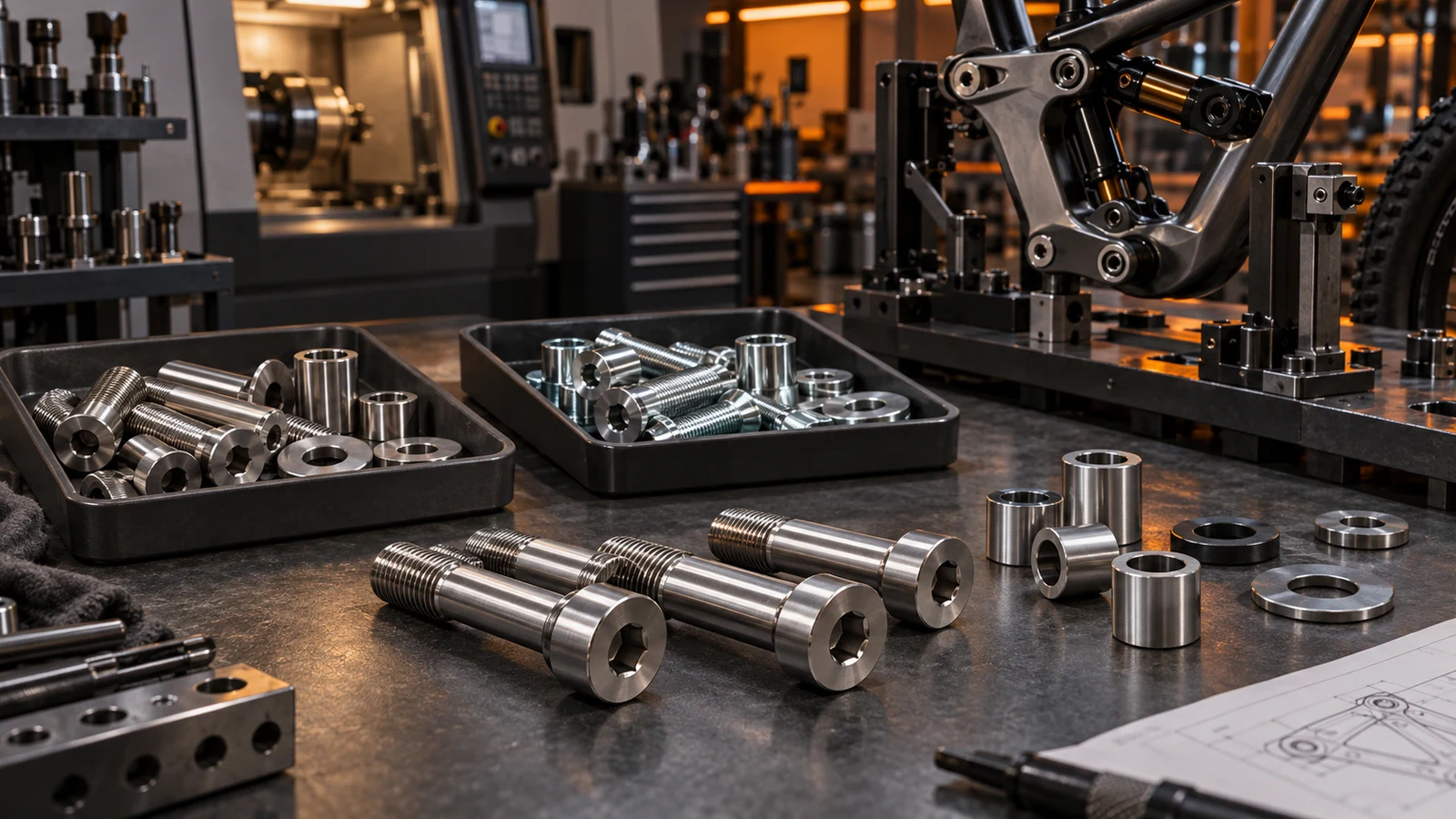
Hydrogen risk in plated stainless pivot bolts cannot be accepted or rejected from the words 304, 316 or stainless alone. Review the finished material condition, pretreatment and plating sequence, then connect any required qualification to the loaded component. A universal post-plating temperature and time is not an approval basis supplied here. Equally, a general laboratory result for stainless steel in hydrogen gas is not a prediction of failure for a particular plated bolt. The buyer's useful question is whether the proposed process and supporting evidence cover this material, this finish and this application, including any change from the previously reviewed route.
Hero: concept illustration of example hardware and its application. It is not a factory photograph, tested component or approved production geometry.
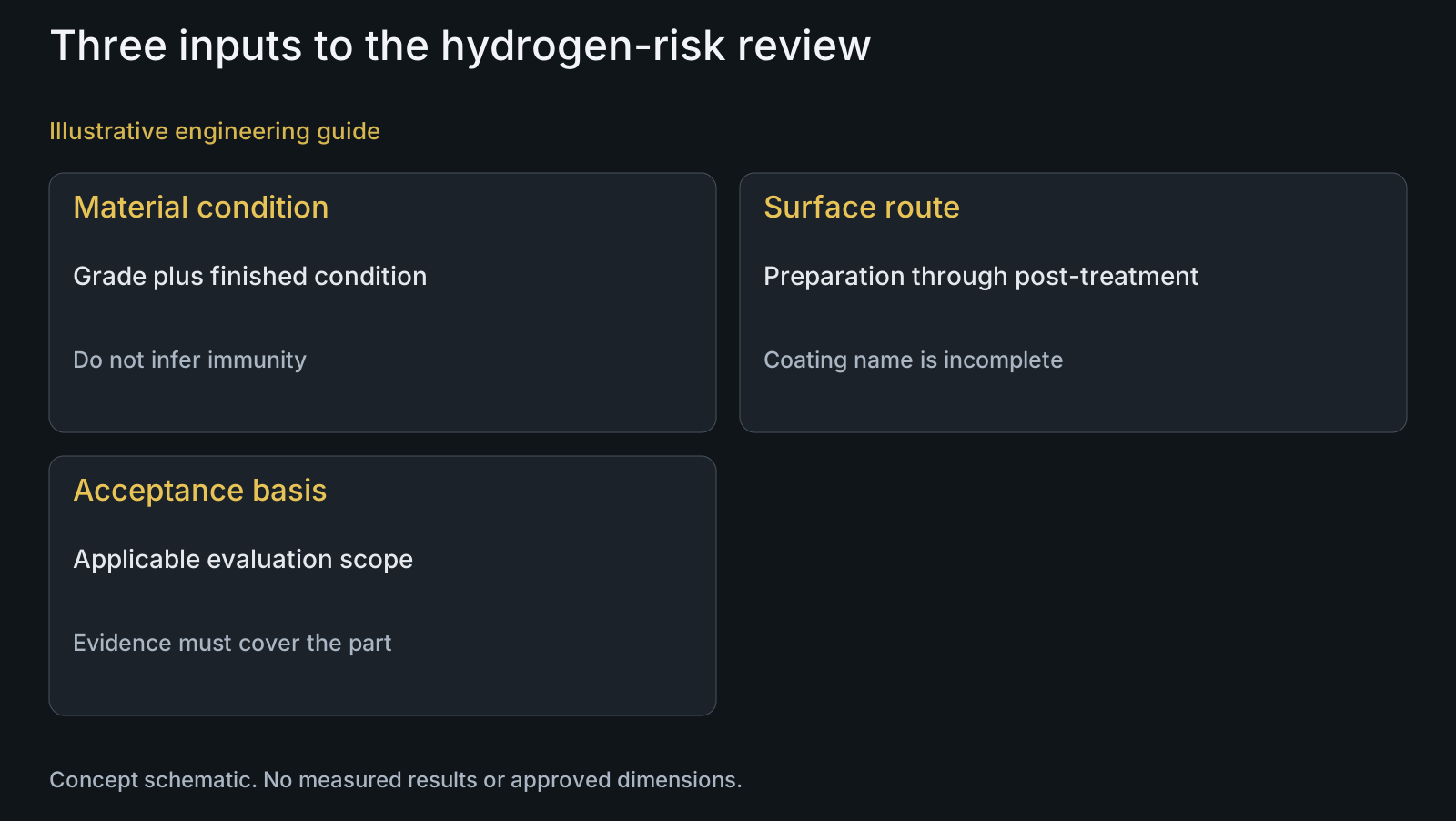
Describe the material as supplied, not only by grade
State the alloy, product condition and specified mechanical properties of the finished bolt. Cold-worked stock and a component with a different processing history should not be assumed to have the same relevant condition simply because both carry the same nominal grade. Link the material information to the actual supplied revision.
Sandia's technical reference discusses hydrogen response in 304/304L and explains that material structure and experimental exposure affect interpretation. Its hydrogen-service studies do not qualify an electroplating route for bicycle hardware. They do support avoiding an unconditional assertion that every austenitic stainless component is immune. No laboratory percentage loss or exposure threshold is transferred to a pivot bolt here.
Do not replace this review with a magnet check or appearance comparison. Such observations do not document the finished mechanical condition, manufacturing history or hydrogen exposure. Ask which material property requirements and process controls were used for the actual drawing.
Name the full surface route and its applicable requirements
A coating name omits the preparation route. Identify the cleaning and activation steps, the actual deposited coating system and any specified post-treatment. When a process changes, establish which steps changed rather than describing the new finish as visually equivalent. Separate any dimensional or lubrication requirement from the hydrogen-risk question.
ISO 4042 describes electroplated fastener coating systems and hydrogen-risk provisions. Its public scope primarily addresses zinc, zinc-alloy and cadmium systems, while some other deposited systems are included only for particular dimensional requirements. The catalog also lists an amendment. Specify the applicable edition and amendment scope; do not infer that naming ISO 4042 imposes the same complete qualification requirement on every stainless coating.
If the specified finish is PVD, electropolishing or passivation rather than electroplating, describe that route accurately. The surface-treatment selection guide compares their different functions. A discussion of a plated route should not be copied wholesale into a different process simply because both alter surface appearance.
| Available information | What it establishes | What remains open | Next useful review |
|---|---|---|---|
| 304 or 316 designation | Nominal alloy identification | Finished condition and route applicability | Material condition and drawing properties |
| Coating name only | Proposed deposited finish | Preparation and post-treatment sequence | Complete surface-processing route |
| Recorded post-treatment cycle | Recorded operation performed | Effectiveness and applicable acceptance basis | Released process requirement and qualification |
| Test on another substrate | Result within that test scope | Relevance to ordered hardware | Specimen, condition and process mapping |
| Good fit and corrosion appearance | Those inspected surface attributes | Hydrogen-related acceptance if required | Separate the required evidence categories |
Distinguish process execution from a qualification basis
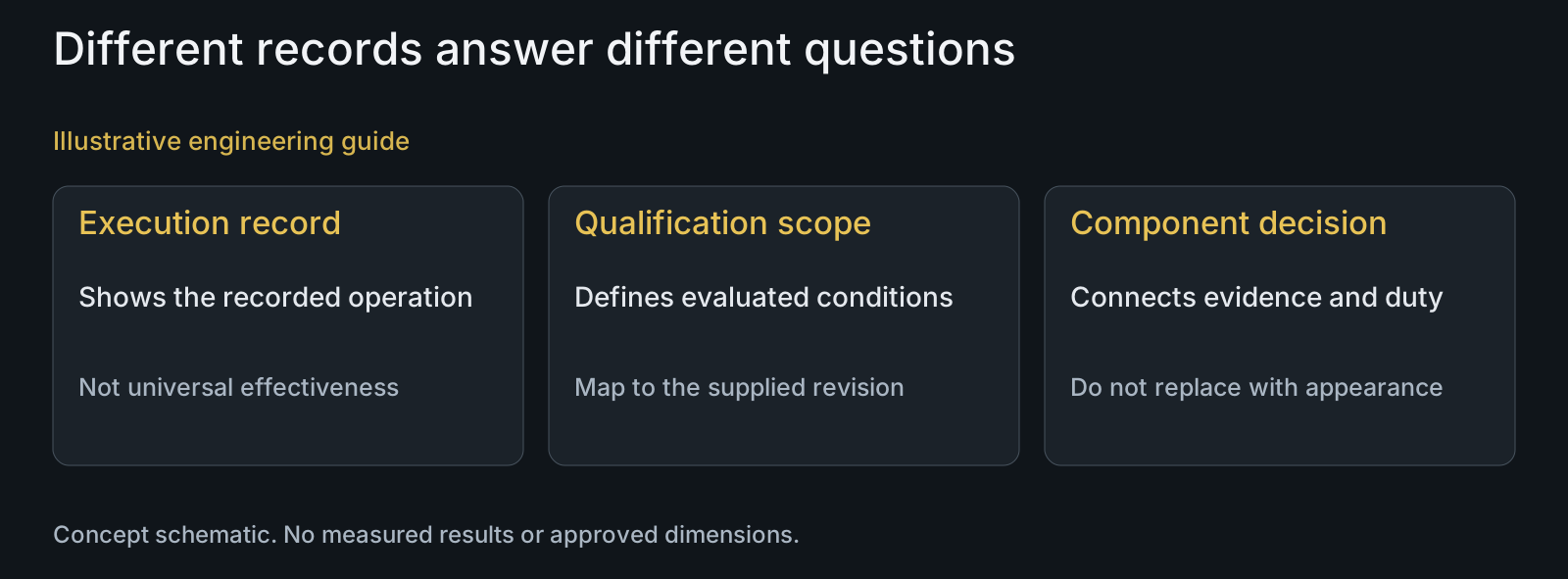
A record of a post-treatment cycle establishes the recorded operation, not automatic effectiveness for all material states and coating systems. The design owner and applicable specification must establish the required prevention or verification method. Do not prescribe a fixed bake from an article without confirming its applicability and the complete process requirement.
Ask what any test actually evaluates: a process-control specimen, a finished fastener or an assembled joint. Identify specimen material, processing sequence, loading, duration and acceptance rule within the released method. A result on a different substrate or finish may be useful process information, but its relevance to the ordered hardware needs explanation.
Corrosion appearance, coating thickness and an immediate tightening check answer different questions. A clean surface or acceptable thread fit does not independently establish freedom from hydrogen-related effects. Conversely, a reported delayed fracture does not prove hydrogen involvement; preserve the failed part and process history for an appropriate cause investigation.
Illustrative review: a finish change without matching evidence
Illustrative engineering example: assume an OEM drawing previously called for unplated stainless hardware and now proposes an electroplated finish to address an interface requirement. The supplier provides the deposited coating name and a generic post-treatment statement, but no material-condition mapping or applicable qualification basis. No failure or successful test is assumed.
The reviewer separates three questions. First, does the finish meet the intended interface function? Second, do finished threads and shoulders still meet the drawing? Third, what evidence covers the hydrogen-risk requirement for the actual substrate and route? Answering the first two does not close the third.
The next action is to obtain the missing route and applicability information, then agree the required evaluation with the responsible engineering team. It is not to invent a longer bake or assume a different stainless grade solves the issue. The example demonstrates an evidence gap, not a claim that the proposed coating is inherently unsuitable.
Keep the coating decision connected to the pivot duty
Provide the component's loading function, installation instruction and relevant design requirements alongside the coating drawing. Distinguish a bolt that clamps an inner sleeve from a part serving a different locating or load-transfer function. The axial preload guide explains why installation input and retained clamp load are different quantities.
For purchasing, require the proposed route and evidence scope in the quotation response instead of accepting a general 'stainless plus baking' declaration. PremFixer's drawing/BOM review can define the supplied part and requested process scope. It does not substitute a generic manufacturing statement for the OEM's component acceptance decision.
Questions buyers need to confirm
Are 304 and 316 pivot bolts automatically immune to hydrogen embrittlement?
Do not make that unconditional claim. The material condition, exposure and loading matter. Hydrogen-service research is useful context, but it does not predict the behavior of a particular plated bicycle bolt or qualify its process.
Should every plated stainless bolt receive the same bake?
No universal recipe is established here. Confirm the actual substrate condition, coating route and applicable specification with the responsible process and engineering teams. A temperature/time statement without that basis is not component acceptance evidence.
Does ISO 4042 cover every stainless coating in the same way?
No. Read the scope for the actual coating system, edition and applicable amendment. Its public description distinguishes its main systems from other coatings included for limited dimensional requirements; a standard name alone is insufficient.
Does a successful corrosion test establish hydrogen-risk acceptance?
No. It addresses the corrosion exposure and acceptance criteria used. Any required hydrogen-risk evidence must be identified separately, including the evaluated material, process and loading scope.
Can a process-control specimen prove every finished bolt is acceptable?
Only use it within its defined and applicable qualification scope. Ask how the specimen material, route and evaluation relate to the supplied hardware. Do not describe a process specimen as a finished-component or assembled-pivot test.
What should be included in an RFQ for plated stainless pivot bolts?
Provide material and finished-property requirements, component and assembly drawings, coating system, relevant standard/revision, finished dimensional requirements and requested qualification scope. Identify changes from any previously reviewed substrate or process.
Technical references and scope
ISO 4042: Electroplated coating systems for fasteners. Public scope only; edition/amendment and coating applicability require confirmation. No full-text clause or compliance result is asserted.
Sandia: Hydrogen compatibility of 304 and 304L stainless steels. Material-state and hydrogen-exposure context from a hydrogen-service reference; no gas-study result is transferred quantitatively to plated pivot bolts.
Explore related component, material and sourcing decisions in the customer decision knowledge center. For a drawing review, use the Drawing/BOM RFQ path.
Define the coating route and its evidence scope
Send the pivot drawing, STEP model, material condition, proposed coating specification, assembly duty and requested acceptance evidence. PremFixer can review the manufacturing and quotation scope, identify missing process inputs and separate dimensional inspection from any required coating qualification.
Discuss the drawing and BOM