
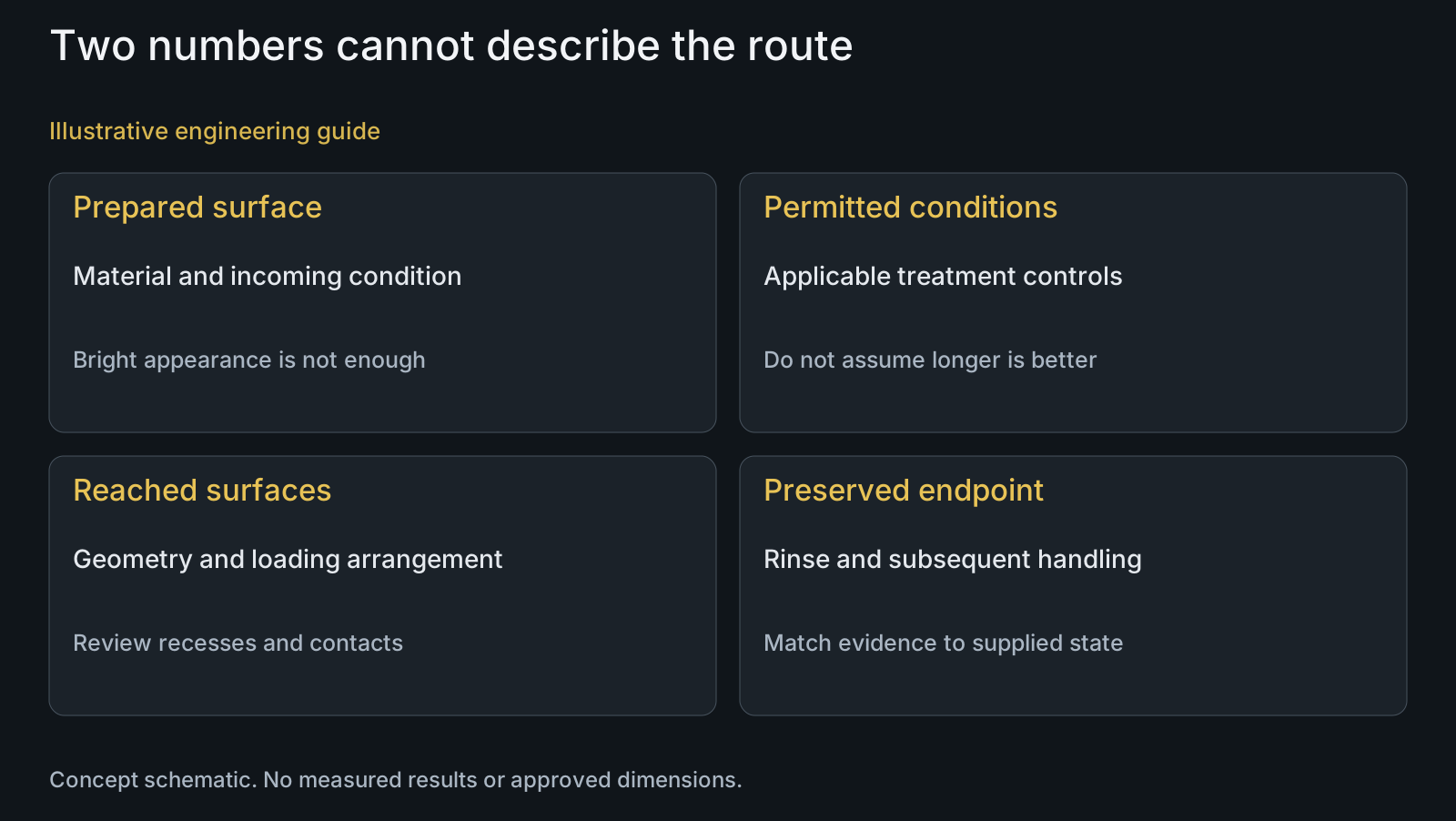
One nitric-acid concentration and treatment time cannot define passivation quality for every stainless pivot bolt. The exact grade, incoming surface, cleaning, permitted treatment conditions, rinsing and later handling also matter. For an OEM or SQE reviewing machined shoulder bolts, the practical question is whether the complete route produces the specified surface condition on the actual part. A nominal bath setting does not establish that oils were removed or that every relevant region was reached. Specify the applicable process and verification with the provider; do not convert a published recipe into a guaranteed passive-film completeness claim or a fixed corrosion-life improvement.
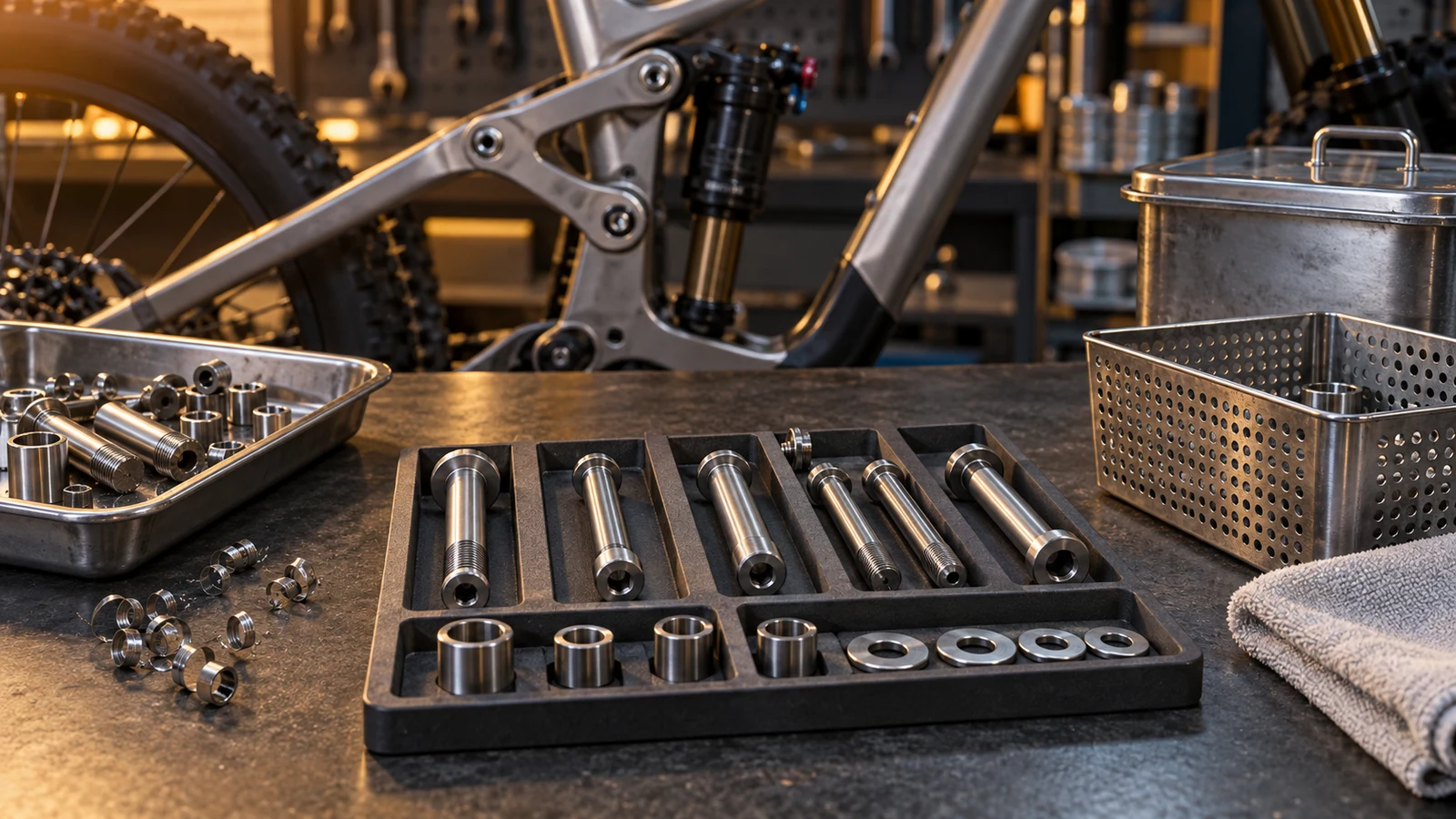
Hero: concept illustration of example hardware and its application. It is not a factory photograph, tested component or approved production geometry.
Start with what is actually on the machined surface
Identify the substrate grade and condition separately from residues or contamination introduced by machining and handling. A bright bearing seat and an oil-bearing thread root can look like one clean component while presenting different preparation concerns.
Carpenter Technology's passivation overview explains why cleaning precedes treatment and why a shiny machined appearance can conceal contamination. It also distinguishes passivation from removing heat-treatment scale or existing coatings.
In a route review, state whether oil, chips, heat tint or an earlier finish may be present. Ask the provider to identify the preparation appropriate to those conditions. Do not describe the passivation bath as a universal cleaning operation or assume that longer immersion solves an unprepared surface.
An accepted process must apply to the identified grade
Use the specified material and acceptance requirement to review the proposed treatment. Nitric and citric routes are not interchangeable just because both are called passivation. Where the order requires a selected process or specification, proposed substitutions need review against that requirement.
ASTM A967/A967M-25's public scope describes alternative chemical treatments and verification tests, and does not recommend a grade or treatment as suitable for every application. The public overview is not the full production instruction for your component.
Resolve the required edition and selected provisions with the responsible provider. The stainless finish comparison addresses choosing among passivation, electropolishing and PVD. This review begins after the intended passivation function is identified, and examines the route's control boundary.
| Review subject | Relevant condition | Risk of relying only on time and concentration | Evidence to define |
|---|---|---|---|
| Incoming surface | Oil, chips or prior surface processing | Unprepared surface assumed treated | Applicable preparation and material state |
| Permitted treatment | Identified grade and ordered specification | Generic process substituted | Selected requirements and provider instruction |
| Working bath | Other controlled variables and contamination | Nominal recipe called actual run condition | Applicable process observations and departures |
| Part access and rinsing | Recesses, contacts and solution removal | Exposed head face called complete coverage | Loading and route suitability for the geometry |
| Later handling | Processing or contact after treatment | Earlier evidence called final regardless of change | Required supplied surface and verification scope |
Time and concentration leave other variables unresolved
Carpenter's process discussion identifies the importance of bath temperature, immersion time, concentration and contamination. It cautions that improperly controlled treatment can attack the surface. Increasing time is therefore not an automatic improvement.
Ask which applicable variables the process instruction controls and how the record identifies the run. A nominal recipe is not the observed condition of a working bath. Likewise, a dwell-time record cannot supply an unrecorded concentration or establish that preparation was adequate.
The review should identify a departure from the permitted conditions without inventing a cause from one observation. Surface discoloration, for example, requires assessment of the incoming condition, process and later handling. No universal acid concentration, operating temperature or corrective chemical addition is prescribed here.
Geometry changes access during treatment and rinsing
Identify thread roots, recesses, blind features and contacting regions that may complicate solution access or removal. Ask how the proposed loading arrangement exposes the required surfaces and permits the subsequent steps to work for that geometry.
Carpenter discusses individual racking and the risk of retained acid in certain free-machining stainless surfaces. This is a reason to review the exact grade and loading arrangement, not to transfer one grade-specific procedure to all stainless shoulder bolts.
Treat rinsing as part of the specified route rather than a cosmetic final wash. Identify the applicable method and completion requirements with the provider. A view of the exposed head face cannot establish what happened in a recessed feature or prove that the entire component has the required final condition.
Preserve the surface after treatment
Review the operations and handling that follow the passivation step. If polishing, machining or another process follows, establish whether it changes the state represented by the treatment verification. If contact or contamination is suspected during packing, assess the actual path rather than merely quoting the earlier bath record.
Define the final-state dimensional and surface requirements for locating faces and threads. Passivation is not a deposited coating to which a generic plating allowance is automatically added, but the complete preparation and finishing route still needs review against the drawing.
The passivation acceptance guide develops the separate purchase and verification evidence. Here the process-control question is narrower: which surface entered the route, which conditions were represented and which subsequent steps could change that surface?
A matching dwell time is not a matching route
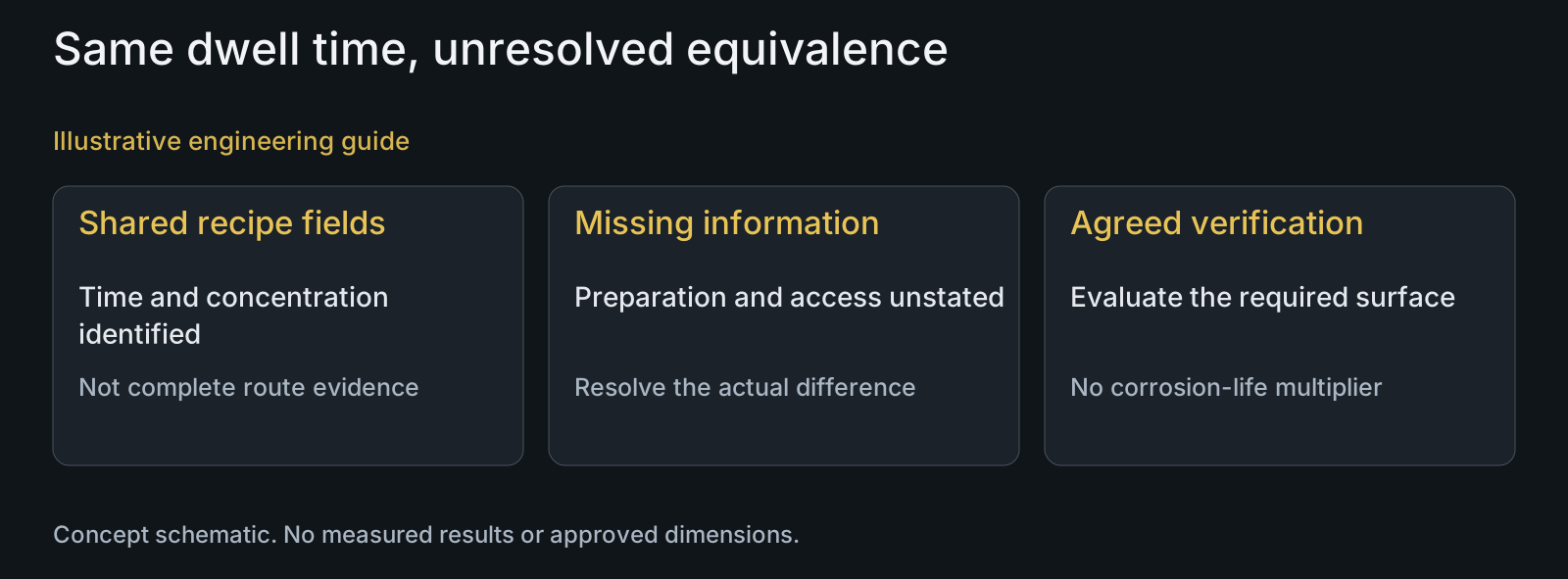
Illustrative engineering example: assume two proposed batches use the same identified treatment time and concentration. One proposal describes a defined cleaning step and separated loading; the other leaves preparation and the contact arrangement unstated. No actual batch, surface observation or corrosion result is supplied.
The proposals are not demonstrated equivalent by the two matching numbers. The review resolves the missing preparation, surface access and rinse requirements, then applies the agreed verification to the relevant parts. It does not declare one proposal failed or promise a life multiplier.
Send the material designation, drawing, previous operations and required process to surface-treatment review. PremFixer can coordinate the agreed component and treatment scope. The manufacturing process review should make the final acceptance state explicit without claiming an in-house chemical line or a universal passivation schedule.
Questions buyers need to confirm
Does one treatment time guarantee a complete passive film?
No. The grade, prepared surface, permitted process and verification matter. A recorded time alone does not establish access to each required region or final surface condition.
Can longer immersion compensate for machining oil?
Do not assume so. Resolve the appropriate cleaning before treatment and use the provider's applicable process instruction. Longer treatment is not a general substitute for a prepared surface.
Are nitric and citric processes automatically interchangeable?
No. Review the exact grade, ordered specification and selected acceptance requirements. A change in chemistry must be assessed against that scope rather than approved from the shared word passivation.
Why do loading and recesses matter?
They affect the surfaces and access that the complete route must address. Define the required regions and ask how the proposed arrangement supports treatment and rinsing; a visible head face does not inspect the interior.
Does a process record prove three times the corrosion life?
No. It describes its identified process scope, not an unrestricted service prediction. A claimed exposure improvement needs its own documented specimens, comparison and assessment; none is established here.
What should a passivation-process review include?
Send the drawing, material grade and condition, previous machining or finishing, required specification, relevant recesses and functional faces, quantities and verification requirements. Identify any later operation that may change the supplied surface.
Technical references and scope
Carpenter: Passivating stainless parts to maximize corrosion resistance. Complete87line page read. General cleaning/contamination and process-function sections15–28 only; Custom465-specific treatment, hydrogen and outcomes not transferred.
Carpenter: How to passivate stainless steel parts. Relevant cleaning, process-control, free-machining and loading sections read. Qualitative variables and grade-specific retained-acid concern only; old chemical recipes, health/environment assertions, test recipes and numerical outcomes excluded.
ASTM A967/A967M-25 public scope. Publicscope140–162 read. Alternative treatments/verification and application-suitability limits only; full standard not accessed and no unpublished compliance instruction supplied.
Explore related component, material and sourcing decisions in the customer decision knowledge center. For a drawing review, use the Drawing/BOM RFQ path.
Review the complete passivation route for your pivot parts
Send the drawing, exact stainless grade and condition, prior operations, critical surfaces and recesses, ordered treatment specification and reporting requirements. PremFixer will review preparation, provider process scope and the final condition to be accepted, without assigning a universal acid recipe or service-life claim.
Discuss the drawing and BOM