

Cold sealing does not automatically give anodized aluminum pivot hardware twice the corrosion life of hot-water sealing. For a colored pivot axle or receiver, compare the full anodizing and sealing route, alloy condition and required final surfaces. Sealing changes the porous anodic coating, but its name alone does not establish a performance ranking. Some cold-sealing systems include a subsequent hydration stage, so cold does not necessarily mean the entire route avoids elevated-temperature processing. Verification also needs to suit the finished coating: a dye-spot method suitable for a light surface may not apply to a deep shade. Specify the route and acceptance together, not a generic lifetime promise.
Hero: concept illustration of example hardware and its application. It is not a factory photograph, tested component or approved production geometry.
Sealing acts on the anodic coating, not on a color name
The mechanism is more useful than the word sealed. Research on water in anodic pores before sealing discusses hot-water hydration and the resulting pore-filling products, alongside a different cold nickel-fluoride route. Its experiments concern the studied aluminum system, not a measured improvement on these pivots.
For engineering review, identify the actual anodic coating and what sealing is intended to achieve. Color, stain resistance, corrosion exposure and working-contact behavior are different requirements. Do not assume that every route called anodizing must have an identical final seal condition.
The color-anodized hardware guide separates appearance from protection. This article develops the sealing decision: which full process and applicable assessment should accompany the specified surface.
Compare a complete hot-water route with a complete cold route
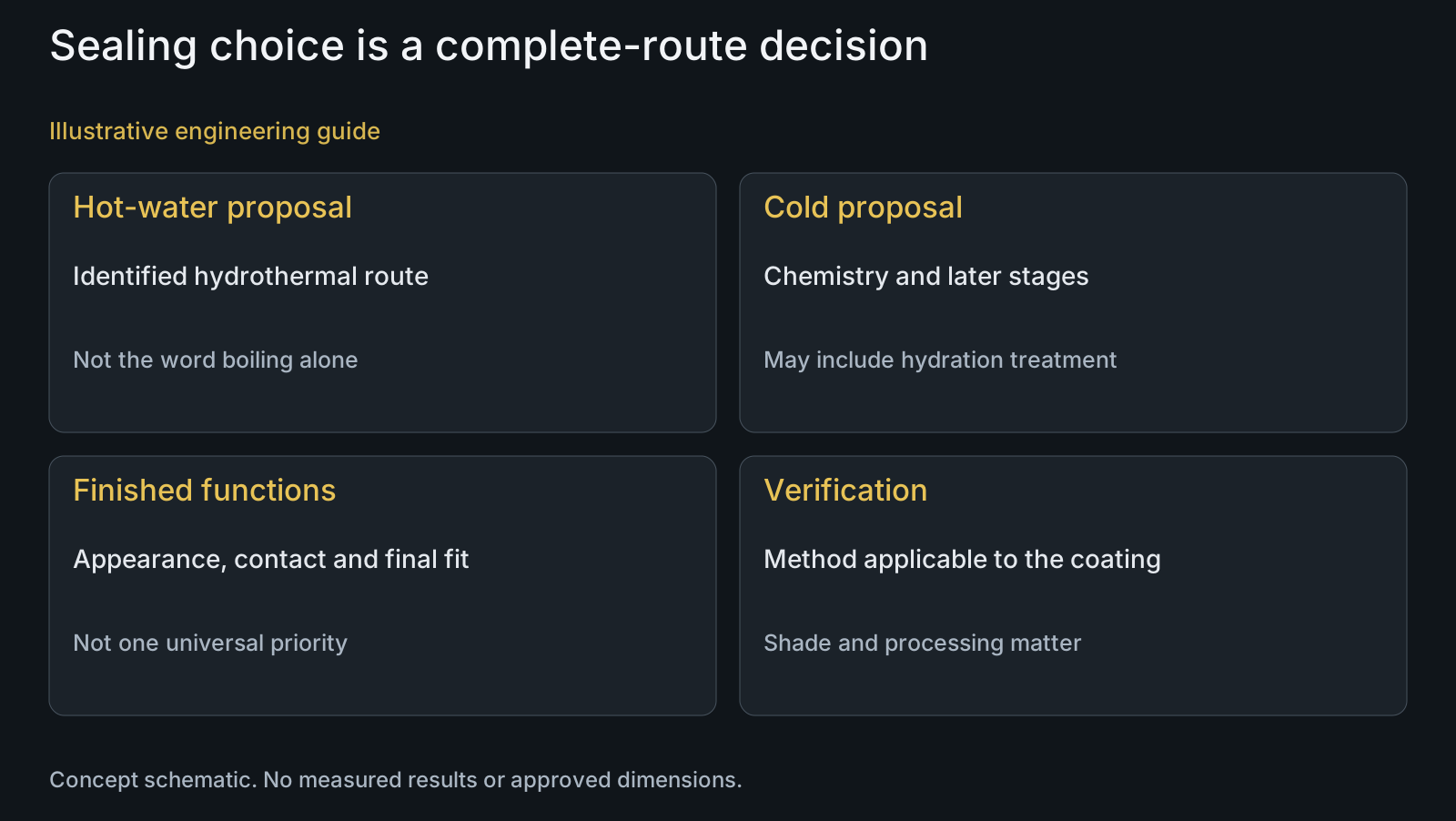
A hot-water proposal needs its identified process and provider controls, not an instruction copied from the word boiling. A cold proposal needs its chemistry and subsequent stages identified. Neither label documents the bath condition, rinsing or represented finished state.
QUALANOD's sealing guidance describes two-step nickel-fluoride cold sealing with subsequent elevated-temperature hydration and emphasizes rinsing between stages. This is an example of why cold sealing need not be a single ambient operation, not a mandatory bicycle process.
Ask the anodizer to quote the full proposed route and its applicable controls. Do not prescribe chemistry concentrations, bath temperatures or times from this article. If a provider uses another qualified system, compare its defined end state rather than force it into an incomplete two-label comparison.
| Proposal or requirement | Useful comparison | Risk in a shortcut | Verification or clarification |
|---|---|---|---|
| Hot-water sealing route | Actual provider process and finished coating | Boiling label treated as complete instruction | Defined system and relevant acceptance |
| Cold sealing route | Chemistry plus all subsequent stages | Cold assumed to mean no thermal stage | Full route and hydration where applicable |
| Sealed versus unsealed working hardcoat | Same contact function and represented finish | Earlier wear evidence transferred unchanged | Relevant finished-state comparison |
| Deep shade or supplementary treatment | Actual test-method applicability | Earlier dye-spot note copied automatically | Laboratory review of ISO2143 scope or selected alternative |
| Corrosion comparison | Matched alloy, route, specimen and endpoint | Universal twice-life claim | Defined comparison without field-life conversion |
| Purchase cost comparison | Same feature and report scope | Bath temperature treated as total cost | Itemized complete processing proposal |
The seal must suit the functional surfaces
Define exposed appearance surfaces separately from the shoulder, bore, seat and thread. Include the counterpart and intended motion. A route selected for color stability on a cap is not automatically the correct response to a wear concern at a working sleeve.
For hard-anodized hardware, review whether the specified application calls for sealing and what condition the wear evidence represents. The hard-anodizing wear guide explains why comparisons of differently finished specimens do not isolate one variable. Do not add a seal and carry forward an earlier unsealed wear conclusion without review.
Where subsequent bonding, lubrication or another coating is planned, identify the actual combination and surface preparation requirement. As engineering assessment, visual cleanliness cannot approve that interface. Request the relevant product and application evidence instead of declaring all sealed anodizing equally compatible.
Select verification that applies to the final coating
ISO 2143:2017's public scope concerns dye absorption after acid pretreatment as an estimate of lost absorptive power following sealing. It excludes several coating conditions, including deep shades and specified supplementary processing. It also identifies limitations associated with certain hydrothermal additives.
Therefore a dye-spot instruction should not remain unchanged merely because the coating became black instead of light. Have the responsible laboratory select an applicable method for the actual alloy, shade, supplementary processing and seal system. A method's public title does not establish its suitability for every finished part.
Keep thickness and final fit separate from the sealing check. A thickness reading does not independently verify sealing, and a seal result does not accept the delivered thread. Specify the intended inspection state rather than treating several different measurements as interchangeable coating approval.
Corrosion and cost comparisons need matched scope
To compare corrosion proposals, state the material, anodizing route, seal, specimen configuration and assessment endpoint. If other conditions change, the result cannot isolate sealing alone. Do not transfer an architectural-process observation to a pivot without identifying what it represents.
Likewise, the lower-temperature bath name does not establish the cheaper delivered route. As purchasing analysis, compare the same features and deliverables, including any additional stages, provider provision and required assessment. No universal hot-water cost advantage or cold-sealing life multiplier is established here.
Discuss the proposed surface-treatment scope and final acceptance with PremFixer. The processor and report provision require order-specific confirmation. No owned anodizing line, automatic seal option or performance report for every aluminum part is implied.
A deep-shade change can reopen the verification choice
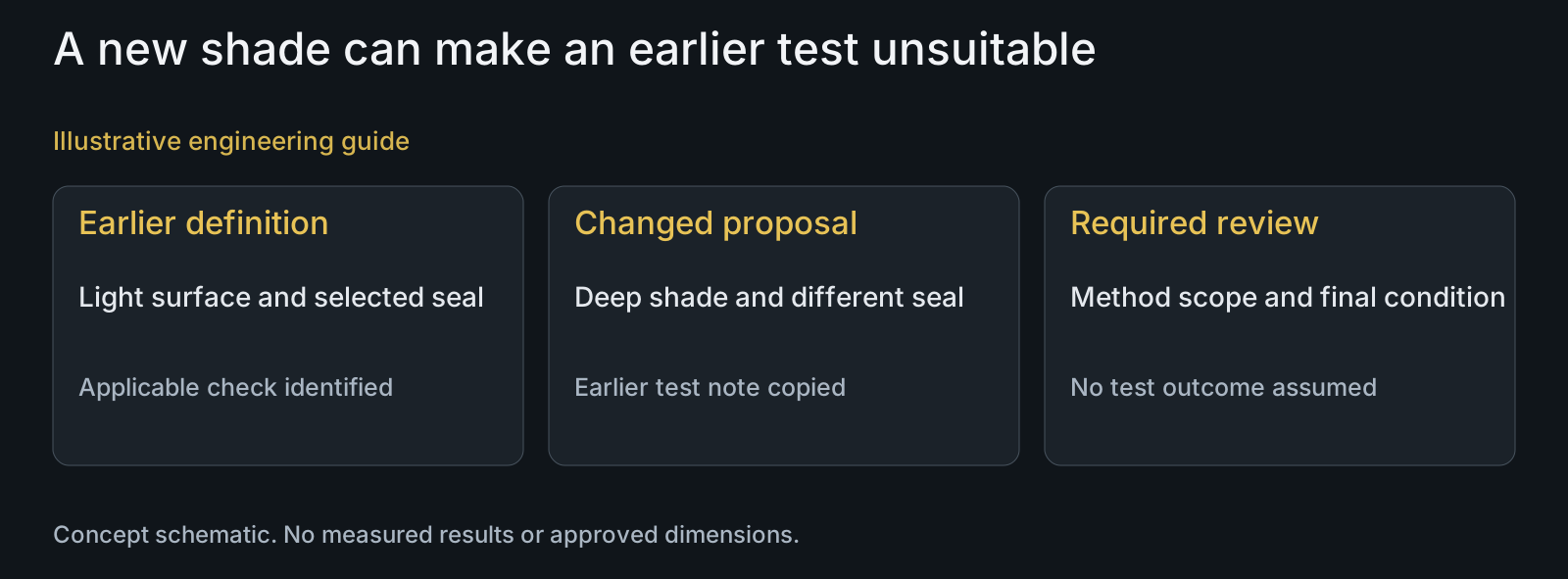
Illustrative engineering example: assume an OEM's light-colored anodized end cap has a specified seal and an applicable dye-spot inspection. The next proposal changes to a deep black shade and a different sealing system, while copying the earlier inspection note unchanged.
The reviewer does not infer better protection from black color or lower process temperature. The new route and the chosen test's applicability must be resolved together. If the test is outside its scope for that coating, select appropriate verification with the responsible parties rather than claim that the unperformed or unsuitable check passed.
No actual seal defect, laboratory result or color-change customer project is asserted. The example shows a concrete purchasing consequence: process and appearance changes can alter which evidence is meaningful even when the part dimensions and nominal aluminum grade remain the same.
Questions buyers need to confirm
Is cold sealing always more corrosion resistant than hot sealing?
No universal ranking is supported. Compare complete routes on a defined material and specimen with an agreed endpoint. A bath label does not establish a life multiplier.
Does cold sealing necessarily avoid every heating stage?
No. Some two-step systems include subsequent elevated-temperature hydration. Obtain the full provider route before interpreting process exposure or cost.
Does an anodizing thickness result prove the seal is acceptable?
No. It measures a different characteristic. Select an applicable seal assessment and keep final dimensional requirements independent.
Can ISO2143 dye-spot testing be used on every black anodized part?
No blanket application is justified. Its public scope excludes deep shades and other specified conditions. Have the laboratory select a method suitable for the actual finished coating.
Should every hard-anodized working surface be sealed?
Use the specified application requirement, not an all-part rule. Review the intended contact and evidence for the delivered finish; a seal change cannot automatically inherit unsealed wear results.
What should an anodizing-seal RFQ include?
Provide alloy condition, drawing and STEP, full finish proposal, shade and reference, working or protected surfaces and subsequent operations. Specify final-fit requirements and the seal or exposure evidence needed for the actual decision.
Technical references and scope
Applied Surface Science: Water in anodic pores before sealing. Primary research context for hydrothermal pore hydration and a different cold-seal mechanism. No1050alloy numeric result transferred to pivots.
QUALANOD: Sealing guidance. Two-step cold-seal hydration and rinsing example only; no certification, mandatory bicycle route or numerical process recipe.
ISO2143:2017: Public scope. Dye-spot purpose and final-coating applicability restrictions; no full acid pretreatment or acceptance method reproduced.
Explore related component, material and sourcing decisions in the customer decision knowledge center. For a drawing review, use the Drawing/BOM RFQ path.
Choose the sealing route and applicable acceptance together
Send the aluminum specification, drawing and STEP, proposed anodizing and complete seal route, appearance reference and functional zones. Include subsequent bonding or lubrication, final-fit requirements and requested verification. PremFixer will review partner-process provision without assigning a universal cost or corrosion-life ranking.
Discuss the drawing and BOM