
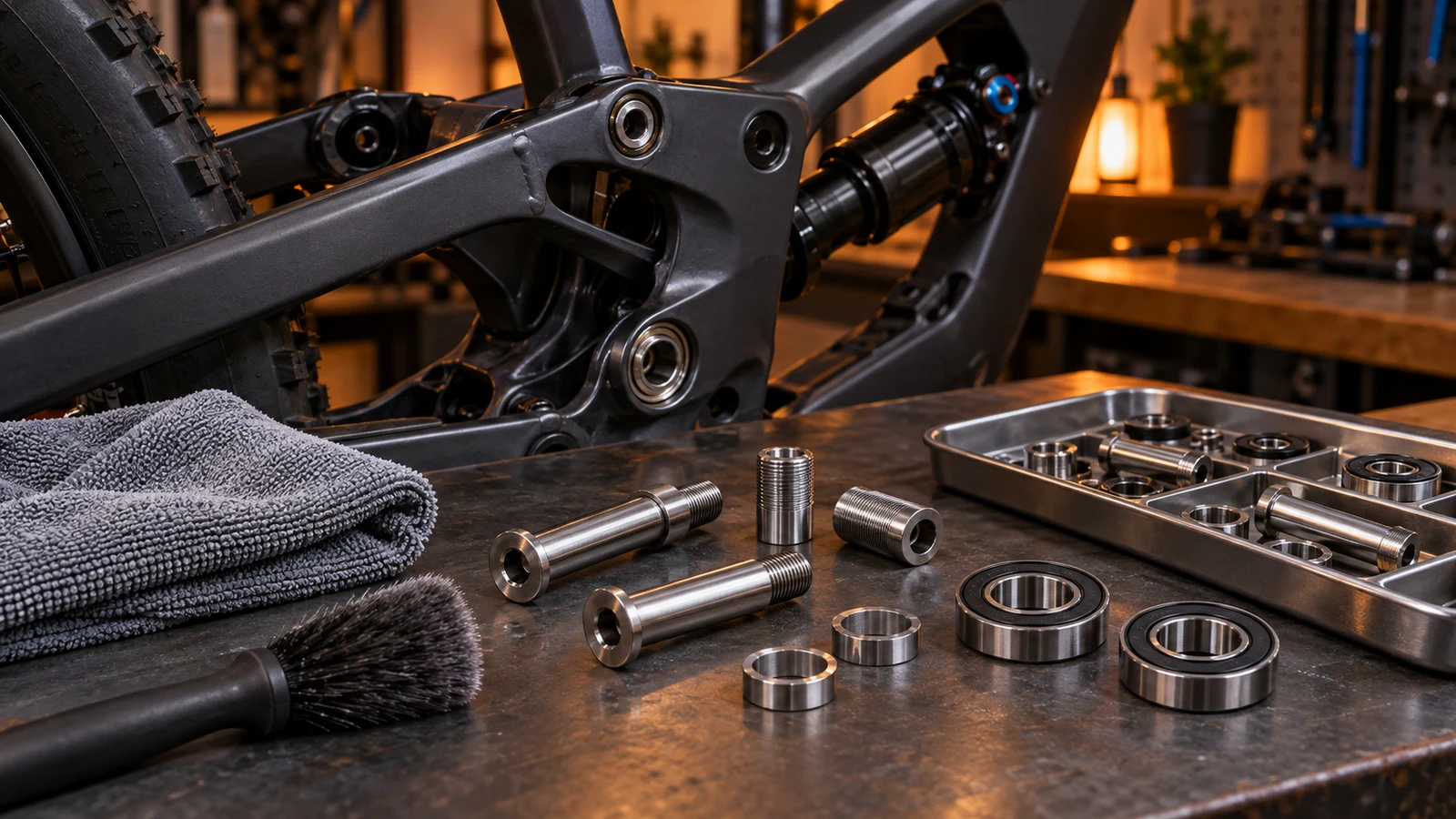
Cleaning stainless pivot bolts starts with the bicycle's approved service method, not a generic stainless-steel cleaner. The exposed bolt sits beside bearing seals, frame finishes, grease and possibly a retention product; compatibility with the bolt alone does not establish compatibility with those materials. For routine dirt, use the permitted gentle cleaning method and leave adjustment or disassembly to the relevant service procedure. Staining, damaged contact surfaces or changing pivot movement need a separate assessment. Do not increase pressure, chemical strength or abrasion simply because dirt remains, and do not treat a clean-looking joint as proof that its internal condition is acceptable.
Hero: concept illustration of example hardware and its application. It is not a factory photograph, tested component or approved production geometry.
Check what the cleaner will actually contact
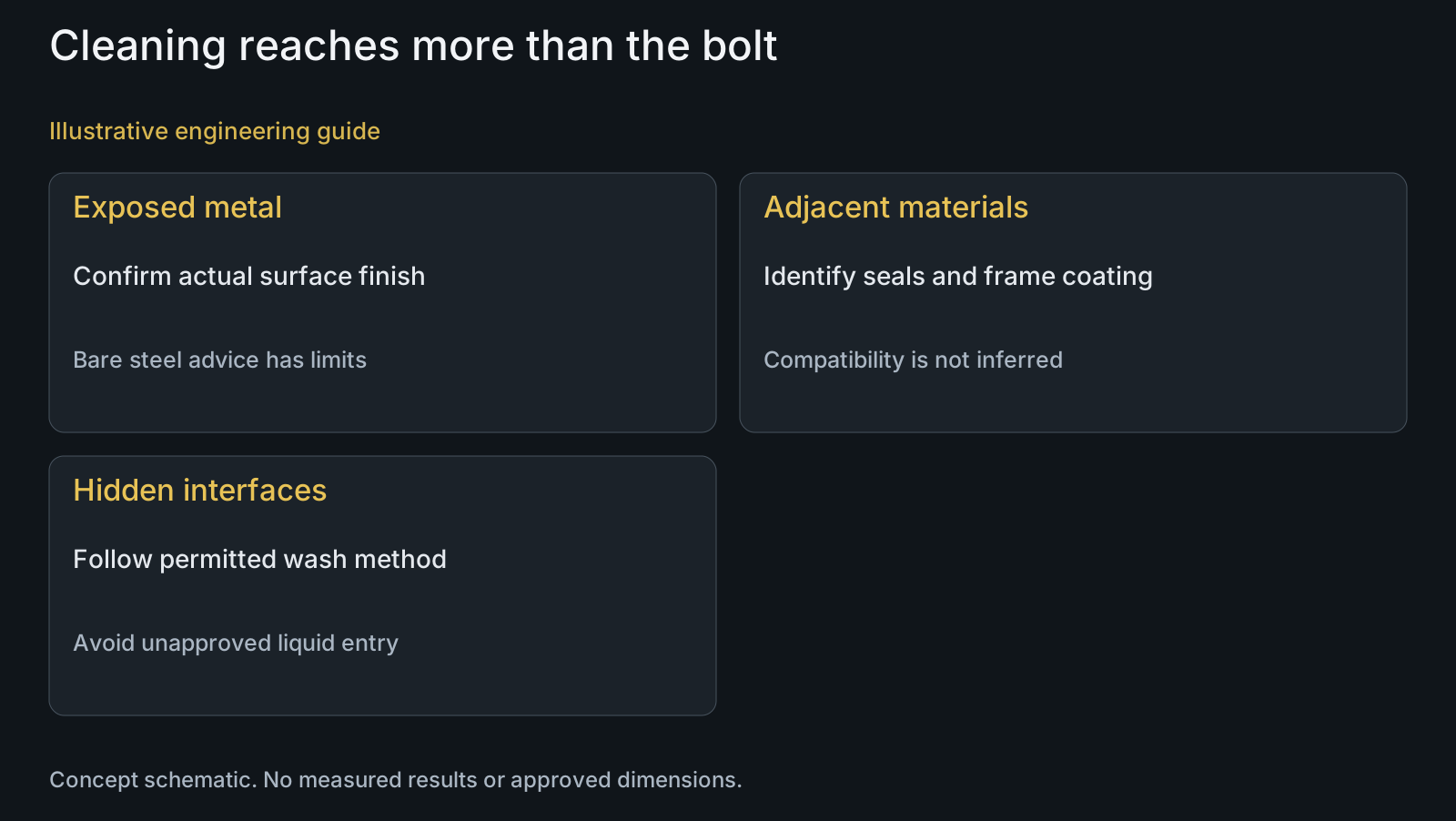
Identify the complete contact area: bolt head, adjacent frame coating, exposed seal, bearing opening and any electrical connection. Cleaner running off the bolt can reach surfaces that were not part of the original material selection. A hidden interface can also retain liquid after the visible head has dried.
Separate a removed bare component from an installed pivot. The BSSA cleaning guidance covers stainless surfaces, including domestic and architectural uses. It is useful for understanding metal-care hazards, but it is not a compatibility approval for an assembled bicycle. Trek's owner manual, for example, places restrictions on harsh chemicals, alcohol wipes and pressurized washing. That illustrates why the actual bicycle instruction governs.
For an OEM maintenance document, name the permitted cleaner or relevant compatibility requirement, application method and surfaces to avoid. Do not leave the instruction at 'use a stainless cleaner.' If the hardware finish changes, review the maintenance wording with the finish and assembly specification.
Match the response to dirt, staining or damage
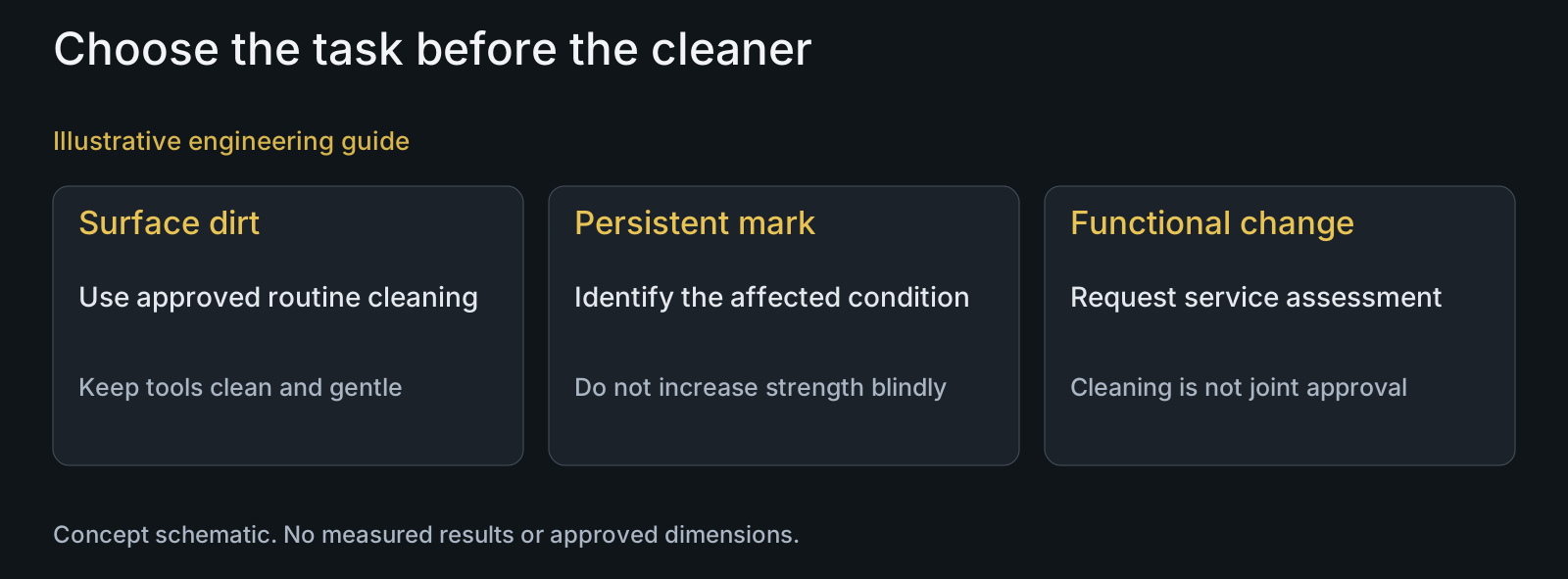
Ordinary surface dirt calls for the model-approved gentle method. Keep brushes and cloths clean and suitable for the finish. BSSA identifies contamination from carbon-steel tools as a stainless-care concern; a wire brush previously used on another metal is therefore not a neutral cleaning tool.
A brown mark requires identification before aggressive treatment. It may be surface contamination or a corrosion-related condition, and appearance alone does not establish the remaining integrity of a working shoulder or thread. Use the 316L pivot rust assessment to separate the observed mark from the material label rather than promising that stronger cleaner resolves it.
Visible pitting, a damaged seating face, new play or binding changes the task from cosmetic cleaning to service assessment. Do not polish a functional diameter to remove a mark without an approved repair decision. Removing material can change an interface even when the finished surface looks smoother. Record the location before cleaning obscures useful evidence.
| Condition | Suitable decision | Risk to avoid | Useful verification |
|---|---|---|---|
| Routine surface dirt | Use the model-approved gentle method | Chemicals or pressure reaching seals | Check actual owner/service instruction |
| Cleaner approved for bare stainless only | Assess the complete installed contact area | Assuming paint and seal compatibility | Cleaner information plus assembly materials |
| Brown stain on an exposed head | Identify contamination versus corrosion | Escalating abrasion before diagnosis | Location and condition before/after permitted cleaning |
| Pitting on a working shoulder | Request a functional condition assessment | Polishing away fit-controlling material | Affected surface and dimensional requirement |
| New play or binding | Follow the applicable service investigation | Treating clean appearance as joint acceptance | Identify the moving or resisting interface |
Control water and residue without inventing a service interval
Where washing is permitted, follow the model's limits for liquid application, rinsing and drying. Trek's manual warns against directing pressurized water at bearing or electrical areas. That is a product-specific example, not a claim that every bicycle has the same approved wash method. A pressure washer should not be assumed acceptable because a bolt itself is stainless.
BSSA warns that hydrochloric-acid cleaners and hypochlorite bleach can damage stainless surfaces. Avoid adopting those products as routine pivot cleaners. Conversely, do not adopt every solvent or acidic method mentioned for bare stainless surfaces: nearby materials and the bicycle manual can impose tighter restrictions.
Frequency depends on the actual riding exposure and released maintenance instruction. Mud retention, winter contamination and wet storage can justify closer attention, but this guide does not assign a universal inspection interval. Record unusual exposure when asking for a service decision; it gives the OEM more useful information than an unsupported mileage-based schedule.
Illustrative review: one cleaner, two different approval questions
Illustrative engineering example: assume a service team has a removed stainless bolt and an assembled pivot with a painted frame and sealed bearings. The proposed cleaner's information addresses stainless metal but contains no compatibility statement for the paint or seal material. No cleaning trial or field result is assumed.
For the removed component, the reviewer still needs its actual finish and the permitted handling method. For the installed assembly, the unanswered paint and seal questions prevent treating the bare-metal recommendation as approval. The practical choice is to retain the bicycle's existing permitted routine-cleaning method while obtaining the missing compatibility decision, rather than experimenting on the assembled joint.
If a mark remains on the bolt, document its location and whether the working surface is affected. That is a separate condition assessment, not evidence that the proposed cleaner should be made stronger. The example shows how one product can require different decisions without claiming a successful cleaning result.
Connect hardware supply to the OEM care instruction
For custom hardware, tell PremFixer which surfaces remain exposed, the specified finish and any maintenance restriction already released for the assembly. The surface-treatment selection guide helps separate a decorative head requirement from the working shoulder and thread requirements.
Supply the assembly section and affected material interfaces when asking about a finish change. Manufacturing review can identify the supplied hardware condition and drawing requirements; it cannot approve an unspecified cleaner for every adjacent bicycle component. Maintenance approval remains tied to the design owner's actual assembly and service evidence.
Questions buyers need to confirm
Can I use any stainless-steel cleaner on a pivot bolt?
No. Check the actual bolt finish and the bicycle's cleaning instruction. For an installed pivot, the cleaner may also contact seals, paint, grease or electrical components; a bare-stainless recommendation does not establish those compatibilities.
Is pressure washing acceptable because the bolts are stainless?
Do not infer that from the material. Follow the bicycle manufacturer's method and bearing/electrical restrictions. Water entry into the assembly is a separate concern from corrosion of the exposed bolt.
Should a persistent brown mark be removed with a wire brush?
Do not escalate abrasion without identifying the mark and affected surface. Carbon-steel tool contamination is itself a stainless-care concern. A working shoulder or thread also has geometry requirements that cosmetic polishing can change.
Can bleach or hydrochloric-acid cleaner be used for stubborn deposits?
Do not adopt these as routine stainless pivot cleaners. BSSA identifies adverse effects on stainless surfaces. Use the actual permitted cleaning method and seek assessment when a deposit cannot be removed within those limits.
How often should stainless pivot bolts be cleaned?
Use the model's maintenance instruction and actual exposure. Provide riding contamination, wet storage and observed condition when requesting advice. No universal mileage or time interval follows from the stainless grade alone.
What information is needed to review an OEM cleaning instruction?
Provide the supplied hardware finish, exposed/hidden interfaces, seal and frame material information, cleaner details and the proposed application method. State whether the request concerns routine care, disassembled parts or an observed fault; those are different approval questions.
Technical references and scope
BSSA: Cleaning methods for stainless steel. Stainless surface-care hazards and tool contamination; bare-metal methods are not approvals for bicycle seals or finishes.
Trek Bicycle Owner's Manual, English, April 2026. Pages 46 and 56 provide a manufacturer example of cleaning and pressure restrictions, not universal instructions for all pivot systems.
Explore related component, material and sourcing decisions in the customer decision knowledge center. For a drawing review, use the Drawing/BOM RFQ path.
Review the hardware finish alongside the care requirement
Send the pivot drawing, assembly section, BOM, specified finish and existing maintenance restrictions, with photographs identifying any affected surface. PremFixer can review the supplied hardware requirements and manufacturing implications; complete-assembly cleaning approval requires the OEM's material and service evidence.
Discuss the drawing and BOM