
One coolant concentration or calendar replacement interval cannot control every pivot machining operation. First identify whether the system uses a water-miscible fluid and which product is approved for the material, machine and operation. Then interpret the relevant condition measurements using that product's guidance. Concentration, pH, contamination and delivery to the cut answer different questions; none independently accepts the finished axle's dimensions or surface. For a buyer investigating changed appearance or machining behavior, retain the actual fluid and process state before assigning a cause. This guide concerns condition management, not a universal mixture, chemical correction recipe or claim about PremFixer's monitoring schedule.
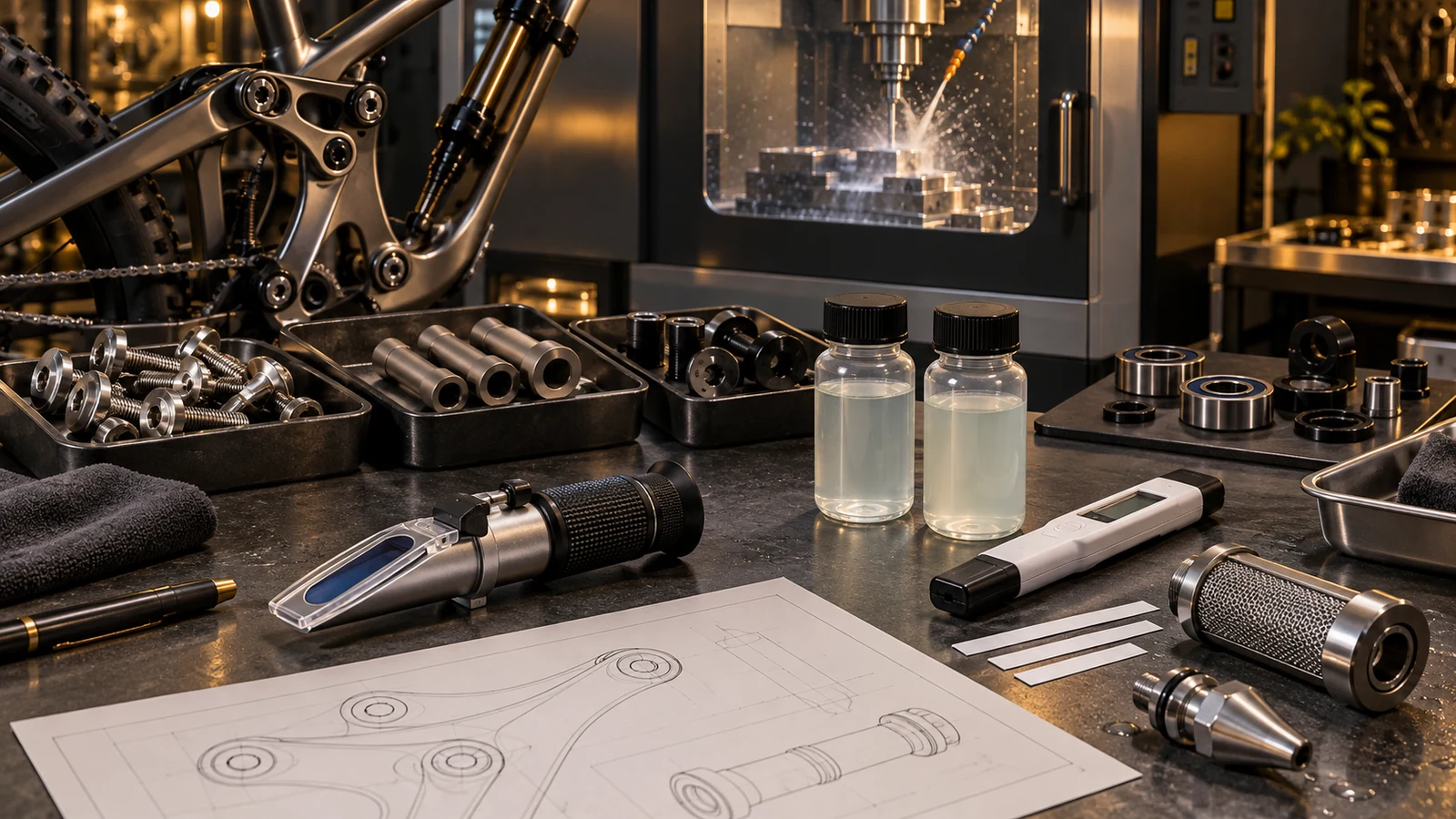
Hero: concept illustration of example hardware and its application. It is not a factory photograph, tested component or approved production geometry.
Identify the system before applying an emulsion checklist
Water-miscible-fluid guidance should not be copied into a neat-oil process as though the measurements mean the same thing. Identify the exact product, system and supported application. A generic entry saying coolant leaves the relevant condition and maintenance basis undefined.
Blaser's water-miscible coolant guide discusses concentration, pH, water quality, filtration and tramp oil as distinct management subjects. Its product-context recommendations do not establish universal limits for stainless, titanium and aluminium pivot machining.
The buyer should distinguish selecting a fluid from assessing fluid already in use. A suitable product category does not prove that a particular sample is in its intended condition. No coolant brand or owned maintenance equipment is confirmed for PremFixer by these external references.
Interpret the reading before comparing concentrations
Blaser's concentration-measurement explanation states that some fluid readings require a product-specific refractometer factor. A scale reading and the resulting fluid concentration are therefore not automatically the same number.
Retain the product identity, applicable interpretation and sample identity with a reading. When reviewing two records, confirm they report the same quantity. Comparing an unconverted scale value with a reported concentration can create an apparent difference that is not a valid process comparison.
Keep measurement validity separate from the corrective action. If the observation is unclear or inconsistent, resolve the measurement basis with the applicable supplier guidance before changing the system. This article provides no factor, calibration routine or universal top-up recipe.
| Observation | Useful condition question | What it does not prove | Review basis |
|---|---|---|---|
| Concentration result | Identified product's represented dilution | pH, contamination or whole-route quality | Product interpretation and applicable range |
| Instrument scale reading | Raw observation for its measurement method | Actual concentration without required interpretation | Product-specific factor where applicable |
| pH observation | Separate in-use fluid condition input | Concentration or a universal replacement decision | Applicable product guidance |
| Water or contamination concern | Additional input omitted by concentration alone | A diagnosed part defect from appearance | Relevant supplier assessment and system identity |
| Delivered-part result | Specified dimension or surface acceptance | Every coolant parameter was controlled | Named feature, supplied state and method |
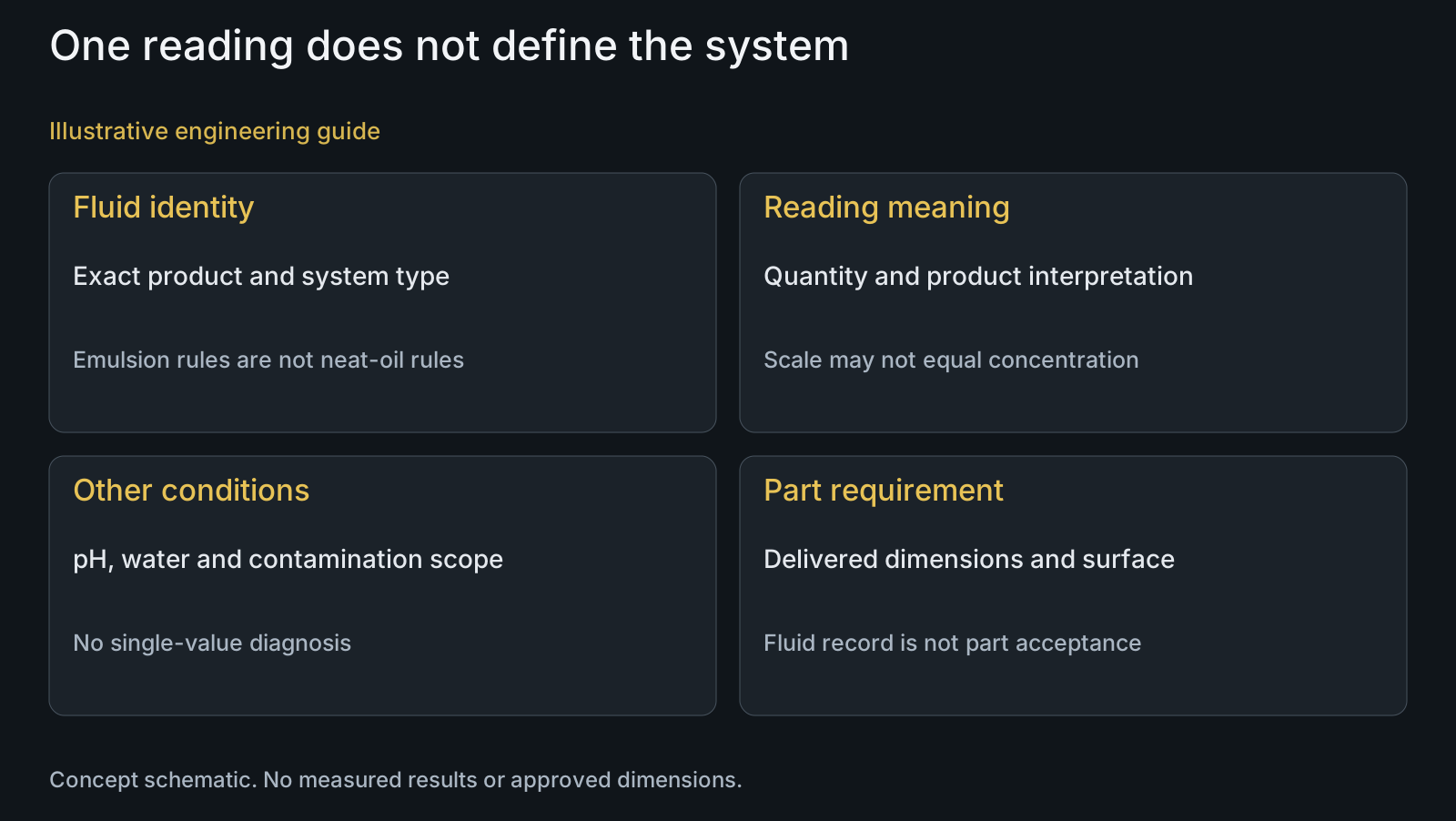
A concentration result does not dispose of other condition concerns
A pH observation is a separate condition input, not a replacement for concentration. Similarly, visible contamination and filtration concerns are not automatically resolved when a concentration result is within its applicable range. Review the actual fluid against its supported condition requirements.
Castrol's water-quality overview identifies water as a major part of diluted fluid and links water quality to several fluid-performance concerns. A concentration-only comparison omits that input.
As engineering review, do not diagnose a changed machined appearance from one condition value. Identify the affected operation, material and observed part condition, and retain tool or setup changes in the comparison. Fluid history may inform the investigation without proving the cause by itself.
Use condition guidance instead of a borrowed changeout interval
The applicable maintenance plan should identify which observations trigger review and who defines the response. A universal monthly replacement rule or one weekly check cannot represent every system and duty. Keep the actual product and system context with the plan.
A proposed replacement and a proposed correction are different actions. Do not infer either from a number without its valid interpretation and applicable guidance. Chemical additions, mixing, handling and disposal require the relevant approved procedures; no such operational recipe is supplied here.
For a purchasing review, ask what condition evidence is available for the represented production period and whether a change was made. Do not claim that a supplier follows a particular schedule or achieved a longer sump life without confirmed records.
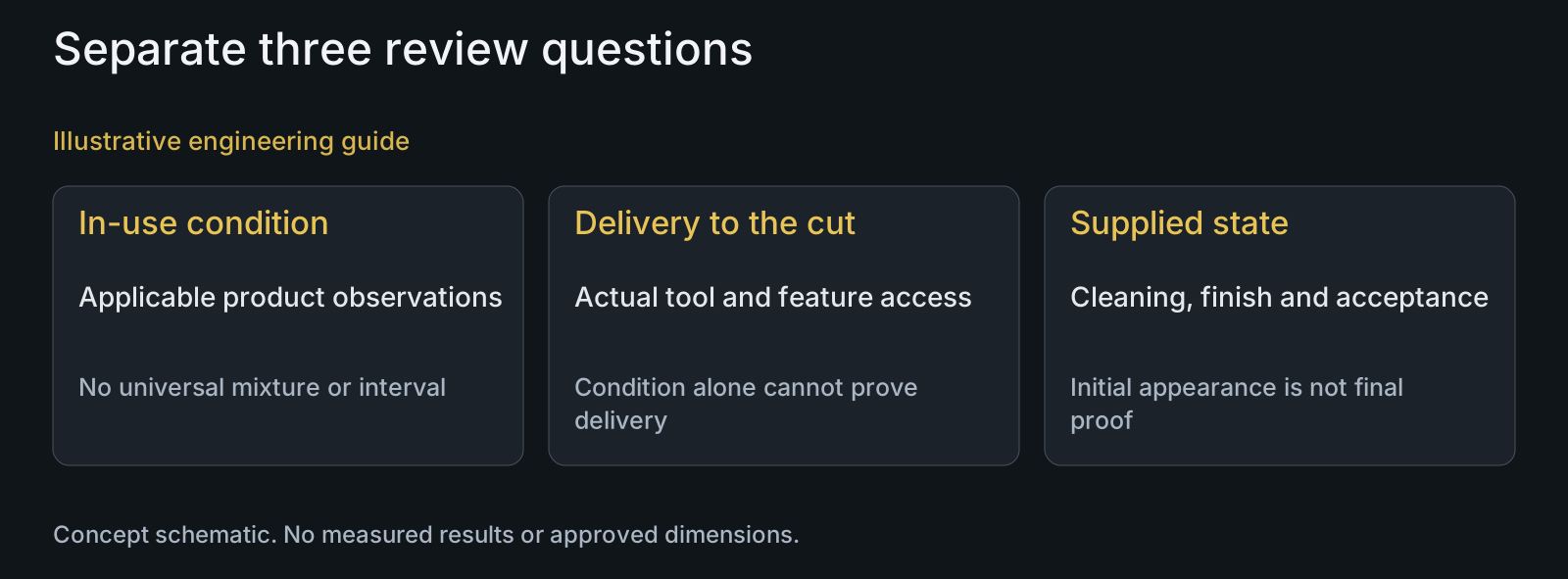
Fluid condition, cut delivery and supplied surface are separate
A condition sample does not demonstrate that fluid reached the working region. The titanium coolant-strategy guide addresses outlet direction, access and chip exit. This article addresses the condition of the identified fluid rather than repeating that delivery decision.
Identify the cleaning and supplied-surface requirements for the actual component and later processing. A good initial machining appearance does not establish readiness for a specified coating or passivation route. Connect those requirements to the surface-treatment review.
Retain dimensional and surface acceptance independently of the coolant observations. If the project asks for a measured finish or freedom from a specified residue, define the applicable part check. A fluid condition record is not a dimensional report or a delivered-surface test.
Two records may use the same scale but report different quantities
Illustrative engineering example: assume a team compares a new fluid record with an earlier machining record after a product change. One records the instrument scale reading, while the other records concentration after applying its product-specific interpretation. No actual values or part defects are supplied.
The team first resolves the reported quantities and product identities. It also checks whether other condition and delivery observations are available for the represented operations. Matching the apparent numbers would not establish that the two fluid systems were equivalent.
The next action follows the actual supplier guidance and component requirement. The example reports no corrected mixture, successful finish, confirmed corrosion cause or extended replacement interval. It demonstrates why the measurement label must be settled before a purchasing comparison or process response.
Send the part concern and represented route with the request
Provide the drawing and STEP, alloy condition, critical surfaces, final finish and quantities to the CNC turning review. Describe the actual part concern and operation. If existing records are available, identify the fluid and what each reported observation measures.
The tool-condition guide addresses a separate contributor to changed part behavior. The manufacturing process overview helps place cleaning and final acceptance in the agreed supplied sequence.
PremFixer manufactures to the customer definition and agreed evidence scope. Request a review of the relevant process and supplied-state requirements without assuming a particular brand, monitoring interval or chemical-maintenance practice has been confirmed.
Questions buyers need to confirm
Is one concentration suitable for every pivot material?
No universal value applies here. Identify the fluid, system, material and operation, then use applicable supplier guidance. Product suitability and its current condition are separate questions.
Is a refractometer scale reading always the actual concentration?
No. Some products require a product-specific factor. Keep the product and interpretation with the record before comparing it with another concentration result.
Does an acceptable concentration prove pH and cleanliness are acceptable?
No. Those are separate condition subjects. Review the relevant product and system observations instead of treating one result as complete fluid acceptance.
Should every machine use the same replacement interval?
Not automatically. The actual fluid and system context determine the applicable maintenance review. No universal calendar interval or PremFixer schedule is established here.
Can a coolant record approve the component's final surface?
No. It addresses its recorded condition. Delivered dimensions, residue requirements and later-treatment readiness need the applicable component checks in the supplied state.
What should a coolant-related part-quality request include?
Send drawing, STEP, alloy condition, affected operation and surface, final finish and quantity. Attach available fluid records with product and measurement meanings, plus relevant tool or setup changes.
Technical references and scope
Blaser: Handling and care of water-miscible coolants. Fullfourpagesread. Condition subjects and product/system scope only; allnumeric limits,chemical recipes and schedules excluded.
Blaser: Measuring coolant concentration. Complete relevant measurement text read. Scale versus product-factor distinction only; not a universal calibration or interval instruction.
Castrol: Water quality and metalworking fluids. Complete45line overview read. Diluted-fluid water contribution only; linked unseen whitepaper not used.
Explore related component, material and sourcing decisions in the customer decision knowledge center. For a drawing review, use the Drawing/BOM RFQ path.
Review coolant context without losing the finished-part requirement
Send the drawing, STEP, material state, marked surface concern, final finish and quantities. Include available fluid and process observations with their product basis. PremFixer will review the manufacturing and supplied-state scope without prescribing an unsupported mixture or maintenance interval.
Discuss the drawing and BOM